Supraventrikuläre Tachykardie
SVT
Fachlich geprüft von Dr Rachel Hudson, MRCGPZuletzt aktualisiert von Dr Caroline Wiggins, MRCGP Zuletzt aktualisiert 7. Apr 2025
Entspricht den Richtlinien für redaktionelle Inhalte
- HerunterladenHerunterladen
- Teilen
- Language
- Diskussion
- Audio-Version
- Zu bevorzugten Quellen bei Google hinzufügen
Supraventrikuläre Tachykardie (SVT) verursacht eine abnorm schnelle Herzfrequenz. Sie kann Symptome wie Herzklopfen, Schwindel und Atemnot verursachen. Viele Episoden von SVT dauern nicht sehr lange und hören ohne Behandlung auf. Manchmal ist eine Behandlung erforderlich, um eine Episode von SVT zu stoppen.
Auf einen Blick
Supraventricular tachycardia (SVT) makes your heart beat very fast in a regular rhythm.
Symptoms include a very fast heart rate, thumping heart sensations, dizziness, and shortness of breath.
Episodes of SVT can be triggered by medications, stimulants, alcohol, stress, or smoking.
Many episodes of SVT stop on their own, or can be stopped by vagal manoeuvres.
Medical help may be needed if SVT episodes are frequent or cause many symptoms.
You must tell the DVLA if SVT affects your ability to drive.
What is SVT?
Supraventricular tachycardia (SVT) causes your heart to beat very fast in a regular rhythm. It is a type of heart palpitation. During an episode of SVT, the heartbeat is not controlled by the sinoatrial (SA) node (the normal timer of the heart). Another part of the heart overrides this timer with faster impulses. The source of this impulse in SVT is somewhere above (supra) the ventricles and causes a very fast, regular heart rate.
Types of SVT
There are three main types of SVT:
Atrioventricular junctional tachycardias. The most common type of SVT is atrioventricular nodal re-entry tachycardia (AVNRT), which is in this category. It is most commonly seen in people in their twenties and thirties and is more common in women. It occurs when there is an electrical short circuit in the centre of the heart. An extra impulse starts to race around this short circuit causing your heart to beat very fast.
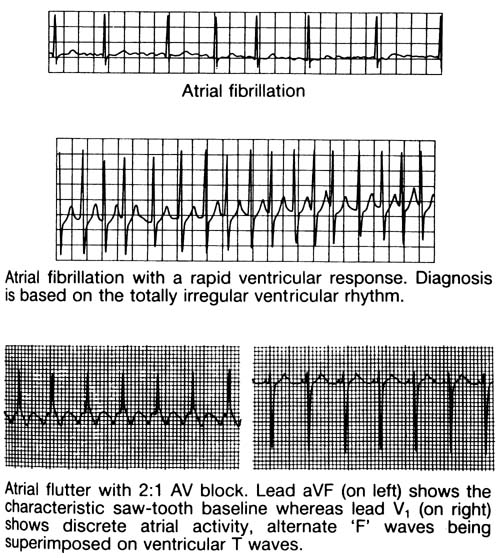
Vorhoftachykardien. This article does not contain information about atrial fibrillation which is managed differently to SVT. For more information about this condition see Vorhofflimmern.
Atrioventricular re-entrant tachycardia (AVRT).
SVT symptoms
Symptoms last as long as the episode of SVT lasts. This may be seconds, minutes, hours or, rarely, longer. Symptoms start quickly when the SVT begins, and stop rapidly when it ends. Possible symptoms include the following:
Very fast heart rate. Your heart rate rises to 140-200 beats per minute (bpm) or sometimes faster. (A normal heart rate is 60-100 bpm.)
'Thumping heart' sensations (palpitations).
Dizziness, or feeling light-headed.
Atemnot.
Du siehst vielleicht blass aus.
Brustbeschwerden. You may feel mild chest discomfort.
Angina. If you have angina then it may be triggered by an episode of SVT.
You may have no signs or symptoms, or just be aware of your fast heartbeat. Sometimes your blood pressure may become low, especially if it continues for several hours. In some cases this causes a faint or collapse. This is more likely if you are older and have other heart or lung problems.
The time between episodes of SVT can vary greatly. How often they happen varies between people. Some people have several very short episodes of SVT daily, whilst others have one episode every few years.
Most people who have a first episode of SVT will seek a medical professional, as the symptoms can be distressing. They will then usually be referred to a heart specialist to decide if they need further investigations and treatment.
Triggers for SVT
Episodes of SVT may be triggered by:
Certain medications - for example, some asthma inhalers, antidepressants, herbal supplements and cold remedies.
Stimulants such as caffeine
Avoiding these triggers will often reduce the frequency of SVTs.
Treatment for SVT
There are different ways to stop an episode of SVT.
No treatment. Many episodes of SVT soon stop on their own, and no treatment is needed.
Vagal manoeuvres. Some people can stop an episode of SVT by stimulating their vagus nerve which can slow your heart rate. If you are diagnosed with SVT you are likely to be taught these manoeuvres.
Medical help. You may need to be admitted to hospital to stop it. In hospital they may use:
Medikament. A medicine called adenosine is given by injection into a vein. It usually stops SVT. It works by blocking electrical impulses in the heart. Alternatives can be given if you cannot have adenosine.
Cardioversion. This is when an electrical impulse is applied to the heart at a certain part of the heartbeat.
Fahren
In the UK, if you have a Group 1 entitlement (car and motorcycle) you must not drive if the SVT has caused or is likely to cause incapacity (you are unable to control or stop the vehicle). You may be able to resume driving if an underlying cause is identified and the SVT has been controlled for at least 4 weeks. You must tell the DVLA if the SVT caused or is likely to cause incapacity, or it is not controlled for 4 weeks, or an underlying cause is not identified.
If you have a Group 2 entitlement you must notify the DVLA. You must not drive if the SVT caused or is likely to cause incapacity. Driving may be permitted only after an underlying cause has been identified and the SVT has been controlled for at least 3 months and a measure of your heart function meets the requirement.
Preventing SVT
People with SVT are referred to heart specialists when they are diagnosed. They will discuss the options with you. This may involve:
Vermeidung von Auslösern. See above for details.
Not treating. This is an option if the episodes of SVT are infrequent, short or cause few symptoms.
Medikation. Examples include verapamil und Betablocker. If one does not work or causes side-effects, another can often be tried.
Tissue destruction using a catheter (catheter ablation). A small wire (catheter) is passed via a large vein in the top of the leg into the chambers of the heart. The tip of the catheter can destroy a tiny section of heart tissue that is the source of the abnormal electrical signals.
Patientenauswahl für Herzklopfen
Herzgesundheit und Blutgefäße
Vorhofflimmern
Vorhofflimmern (VF) ist ein abnormal schneller, unregelmäßiger Herzschlag. Ein abnormaler Herzrhythmus wird als Arrhythmie bezeichnet. Eine normale Herzfrequenz liegt im Ruhezustand zwischen 60 und 100 Schlägen pro Minute (bpm). Bei VF kann die Herzfrequenz manchmal sehr schnell sein (oft zwischen 140 und 180 bpm) und zudem unregelmäßig.
von Dr. Doug McKechnie, MRCGP
Herzgesundheit und Blutgefäße
Unregelmäßige Herzrhythmen
Eine Arrhythmie ist eine abnormale Frequenz und/oder ein abnormer Rhythmus des Herzschlags aufgrund eines Problems mit dem elektrischen Leitungssystem des Herzens.
von Dr. Colin Tidy, MRCGP
Häufig gestellte Fragen
What is the difference between SVT and atrial fibrillation?
SVT is a type of heart palpitation where the heart beats very fast in a regular rhythm, due to faster impulses coming from somewhere above the ventricles. Atrial fibrillation, while also causing an irregular heart rhythm, is managed differently from SVT and is a separate condition not detailed further in this article.
How long do episodes of SVT typically last?
The duration of SVT episodes can vary greatly. They may last for seconds, minutes, hours, or, on rare occasions, even longer. Symptoms begin quickly when an episode starts and stop rapidly once it ends.
Does having SVT mean I have a more serious heart condition?
SVT is a condition where your heart beats very fast in a regular rhythm. It is a type of heart palpitation. While SVT can cause distressing symptoms, the article does not state that it inherently means you have a more serious underlying heart condition, although it can be triggered by existing angina. It is common for people to be referred to a heart specialist for investigation and treatment after a first episode.
What are vagal manoeuvres and how do they help with SVT?
Vagal manoeuvres are specific actions some people can use to stop an episode of SVT. They work by stimulating the vagus nerve, which can help to slow down your heart rate. If you are diagnosed with SVT, you are likely to be taught these manoeuvres by a medical professional.
Could my regular medications be causing my SVT?
Yes, certain medications can trigger episodes of SVT. These include some asthma inhalers, antidepressants, herbal supplements, and cold remedies. If you suspect your medication is a trigger, discussing this with a healthcare professional is advisable.
What is catheter ablation and how does it prevent SVT?
Catheter ablation is a procedure used to prevent SVT. It involves inserting a small wire (catheter) into a large vein, usually in the leg, and guiding it to the heart. The tip of this catheter is used to destroy a tiny section of heart tissue that is responsible for producing the abnormal electrical signals causing the SVT. This can effectively stop the SVT from recurring.
Weiterführende Literatur und Referenzen
- Brugada J, Katritsis DG, Arbelo E, et al; 2019 ESC-Leitlinien für das Management von Patienten mit supraventrikulärer Tachykardie. Die Task Force für das Management von Patienten mit supraventrikulärer Tachykardie der Europäischen Gesellschaft für Kardiologie (ESC). Eur Heart J. 2020 Feb 1;41(5):655-720. doi: 10.1093/eurheartj/ehz467.
- Kotadia ID, Williams SE, O'Neill M; Supraventrikuläre Tachykardie: Ein Überblick über Diagnose und Management. Clin Med (Lond). 2020 Jan;20(1):43-47. doi: 10.7861/clinmed.cme.20.1.3.
- Bibas L, Levi M, Essebag V; Diagnose und Behandlung von supraventrikulären Tachykardien. CMAJ. 6. Dez 2016;188(17-18):E466-E473. doi: 10.1503/cmaj.160079. Epub 24. Okt 2016.
- Helton MR; Diagnose und Behandlung häufiger Arten von supraventrikulärer Tachykardie. Am Fam Physician. 1. Nov 2015;92(9):793-800.
- Herzklopfen; NICE CKS, Februar 2026 (nur für UK-Zugang)
- Tisdale JE, Chung MK, Campbell KB, et al; Drug-Induced Arrhythmias: A Scientific Statement From the American Heart Association. Circulation. 2020 Oct 13;142(15):e214-e233. doi: 10.1161/CIR.0000000000000905. Epub 2020 Sep 15.
- Beurteilung der Fahrtauglichkeit: Leitfaden für medizinische Fachkräfte; Fahrer- und Fahrzeugzulassungsbehörde
Über den AutorVollständige Biografie anzeigen

Dr Caroline Wiggins, MRCGP
Allgemeinmediziner, Medizinischer Autor
MBBS Auszeichnung (mit Auszeichnung), MRCGP (2016), MSc.SEM (mit Auszeichnung), BSc (Hons)
Dr. Caroline Wiggins ist derzeit als Vertretungsärztin im Südwesten Englands tätig.
Über den RezensentenVollständige Biografie anzeigen

Dr Rachel Hudson, MRCGP
Allgemeinmediziner und Medizinischer Autor
MBChB, MRCGP (2008), BSc (Medical Science), DFSRH, DRCOG, DCH
Dr. Rachel Hudson ist eine NHS-Ärztin, die im Nordwesten Englands arbeitet.
Artikelverlauf
Die Informationen auf dieser Seite wurden von qualifizierten Klinikern verfasst und begutachtet.
Artikel auch verfügbar in Englisch, Deutsch, Spanisch, Französisch, Italienisch, Portugiesisch, Hindi, Hebräisch, Arabisch, und Schwedisch.
Nächste Überprüfung fällig: 6. Apr 2028
7. Apr 2025 | Neueste Version

Fragen, teilen, verbinden.
Durchsuchen Sie Diskussionen, stellen Sie Fragen und teilen Sie Erfahrungen zu Hunderten von Gesundheitsthemen.

Fühlen Sie sich unwohl?
Bewerten Sie Ihre Symptome online kostenlos
Abonnieren Sie den Patienten-Newsletter
Ihre wöchentliche Dosis klarer, vertrauenswürdiger Gesundheitsberatung - geschrieben, um Ihnen zu helfen, sich informiert, selbstbewusst und in Kontrolle zu fühlen.
Durch das Abonnieren akzeptieren Sie unsere Datenschutzrichtlinie. Sie können sich jederzeit abmelden. Wir verkaufen Ihre Daten niemals.