Chirurgische Drainagen
Begutachtet von Dr Hayley Willacy, FRCGP Zuletzt aktualisiert von Dr Rachel Hudson, MRCGPLast updated 11 Feb 2023
Erfüllt die Anforderungen des Patienten Richtlinien des Patienten
- HerunterladenHerunterladen
- Teilen
- Language
- Diskussion
- Audio-Version
- Add to preferred sources on Google
Ein chirurgischer Drain ist ein kleines Plastikrohr, das nach einer Operation manchmal verwendet wird. Es wird während der Operation vom Arzt in Ihren Körper eingeführt und ragt bis zur Entfernung aus Ihrem Körper heraus, in der Regel nach einigen Tagen. Es ist mit einem kleinen Plastikbeutel verbunden, der Flüssigkeit oder Luft auffängt, die sich an der Operationsstelle abgelassen haben. Nicht alle Operationen erfordern einen Drain: Ihr Chirurg wird Sie darüber informieren, ob einer notwendig ist.
In diesem Artikel:
Video picks for Andere Operationen und Verfahren
Lesen Sie unten weiter
What is a surgical drain?
Surgeons use small plastic tubes to help drain away fluid after an operation: without them the fluid might gather up and cause infection. Or, in the case of an operation on the lungs or chest, air might gather up and squash the lungs.
They are usually special small, flexible plastic tubes which the surgeon places during the operation and then leaves poking out your skin, attached to a small bag.
This is an example of a drain coming out of someone's leg:
Surgical drain
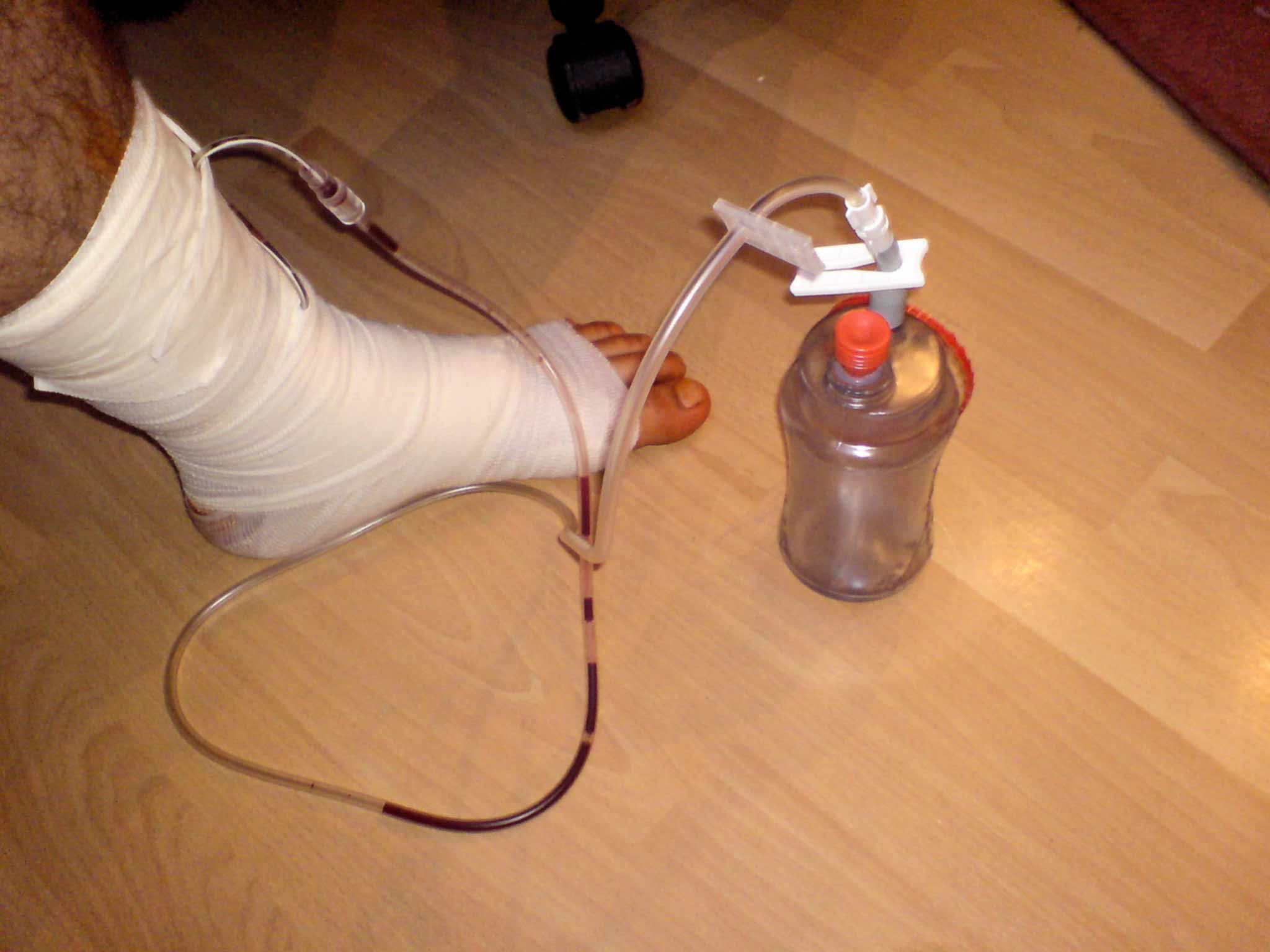
© ChristianKazur, Public domain, via Wikimedia Commons
Although they look a bit gruesome, they aren't usually painful.
Here's an example of a surgical drain after hand surgery:
Hand surgical drain
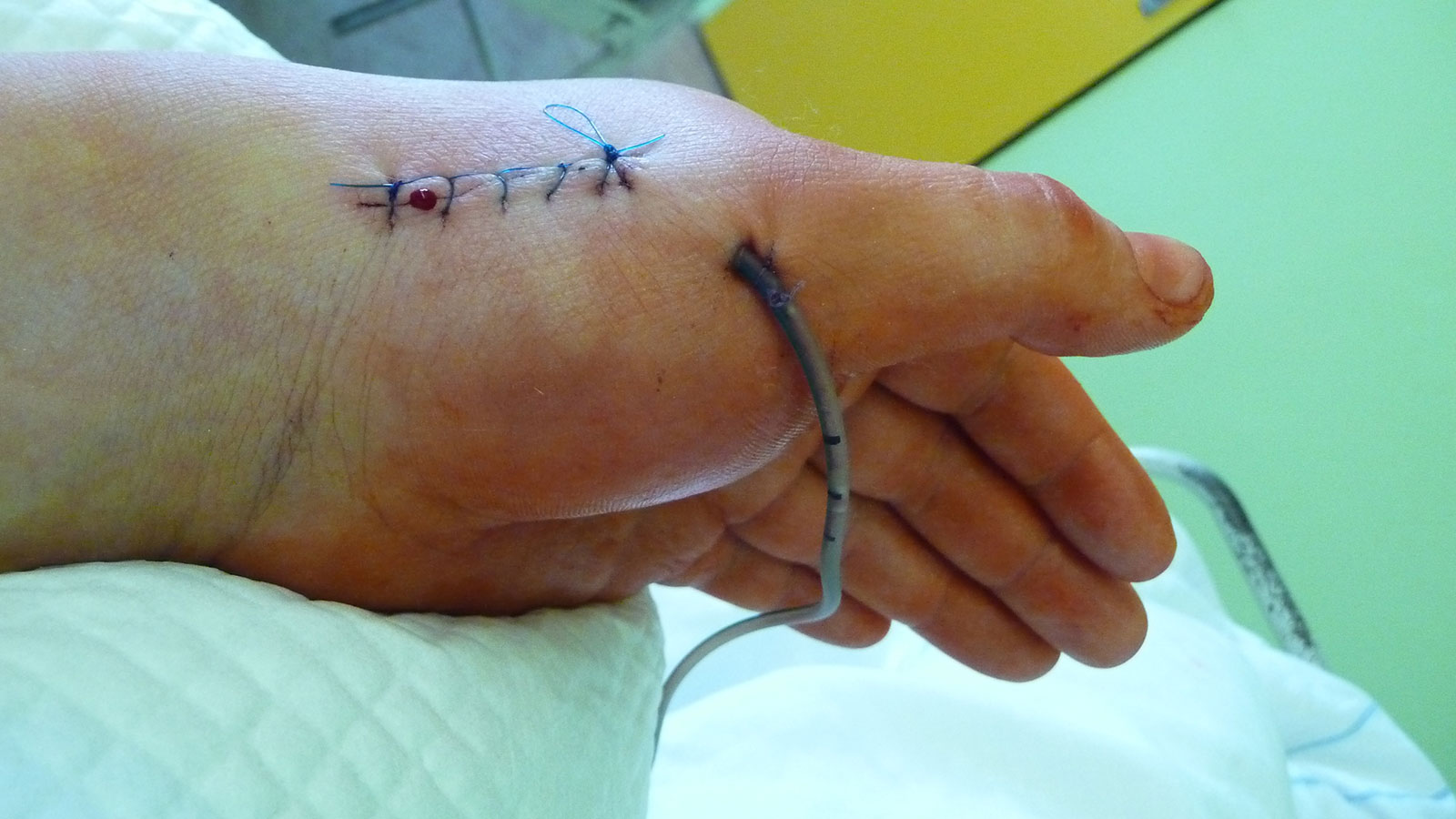
© Pavel Ševela, CC BY-SA 3.0,viaWikimedia Commons
How useful are surgical drains?
Zurück zum InhaltSome operations involve quite 'juicy' parts of the body: areas where the body usually makes lots of fluid or juices. An example would be surgery on someone's armpit (axilla): this is often done as part of breast cancer surgery. The armpit makes a lot of fluid after being operated on. Without a drain, the fluid might gather up in a large pool and be painful.
The pressure of the fluid inside might stop the wound healing properly. So the surgical drain allows extra fluid to drain off harmlessly.
If you have had to have an emergency operation - for example, for a burst digestive tract (what doctors would call a perforated bowel) - then there can be infected juices left behind inside you. A surgical drain allows those juices to drain away and hopefully reduce the chances of getting an infection after the operation.
Lesen Sie unten weiter
How long do surgical drains stay in for?
Zurück zum InhaltSurgical drains usually stay in the body for a few days after an operation. When the fluid production has faded away, the drain can be removed painlessly.
Are there any drawbacks to surgical drains?
Zurück zum InhaltThere are differences of opinion between surgeons as to whether surgical drains are always needed. Some studies have shown that they don't necessarily allow things to heal any faster. Other drawbacks include:
They can cause problems like infection around where the drain comes out; or they can interfere with things healing inside your body.
They can keep you in hospital longer.
Sometimes they can stop you moving around as much as you'd like, particularly if you have a drain from your chest area.
If they are left in for too long accidentally, they can be difficult to pull out and may leave a small tract which will take a while to heal up.
Lesen Sie unten weiter
Which operations require a surgical drain to be fitted?
Zurück zum InhaltOperations around the neck, including on the thyroid gland.
Operations on the armpit (axilla).
Operations done in an emergency for something which has ruptured inside you.
Some types of brain surgery.
Operations on the stomach (the drain often then comes out your nose and is called a 'nasogastric tube').
Operations on the bladder (the drain then usually comes out the urine tube and is called a 'urinary catheter').
Your surgeon will discuss with you before the operation whether you will need a surgical drain and where it will be.
Patient picks for Andere Operationen und Verfahren

Chirurgie und Verfahren
Kolposkopie und zervikale Behandlungen
Die Kolposkopie ist eine detaillierte Untersuchung des Gebärmutterhalses (Zervix). Sie wird in der Regel in einer Kolposkopie-Praxis von einem Arzt oder spezialisierten Pflegepersonal durchgeführt.
von Dr. Philippa Vincent, MRCGP

Chirurgie und Verfahren
Kniegelenkersatz
Ein Kniegelenkersatz ist ein Eingriff, um beschädigte Teile des Kniegelenks zu ersetzen. Es kann entweder ein vollständiger Kniegelenkersatz (TKR) oder ein teilweiser (unikompartimenteller) Kniegelenkersatz sein. Der neue Teil des Gelenks wird Prothese genannt.
von Dr. Philippa Vincent, MRCGP
Weiterführende Literatur und Referenzen
- Makama JG, Ameh EA; Chirurgische Drainagen: Was der Assistenzarzt wissen muss. Niger J Med. 2008 Jul-Aug;17(3):244-50.
Lesen Sie unten weiter
About the author

Dr Oliver Starr, MRCGP
MBChB, BMedSc, MRCS, MRCGP, DRCOG
Dr Oliver Starr is a general practitioner in Hertfordshire and an undergraduate tutor at University College Medical School.
About the reviewerView full bio

Dr Hayley Willacy, FRCGP
Allgemeinmediziner, Medizinischer Autor
MBChB (1992), DRCOG, DFFP, MRCOG (Part 1) MRCGP (2007), DFSRH (2013), MSc - medical education (2020)
Dr Hayley Willacy was an NHS GP working in northwest England, who retired from clinical practice in 2022 after 30 years.
Artikelverlauf
Die Informationen auf dieser Seite wurden von qualifizierten Klinikern verfasst und begutachtet.
Nächste Überprüfung fällig: 10. Feb 2028
11 Feb 2023 | Neueste Version
18 Oct 2017 | Ursprünglich veröffentlicht
Verfasst von:
Dr Oliver Starr, MRCGP

Fragen, teilen, verbinden.
Durchsuchen Sie Diskussionen, stellen Sie Fragen und teilen Sie Erfahrungen zu Hunderten von Gesundheitsthemen.

Fühlen Sie sich unwohl?
Bewerten Sie Ihre Symptome online kostenlos
Abonnieren Sie den Patienten-Newsletter
Ihre wöchentliche Dosis klarer, vertrauenswürdiger Gesundheitsberatung - geschrieben, um Ihnen zu helfen, sich informiert, selbstbewusst und in Kontrolle zu fühlen.
By subscribing you accept our Datenschutzrichtlinie. Sie können sich jederzeit abmelden. Wir verkaufen Ihre Daten niemals.