Lipom
Begutachtet von Dr Hayley Willacy, FRCGP Zuletzt aktualisiert von Dr Doug McKechnie, MRCGPZuletzt aktualisiert 13. Jul 2023
Erfüllt die Anforderungen des Patienten Richtlinien des Patienten
- HerunterladenHerunterladen
- Teilen
- Language
- Diskussion
- Audio-Version
- Zu bevorzugten Quellen bei Google hinzufügen
Ein Lipom ist eine gutartige (benigne) Fettgeschwulst, die in der Regel keine Symptome oder Probleme verursacht. Die meisten Lipome sind klein und können unbehandelt bleiben. Ein Lipom, das sich unter der Haut entwickelt, kann jedoch manchmal unschön aussehen. Falls erforderlich, kann es durch eine einfache Operation unter örtlicher Betäubung entfernt werden.
Auf einen Blick
A lipoma is a soft, fatty, non-cancerous lump that forms under the skin.
They are usually painless, grow slowly, and are often found on the shoulders, chest, or back.
Lipomas typically feel soft and can be moved slightly under the skin.
Most lipomas do not cause problems and do not need treatment.
See your doctor if a lipoma increases in size.
What is a lipoma?
A lipoma is a soft fatty lump. It is a non-cancerous (benign) growth made up from fat cells that clump together. A lipoma can occur in any part of the body where there are fat cells.
Superficial subcutaneous lipoma
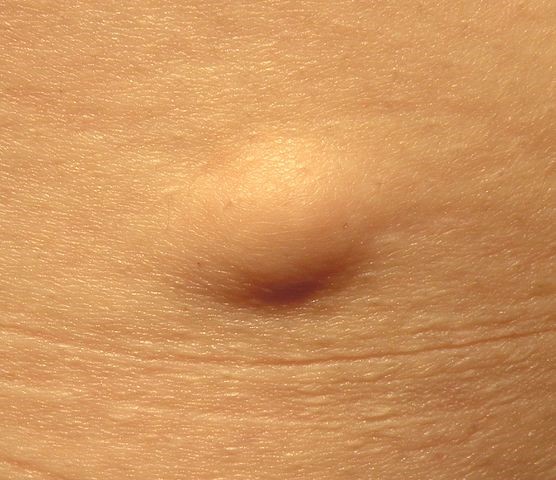
© By Jmarchn (Own work), via Wikimedia Commons
Lipomas typically feel soft and can be felt to move slightly under your skin when you press on them.
Lipomas under the skin are the most common
Lipomas often form in the fatty tissue under the skin. These are also the most noticeable ones, as they look and feel like soft, dome-shaped lumps under the skin. They vary in size from pea-sized to several centimetres in diameter.
The most common sites where lipomas develop are on the shoulders, the chest and the back. However, other areas of the skin can develop a lipoma.
Other parts of the body
Lipomas can less commonly form inside the body too. However, in most of these cases you will not be aware that you have a lipoma, as you cannot see them and they rarely cause any problems.
What are the symptoms of a lipoma and are they harmful?
In themselves, lipomas are not serious and most lipomas cause no symptoms or problems. Usually if you have a lipoma, it does not cause any symptoms but you notice a painless lump. Lipomas grow very slowly.
Sometimes a lipoma under the skin can be unsightly if it grows to be several centimetres across. Rarely, a lipoma may press on another structure and cause problems. For example, if one presses on a nerve it may cause pain.
Also, rarely, a lipoma may develop in the gut wall and cause problems such as pain or a blockage of the gut.
Sometimes a scan or other investigation that is done for other reasons may detect a lipoma inside the body by chance. There is a condition called familial multiple lipoma in which groups of fat cells occur under the skin and then produce multiple fatty lumps. This is an uncommon condition and runs in families.
When to see your doctor about a lipoma
If you are concerned about a lipoma which has started to increase in size you should consult your doctor.
Hinweis: lipomas are benign (non-cancerous).
There is a type of cancer, called a liposarcoma, which can sometimes be difficult to tell apart from a lipoma. Liposarcomas tend to be large (over 5cm in size) and grow rapidly.
There is some debate amongst researchers about whether or not lipomas have the potential to turn into cancers (such as liposarcomas) over time.
Generally, it's felt that the risk of a lipoma turning into a cancer is exceptionally low. Many researchers believe that lipomas can't turn into cancers at all.
What causes lipoma?
We don't know exactly what causes lipomas to form.
Some people think that injuries to the skin might occasionally cause a reaction in the skin that leads lipomas to form.
In some people, lipomas seem to be linked to genetics. There are several - fairly rare - genetic conditions where people develop multiple lipomas in their body.
Most people with lipomas, though, don't have any underlying genetic condition.
How common are lipomas?
Anyone can develop a lipoma at any age. Lipomas are common. Some people inherit a tendency to develop lipomas and may have several on different parts of the body. Sometimes as many as 20 or more develop. However, it is more common to develop just one or two.
Lipomas can occur in people who are normal weight as well as in people who are overweight.
Diagnosing lipoma
Often your doctor will be able to diagnose a lipoma from its typical appearance, and no tests will be needed. In some cases, a scan may be needed to confirm whether your lump is a lipoma. This may be:
Ein Ultraschall-Scan.
Eine Computertomographie (CT) Untersuchung oder ein MRT-Scan (Magnetresonanztomographie).
Do I need any treatment for a lipoma?
Usually not. If you are not bothered by a lipoma that develops then it is best just to leave it alone. However, some people want lipomas that are unsightly to be removed for cosmetic reasons. For example, if they occur on the face.
Removal of a lipoma for cosmetic reasons alone is usually not funded on the NHS.
Occasionally, a lipoma needs to be removed if it is causing symptoms - for example, by pressing on another part of the body. Sometimes if the diagnosis is not clear, a lipoma is removed to look at under the microscope. This is to make sure the growth that has been detected is a lipoma and not something more serious. For example, rapidly-growing or very large lipomas might be removed to ensure they aren't actually a type of cancer, called a liposarcoma.
For a lipoma that forms under the skin, usually it can be removed by a simple minor operation. Some local anaesthetic is injected into the skin over the lipoma. Once the overlying skin is numbed by the local anaesthetic, a cut (an incision) is made over the lipoma. The lipoma is then removed and cut away from the underlying tissue. The wound is then stitched up. A fine scar will be left.
Steroidinjektionen and liposuction are sometimes used as alternatives to surgery.
Patientenauswahl für Andere Hauterkrankungen

Haut-, Nagel- und Haargesundheit
Hidradenitis suppurativa
Hidradenitis suppurativa ist eine lang anhaltende (chronische) Hauterkrankung, die zu schmerzhaften und wiederholten Eiterhügeln (Abszessen oder Furunkeln) führt. Die genaue Ursache ist unbekannt. Suppuration bedeutet die Bildung oder den Austritt von Eiter. Diese Bereiche (häufig die Achselhöhlen und die Leistengegend) lecken Eiter ab und sind schwer zu heilen. Schließlich entstehen Narben. Behandlungen umfassen antibiotische Salben oder Medikamente oder eine Operation zur Entfernung des betroffenen Hautbereichs. Eine neuere Behandlung wirkt, indem sie eine chemische Substanz des Immunsystems blockiert, die Entzündungen im Körper verursacht.
von Dr. Colin Tidy, MRCGP

Haut-, Nagel- und Haargesundheit
Verbrennungen und Verbrühungen
Nach einer Verbrennung oder Verbrühung stellen Sie sicher, dass Sie und die betroffene Person vor weiteren Verbrennungen oder Gefahren geschützt sind – kühlen Sie dann die verbrannte oder verbrühte Stelle sofort mit kaltem, fließendem Wasser für mindestens 20 Minuten. Dieses Informationsblatt gibt auch weitere Ratschläge. Die überwiegende Mehrheit der Verbrennungen und Verbrühungen wird durch Unfälle verursacht. Gelegentlich können Verbrennungen und Verbrühungen jedoch auch absichtlich verursacht werden, insbesondere bei Kindern und schutzbedürftigen Erwachsenen. Wenn Sie Bedenken diesbezüglich haben, sollten Sie dies den zuständigen Behörden melden, die weitere Untersuchungen durchführen können. Sie können dies anonym tun, wenn Sie Angst haben, Ihren Namen zu nennen.
von Dr. Toni Hazell, FRCGP
Häufig gestellte Fragen
Can I prevent lipomas from forming?
The exact cause of lipomas is not known, so there aren't specific ways to prevent them. Some people believe that skin injuries might play a role, and genetics can also be a factor in some cases, but most people with lipomas do not have an underlying genetic condition.
How fast do lipomas typically grow?
Lipomas are known to grow very slowly. This slow growth is a characteristic feature of these benign lumps.
What is familial multiple lipoma?
Familial multiple lipoma is an uncommon condition where groups of fat cells develop under the skin, leading to numerous fatty lumps. This condition tends to run in families.
If I have multiple lipomas, does that mean they are more serious?
No, having multiple lipomas does not necessarily mean they are more serious. Some people inherit a tendency to develop several lipomas in different parts of the body, sometimes as many as 20 or more. Even in these cases, lipomas are generally not serious and cause no symptoms or problems.
Weiterführende Lektüre und Referenzen
- Weerakkody Y et al; Liposarcoma, Radiopaedia.org
- Abd Rabou A et al; Lipoma; Radiopaedia.org
Über den AutorVollständige Biografie anzeigen

Dr Doug McKechnie, MRCGP
Medizinischer Autor
MA, MBBS, MSc, DRCOG, MRCP(UK), MRCGP(2021), FHEA
Dr. Doug McKechnie ist ein NHS-Hausarzt, der in London arbeitet. Er arbeitet klinisch in Vollzeit und ist außerdem stellvertretender Leiter des Moduls für klinische und berufliche Praxis an der University College London Medical School.
Über den RezensentenVollständige Biografie anzeigen

Dr Hayley Willacy, FRCGP
Allgemeinmediziner, Medizinischer Autor
MBChB (1992), DRCOG, DFFP, MRCOG (Part 1) MRCGP (2007), DFSRH (2013), MSc - medical education (2020)
Dr. Hayley Willacy war eine NHS-Hausärztin, die in Nordwestengland arbeitete und 2022 nach 30 Jahren aus der klinischen Praxis ausschied.
Artikelverlauf
Die Informationen auf dieser Seite wurden von qualifizierten Klinikern verfasst und begutachtet.
Artikel auch verfügbar in Englisch, Deutsch, Spanisch, Französisch, Italienisch, Portugiesisch, Hindi, Hebräisch, Arabisch, und Schwedisch.
Nächste Überprüfung fällig: 11. Jul 2028
13. Jul 2023 | Neueste Version

Fragen, teilen, verbinden.
Durchsuchen Sie Diskussionen, stellen Sie Fragen und teilen Sie Erfahrungen zu Hunderten von Gesundheitsthemen.

Fühlen Sie sich unwohl?
Bewerten Sie Ihre Symptome online kostenlos
Abonnieren Sie den Patienten-Newsletter
Ihre wöchentliche Dosis klarer, vertrauenswürdiger Gesundheitsberatung - geschrieben, um Ihnen zu helfen, sich informiert, selbstbewusst und in Kontrolle zu fühlen.
Durch das Abonnieren akzeptieren Sie unsere Datenschutzrichtlinie. Sie können sich jederzeit abmelden. Wir verkaufen Ihre Daten niemals.