Diets suitable for people with anaemia
Peer reviewed by Dr Colin Tidy, MRCGPLast updated by Dr Doug McKechnie, MRCGPLast updated 18 Jan 2023
Meets Patient’s editorial guidelines
- DownloadDownload
- Share
- Language
- Discussion
- Audio Version
- Add to preferred sources on Google
In this series:AnaemiaFolic acid deficiencyIron-deficiency anaemiaMacrocytosis and macrocytic anaemiaVitamin B12 deficiency and pernicious anaemia
If you have anaemia, you may be able to change your diet to include foods which contain more of the vitamins or minerals you are short of. The sort of foods you should eat will depend on whether you are short of iron, vitamin B12 or folic acid.
At a glance
Anaemia can be caused by not eating enough foods containing iron, folic acid, or vitamin B12.
Iron-rich foods include red meat, fish, eggs, nuts, and leafy green vegetables.
Vitamin C helps absorb iron, while tea can reduce iron absorption.
Folic acid is found in green vegetables, beans, and fortified cereals.
Vitamin B12 is mainly found in animal products like meat, fish, and eggs.
Strict vegans may need fortified foods or supplements for vitamin B12.
Diet and anaemia
Not eating foods with enough iron is sometimes the cause of iron-deficiency anaemia. Some people who have a poor diet with just enough iron to get by, may slip into anaemia if other factors develop. For example, a barely adequate diet combined with one of the following may lead to anaemia:
A growth spurt in children.
Pregnancy.
Heavy periods.
A restricted diet such as a vegan or limited vegetarian diet sometimes does not contain enough iron.
There are other causes of iron-deficiency anaemia, and these should be checked for by a doctor first, before concluding that you are not eating enough iron. Other causes of iron-deficiency anaemia include coeliac disease, or losing blood into the stomach or bowel. See the separate leaflet called Iron-deficiency Anaemia.
Foods to eat for iron-deficiency anaemia
The amount of iron we need depends on our age and sex. The best sources of iron come from animal products - mainly red meat. However, we get a good proportion of iron from non-animal sources too.
Iron sources include:
Offal: liver and kidneys contain high levels of iron (note that pregnant women should avoid liver).
Red meat and also poultry and pork.
Fish and shellfish - for example, octopus, sardines, pilchards, crab, anchovies, shrimps, mussels, tuna, mackerel, bass and trout.
Eggs.
Cereal and cereal products.
Wholegrain bread.
Nuts and seeds - for example, hazelnuts, macadamia nuts, peanuts, pecans, walnuts, sesame seeds, sunflower seeds and pine nuts.
Green leafy vegetables - for example, broccoli, spinach, watercress and kale.
Beans and pulses - for example, baked beans, peas, lentils, chickpeas, black-eyed beans and kidney beans.
Dried fruit - for example, raisins, apricots, prunes, currants and figs.
Miscellaneous - for example, plain (dark) chocolate, cocoa powder, mango chutney, yeast extract spread (Marmite® or Vegemite®), cherries in syrup, ginger nut biscuits, pastry and curry powder.
Top tips
Having vitamin C with iron-rich foods will help to absorb the iron more easily. Serve up meals with plenty of vegetables and fruit or have a glass of orange juice with your meal.
Eating meat at mealtimes can also help to absorb the iron from non-animal sources.
Avoid drinking tea with meals as this can actually reduce the amount of iron that is absorbed. Raw wheat bran can also interfere with the absorption of iron so this should be avoided.
Folic acid deficiency anaemia
A lack of folic acid (folate) is one cause of anaemia. The usual cause is not eating enough foods which contain folic acid. It is treated easily by taking folic acid tablets. Pregnant women should also take extra folic acid to help prevent spina bifida and other related problems in the baby.
Foods high in folic acid
We need around 200 micrograms per day of folic acid. However, when planning a pregnancy, and during pregnancy, an additional 400 micrograms are needed, especially for the first 12 weeks of pregnancy. This is usually taken in the form of a supplement, as it is difficult to obtain this required amount through food alone.
Some women should take a higher dose of folic acid on prescription (5 milligrams):
Women with diabetes.
Women taking anti-epileptic medicine.
Women taking medication for HIV.
Women who have had a previous pregnancy with a neural tube defect.
When there is a history of neural tube defects in the mother, the father of the baby, or either of their families.
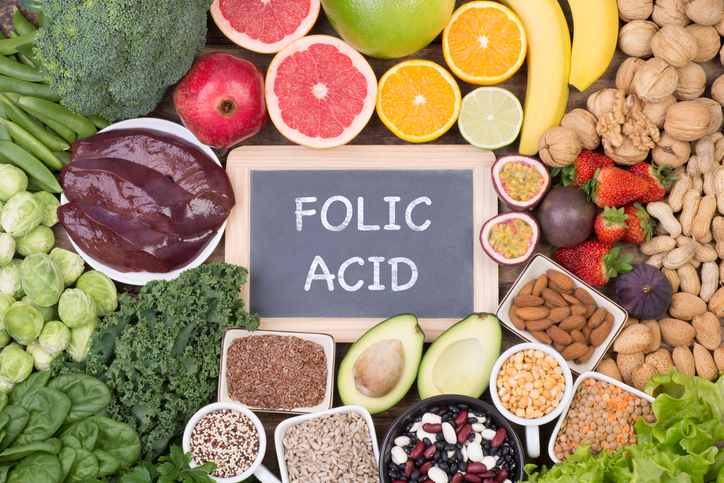
Good sources of folic acid include:
Fresh, raw or cooked Brussels sprouts, asparagus, spinach, kale, broccoli, spring beans, green beans, cabbage, cauliflower, okra, lettuce, parsnips, peas and bean sprouts.
Cooked black-eyed beans and chickpeas.
Breakfast cereals (with folic acid added to them).
Liver (note that pregnant women should avoid liver).
Kidneys, yeast and beef extracts.
Brown rice.
To ensure you are getting the amount of folic acid you need, aim to include 2-3 portions of these sources daily.
Moderate amounts of folic acid are also found in foods such as fresh fruit, nuts, cheese, yoghurt, milk, potatoes, bread, brown rice, oats, eggs, salmon and beef.
TOP TIP
Try not to overcook foods containing folic acid. Steam, stir fry or microwave vegetables to prevent them from losing too much folic acid.
If you are deficient in vitamin B12, this can impair the absorption of folic acid and the way it is used in the body.
Vitamin B12 deficiency
It is unusual to have anaemia due to a lack of vitamin B12 in your diet, although strict vegans may be at risk. It is more common to have vitamin B12 deficiency due to a condition called pernicious anaemia or gut conditions leading to problems absorbing food.
You can find out all about the causes from our leaflet called Vitamin B12 Deficiency and Pernicious Anaemia.
Foods containing vitamin B12
The following foods are good sources of vitamin B12. Including these foods regularly in the diet should help to prevent vitamin B12 deficiency:
Liver/liver pâté (note that pregnant women should avoid liver/liver pâté).
Eggs.
Cheese.
Milk.
Meat - for example, beef, lamb and pork.
Fish.
Fortified breakfast cereals.
Marmite®.
Fortified oat, rice and soya milks.
Fortified soya yoghurts.
Fortified spreads.
Fortified yeast extract.
If you are vegan, aim to include foods that are fortified with vitamin B12, at least three times a day. If these foods are not consumed in adequate amounts, the Vegan Society recommends a vitamin B12 supplement of 10 micrograms per day.
Patient picks for Anaemia
Allergies, blood and immune system
Macrocytosis and macrocytic anaemia
Macrocytosis refers to red blood cells which are larger than normal. It does not cause any symptoms in itself.
by Dr Philippa Vincent, MRCGP
Allergies, blood and immune system
Folic acid deficiency
A normal balanced diet contains enough folic acid. However, a folic acid deficiency may cause anaemia and sometimes other symptoms.
by Dr Rosalyn Adleman, MRCGP
Frequently asked questions
What are some general meal ideas to ensure I get enough iron from non-animal sources?
You can combine various plant-based iron sources for your meals. For example, a lentil or chickpea curry with spinach and broccoli would provide iron. Another idea is a stir-fry with kale, nuts, and various beans. Wholemeal bread with a yeast extract spread like Marmite® can also contribute. Remember to include a source of vitamin C, like orange juice or bell peppers, to help with iron absorption.
How can I prepare foods to best preserve their folic acid content?
To preserve folic acid in foods, it's best to use cooking methods that involve less water and shorter cooking times. Steaming, stir-frying, or microwaving vegetables are good ways to prevent them from losing too much folic acid. Avoiding overcooking these foods is key.
Are there specific conditions or types of medications that require a higher dose of folic acid during pregnancy?
Yes, some women require a higher dose of folic acid, usually 5 milligrams on prescription, when planning or during pregnancy. This applies to women with diabetes, those taking anti-epileptic medication, or medication for HIV. A higher dose is also recommended for women who have previously had a pregnancy with a neural tube defect, or if there's a family history of neural tube defects on either the mother's or father's side.
What are common non-dietary causes of iron-deficiency anaemia?
While diet is often a factor, iron-deficiency anaemia can also be caused by various other conditions. These include coeliac disease, or losing blood internally, for example, from the stomach or bowel. It's important for a doctor to investigate and rule out these underlying medical causes before concluding that the anaemia is solely due to insufficient iron intake from diet.
Besides dietary intake, what are other common reasons someone might have a vitamin B12 deficiency?
Beyond dietary intake (which primarily affects strict vegans), a common reason for vitamin B12 deficiency is a condition called pernicious anaemia. This is an autoimmune condition that affects your stomach and prevents you from absorbing vitamin B12 from food. Other gut conditions that interfere with food absorption can also lead to vitamin B12 deficiency.
Further reading and references
- Anaemia - iron deficiency; NICE CKS, August 2024 (UK access only)
- Anaemia - B12 and folate deficiency; NICE CKS, March 2022 (UK access only)
About the author
Updated by

Dr Doug McKechnie, MRCGP
Medical Writer
MA, MBBS, MSc, DRCOG, MRCP(UK), MRCGP(2021), FHEA
Dr Doug McKechnie is an NHS GP working in London. He works full-time clinically and is also the Deputy Lead for the Clinical and Professional Practice module at University College London Medical School.
Authored by
Alexa Evans
BSc (Human Nutrition and Dietetics)
About the reviewerView full bio

Dr Colin Tidy, MRCGP
General Practitioner, Medical Author
MBBS, MRCGP, MRCP (Paediatrics), DCH
Dr Colin Tidy is an NHS Doctor, based in Oxfordshire.
Article history
Article also available in English, German, Spanish, French, Italian, Portuguese, Hindi, Hebrew, Arabic, and Swedish.
Next review due: 16 Dec 2027
18 Jan 2023 | Latest version
21 Jul 2014 | Originally published
Authored by:
Alexa Evans
Join the conversation
Share your thoughts or experiences with others in our patient communities.

Ask, share, connect.
Browse discussions, ask questions, and share experiences across hundreds of health topics.

Feeling unwell?
Assess your symptoms online for free
Sign up to the Patient newsletter
Your weekly dose of clear, trustworthy health advice - written to help you feel informed, confident and in control.
By subscribing you accept our Privacy Policy. You can unsubscribe at any time. We never sell your data.