Makrozytose und makrozytäre Anämie
Begutachtet von Dr Rosalyn Adleman, MRCGPZuletzt aktualisiert von Dr Philippa Vincent, MRCGPZuletzt aktualisiert 3. Juni 2025
Erfüllt die Anforderungen des Patienten Richtlinien des Patienten
- HerunterladenHerunterladen
- Teilen
- Language
- Diskussion
- Audio-Version
- Zu bevorzugten Quellen bei Google hinzufügen
In dieser Serie:AnämieErnährungspläne für Menschen mit AnämieFolsäuremangelEisenmangelanämieVitamin-B12-Mangel und perniziöse Anämie
Makrozytose bezieht sich auf rote Blutkörperchen, die größer als normal sind. Sie verursacht an sich keine Symptome.
Auf einen Blick
Makrozytose ist, wenn rote Blutkörperchen größer als normal sind.
Es kann ein Zeichen für niedrige Vitamin-B12- oder Folsäurewerte sein.
Makrozytose selbst verursacht keine Symptome, aber makrozytäre Anämie schon.
Symptome der makrozytären Anämie sind Atemnot, Müdigkeit und ein 'pochendes' Herz.
Ein Vitamin-B12-Mangel kann auch Nervensystemprobleme wie Kribbeln verursachen.
Ursachen sind unter anderem bestimmte Medikamente, Alkohol und Mängel an Vitamin B12 oder Folsäure.
Die Behandlung der Makrozytose beinhaltet die Behebung der zugrunde liegenden Ursache oder des Mangels.
Macrocytosis symptoms
You may also find relevant information in our other separate leaflet called What is blood?
Macrocytosis can exist without anaemia. Macrocytosis itself does not cause any symptoms but can be a sign of low levels of other vitamins such as vitamin B12 or folic acid.
Macrocytic anaemia causes the same symptoms as with any other kind of Anämie. In mild macrocytic anaemia you may not get any symptoms. You're more likely to notice symptoms if you are older or have coronary heart disease. Younger people can sometimes be quite anaemic without noticing any problems at all.
Symptoms you may notice include:
Symptoms of Herzinsuffizienz.
Wenn Sie Angina, you may notice your chest pains getting worse.
If your macrocytic anaemia is due to Vitamin-B12-Mangel you may also notice nervous system problems such as pins and needles, numbness, vision changes and unsteadiness. If it is severe, you may also develop depression or confusion. Normally these symptoms only develop if the deficiency is severe and has been untreated for a long time.
If the anaemia is severe, a doctor examining you may notice that you:
Look paler than normal (the nails, eyes and tongue are a good place to check).
Have a bounding pulse (a pulse which feels stronger and more powerful than normal).
Have signs of Herzinsuffizienz.
Have a heart murmur between the left second and third ribs when the heart is contracting (a pulmonary flow murmur).
In mild-moderate anaemia there are often very few signs on examination.
Causes of macrocytosis
Macrocytosis can be caused by:
Medicines such as Azathioprin.
Depending on the severity and how long the person has had the condition, some of these causes can eventually lead to anaemia.
There are two types of macrocytic anaemia:
Megaloblastic macrocytic anaemia
Non-megaloblastic macrocytic anaemia
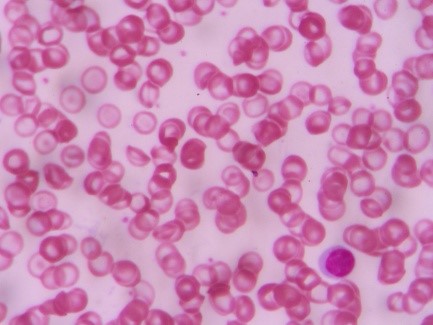
The difference is in the presence or absence of megaloblasts. These are large, abnormally developed red blood cells visible when a pathologist uses a microscope to look at a slide smeared with blood.
Causes of megaloblastic macrocytic anaemia include:
Serum B12 deficiency (when associated with a low haemoglobin, this is often called perniziöse Anämie, although actually pernicious anaemia is only one of the causes of vitamin B12 deficiency).
Surgery that removes a part of the stomach (gastrectomy) or part of the gut called the ileum (ileal resection), causing difficulty in absorbing vitamin B12 from the diet.
Infection of the gut with germs (bacteria) or parasites (organisms that live in the body and obtain nutrition from it).
Deficiency of vitamin B12 in the diet - this can happen in strict vegans but even then it is rare.
Folsäuremangel. This can be due to:
Not eating enough foods containing folic acid. Foods high in folic acid include broccoli, Brussels sprouts, asparagus, peas, chickpeas and brown rice.
Medical conditions affecting the gut - for example, Zöliakie.
Inflammatory conditions such as Morbus Crohn.
Some blood disorders can lead to a very high turnover of red blood cells - for example, Sichelzellenanämie und Thalassämie. Normal amounts of folic acid in the diet may then not be enough and supplements may need to be taken.
Some medicines interfere with folic acid. Therefore, you may need to take extra folic acid whilst taking certain medicines. These include Colestyramin, Sulfasalazin, Methotrexat and some anticonvulsant medicines used to treat epilepsy. If you need dialysis then you may be recommended to take folic acid supplements.
Causes of non-megaloblastic macrocytic anaemia include:
Alcohol use over the recommended limits.
Lebererkrankung.
Severe underactivity of the thyroid gland (Hypothyreose).
An increase in the number of immature red blood cells called reticulocytes (reticulocytosis).
Other blood disorders including myeloid leukaemia, aplastic anaemia (a condition affecting the bone marrow) and some other rare blood conditions.
Medicines that affect how the genetic material DNA is produced, such as azathioprine.
How are macrocytosis and macrocytic anaemia diagnosed?
These conditions will show up on a blood film. Your doctor may have arranged this test as part of a routine check or because you have felt unwell (see the section on symptoms, above). Once the condition has been diagnosed, further tests will be arranged to find the cause. You may also need tests to check whether you have any conditions that people who have macrocytosis or macrocytic anaemia frequently develop.
Die Tests können umfassen:
A reticulocyte count. This may be raised if there is a rapid turnover of red blood cells - for example, in conditions in which red cells are destroyed, such as haemolytic anaemia. If you're found to have such a condition, more tests (for example, a Coombs' test) may be needed to investigate the cause.
The level of folate in your blood.
The level of serum B12 in your blood.
Tests of your liver function.
Checks to rule out conditions which people with some types of macrocytic anaemia develop, such as diabetes, underactive thyroid gland, and homocystinuria (a condition in which a chemical called homocysteine and related substances build up in the blood and urine).
If some rare blood disorders are suspected, you may need a bone marrow examination, but this is the exception rather than the rule.
Other tests may be needed if your doctor suspects other conditions need to be ruled out.
Macrocytosis treatment
If it has been identified that your macrocytosis is caused by a deficiency, this will need to be treated, whether or not you have anaemia.
You will also need treatment for the condition that caused the deficiency in the first place.
Traditionally with vitamin B12 deficiency, people were offered an injectable form of the vitamin called hydroxocobalamin. Your practice nurse will usually inject this into a muscle every 3-6 months.
However, it is more common nowadays for you to be prescribed B12 tablets (cyanocobalamin) first. These do not work as well as the injections if the B12 deficiency is due to difficulties with absorption but can work well where vitamin B12 deficiency is due to a lack of vitamin B12 in the diet. This used to be rare but is becoming more common.
If you have folic acid deficiency you will be advised to take Folsäuretabletten. 5 mg daily for four months is usually advised.
If you have vitamin B12 and folic acid deficiency together, it's important that the B12 deficiency be treated first, otherwise, a rare but serious spinal cord complication (subacute combined degeneration of the cord) can occur.
Treatment of the underlying cause will depend on the condition. For example, if your deficiency was due to excessive use of alcohol, this will need to be addressed.
Patientenauswahl für Anämie
Allergien, Blut und Immunsystem
Sichelzellenanämie
Sichelzellanämie (SCD) ist eine ernsthafte, vererbte Erkrankung, die das Blut und verschiedene Organe im Körper betrifft. Sie beeinflusst die roten Blutkörperchen und verursacht Episoden des 'Sichelzellens', die Schmerzen und andere Symptome hervorrufen. Zwischen den Sichelzell-Episoden sind Menschen mit SCD in der Regel gesund. Langzeitkomplikationen können auftreten. Eine gute Behandlung, die früh im Leben beginnt, kann Komplikationen verhindern. Daher wird eine frühzeitige Diagnose und spezialisierte Behandlung für SCD empfohlen. Das Sichelzell-Gen ist nicht dasselbe wie Sichelzellanämie.
von Dr. Hayley Willacy, FRCGP

Allergien, Blut und Immunsystem
Ernährungspläne für Menschen mit Anämie
Wenn Sie an Anämie leiden, können Sie möglicherweise Ihre Ernährung umstellen, um Lebensmittel einzuschließen, die mehr von den Vitaminen oder Mineralstoffen enthalten, an denen es Ihnen mangelt. Die Art der Lebensmittel, die Sie essen sollten, hängt davon ab, ob Ihnen Eisen, Vitamin B12 oder Folsäure fehlt.
von Dr. Doug McKechnie, MRCGP
Häufig gestellte Fragen
Sind Makrozyten gefährlich?
Makrozytose, was bedeutet, dass man größere als normale rote Blutkörperchen (Makrozyten) hat, ist an sich nicht gefährlich. Es ist ein Anzeichen dafür, dass es eine zugrunde liegende Erkrankung geben könnte, die untersucht werden muss, wie z.B. niedrige Werte von Vitaminen wie B12 oder Folsäure. Die Gefahr kommt von der zugrunde liegenden Ursache oder wenn die Makrozytose zu einer makrozytären Anämie führt.
Was ist megaloblastische makrozytäre Anämie?
Megaloblastäre makrozytäre Anämie ist eine spezifische Art der makrozytären Anämie. Sie zeichnet sich durch das Vorhandensein von 'Megaloblasten' aus, die abnorm entwickelte große rote Blutkörperchen sind. Diese Zellen können gesehen werden, wenn ein Pathologe eine Blutprobe unter einem Mikroskop untersucht. Häufige Ursachen sind Vitamin-B12-Mangel (manchmal als perniziöse Anämie bezeichnet) und Folsäuremangel.
Wie überprüfen Ärzte auf Erkrankungen im Zusammenhang mit Makrozytose?
Sobald eine Makrozytose oder makrozytäre Anämie durch einen Blutausstrich diagnostiziert wurde, wird Ihr Arzt weitere Tests anordnen, um die Ursache zu finden und auf damit verbundene Erkrankungen zu prüfen. Diese Tests können die Messung der Folsäure- und Serum-B12-Spiegel in Ihrem Blut, die Überprüfung der Leberfunktion und den Ausschluss von Erkrankungen wie Diabetes, einer Schilddrüsenunterfunktion oder Homocystinurie umfassen. In seltenen Fällen, wenn bestimmte Blutkrankheiten vermutet werden, könnte eine Knochenmarkuntersuchung erforderlich sein.
Weiterführende Literatur und Referenzen
- Anämie - B12- und Folsäuremangel; NICE CKS, März 2024 (nur Zugang in Großbritannien)
Über den AutorVollständige Biografie anzeigen

Dr Philippa Vincent, MRCGP
Allgemeinmediziner, Medizinischer Autor
MB BS, Bsc, MRCGP (2000), DCH, DFSRH, DRCOG
Dr Philippa Vincent ist ein NHS-Arzt, der in Nordlondon arbeitet.
Über den RezensentenVollständige Biografie anzeigen

Dr Rosalyn Adleman, MRCGP
MRCGP
Dr. Rosalyn Adleman ist eine NHS-Ärztin, die in Nordlondon arbeitet.
Artikelverlauf
Die Informationen auf dieser Seite wurden von qualifizierten Klinikern verfasst und begutachtet.
Artikel auch verfügbar in Englisch, Deutsch, Spanisch, Französisch, Italienisch, Portugiesisch, Hindi, Hebräisch, Arabisch, und Schwedisch.
Nächste Überprüfung fällig: 2. Jun. 2028
3. Juni 2025 | Neueste Version
9 Jul 2017 | Ursprünglich veröffentlicht

Fragen, teilen, verbinden.
Durchsuchen Sie Diskussionen, stellen Sie Fragen und teilen Sie Erfahrungen zu Hunderten von Gesundheitsthemen.

Fühlen Sie sich unwohl?
Bewerten Sie Ihre Symptome online kostenlos
Abonnieren Sie den Patienten-Newsletter
Ihre wöchentliche Dosis klarer, vertrauenswürdiger Gesundheitsberatung - geschrieben, um Ihnen zu helfen, sich informiert, selbstbewusst und in Kontrolle zu fühlen.
Durch das Abonnieren akzeptieren Sie unsere Datenschutzrichtlinie. Sie können sich jederzeit abmelden. Wir verkaufen Ihre Daten niemals.