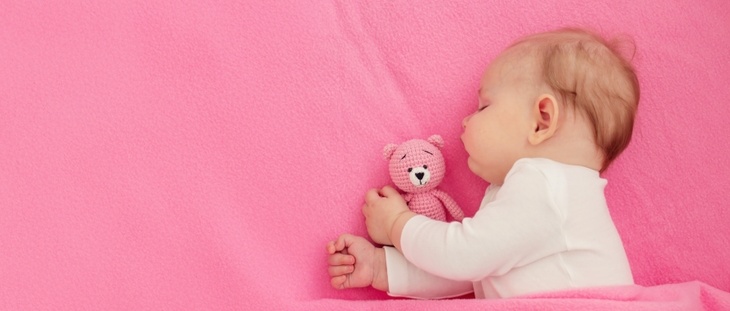
Everything you need to know about baby eczema
Peer reviewed by Dr Colin Tidy, MRCGPLast updated by Lawrence HigginsLast updated 17 Jun 2026
Meets Patient’s editorial guidelines
- DownloadDownload
- Share
- Language
- Discussion
- Audio Version
- Add to preferred sources on Google
Babies get all sorts of rashes and skin complaints, from nappy rash to cradle cap. Most are harmless and will disappear over time with the right care, but eczema can be a persistent problem. So what is baby eczema and how do you treat it?
Around 1 in 5 newborn babies get eczema, a skin condition that usually appears as an itchy red or brown patch.
Dr Derrick Phillips, consultant dermatologist and British Skin Foundation spokesperson, says eczema happens due to an impairment of the skin barrier function affecting its ability to retain moisture, leading to dryness and irritation.
"Baby eczema typically manifests as dry, red patches on the baby's cheeks. There may be areas of broken skin and scratch marks," he says. "The presence of yellow crusting is a sign of infection and usually requires a course of cream or oral antibiotics. Over time, the eczema may spread to other areas, including the torso, hands, in front of the elbows, and behind the knees. Nappy rash can also develop."
Why do babies get eczema?
Eczema is a complex condition. It can be genetic, which means your baby may be more likely to have eczema if other family members have it. "It is also more common in families with a strong history of eczema, asthma, hay fever, and food allergies," says Phillips.
However, eczema also involves an overactive immune response to environmental factors such as heat, soap, pollen, or other irritants, which can cause flare-ups. Around 1 in 2 people with eczema have an additional genetic element - a difference in a skin protein called filaggrin - which leads to further problems in the skin barrier.
What’s the link between baby eczema and food allergies?
Food allergies can happen in any baby. Although babies with eczema have a slightly higher risk of allergy, lots of babies with eczema have no other food or cow’s milk allergies.
Cows' milk allergy, also called cows' milk protein allergy, is common in childhood. One of the symptoms of a cow’s milk protein allergy can be an itchy rash. Exposure to cow's milk may act as a trigger for eczema if a baby is allergic to it.
However, it’s possible for a child to have both a cow's milk allergy and eczema as two separate conditions that need to be treated as such. If you think your baby has a cow’s milk allergy, you should speak to your doctor.
How can you manage baby eczema?
Baby eczema is often managed with a type of moisturiser called an emollient. "Emollients soothe the skin by producing an oily layer that traps water beneath, locking in moisture and repairing the skin barrier," says Phillips.
"Hot baths and soaps should be avoided as they strip natural oils away from the skin, causing further irritation," he adds.
"Bath oils and soap substitutes should be used instead. Bath oils are added to bath water, and both clean the skin and coat it with a film of oil trapping moisture beneath. Soap substitutes will clean the skin without causing dryness. They do not foam and may take some getting used to."
However, it is important to use bath oils or soap substitutes that are suitable for a baby’s skin, which is extra sensitive.
"Some cases of baby eczema will not respond to emollients alone and will need to be managed with the assistance of your family doctor or dermatologist," says Phillips. "Short courses of low potency steroid creams may be required to soothe the skin and reduce the inflammation."
Which creams or lotions are appropriate for baby eczema?
It is important to consult your dermatologist, paediatrician, or family doctor before trying new products.
Ointments are heavy, greasy moisturisers and are the most effective at locking in moisture and repairing the skin barrier. "These contain less water than other types of moisturiser, and as a result contain fewer preservatives. Ointments can also be used as a barrier treatment for nappy dermatitis," says Phillips.
Creams and lotions have a higher water content than ointments, Phillips explains. This means they are absorbed more rapidly and require more frequent application.
Do babies grow out of eczema?
It is impossible to predict whether your baby will have eczema for life or not. Currently, there is no cure for eczema. For many babies with eczema, the condition will resolve, but in some babies the condition will be lifelong.
Eczema is a long lasting (chronic) condition with periods of flare and periods of remission, and most people with a history of eczema still have problems with dry and itchy skin.
If your baby’s eczema is weepy, has a gold crust or is hot or red, the skin may be infected and they may need antibiotics.
Your doctor may refer your baby to a dermatologist if standard treatments are not working as well as they should be.
Patient picks for Eczema
Skin, nail and hair health
Which natural remedies help soothe eczema?
Itchy and sore, eczema can be very unpleasant - and often, unbearable. Although there is no cure for eczema, conventional treatments like creams and ointments can help relieve dry, irritated skin. However, some natural products - like coconut oil - may provide some much-needed relief too.
by Lydia Smith
Skin, nail and hair health
Eczema management plans: do they help control your eczema?
Poorly controlled eczema can make you or your child feel miserable, generally unwell, grumpy and uncomfortable, even if you don't have a flare-up. So it's not surprising that we're always hunting for something that will help relieve both flare-ups and day-to-day misery - and an eczema management plan could help do just that.
by Dr Sarah Jarvis
About the authorView full bio
Updated by

Lawrence Higgins
Managing editor
BSc, Post Graduate Diploma
Lawrence has worked as both Managing Editor of Patient.info and a contributing author. He is also a member of the Guild of Health Writers.
Authored by

Lydia Smith
Feature writer
BA, MA, MSc
Lydia Smith is an award-winning journalist and feature writer who has written extensively on women's health and mental health. She is currently studying for an MSc in psychology.
About the reviewerView full bio

Dr Colin Tidy, MRCGP
General Practitioner, Medical Author
MBBS, MRCGP, MRCP (Paediatrics), DCH
Dr Colin Tidy is an NHS Doctor, based in Oxfordshire.
Article history
Article also available in English, German, Spanish, French, Italian, Portuguese, Hindi, Hebrew, Arabic, and Swedish.
Next review due: 18 Jun 2029
17 Jun 2026 | Latest version
4 May 2023 | Originally published
Authored by:
Lydia Smith
Join the conversation
Share your thoughts or experiences with others in our patient communities.

Ask, share, connect.
Browse discussions, ask questions, and share experiences across hundreds of health topics.

Feeling unwell?
Assess your symptoms online for free
Sign up to the Patient newsletter
Your weekly dose of clear, trustworthy health advice - written to help you feel informed, confident and in control.
By subscribing you accept our Privacy Policy. You can unsubscribe at any time. We never sell your data.