
Was tun, wenn Sie ein infiziertes eingewachsenes Haar haben
Begutachtet von Dr Krishna Vakharia, MRCGPAuthored by Matt BinnyUrsprünglich veröffentlicht 4. Apr 2023
Erfüllt die Anforderungen des Patienten Richtlinien des Patienten
- HerunterladenHerunterladen
- Teilen
- Language
- Diskussion
- Audio-Version
- Add to preferred sources on Google
Eingewachsene Haare treten auf, wenn das Haar in die Haut wächst, anstatt nach außen zu wachsen. Sie erscheinen oft als kleine rote Beulen, die manchmal jucken. Wenn ein eingewachsenes Haar jedoch infiziert wird, kann es sehr schmerzhaft sein und bei unbehandelter Behandlung zu schwerwiegenderen Problemen führen. Was sollten Sie also tun, wenn Sie ein infiziertes eingewachsenes Haar haben?
In diesem Artikel:
Video picks for Hair and scalp
Why do we get ingrown hairs?
An ingrown hair happens when people shave or remove hair, and the new one grows and curls back into the skin. Instead of growing from the follicle through the skin, the hair grows inwards.
There are several reasons why this happens. Sometimes dead skin clogs a follicle and forces the hair inwards, or the end of a cut hair can pierce your skin and begin to grow the wrong way.
Ingrown hairs mainly happen on parts of the body where you shave - such as the face and neck, legs, pubic region and armpits. If you shave regularly, you're more likely to get ingrown and infected ingrown hairs1. This is because shaving and waxing sharpen hair that can then get trapped in the skin. People with coarse or curly hair are also more prone to ingrown hairs, as these hair types tend to curl back rather than outwards.
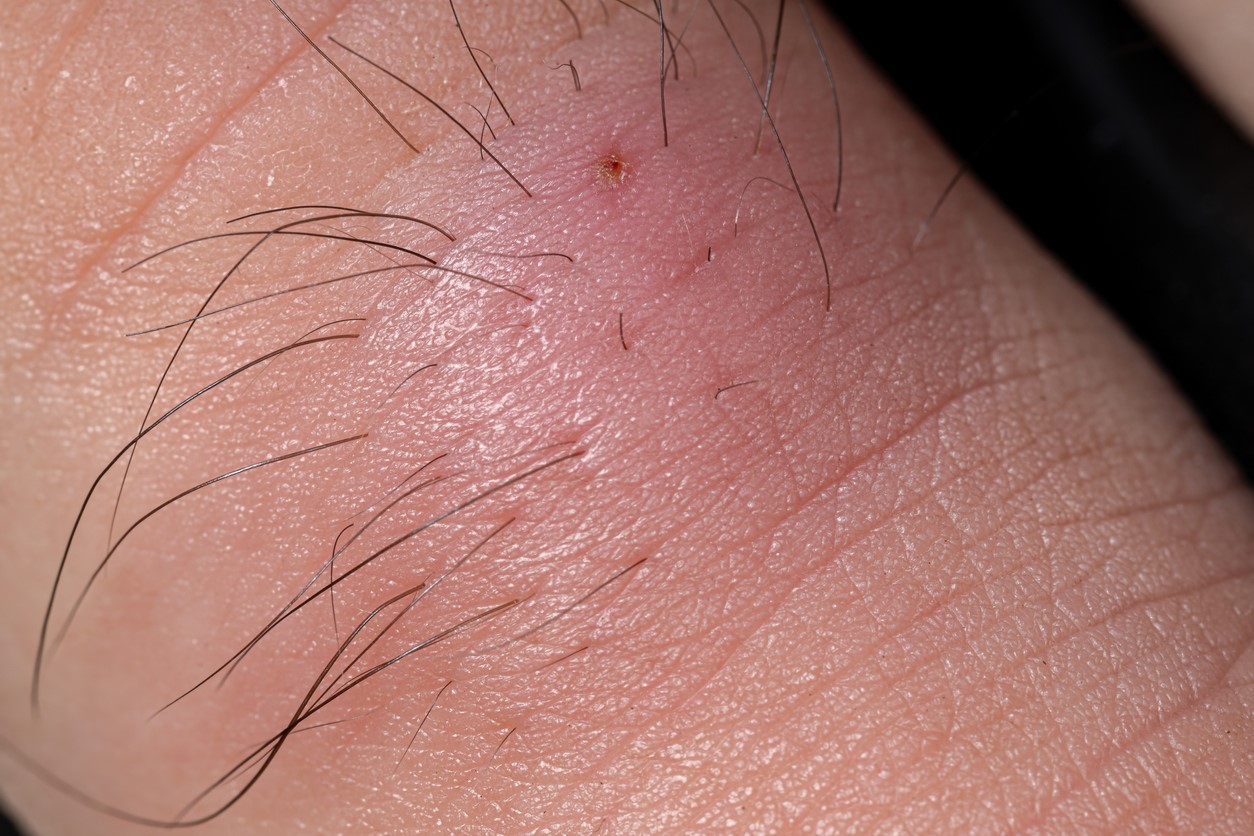
Ingrown hair swelling and redness
Lesen Sie unten weiter
How to tell if your ingrown hair is infected?
An ingrown hair looks like an everyday spot or skin bump, varying in size and redness, and it may have swelling. Most ingrown hairs go away on their own if they're left alone and have time to heal. An infected ingrown hair looks similar, but there tends to be more swelling, redness and signs of pus.
Infected ingrown hairs can also be sore to touch. Mild infections are less noticeable and usually clear up without treatment. If you have a more serious infection that doesn't clear up in a few days or worsens, you should contact your doctor.
What's the difference between ingrown hairs and infected ingrown hairs?
Signs of ingrown hair
Small, round skin bumps.
Slightly itchy and sensitive.
Hair is sometimes visible underneath the skin.
Signs of an infected ingrown hair:
Rötung und Schwellung.
Pain and irritation.
The skin around the bump may feel warm or hot.
Bumps may have a pus-filled head.
How long does an ingrown hair infection last?
Zurück zum InhaltIngrown hairs tend to cure themselves in a few days but this can take longer if you pick, scratch, or interfere with the healing process in any other way.
Infected ingrown hairs take a bit longer to heal as your body is busy helping the ingrown hair exit the skin while fighting the infection. But you should see signs of improvement after a few days.
It’s important that you don’t miss any signs of a severe infection. Speak to your doctor if you have redness that is spreading, the swelling is increasing, your pain is getting worse, or you develop a fever, as these are all signs of a worsening infection.
Lesen Sie unten weiter
Should you pop an infected ingrown hair?
Zurück zum InhaltYou should treat ingrown hairs with caution. Do not pop them - especially those with a pus-filled head as it can lead to infection and scarring. If you have an infected ingrown hair, picking at it risks spreading and worsening the infection.
Infected ingrown hair treatment
Zurück zum InhaltRegular ingrown hairs or mildly infected ingrown hairs can be left alone until the condition resolves. It also helps if you don't shave the area or try any other type of hair removal method. However, speak to your doctor if you experience any pain, swelling, heat or feverish symptoms around an ingrown hair.
Medical treatment
If an ingrown hair becomes infected, your doctor may treat it by:
Prescribing antibiotic medication or creams if you develop more severe ingrown hair issues such as cysts or folliculitis.
Giving you a steroid cream if swelling or irritation occurs.
Removing the hair with a surgical blade or sterile needle.
Sending you to the emergency department in hospital if the infection is spreading or there is an abscess that needs lancing.
Hausmittel
There are ways you can treat infected ingrown hairs at home to help heal and soothe the affected area.
Dazu gehören:
Keeping the area clean by using small circular motions around the area and surrounding skin to prevent worse or prolonged infection.
Applying anti-bacterial ointment such as tea tree oil to help the infection and ensure it doesn't get worse.
Using over-the-counter products to relieve skin irritation and itching.
Lesen Sie unten weiter
How to prevent ingrown hairs
Zurück zum InhaltKnowing how to treat and prevent ingrown hairs helps you avoid the hassle it causes and more severe concerns like an infection.
You can prevent ingrown hairs when shaving by:
Using warm water or shaving cream/gel to wet your skin when shaving.
Removing dead skin cells or moisturising if your skin is dry before shaving.
Not shaving too close to your skin.
Shaving in the direction your hair is growing.
Using a sharp razor and rinse after every stroke.
Using aftershave or lotion to soothe and clean the area.
Using alternative hair removal methods such as laser hair removal, chemical hair removal, or electric clippers.
You can't guarantee that these methods will prevent ingrown hairs, but they may reduce the likelihood of them developing and improve your skin's health overall.
Weiterführende Lektüre
Zurück zum InhaltPatient picks for Hair and scalp

Haut-, Nagel- und Haargesundheit
Hilft Rosmarinöl wirklich beim Haarwachstum?
Wir sind stets auf der Suche nach dem neuesten Wundermittel für die Gesundheit – vor allem, wenn es günstig ist und leicht in der Stadt erhältlich ist. Und TikTok ist voll von Behauptungen, dass Rosmarinöl ein Mittel für schnelles Haarwachstum ist. Aber gibt es Beweise dafür, dass es wirkt?
von Victoria Raw
Haut-, Nagel- und Haargesundheit
Können Vitamine wirklich Haarausfall verhindern?
In der Gesundheits- und Schönheitsbranche sind Vitaminpräparate zur Vorbeugung von Haarausfall und Förderung des Haarwachstums beliebt. Können Vitamine eine gute Behandlungsmöglichkeit sein? Welche Vitamine sind am besten durch wissenschaftliche Belege unterstützt?
von Lynn Stephen
Lesen Sie unten weiter
About the authorView full bio

Matt Binny
Feature-Autorin
BA Angewandte Medien
About the reviewerView full bio

Dr Krishna Vakharia, MRCGP
Chief Medical Officer for Health, Optum UK
MBChB, MRCGP(2013), BMedSci (hons), DFSRH, DRCOG, PGDipDerm (Distn)
Dr. Krishna Vakharia ist eine NHS-Hausärztin. Sie ist auch regelmäßige Prüferin für das postgraduale Diplom in Praktischer Dermatologie an der Cardiff University und zudem Chief Medical Officer für Gesundheit bei Optum UK.
Artikelverlauf
Die Informationen auf dieser Seite werden von qualifizierten Klinikern begutachtet.
Nächste Überprüfung fällig: 2. Mai 2027
4. Apr 2023 | Ursprünglich veröffentlicht
Verfasst von:
Matt BinnyBegutachtet von
Dr Krishna Vakharia, MRCGP

Fragen, teilen, verbinden.
Durchsuchen Sie Diskussionen, stellen Sie Fragen und teilen Sie Erfahrungen zu Hunderten von Gesundheitsthemen.

Fühlen Sie sich unwohl?
Bewerten Sie Ihre Symptome online kostenlos
Abonnieren Sie den Patienten-Newsletter
Ihre wöchentliche Dosis klarer, vertrauenswürdiger Gesundheitsberatung - geschrieben, um Ihnen zu helfen, sich informiert, selbstbewusst und in Kontrolle zu fühlen.
By subscribing you accept our Datenschutzrichtlinie. Sie können sich jederzeit abmelden. Wir verkaufen Ihre Daten niemals.