
How do I know if my child is struggling with their mental health, or if it’s just part of growing up?
Peer reviewed by Dr Colin Tidy, MRCGPAuthored by Babalwa Madikazi, Head of Children and Young People Psychological Therapies at OnebrightOriginally published 6 Feb 2026
Erfüllt die Anforderungen des Patienten redaktionelle Richtlinien
- HerunterladenHerunterladen
- Teilen Sie
- Sprache
- Diskussion
Childhood and adolescence are critical stages of life for mental health. This is a time of rapid growth and brain development. Young people are rapidly learning social and emotional skills that shape their future ability to learn, grow, and adapt to different situations in life.
In diesem Artikel:
Lesen Sie unten weiter
Understanding mental health in children and young people
Like adults, at times children and young people experience overwhelming emotions such as low mood, anxiety, irritability, anger, etc., as well as challenging behaviours.
Some may find it occasionally challenging to sit still, pay attention, or interact with others. In most cases, these are just typical developmental phases.
However, distinguishing between challenging behaviours and emotions that are a part of normal development and those that may be a cause for concern can be hard. As a result, many children who could be helped by treatment don't get the help they need.
The importance of early intervention
Research has found that experiencing mental health symptoms before the age of 14 and even as young as five, were predictive of mental health issues well into adulthood.
Early recognition and early intervention can significantly improve outcomes for children experiencing mental health issues, leading to better long-term prognosis and a happier life.
Identifying and addressing mental health concerns during the formative years can help provide some much-needed skills and strategies to carry with them throughout their lives and mitigate the likelihood of more severe issues emerging later in life.
Consider seeking help if your child’s behaviour or emotions last for weeks or longer, cause distress for your child or your family, or interfere with your child’s functioning at school, at home, or with friends. Seek crisis help if your child engages in unsafe behaviour or talk about wanting to hurt themselves or someone else.
Common mental health issues in children
Back to contents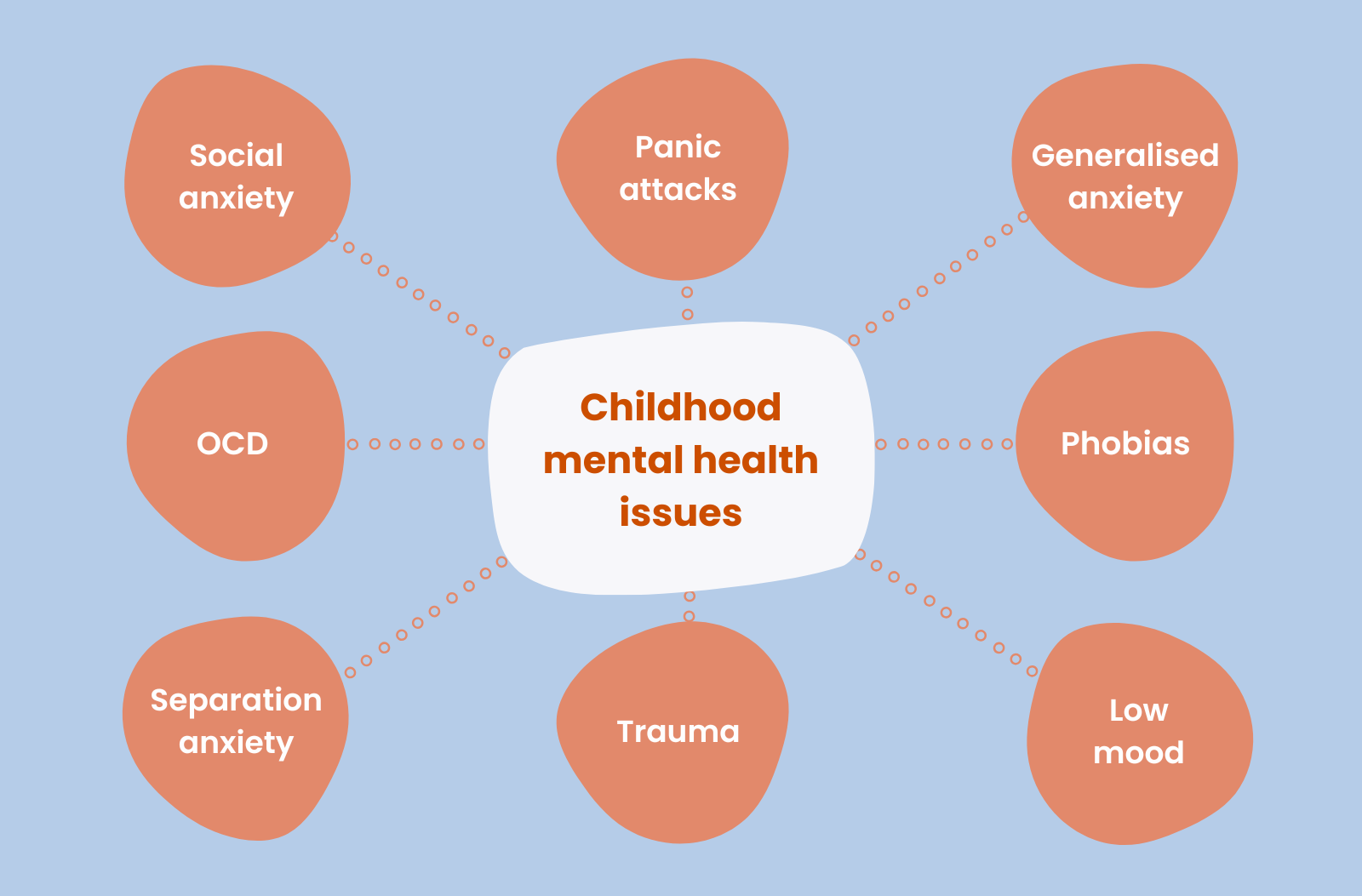
Common childhood mental issues deeper than normal developmental changes include:
Social anxiety: A fear of being judged or embarrassed in social situations, which can cause children to avoid places such as school and worry about saying or doing something wrong.
Separation anxiety: An intense fear of being away from a caregiver, leading children to avoid separation and worry about harm, getting lost, or being unable to cope without their parent.
Generalised anxiety: Excessive worry about many everyday things, often with physical symptoms - such as headaches or stomach aches - sleep issues, and frequent reassurance-seeking when feeling uncertain.
Panic attacks: A sudden feeling of intense fear and physical symptoms. Typically affects adolescence and early adulthood. Adolescents with panic disorder are at greater chance of a concurring depression.
OCD: Involves unwanted, repetitive thoughts (obsessions) and repetitive behaviours or mental rituals (compulsions) that a person feels driven to do to reduce anxiety or feel “just right.”
Trauma: Exposure to a very frightening or harmful event, which in children may show through play, drawings, nightmares, impulsive behaviour, and changes in emotions or development.
Low mood: Low mood in children and adolescents can show as irritability, loss of interest in activities, difficulty concentrating, and a drop in school performance or trouble completing work.
Phobias: Intense, ongoing fears of specific things or situations - for example, heights, animals, injections - that are much stronger than usual for a child’s age and interfere with daily life.
In a YoungMinds survey, 75 per cent of parents said that their child’s mental health had deteriorated while waiting for support from Child and Adolescent Mental Health Services (CAMHS).
Lesen Sie unten weiter
How to support your child
Back to contents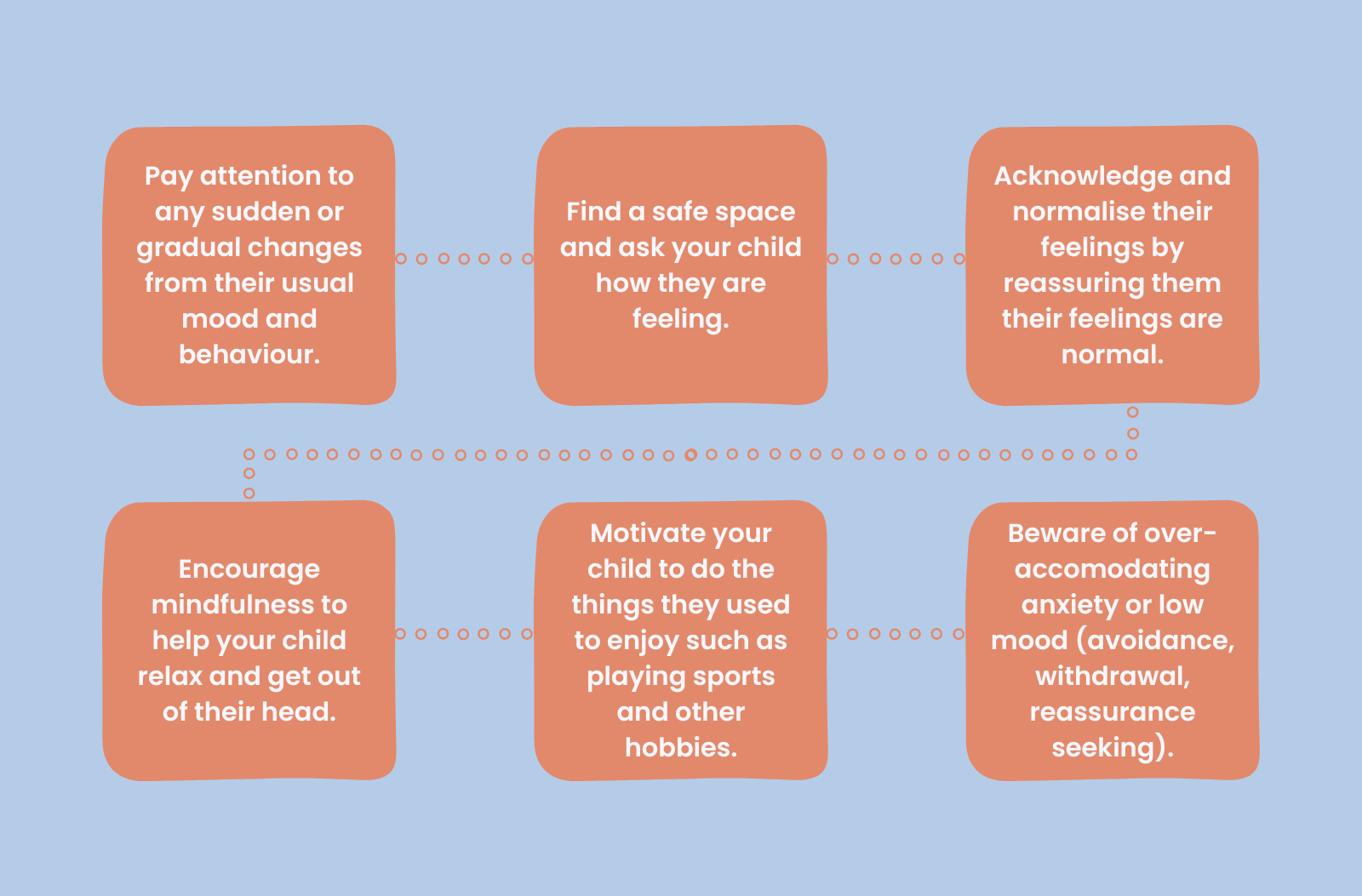
Encourage your child to engage in positive activities to prevent isolating themselves
Positive activities such as exercise, hobbies, connecting with others, often provide a sense of pleasure and achievement.
Activities give a child something to look forward to, can help to distract them from their worries, and more importantly, support their recovery and build their confidence.
Importance of structure and routine
Resetting your child’s biological clock - sleeping and waking up time, going to school and engaging in day-to-day activities is key to improving their overall wellbeing.
Suchen Sie professionelle Unterstützung
Right evidence-based interventions at the right time are essential for quick recovery and return to normal life. Some children and young people will need professional or specialised help at some point in their lives, and this typically includes seeing a therapist or psychiatrist.
If you are concerned about your child’s mental health, it is crucial to seek professional guidance promptly. Speaking to your GP is the first step to accessing mental health services and for general advice regarding treatment options.
However, unprecedented demand for mental health services in recent years has resulted in a huge strain on the healthcare system, making prevention and early intervention more difficult. The cycle of poor mental health creates a significant burden for children and young people and their families.
Children and young people who receive effective evidence-based care at the right time to tackle the issue head-on before it gets worse are more likely to recover and return to full functioning (Early Intervention Foundation, 2023).
The benefits of Cognitive Behaviour Therapy (CBT) in managing mental health
Back to contentsCBT is an evidence-based talking therapy recommended by the National Institute for Clinical Excellence (NICE) as first line treatment for the treatment of childhood mental health issues including anxiety disorders, depression, and trauma.
CBT helps identify the connection between thoughts, feelings, and behaviours that keep the issue going. It helps your child to identify triggers for their anxiety or low mood and teach them strategies to face anxiety provoking situations.
For children and young people, this means a child receives effective and targeted treatment to enhance their natural growth and development, improve quality of life, and enjoy greater resilience as adults.
Addressing mental health concerns early in their journey to better mental health, enables children and young people to build resilience into adulthood.
Patient picks for Mental health and behaviour

Die Gesundheit der Kinder
Wie Sie Ihrem Kind helfen können, Prüfungsstress zu bewältigen
Die Prüfungszeit ist eine stressige Zeit. Junge Menschen, die ihre SATs, GCSEs, A-Levels oder Universitätsprüfungen ablegen, fühlen sich häufig überfordert und haben Angst. Auch für Ihr Kind kann es sehr schwer sein, den Stress bei den Prüfungen mitzuerleben. Es gibt jedoch Maßnahmen, die Sie ergreifen können, um ihnen bei der Bewältigung zu helfen.
von Lydia Smith

Die Gesundheit der Kinder
Psychische Gesundheit von Studenten: Woran Sie erkennen, ob Ihr Kind an der Universität depressiv ist
University can be an exciting time in a young person's life - for many it marks the first step into independent living, and a time to explore new opportunities. However, this exciting life change can also come with challenges, both physical and emotional.
von Lynn Stephen
Lesen Sie unten weiter
Artikel Geschichte
Die Informationen auf dieser Seite wurden von qualifizierten Klinikern geprüft.
Nächste Überprüfung fällig: 3 Februar 2029
6 Februar 2026 | Ursprünglich veröffentlicht
Verfasst von:
Babalwa Madikazi, Head of Children and Young People Psychological Therapies at Onebright
Peer-Review durch
Dr. Colin Tidy, MRCGP

Fragen, teilen, verbinden.
Stöbern Sie in Diskussionen, stellen Sie Fragen, und tauschen Sie Erfahrungen zu Hunderten von Gesundheitsthemen aus.
Fühlen Sie sich unwohl?
Beurteilen Sie Ihre Symptome online und kostenlos
Melden Sie sich für den Patienten-Newsletter an
Ihre wöchentliche Dosis klarer, vertrauenswürdiger Gesundheitsratschläge – geschrieben, damit Sie sich informiert, sicher und unter Kontrolle fühlen.
Mit Ihrer Anmeldung akzeptieren Sie unsere Datenschutzerklärung. Sie können sich jederzeit abmelden. Wir verkaufen Ihre Daten niemals weiter.