
Alltägliche Aktivitäten, die Rückenschmerzen verursachen können
Begutachtet von Dr Sarah JarvisZuletzt aktualisiert von Gillian HarveyZuletzt aktualisiert 1. Jul 2018
Erfüllt die Anforderungen des Patienten redaktionellen Richtlinien
- HerunterladenHerunterladen
- Teilen
- Language
- Diskussion
- Audio-Version
- Zu bevorzugten Quellen bei Google hinzufügen
Die meisten von uns haben schon einmal einen stechenden Schmerz im unteren Rücken gespürt, wenn wir etwas zu Schweres getragen haben, oder ein dumpfes Ziehen in den Schultern, wenn wir zu lange am Computer gesessen haben. Für die meisten ist dieser Schmerz nur vorübergehend; doch er erinnert uns daran, dass einige unserer Aktivitäten unserem Rücken schaden könnten. Wie können wir also unseren Rücken vor Schäden schützen?
Unfortunately, the fact is that some of us may be genetically disposed to develop a schlechten Rücken.
"There are a lot of variables that contribute to whether you end up with back pain," explains Dr Moein Tavakkoli, back pain specialist from The London Spine Clinic. "One is a genetic predisposition. There are people who have very good posture but end up with back pain, and others who have poor posture but never experience back pain."
However, despite the fact we may be genetically inclined to develop problems, there are ways in which we can reduce the risk. We look at the everyday ways you could be harming your back and how to avoid unintentional damage.
Repetitive movement
We all know that lifting something heavy incorrectly could be damaging. But did you know almost any repetitive movement or position could have a negative impact on our back health? Whether it's sitting at the computer, hunching over your smartphone or carrying out a physical action, repeating the same movement can create an imbalance and lead to bad posture.
"With any repetitive task, you will build up muscle disproportionately," says Dr Stefaan Vossen, clinical director of Core Clinics. "This can alter posture and lead to back pain."
"Poor posture changes the way that you carry weight on your spine," explains Tavakkoli. "By leaning forward, for example, you are offloading the elements on the back of the spine to the front of the spine. You are compressing the discs more frequently and, as a result, you may experience earlier-onset disc degeneration.”
The problem is, as we all know, the solution may not be simple - we can't necessarily quit our job just because it involves frequent bending or eight hours of desk work a day. However, according to Vossen we can mitigate the problem by using targeted exercise.
"What you need to do is develop an exercise regime that compensates for your repetitive movement," he explains. “So, if you do a lot of stooping, you need to build core strength and work on your abdominal wall. If you do a lot of standing, you need to do a lot of running or swimming. These are things that are essentially the opposite of your repetitive movement."
Excess stress
In addition to physical stress, emotional stress can also wreak havoc on our health, including our back.
"Many of us develop a lot of stress in our working day, but there's no physical response to it," explains Vossen. "All the adrenaline and all the sympathetic responses - for example, increased blood supply to the muscles - are not being put to use. This can cause a number of problems, including Reizdarmsyndrom, which may radiate to the back."
In addition, stress can cause muscle tension, which may throw the back out of alignment.
"When people get stressed, the hip flexors become tight as part of the fight or flight response," explains Vossen. "This tilts the pelvis forward and can cause back pain."
To avoid the build-up of stress in our bodies, it's important to engage in some cardiovascular activity.
"Anything that gets the heart rate up to 75-80% of its maximum is great for burning off those excess chemicals," agrees Vossen.
Rauchen
It's no secret that rauchen is bad for our health. But did you know that smoking can also lead to or exacerbate chronic back pain?
"As well as being associated with stress, smoking reduces the quality of the blood supply to the discs and the joints in your lumbar spine (lower back), thereby causing you to heal less efficiently and deteriorate more rapidly," explains Vossen.
Of course, for many smokers, quitting can be a struggle. However, there is lots of help available. Read our guide to quitting for information on how to access the right support.
Working out
Core strength can be important for supporting your spine and keeping back problems at bay. So it makes sense to strengthen your core through exercise. Unfortunately, when working the core, it can be hard to perform certain exercises correctly and with sufficient precision. This means that the core workout you’ve developed to avoid back problems might actually make back pain more likely.
"People who have done a lot of gym work may develop one group of muscles that is drastically bigger than the other group," agrees Tavakkoli. "So, you develop an unnatural posture. If your core muscle is strong but imbalanced, you can end up leaning forward too much for example."
But rather than quit your core work, it's better to invest in getting it right by joining a class or speaking to a trainer at your local gym.
"Lots of people think they do their exercises right, but it's really hard to get the form right unsupervised. Invest in doing it well," advises Vossen. "Get yourself supervised by someone who will take you through it correctly."
Wiedergabeliste: Back Pain Exercises
3 Videos
Dehnübungen für den unteren Rücken (Sitzroutine)
Lilly Sabri, MHPC
Dehnübungen für den unteren Rücken (Sitzroutine)
Lilly Sabri, MHPC
Lower Back Stretches (Standing Routine)
Lilly Sabri, MHPC
Spinal Stretches
Lilly Sabri, MHPC
Focusing on your back
As with most health problems, back pain is less likely to occur if you are generally fit and healthy. It's easy to focus solely on the area causing us discomfort, but if you want to reduce the risk of back problems, you'd do well to look at your body as a whole.
"As well as focusing on specific activities - for example, reducing bad habits, trying to sit correctly - it's important to consider your overall health and how fit you are," explains Tavakkoli. "Factors such as Fettleibigkeit, bad diet and poor lung function can all raise the risk of back pain."
Everything in moderation
Anyone who's had a bad back has probably been offered advice about moving correctly, avoiding certain footwear or ditching that heavy handbag. But activities that put our back under stress may not be as harmful as we're sometimes led to believe.
"There are a lot of stories about things you should or shouldn't do," explains Vossen. "The reality is that if you have a healthy spine, none of these are relevant as long as you don't do them to excess."
Patientenauswahl für Rückenschmerzen

Knochen, Gelenke und Muskeln
Rückenschmerzen: Sind es Stress oder eine Verletzung?
Pain in the lower back is a very common complaint, with an estimated one third of adults suffering from it each year in the UK. While the pain itself is easily diagnosed, what's causing the problem can be harder to pinpoint. Some back injuries are caused by a specific, easily identifiable event, but others may relate to repetitive movement, poor posture or even stress.
von Gillian Harvey
Knochen, Gelenke und Muskeln
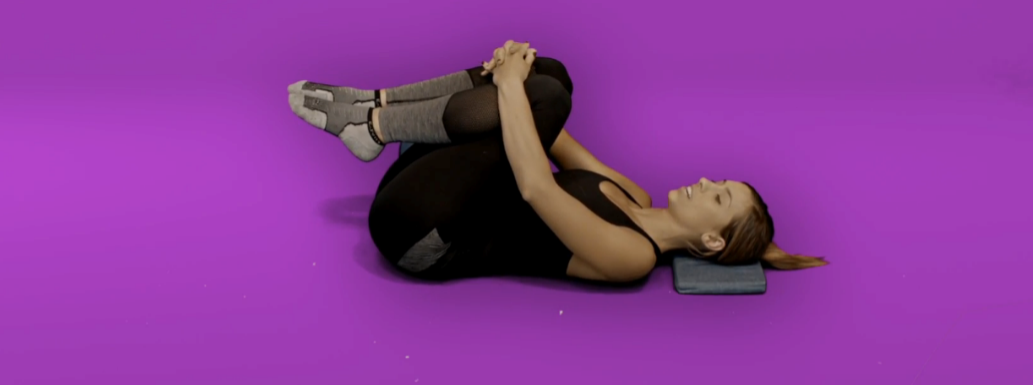
Video: Übungen gegen Rückenschmerzen
Back pain is very common but in most cases is not caused by a serious problem. Most cases of back pain resolve on their own within two weeks, and full recovery is made within four to six weeks.
von Lilly Sabri, MHPC
Über den AutorVollständige Biografie anzeigen

Gillian Harvey
Freiberufliche Autorin
BA (Hons) Englisch
Gillian ist freiberufliche Autorin und Kolumnistin für verschiedene nationale Zeitungen und Zeitschriften.
Über den RezensentenVollständige Biografie anzeigen

Dr. Sarah Jarvis
Klinische Beraterin
MA (Cantab), BM, BCh (Oxon), DRCOG, FRCGP, MBE
Nach ihrer medizinischen Ausbildung in Cambridge und Oxford wurde Dr. Sarah Jarvis MBE Hausärztin.
Artikelverlauf
Die Informationen auf dieser Seite werden von qualifizierten Klinikern begutachtet.
Artikel auch verfügbar in Englisch, Deutsch, Spanisch, Französisch, Italienisch, Portugiesisch, Hindi, Hebräisch, Arabisch, und Schwedisch.
1. Jul 2018 | Neueste Version

Fragen, teilen, verbinden.
Durchsuchen Sie Diskussionen, stellen Sie Fragen und teilen Sie Erfahrungen zu Hunderten von Gesundheitsthemen.

Fühlen Sie sich unwohl?
Bewerten Sie Ihre Symptome online kostenlos
Abonnieren Sie den Patienten-Newsletter
Ihre wöchentliche Dosis klarer, vertrauenswürdiger Gesundheitsberatung - geschrieben, um Ihnen zu helfen, sich informiert, selbstbewusst und in Kontrolle zu fühlen.
Durch das Abonnieren akzeptieren Sie unsere Datenschutzrichtlinie. Sie können sich jederzeit abmelden. Wir verkaufen Ihre Daten niemals.
Mehr über Knochen, Gelenke und Muskeln
- Rückenschmerzen und Übungsvideos
- Beste Übungen für Ihre Gelenke
- Können Kreatinpräparate beim Muskelaufbau helfen?
- NeuBenötige ich ein MRT für meine Rückenschmerzen?
- Benötigen Sie Physiotherapie nach einem Gelenkersatz?
- Wie viel Eiweiß benötigen Sie, um Muskeln aufzubauen?
- Wie man Rückenschmerzen in den Griff bekommt
- Wie Sie Ihre Knochen im Alter schützen können
- Wie Sie Ihre Gelenke im Alter schützen können
- Kniebeschwerden, die nicht verschwinden: Wann ist es Zeit für eine Untersuchung?
- Leben mit Fibromyalgie - Jennys Geschichte
- Natürliche Heilmittel zur Linderung von Gelenkschmerzen
- Die wahrscheinlichsten Gründe für Ihre Muskelschmerzen
- Video: Übungen bei Knieschmerzen
- Welche Lebensmittel sind gut bei Arthritis?
- Was ist das Hypermobilitätssyndrom?
- Was ist Sarkopenie?
- Wie es wirklich ist, mit Gicht zu leben
- Warum sauberes Essen schlecht für Ihre Knochen sein könnte
- Frauengesundheit im Sport: Verletzungen, Menstruation und Mutterschaft