Die Wahrheit über das Fett in Ihrer Ernährung
Begutachtet von Dr Sarah JarvisZuletzt aktualisiert von Amberley DavisZuletzt aktualisiert 22. Feb. 2024
Erfüllt die redaktionelle Richtlinien
- HerunterladenHerunterladen
- Teilen
- Language
- Diskussion
- Ask Patient
- Audio-Version
- Zu bevorzugten Quellen bei Google hinzufügen
Ernährungsfette haben ihren Anteil an schlechter Presse erhalten, aber nicht alle Fette sind schlecht für uns. Wir tauchen in diese wichtige Lebensmittelgruppe ein, trennen das Gesunde vom Ungesunden und Fakten von Fiktion.
Videoauswahl für ErnährungVideothek
What is fat?
What we call fat is actually the family name for a whole host of individual fatty acids. These are split into two groups - saturated and unsaturated - depending on key aspects of their structure.
Gesättigte Fette
Saturated fats are straight, dense chains of molecules and this characteristic makes them typically solid at room temperature. Saturated fats are less healthy for your heart as they push up LDL Cholesterin levels - the 'bad' cholesterol that can build up in your arteries and cause problems.
You can find saturated fats in animal products, such as:
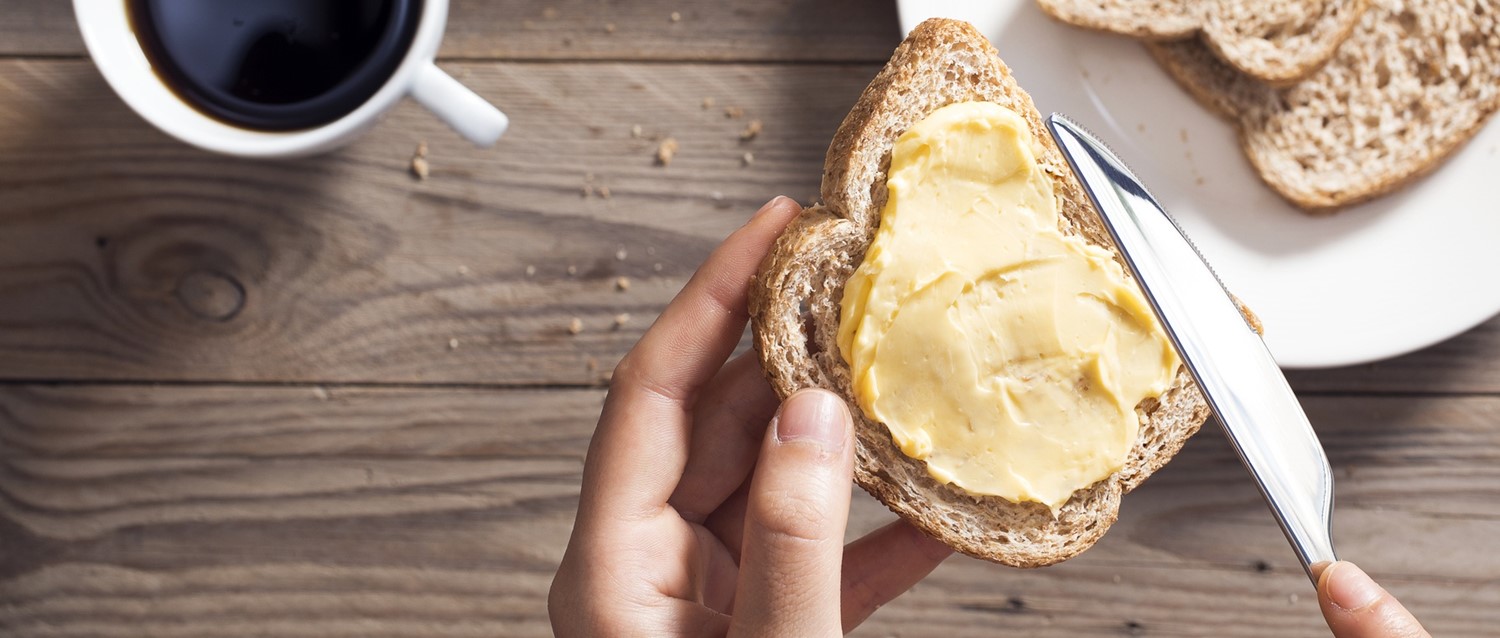
Butter.
Sahne.
Lard.
Käse.
Fatty meats - including lamb, pork and beef.
Processed meats - including sausages, bacon and burgers.
Saturated fats are also in vegetable products, such as:
Coconut fat.
Palm oil.
Processed treats are contributing a large amount of saturated fat to a typical Western diet:
Kuchen.
Biscuits.
Pies.
Gebäck.
Süßigkeiten.
Unsaturated fats
Unsaturated fats are less dense and are liquid at room temperature. Unsaturated fats are believed to be healthier options. Studies have shown that they can reduce your cholesterol levels and protect against cardiovascular disease1.
They are split into monounsaturated fats and polyunsaturated fats, and include:
Nüsse.
Samen.
Avocado.
Öliger Fisch.
Olive, rapeseed, and other vegetable oils - but not palm and coconut oils.
Trans fats
A third group, trans fats, only exist in tiny amounts in a few natural foods, such as:
Ruminant meat - such as meat from cows, sheep, and goats.
Milchprodukte.
However, in the 1970s, large amounts of trans fats were manufactured by changing the structure of unsaturated fats to force them to be solid at room temperature. These were then added to a range of processed foods, such as:
Margarine.
Kuchen.
Biscuits.
In the last few decades, efforts have been made to minimise trans fats in products, due to concerns about their negative effect on blood cholesterol levels and heart disease risk.
Intakes of trans fats in the UK have now reduced to half the maximum limit2. In the UK, there is no legal requirement to list trans fats on labels but you can check product ingredient lists for 'hydrogenated fats/oils' which may contain trans fats. Takeaway foods are also a source, as the high temperature heating of vegetable oil boosts the trans fat content.
Is dietary fat healthy?
There is no need to fear dietary fat as it's essential for health. Fat provides energy, helps to keep us warm, cushions our vital organs, protects our body cells and acts as a carrier for fat-soluble vitamins, such as A, D, E and K. More than half of the brain is fat3 and our cognitive development and brain functions rely on essential fatty acids that cannot be made by our bodies.
However, fats are a rich source of calories, making them easy to overeat. As an example, one 50 g cube of cheddar cheese has the same calories as two medium bananas. Also, several high-fat foods, such as biscuits, cakes, confectionery, desserts, and ice cream, are high in sugar too.
Which types of fats are the healthiest?
We should try to focus on unsaturated fats, while limiting our consumption of saturated and trans fats.
Professor of nutritional immunology, Philip Calder from the University of Southampton, says: "Fats affect the way that cells and tissues in the body work. Some, like omega-3s - which are unsaturated - are better for us because they promote optimal cell and tissue function. Ultimately, this relates to improved wellbeing and less risk of disease."
According to Professor Calder, his top choice would be omega-3s from oily fish, although: "Plant omega-3s from nuts, especially walnuts, and monounsaturated fats like those in olive oil, are important too."
Should we avoid some fats?
Apart from artificial trans fats, there's no need to cut out any particular fats from the diet - but we should limit our saturated fat consumption.
The effect of saturated fats on cholesterol and heart disease has been under debate in recent years4. The confusion may have arisen because scientists now know that individual saturated fatty acids have different effects on the body and are not one entity as previously believed5.
However, in 2019 the UK's Scientific Advisory Committee on Nutrition found that6:
Too much saturated fat increases your chances of cardiovascular disease, coronary heart disease, and high blood pressure.
The average person's intake of saturated fat is too high - and should be reduced to no more than 10% of their total dietary energy.
Saturated fats should be replaced with unsaturated fats, carbohydrates, or proteins.
How to eat the right fats
The best way to do this is to rebalance our fats towards plant sources, choose lean meats, poultry and oily fish, and keep high-calorie fatty foods to a minimum.
Sian Porter, spokesperson for the British Dietetic Association, says: "In the UK we eat too much of the saturated fats found in cakes, biscuits, pies, pastries, confectionery, and fatty meats so we need to cut down these foods."
She adds: "As for cooking, it depends on what you’re making but, in the main, try to use small amounts of unsaturated fats such as olive oil and rapeseed oil.
"Poor storage and constant reuse can change the fatty acids into harmful forms so always store your oils away from sunlight in a cool, dark place and replace regularly.
Butter, ghee, and coconut fat are fine to use occasionally in small amounts if you like the taste but there's no evidence that adding them to your diet offers any benefits."
Weiterführende Lektüre
Patientenauswahl für Ernährung
Ernährung und Diät
Funktionieren Neujahrsdiäten wirklich?
Wir alle kennen den Ausdruck „Neues Jahr, neues Ich“. Der Januar ist die Zeit, in der viele Menschen Vorsätze fassen, um mehr Sport zu treiben und sich gesünder zu ernähren. Aber wenn man eine Neujahrskur beginnt, wie hoch sind die Chancen, dass sie tatsächlich erfolgreich ist? Kann sie langfristig die allgemeine Gesundheit verbessern und nachhaltig sein?
von Emily Jane Bashforth

Ernährung und Diät
Ist eine milchfreie Ernährung gesund?
While increasing numbers of people are buying dairy-free products, fewer than 5% have a diagnosed allergy or intolerance. Milk and dairy foods are valuable sources of protein, calcium, B vitamins and iodine so make sure you really need to cut them out of your diet. Your doctor will be able to advise. One issue to be considered when you decide to give up the white stuff is how to replace dairy-sourced nutrients. This article will examine alternatives for the key nutrients found in dairy foods, and offer tips for a lactose-free diet, including treats!
von Dr. Carrie Ruxton, PhD, Kinderernährung
Über den AutorVollständige Biografie anzeigen
Aktualisiert von

Amberley Davis
Senior-Autorin
BA (Hons), CPD
Amberley ist eine leitende Autorin bei Patient und hat umfangreich über eine Vielzahl von Gesundheits- und Wohlfühlthemen geschrieben.
Verfasst von

Dr. Carrie Ruxton, PhD, Kinderernährung
Ernährungsberater und Gesundheitsautor
PhD, Kinderernährung
Dr. Carrie Ruxton qualifizierte sich als Diätassistentin an der Queen Margaret University in Edinburgh, bevor sie einen Doktortitel in Kinderernährung erwarb.
Über den RezensentenVollständige Biografie anzeigen

Dr. Sarah Jarvis
Klinische Beraterin
MA (Cantab), BM, BCh (Oxon), DRCOG, FRCGP, MBE
Nach ihrer medizinischen Ausbildung in Cambridge und Oxford wurde Dr. Sarah Jarvis MBE Hausärztin.
Artikelverlauf
Artikel auch verfügbar in Englisch, Deutsch, Spanisch, Französisch, Italienisch, Portugiesisch, Hindi, Hebräisch, Arabisch, und Schwedisch.
Nächste Überprüfung fällig: 22. Feb. 2027
22. Feb. 2024 | Neueste Version
16 Feb 2018 | Ursprünglich veröffentlicht
Verfasst von:
Dr. Carrie Ruxton, PhD, Kinderernährung
Teilen Sie Ihre Gedanken oder Erfahrungen mit anderen in unserem Patientengemeinschaften.
Abonnieren Sie den Patienten-Newsletter
Ihre wöchentliche Dosis klarer, vertrauenswürdiger Gesundheitsberatung - geschrieben, um Ihnen zu helfen, sich informiert, selbstbewusst und in Kontrolle zu fühlen.
Durch das Abonnieren akzeptieren Sie unsere Datenschutzrichtlinie. Sie können sich jederzeit abmelden. Wir verkaufen Ihre Daten niemals.