
What is it like to be Deaf?
Peer reviewed by Dr Krishna Vakharia, MRCGPAuthored by Gillian HarveyOriginally published 23 Sept 2022
Meets Patient’s editorial guidelines
- DownloadDownload
- Share
- Language
- Discussion
- Audio Version
- Add to preferred sources on Google
For those without hearing loss, it's hard to imagine what living with the condition would be like. We look at some misconceptions and explore how the Deaf community could be better supported.
Around 1 in 61 of us are now thought to be living with some degree of hearing loss (over 40% of people over 50 and over 70% of over-70s).
Did you know - hearing can affect memory?
For Hugh Donaghy, spokesperson for Royal National Institute for Deaf People RNID, one of the first signs of hearing loss was problems with his memory.
"I was working for a company which had regular meetings in a large boardroom," he says. "But I started to have problems remembering what had been said. I started to get stressed out, to the point where I tried to avoid meetings when possible.
"The doctor later told me my symptom was likely a result of hearing loss. I've always been deaf in my right ear, but the hearing in my left was deteriorating without my realising. I discovered that our brains work a bit like a short-term memory on a computer. When it's full, it looks for information to discard. And any conversations where you miss a word, subconsciously your brain filters through, and later discards them."
Did you know - hearing aids aren't always the answer?
It would be easy to assume that those with hearing loss who wear hearing aids are able to hear without issue. However, while technology is improving all the time, hearing aids aren't an asset in all situations.
"My hearing loss is at a particular frequency, but hearing aids pick up all frequencies and fire them into your ear," explains Hugh. "Your brain has to decipher it. The upshot of that is in busy areas the noise can be unbearable. And even when things are quieter, your brain has to work hard, meaning you tire more easily."
Did you know - it can take years for people to seek treatment?
Perhaps as it's often associated with ageing, many people are reluctant to admit they have hearing loss.
"Most people in their 50s and above know they cannot hear as well as they used to. But it takes people on average 10 years to acknowledge hearing loss, so many people with difficulties may be unprepared to disclose them," explains Hugh.
Improving support for the Deaf community
When interacting with people we don't know, it's common for those without hearing loss to assume others they come into contact with can also hear without an issue. This assumption can cause problems for those with hearing loss - and with around 12 million people2 in the UK now living with hearing loss, it's time to challenge that assumption.
Other easy modifications to the way we do things could make a big difference for deaf people.
Don't assume everyone can hear
"People assume you can hear - but with 1 in 6 of us having some form of hearing loss, it shouldn't be an assumption we make," says Hugh.
"Once a ticket seller on the subway was quite rude to me when I asked him to repeat something; he was horrified when I explained I was deaf. But if we all thought a little more about this possibility, things would be a lot easier for those with hearing loss."
Improve information delivery
With so many of us experiencing some degree of hearing loss, you'd expect public infrastructure to be geared up to support those who need it. However, public service announcements - for example, in train stations and airports - are often not accompanied by a visual. This can lead to great problems for those with deafness.
Hugh says he has been on the wrong train more than once because a change of platform was announced at the last minute.
Take responsibility
Imagine having an invisible condition but having to declare it loudly to strangers each and every time you needed support or encountered a new person. And with hearing aids often small and discreet, those with hearing loss are not always apparent on first glance. This means that many deaf people have to take responsibility for highlighting their disability in new situations in order to get support, which can cause undue stress.
"People know when you've got problems with your vision, because you're wearing glasses," Hugh explains. "But people don't always see hearing aids - especially the new ones. The onus remains on Deaf people to tell people we're deaf. This places an additional burden on us. For example, in hotels, a quick question about hearing loss could improve safety - as those with hearing loss will not hear fire or other alarms - and save the deaf person from having to raise the subject repeatedly."
Alter your behaviour
Finally, if you know you are working with someone with hearing loss, it's important to understand their specific difficulties and preferences.
For example, Hugh explains that, if you want to talk to him in the office, you need to get his attention first.
"It takes me a moment to realise who is speaking to me, and I'll miss what you say otherwise."
Don't be afraid to ask the questions - doing so will make life easier for your friend or colleague and improve communication all round.
By modifying our thinking and avoiding assumptions, we could make a big difference to the daily lives of Deaf people.
Further reading
Patient picks for Hearing problems
Ear, nose and throat
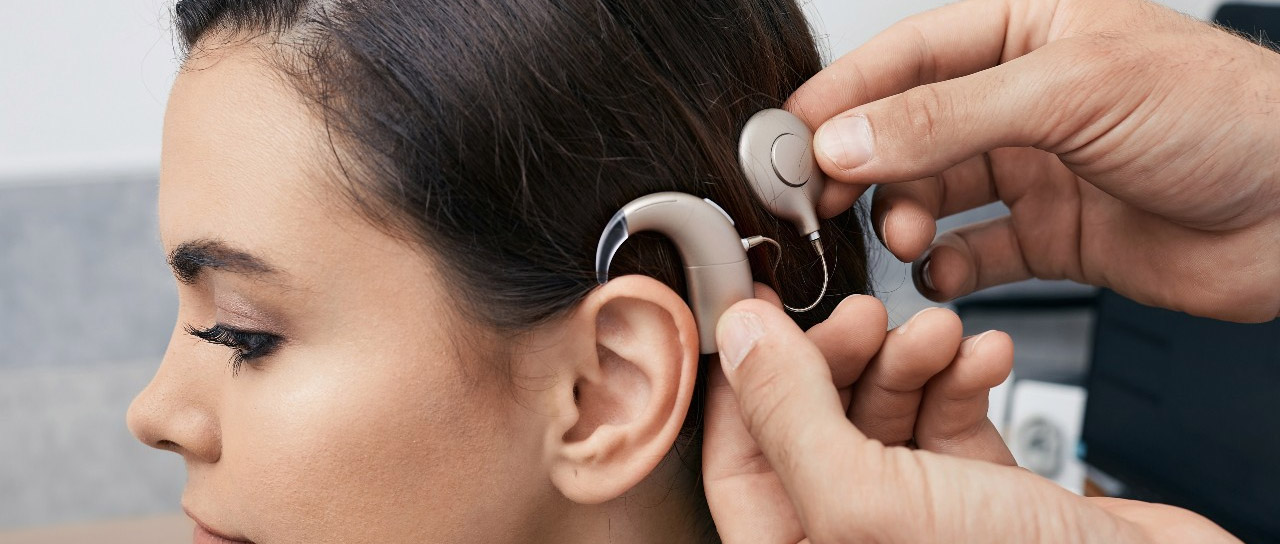
What is a cochlear implant and what effect do they have on hearing?
Opportunities and representation for the Deaf community have greatly improved over recent years. In 2022, a Bill passed through Parliament to make British Sign Language (BSL) a legally recognised and protected language. Despite these conversations being in the spotlight, there might be some aspects of deafness that you aren't familiar with and want to know more about.
by Emily Jane Bashforth

Ear, nose and throat
What's causing my hearing loss?
We often take our hearing for granted, but as we get older, we shouldn't make assumptions. Hearing loss affects much more than your hearing - if untreated, it can lead to social isolation, anxiety, depression, and even falls or reduced independence. We explain what affects your hearing and what you do to protect it.
by Dr Sarah Jarvis
About the authorView full bio

Gillian Harvey
Freelance Writer
BA (Hons) English
Gillian is a freelance writer and columnist for a variety of national newspapers and magazines.
About the reviewerView full bio

Dr Krishna Vakharia, MRCGP
Chief Medical Officer for Health, Optum UK
MBChB, MRCGP(2013), BMedSci (hons), DFSRH, DRCOG, PGDipDerm (Distn)
Dr Krishna Vakharia is an NHS GP. She is also a regular examiner for the postgraduate Diploma in Practical Dermatology at Cardiff University as well as being the Chief Medical Officer for health at Optum UK.
Article history
Article also available in English, German, Spanish, French, Italian, Portuguese, Hindi, Hebrew, Arabic, and Swedish.
23 Sept 2022 | Originally published
Authored by:
Gillian HarveyPeer reviewed by
Dr Krishna Vakharia, MRCGP
Join the conversation
Share your thoughts or experiences with others in our patient communities.

Ask, share, connect.
Browse discussions, ask questions, and share experiences across hundreds of health topics.

Feeling unwell?
Assess your symptoms online for free
Sign up to the Patient newsletter
Your weekly dose of clear, trustworthy health advice - written to help you feel informed, confident and in control.
By subscribing you accept our Privacy Policy. You can unsubscribe at any time. We never sell your data.
More in ear, nose and throat
- 9 home remedies for tonsillitis
- Anatomy of the ear
- Can deaf people have therapy?
- Can earwax build-up cause hearing loss?
- Coughs, colds and sore throats: is honey better than over-the-counter treatments?
- Ear tickle' therapy could slow down ageing
- Find your balance: 10 natural remedies to treat labyrinthitis at home
- How to manage tonsillitis in children
- How to protect against hearing loss while using headphones
- How to protect yourself from hearing loss this Bonfire Night
- Is your sore throat something more serious?
- Living with tinnitus: symptoms and solutions
- Signs of tinnitus to look out for in children
- What causes a musty smell in the nose?
- What is swimmer’s ear - and why you shouldn’t ignore it
- What should you eat if you have tonsillitis?
- What's causing my hearing loss?
- When it feels like something is stuck in your throat
- Why a GCSE in British Sign Language could prove a game-changer
- Why has the advice on dealing with earwax blockages changed?