5 Vorteile von Bienen für Ihre Gesundheit
Begutachtet von Dr Colin Tidy, MRCGPZuletzt aktualisiert von Lynn StephenZuletzt aktualisiert 3 Sept 2026
Erfüllt die redaktionelle Richtlinien
- HerunterladenHerunterladen
- Teilen
- Language
- Diskussion
- Audio-Version
- Zu bevorzugten Quellen bei Google hinzufügen
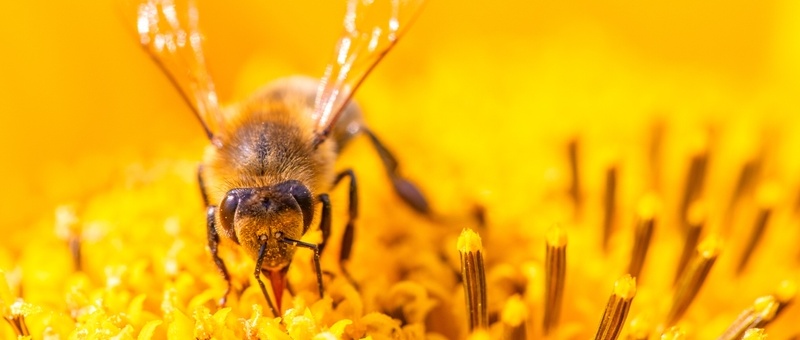
They may be unwelcome at our picnics and pub garden lunches, but the health of the bee population plays an important role in our own health and wellbeing. Let's take a moment to look beyond the fear of being stung and at the unique behaviours that make these small insects so interesting.
Bist du begeistert von Bienen?
According to Rosie Bleet, wilding evidence ecologist at Kent Wildlife Trust, from the first buzz of a bumblebee in the spring to the perfect circular holes in leaves made by leafcutter bees, these charismatic creatures have always been a source of fascination to humans.
3 wild bee facts from The Wildlife Trust
Wusstest du schon?
Most people know about honeybees, domesticated in hives, but wild bees - such as solitary bees, bumblebees, and leafcutter bees - are more important as pollinators of plants.
Eine sammelnde Hummel mit vollem Bauch ist nur etwa 40 Minuten von Hunger bedroht.
Die Laubblattbiene schneidet kleine Kreise aus Pflanzen und klebt sie zusammen, um Nester zu bauen.
Warum sind Bienen wichtig?
They may be fascinating, but why are bees important?
"Bees are incredibly important for the pollination of our crops and wildflowers, along with our other wild pollinators such as moths and hoverflies," explains Bleet.
By moving pollen from flower to flower and fertilising them, bees allow plants to multiply and spread. When it comes to the food crops we rely on, 85-95% of the UK’s insect-pollinated crops depend on wild pollinators - of which wild bees are the largest group. Honeybees, which are mostly managed by humans in hives, also make a significant contribution - pollinating the remaining 5-15%.1
Bleet says that we often hear that bees need our help and it's true that there is a general downward trend in the abundance of bees.
"This is largely caused by habitat loss and the resulting lack of food - flowers, fewer places to nest, and fewer places to spend the winter," she notes." Other factors such as pesticide use - especially insecticides, for example, neonicotinoids - can also have negative impacts on our bees and other pollinators."
Der Stich in der Bienenpopulation
5,000 species of bee - around one quarter of the 20,000 global bee species - have been lost since 1990.2
In the UK, while many bee species continue to decline, others such as the solitary bee and bumblebee are actually doing well.
The species doing well are mainly made up of ones that aren't reliant on specific flowers but can collect pollen from a wider range.3
Wie beeinflussen Bienen Menschen?
As important pollinators, the health of the bee population has a direct effect on our own health. In fact, when it comes to environmental and human health, there are several noteworthy benefits of bees. We've divided these into five key health benefits that show how these unique insects impact our own natural resources and wellbeing.
1. Lebensmittelsicherheit
Bees are so heavily involved in crop pollination that you have them to thank for every third mouthful of food you eat.4 When we think of food crops, it's easy to only think of fruits and vegetables, but the range of food made available to us through pollination is much more wide-reaching - for example, nuts, oats, and grains are found in everything from porridge to bread and soups.
Experts are concerned that losing too many bees will de-stabilise global food supplies, making their distribution more precarious. What’s more, as crops visited by pollinators have 32% more variation,5 the decline in bees could lead to Ernährungsbedingte Mangelerscheinungen in unserer Ernährung da der Zugang zu vielen nährstoffreichen Nutzpflanzen abgeschnitten wird.
2. Die Kosten der Ernte
In financial terms, the pollination services of bees and other insects contribute to around £690 million worth of crops in the UK every year.1 Counter-acting the loss of wild bees with manual farming methods would cost Britain an estimated £1.8 billion annually.3
Diese alternativen Anbaumethoden sind zeitaufwendig und teuer, und dies könnte einen enorm negativen Einfluss auf lokale und globale Wirtschaften haben. Es gibt verschiedene mögliche Folgewirkungen, darunter financial instability and associated mental health issues.
3. Tierwelt und Wohlbefinden
We don’t just need bees to pollinate plant crops. Bees pollinate wildflowers, securing the growth of a huge range of plants that provide healthy habitats and food supplies for hundreds of species. A healthy environment underpins many essential human needs.
Dazu gehören:
Süßwasser - for drinking, growing crops, energy, and more.
Atmungsaktive Luft - Bienen bestäuben Bäume, die wiederum Sauerstoff produzieren.
Medikamente - Bienen bestäuben viele Pflanzen, die heilende Eigenschaften haben und in modernen Medikamenten verwendet werden.
Mentales Wohlbefinden - Zeit in einer gesunden natürlichen Umgebung verbringen kann helfen, Stress abzubauen.
4. Honig
There are, of course, some more direct benefits of bees. Many honeybee colonies are managed by humans in hives because they produce honey. Aside from upgrading your morning porridge, honey has potential health benefits because of its antioxidant, anti-inflammatory, and antimicrobial properties.
Honig wurde auch Zeigt sich in der Linderung des nächtlichen Hustens bei Kindern, allowing them to rest.6
However, beware the over-sold claims that honey is a miracle food - honey cannot be considered a good source of nutrients for humans in amounts we can healthily consume. Honey is a sugar, and The American Heart Association (AHA) recommends eating no more than two to three tablespoons of sugar each day.7
5. Andere Bienenprodukte
Honig ist nicht das einzige Bienenprodukt, das Menschen verwenden. Auch andere Substanzen sind in Medikamenten und Nahrungsergänzungsmitteln zu finden, wobei jedoch zu beachten ist, dass weitere menschliche Studien erforderlich sind, um ihre gesundheitlichen Vorteile genau zu bestimmen.
Wie können Sie helfen, Bienen zu schützen?
"Small actions can make a big difference," says Bleet. "You can find out more about how you can help by taking a look at our Wildbienen-Aktionspaket."
Alongside other useful advice and fascinating facts, the Wildlife Trust's pack contains practical tips for supporting bees.
They include how to:
Pflanzen Sie nektar- und pollenreiche Blumen - Finden Sie hier die Lieblingsblumen der Hummel.
Schaffen und schützen Sie Bienen-Nistplätze.
Stellen Sie eine Wasserquelle für Bienen zum Trinken bereit.
Vermeiden Sie den Einsatz von Pestiziden - diese aggressiven Gifte können Bienen töten.
Verwenden Sie torffreien Kompost – die Gewinnung aus Mooren zerstört die natürlichen Lebensräume der Bienen.
Hilf einer müden Hummel.
Patientenauswahl für Umweltbedingungen
Allgemeine Gesundheit und Lebensstil
Was sind EDCs und warum sollten Sie sich darüber Sorgen machen?
Wenn Sie noch nie von EDCs gehört haben, sind Sie nicht allein – sie werden selten erwähnt und tauchen nicht oft in den Nachrichten auf. Aber es ist Zeit, aufmerksam zu werden, denn sie sind überall um Sie herum, an Orten, die Sie nie erwarten würden. Was Sie vielleicht noch mehr überraschen wird, ist, wie schädlich sie für Ihre Hormon-Gesundheit sein können.
von Victoria Raw
Haut-, Nagel- und Haargesundheit
Schutz Ihrer Haut vor schädlicher Verschmutzung
Es ist nicht nur Sonnenschutz, an den Sie denken müssen, wenn es heiß ist – stehende Sommertage können die Luftverschmutzung besonders hoch machen. Dies kann bestehende Hautprobleme verschlimmern und die Hautalterung beschleunigen, aber eine Reinigungsroutine mit den richtigen Inhaltsstoffen kann Ihnen dabei helfen. Erfahren Sie hier, wie Sie sich schützen können.
von Lynn Stephen
Weiterführende Lektüre und Referenzen
- Bees and pollinators; Kent Wildlife Trust
- The Independent: One quarter of all bees not seen since 1990.
- Soil Association: Why bees matter?
- Food and Agriculture Organization of the United Nations: Declining bee populations pose threat to global food security and nutrition
- Bishop et al.: Tierbestäubung erhöht die Stabilität der Ernteerträge über räumliche Skalen hinweg
- Ashkin E, Mounsey A; PURLs: a spoonful of honey helps a coughing child sleep. J Fam Pract. 2013 Mar;62(3):145-7.
- Amerikanische Herzgesellschaft: Zugesetzte Zucker
- Kieliszek et al.: Pollen und Bienenbrot als neue gesundheitsorientierte Produkte: eine Übersicht
Über den AutorVollständige Biografie anzeigen
Aktualisiert von

Lynn Stephen
Inhaltsentwicklerin
MA (Hons)
Lynn trat 2023 dem Patient bei und ihre Rolle umfasst die Überprüfung aller professionellen Broschüren, Patienteninformationsblätter und Medikamentenbroschüren, um die Konsistenz von Rechtschreibung, Grammatik, Referenzmaterial und Markenstil sicherzustellen. Sie arbeitet mit den medizinischen Autoren und dem klinischen Direktor zusammen, um die Erstellung und Begutachtung der Broschüren zu koordinieren.
Verfasst von

Amberley Davis
Senior-Autorin
BA (Hons), CPD
Amberley ist eine leitende Autorin bei Patient und hat umfangreich über eine Vielzahl von Gesundheits- und Wohlfühlthemen geschrieben.
Über den RezensentenVollständige Biografie anzeigen

Dr Colin Tidy, MRCGP
Allgemeinmediziner, Medizinischer Autor
MBBS, MRCGP, MRCP (Paediatrics), DCH
Dr. Colin Tidy ist ein NHS-Arzt mit Sitz in Oxfordshire.
Artikelverlauf
Artikel auch verfügbar in Englisch, Deutsch, Spanisch, Französisch, Italienisch, Portugiesisch, Hindi, Hebräisch, Arabisch, und Schwedisch.
Next review due: 2 Sept 2029
3 Sept 2026 | Neueste Version
27. Sept. 2022 | Ursprünglich veröffentlicht
Verfasst von:
Amberley Davis
Nehmen Sie an der Diskussion teil
Teilen Sie Ihre Gedanken oder Erfahrungen mit anderen in unserem Patientengemeinschaften.

Fragen, teilen, verbinden.
Durchsuchen Sie Diskussionen, stellen Sie Fragen und teilen Sie Erfahrungen zu Hunderten von Gesundheitsthemen.

Fühlen Sie sich unwohl?
Bewerten Sie Ihre Symptome online kostenlos
Abonnieren Sie den Patienten-Newsletter
Ihre wöchentliche Dosis klarer, vertrauenswürdiger Gesundheitsberatung - geschrieben, um Ihnen zu helfen, sich informiert, selbstbewusst und in Kontrolle zu fühlen.
Durch das Abonnieren akzeptieren Sie unsere Datenschutzrichtlinie. Sie können sich jederzeit abmelden. Wir verkaufen Ihre Daten niemals.