Plastikfreier Juli: Sollten wir uns über Mikroplastik Sorgen machen?
Begutachtet von Dr Krishna Vakharia, MRCGPVerfasst von Amberley DavisUrsprünglich veröffentlicht 4. Jul 2024
Erfüllt die redaktionelle Richtlinien
- HerunterladenHerunterladen
- Teilen
- Language
- Diskussion
- Ask Patient
- Audio-Version
- Zu bevorzugten Quellen bei Google hinzufügen
What do testicles, clouds, beer and arctic ice all have in common?
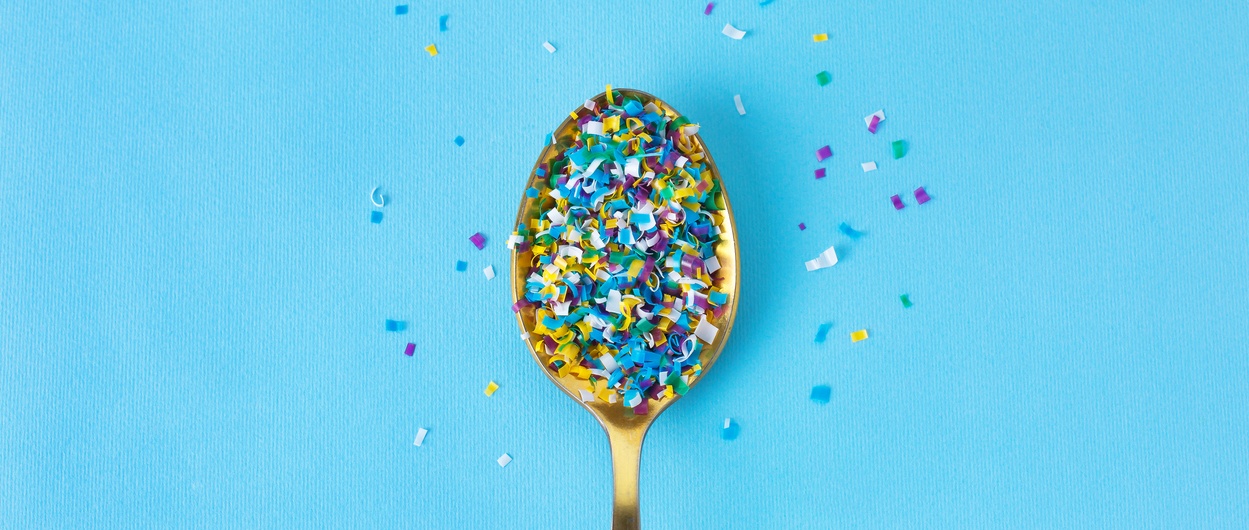
These are all places you might find microplastics, if you were a scientist with the right equipment to detect these tiny pieces of plastic, measuring below 5 millimetres. Over the last 20 years, microplastics have been discovered all around us, and now inside us too. It's thought we consume around 5 grams of microplastic particles every week - equivalent to the weight of a credit card. But what does this mean for our health? Here's what we currently know.
Videoauswahl für UmweltbedingungenVideothek
Was sind Mikroplastik?
Plastics have entered every environment on earth as consumer products and industrial waste. Plastic pollution can do a lot of environmental harm and witnessing it - like seeing plastic bags in the ocean - can be emotive. But what about the tiny pieces we can't see when disposed plastic breaks down?
Called microplastics, we now know that these disintegrated synthetic pieces - usually invisible to the naked eye - are all around us: in our tap water, our food, and the air in our homes. Thanks to recent research on human body tissues, we also know that microplastics have found their way into us.
Everyday plastics found in humans
Professor Jeanette Rotchell studies microplastics in the body: "Myself and others have found a variety of plastic polymers in human tissues - as many as 20 different types, but it depends on the detection method used and the quality control measures. The common ones include:
Polyethylene (PE) - commonly used to make plastic bags and bottles.
Polypropylene (PP) - commonly used in food packaging and car manufacturing.
Polyethylene terephthalate (PET) - commonly used in textiles and packaging.
Ethylene propylene diene (EPDM) - a rubber with many uses including door sealing.
Polytetrafluoroethylene (PTFE) - commonly used in pesticides and to coat cookware.
Polystyrene - used in a variety of consumer products, including toys and food cases.
Polyvinyl chloride (PVC) - commonly used in pipes, insulation, and medical devices.
Welche Gesundheitsrisiken gehen von Mikroplastik aus?
What we don't yet know is how toxic microplastics are to our bodies, and whether they can lead to health problems, as Professor Rotchell explains: "Cell-based and animal studies indicate that microplastics do cause negative biological effects, such as inflammation (internal swelling), oxidative stress (cell damage) and challenges to cellular barrier structures."
It's thought that the chemicals in microplastics may have the power to disrupt the endocrine system - which releases hormones needed around the body for essential functions like growth, metabolism, and reproduction.
"There has been a slight disconnect in between these studies and human tissue studies - the former usually involve bead-shaped microplastics, yet while we find fragments and fibres in the human tissues, we don't find beads," says the ecotoxicology specialist.
"Whether these forms of microplastics negatively affect the human body is still unclear. We're starting to find correlations between their presence and negative health outcomes, such as irritable bowel and cardiovascular conditions, but the actual cause-and-effect mechanisms of how that damage might be occurring with the body is yet to be established."
Here's a snapshot of the evidence for microplastics and human disease so far:
Heart problems - In 2024, researchers studied people with fatty plaque build up in their blood vessels. They detected microplastics in some people's plaque and found that these people were 4.5 times more likely to develop Herzinfarkte, Schlaganfall, und herzbedingten Tod als diejenigen mit plastikfreier Plaque1.
Entzündliche Darmerkrankung (IBD) - In 2022, researchers compared poo samples of people with IBD and healthy people. They found significantly more microplastics in the samples from people with IBD2.
Endometriosis – In 2024, Professor Rotchell and her team discovered that larger microplastics in pee samples of women with Endometriose, im Vergleich zu Frauen ohne Endometriose3. Sie sagt: "Wir benötigen eine weitere Studie, um zu verstehen, ob es einen Zusammenhang zwischen der Anwesenheit von Mikroplastik und der Erkrankung gibt. Größere Mikroplastikpartikel könnten zu mehr entzündungsartigen Reaktionen führen, aber das wurde noch nicht direkt untersucht und wäre ein großartiges Folgeexperiment, das als nächstes durchgeführt werden könnte."
Wo im Körper?
There are also human tissue studies that don't directly link microplastics to disease, but raise concerns. For example:
Microplastics in testicles: Im Jahr 2024 entdeckten Forscher 12 Arten von Mikroplastik in 23 menschlichen Hoden4. The study sample was small but the findings highlight the need for more research on the effect of microplastics on sperm count and fertility.
Microplastics in blood vessels: Die Pilotstudie von Professor Rotchell aus dem Jahr 2023 war die erste, die Mikroplastik in menschlichen Blutgefäßen fand, was die Theorie unterstützt, dass sie durch Venen zu wichtigen Organen wie der Lunge wandern können5.
Aufnahme - Mikroplastik in der Nahrungskette
So just how are microplastics entering our bodies? Professor Rotchell explains that microplastics range in size - from a sesame seed at their largest, to the diameter of a hair invisible to the naked eye at the smaller end of the size range.
These tiny particles are small enough to transfer and seep into all sorts of places - including several levels of our food chain.
"These smaller plastics can be taken up by marine organisms which we then eat as seafood. Another source can be via plastic packaging particles that transfer into the foods that they contain," says the professor.
Microplastics are also added to many synthetic fertilisers and Pestiziden. Diese kunststoffbeschichteten Agrochemikalien werden direkt auf die Pflanzen gesprüht, die wir essen, und dringen in den Boden ein, wo neue Pflanzen wachsen6.
Mikroplastik in der Nahrungskette
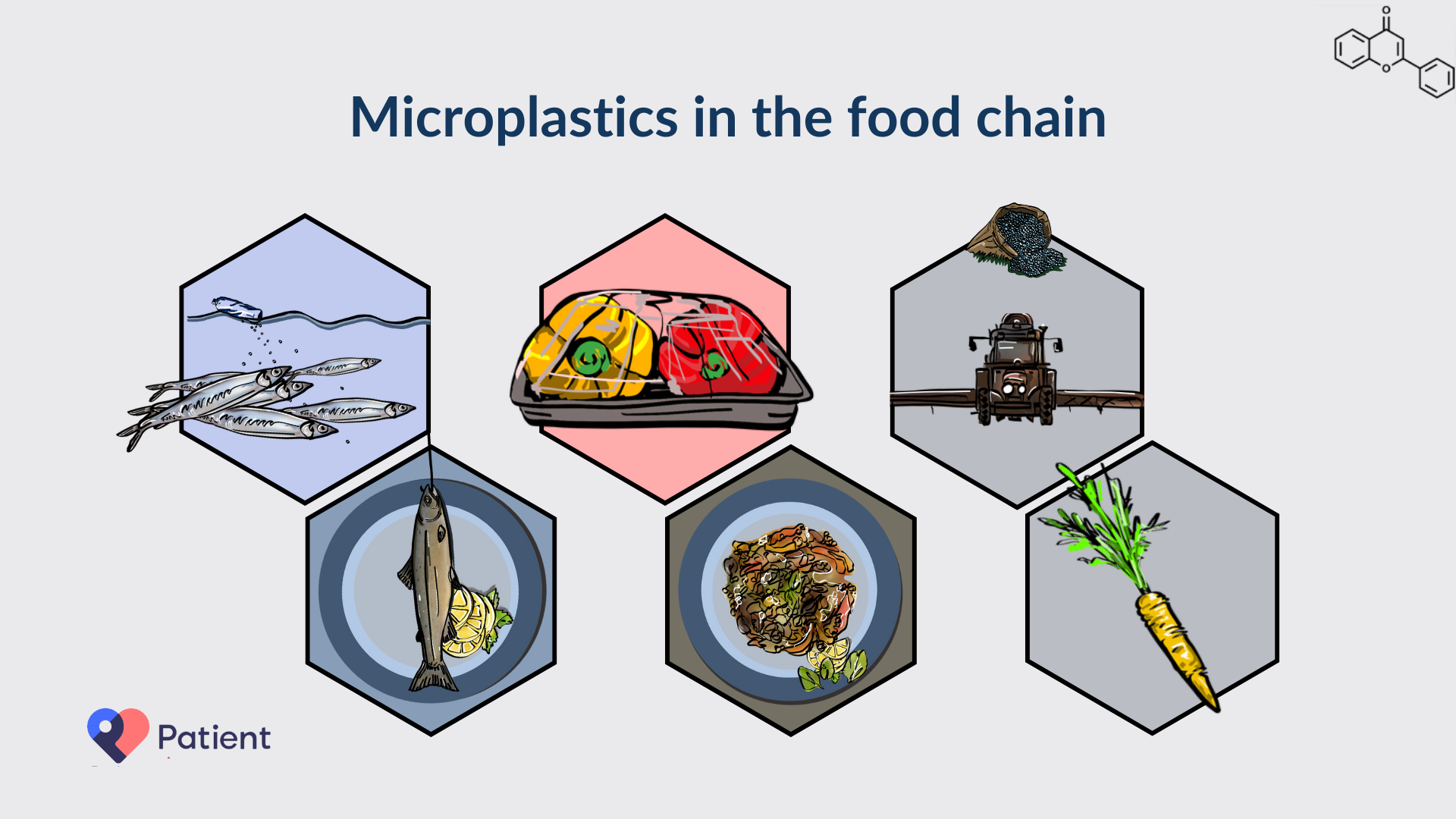
Lebensmittel - People may be eating an estimated 50,000 plastic particles every year7.
Wasser - If you drink from water bottles, you could be consuming up to 90,000 extra microplastics annually - compared to the additional 4,000 microplastics per year from your tap water7.
Bier - A beer a day could amount to 520 particles each year8.
Inhalation - Mikroplastik im Haushalt
From children's toys to cookware coating and fridge, door and window seals, plastic is used everywhere in the home. We don't know if these commonplace features affect us, but we do know that when plastic gradually breaks down into microplastics, these tiny particles can become airborne.
"We may also inhale as well as ingest microplastics since they are floating in the indoor and outdoor air," says professor Rotchell. "We don't know much about the transport of microplastics in the outdoor and indoor air beyond knowing that they are present and at varying levels depending on location. Indoor studies have identified textile type microplastics, usually fibres, present - these could be from clothing and soft furnishings."
Ist gefärbter Kunststoff schlechter?
Rote, blaue und grüne Plastikprodukte zersetzen sich über einen Zeitraum von drei Jahren schneller in Mikroplastikpartikel als schwarze, weiße und silberne Plastikfarben9. The researchers are calling for manufacturers to stop making household products, like toys and outdoor furniture, in these colours.
Wolken und Plastikregen
Wissenschaftler waren überrascht, Mikroplastik auf zwei nebligen Berggipfeln in Japan zu entdecken. Es ist unklar, wie sie dorthin gelangt sind, aber es ist möglich, dass dies der erste Bericht über luftgetragene Mikroplastik in Wolkenwasser ist10.
This theory suggests that plastic litter in the ocean breaks down into microplastics and is then launched into the atmosphere through ocean spray. So-called 'plastic rainfall' has an alarming potential to contaminate vast areas of land - but there's a lot more we need to learn before this causes concern.
Was können wir tun, um unsere Exposition gegenüber Mikroplastik zu reduzieren?
Tackling microplastic pollution begins with your single-use plastics. These are things like disposable water bottles, shopping bags and plastic-coated coffee cups.
Was ist der plastikfreie Juli?
Plastikfreier Juli is a yearly campaign against plastic pollution. It challenges those who take part to reduce their single-use plastic waste every day of July, providing resources and ideas to help. The hope is that it helps people find ways to use less plastic all year round. Their helpful tips include:
Investing in a reusable water bottle.
Bringing a reusable coffee cup to your local cafe.
Choosing unpackaged bakery items at supermarkets, bakeries, and farmers markets.
Shopping for unpackaged meat at the local butcher, fishmonger or deli-counter.
Refusing plastic straws and bringing along your own metal option.
Using refillable cleaning products, offered by an increasing number of places.
Considering reusable sanitary products like period pants or Menstruationstassen.
Swapping cling film for reusable food storage containers.
Ditching synthetic clothes for natural fibres, like linen, wool, hemp, and silk.
Reduce, reuse, recycle
Reduzieren Sie, was Sie kaufen: Ask yourself if you really need something, or if you can repurpose something you already own, or buy secondhand to reduce plastic waste.
Plastikartikel wiederverwenden: Reuse plastic as you can or take it to a secondhand store where possible so it doesn't end up in landfill.
Recycle: Understand what you can and can't recycle in your local area. You can also choose to buy recycled products to close the loop.
Mikroplastik und Klimawandel - ein Kreislauf
The relationship between microplastics and Klimawandel appears to be cyclical. Global warming is expected to speed up the rate at which plastic products breakdown into microplastic particles11. Gleichzeitig befürchten Forscher, dass Mikroplastik, wenn es in großen Mengen in der oberen Atmosphäre gefunden wird, ebenfalls zum Problem des Klimawandels beitragen könnte10.
Microplastics and climate change
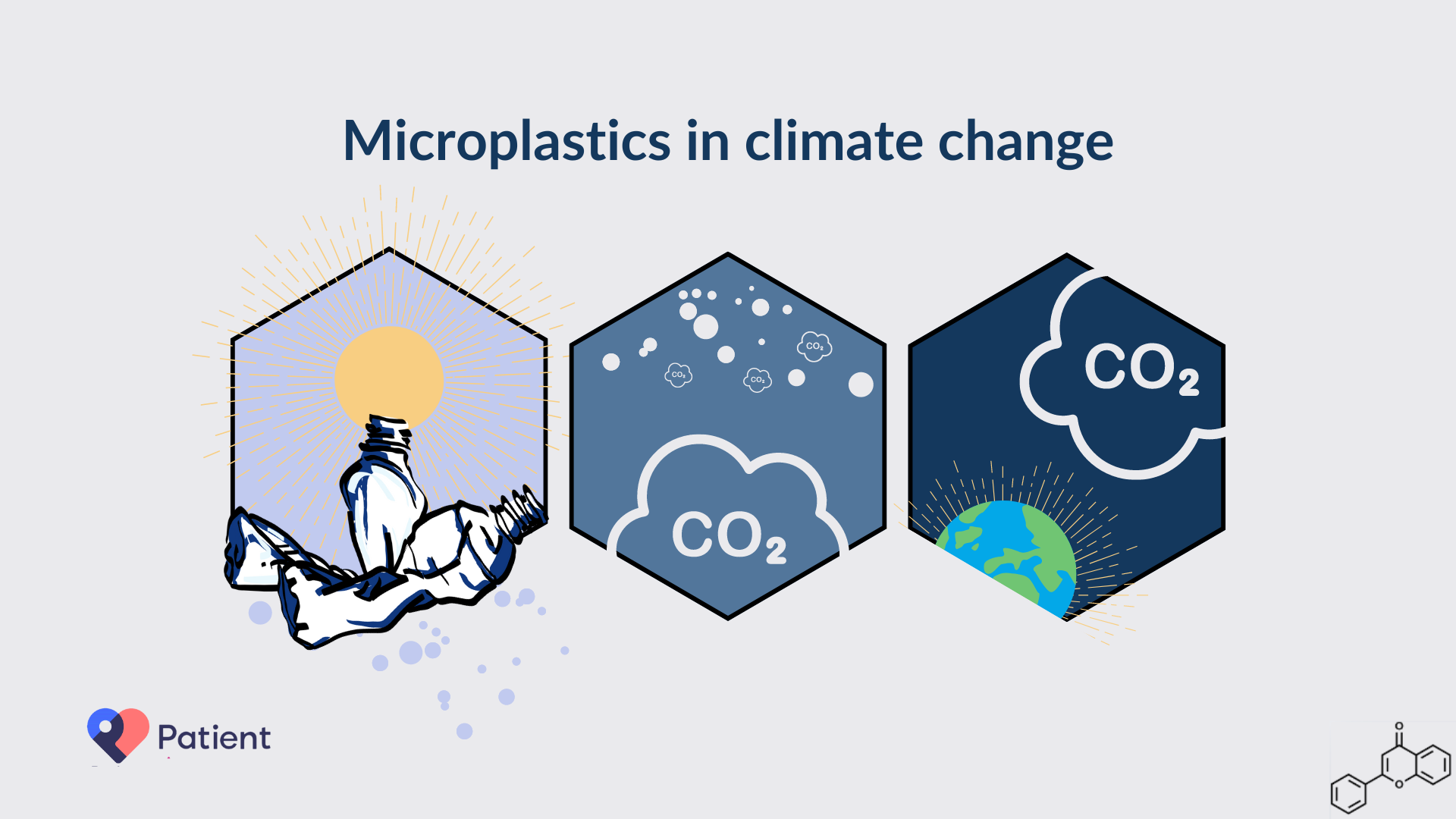
Mikroplastik in der oberen Atmosphäre ist näher am Sonnenlicht - was eine größere Exposition gegenüber ultravioletter (UV) Strahlung bedeutet. Dies könnte dazu führen, dass Mikroplastik zerfällt und zu Treibhausgasen beiträgt. Weitere Studien wie die auf den japanischen Berggipfeln könnten uns helfen, besser zu verstehen, ob Mikroplastik zum Klimawandel beiträgt10.
Reducing our use of plastic in everyday life is one way to try and reduce the demand for plastic production. There are also other ways to reach policy makers.
"As a scientist, my role is to conduct experiments to establish presence, and biological impacts, of contaminants such as microplastics in a robust manner," says professor Rotchell. "Then to communicate these findings to policy makers, regulators, and the public.
“„Je mehr Beweise wir dafür liefern, dass Mikroplastik negative Auswirkungen auf die menschliche Gesundheit hat, desto mehr beeinflusst dies die Entscheidungsträger, Regulierungsbehörden und Politiker, Überwachungspraktiken, Vorschriften oder Gesetze einzuführen."
Weiterführende Lektüre
Marfella et al: Mikroplastik und Nanoplastik in Atheromen und kardiovaskulären Ereignissen.
Kosuth: Anthropogene Verunreinigung von Leitungswasser, Bier und Meersalz.
Key et al: Einfluss von Farbstoffen auf den Umweltabbau von Plastikmüll.
Haque und Fan: Schicksal von Mikroplastik unter dem Einfluss des Klimawandels.
Patientenauswahl für Umweltbedingungen
Allgemeine Gesundheit und Lebensstil
Die Hitze besiegen: Ihr unverzichtbarer Sonnenschutz-Leitfaden
Da in den kommenden Monaten in ganz Großbritannien wärmeres Wetter erwartet wird, hat St John Ambulance wichtige Gesundheitstipps geteilt, um Menschen dabei zu helfen, die Symptome häufiger hitzebedingter Erkrankungen zu erkennen und zu verstehen, wie man sie behandelt. Diese wesentlichen Tipps zu kennen, kann Ihnen helfen, sicher, vorbereitet und bereit zu sein, das Beste aus Ihrem Sommer zu machen.
von Victoria Raw
Allgemeine Gesundheit und Lebensstil
Könnte die Energiekrise eine psychische Gesundheitskrise auslösen?
Die Entscheidung zwischen Heizung einschalten und Essen kaufen zu müssen, ist eine Entscheidung, die niemand treffen sollte. Doch für viele wird dies zur Realität angesichts der anhaltenden Energiekrise und der steigenden Lebenshaltungskosten – und es wirkt sich auf unsere psychische Gesundheit aus.
von Lydia Smith
Über den AutorVollständige Biografie anzeigen
Verfasst von

Amberley Davis
Senior-Autorin
BA (Hons), CPD
Amberley ist eine leitende Autorin bei Patient und hat umfangreich über eine Vielzahl von Gesundheits- und Wohlfühlthemen geschrieben.
Über den RezensentenVollständige Biografie anzeigen

Dr Krishna Vakharia, MRCGP
Chief Medical Officer für Gesundheit, Optum UK
MBChB, MRCGP(2013), BMedSci (hons), DFSRH, DRCOG, PGDipDerm (Distn)
Dr. Krishna Vakharia ist eine NHS-Hausärztin. Sie ist auch regelmäßige Prüferin für das postgraduale Diplom in Praktischer Dermatologie an der Cardiff University und zudem Chief Medical Officer für Gesundheit bei Optum UK.
Artikelverlauf
Artikel auch verfügbar in Englisch, Deutsch, Spanisch, Französisch, Italienisch, Portugiesisch, Hindi, Hebräisch, Arabisch, und Schwedisch.
Nächste Überprüfung fällig: 4. Juli 2027
4. Jul 2024 | Ursprünglich veröffentlicht
Verfasst von:
Amberley DavisBegutachtet von
Dr Krishna Vakharia, MRCGP
Teilen Sie Ihre Gedanken oder Erfahrungen mit anderen in unserem Patientengemeinschaften.
Abonnieren Sie den Patienten-Newsletter
Ihre wöchentliche Dosis klarer, vertrauenswürdiger Gesundheitsberatung - geschrieben, um Ihnen zu helfen, sich informiert, selbstbewusst und in Kontrolle zu fühlen.
Durch das Abonnieren akzeptieren Sie unsere Datenschutzrichtlinie. Sie können sich jederzeit abmelden. Wir verkaufen Ihre Daten niemals.