
Anaphylaktischer Schock: Symptome, Auslöser und was zu tun ist
Begutachtet von Dr Krishna Vakharia, MRCGPVerfasst von Amberley DavisUrsprünglich veröffentlicht 19 Jun 2022
Erfüllt die redaktionelle Richtlinien
- HerunterladenHerunterladen
- Teilen
- Language
- Diskussion
- Ask Patient
- Audio-Version
- Zu bevorzugten Quellen bei Google hinzufügen
Bis zu 1 von 5 Allergikern lebt in der Angst vor dem Tod durch einen möglichen anaphylaktischen Schock - eine schwere und oft plötzliche allergische Reaktion, die eine Notfallbehandlung erfordert. Glücklicherweise sind Todesfälle selten, aber wenn Sie oder ein geliebter Mensch eine schwere Allergie haben, ist es wichtig, die Warnzeichen zu kennen und zu wissen, was zu tun ist.
Learn about adrenaline auto-injectors
Erhalten Sie fachkundige medizinische Beratung bequem von zu Hause aus. Füllen Sie eine kurze Online-Konsultation aus, die rund um die Uhr verfügbar ist. Ihre Anfrage wird von einer in Großbritannien registrierten medizinischen Fachkraft geprüft. Für ausgewählte Behandlungen ist eine Lieferung am nächsten Tag möglich.

What is anaphylactic shock?
Anaphylaktischer Schock - also known as anaphylaxis - is a severe allergic reaction that often comes on very suddenly and without warning.
According to Anaphylaxis UK1, the reaction "usually begins within minutes and rapidly progresses, but in some cases it can also occur up to 2-3 hours later". The UK charity warns that anaphylaxis is "potentially life-threatening, and always requires an immediate emergency response".
It's important to note that not all allergic reactions are considered to be anaphylaxis. Many people with allergies will never experience a reaction this extreme.
Nonetheless, the possibility of anaphylactic shock can be a great source of Stress and anxiety in people's lives. For example, approximately 41% of parents who have children with diagnosed Nahrungsmittelallergien are thought to have higher stress levels2.
What are the symptoms of anaphylactic shock?
If you or someone you are with starts having an allergic reaction, look out for the 'ABC symptoms' (Airway, Breathing, Consciousness/Circulation) of an anaphylactic shock3.
Anaphylaxis UK ABC symptoms
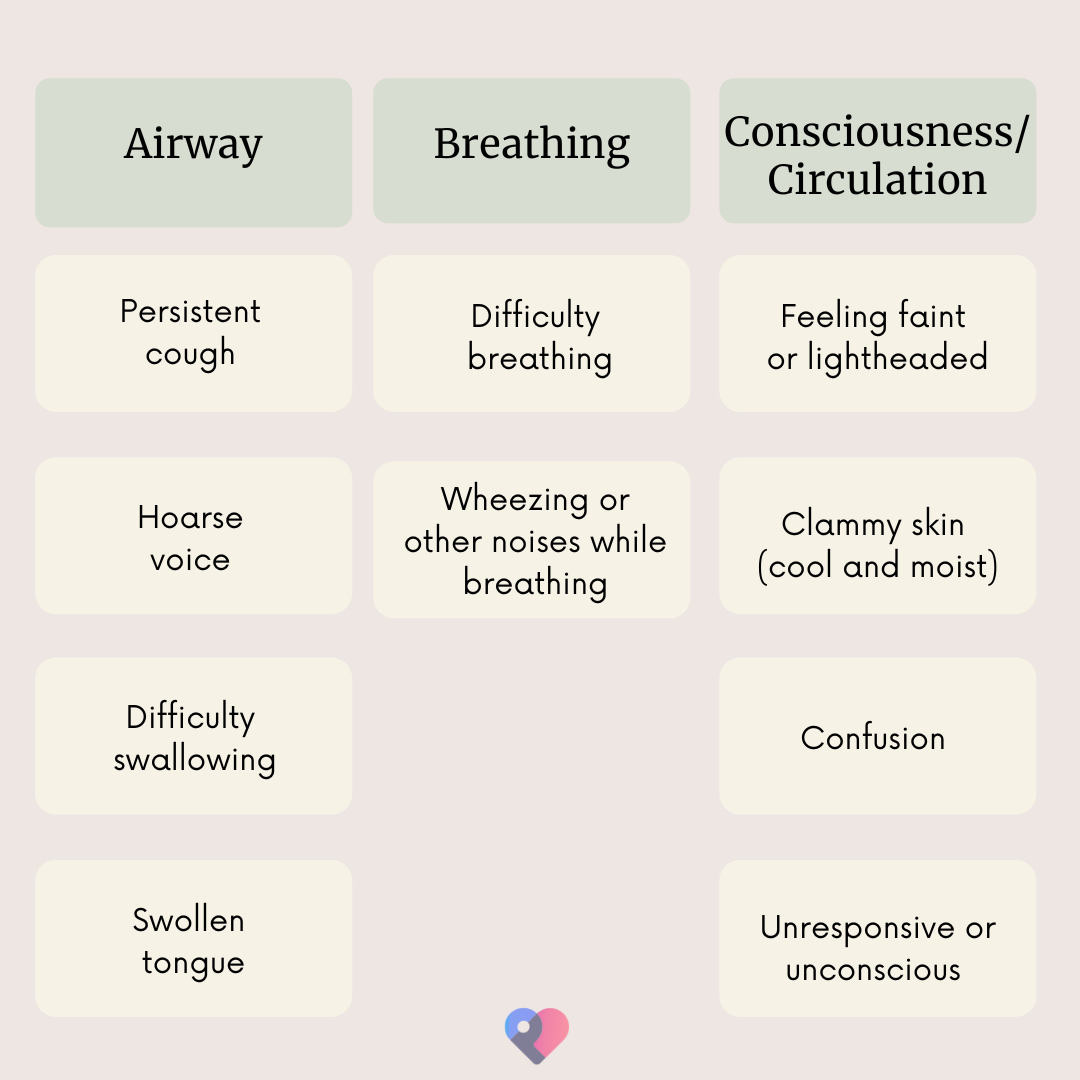
These symptoms of anaphylaxis can rapidly become worse as a person's blood pressure drops.
Can anaphylactic shock kill you?
This is a life-threatening allergic reaction sometimes resulting in death. Fortunately, this outcome is rare - occurring in just one in a thousand of all cases4. In the UK, this roughly translates to around 20 deaths per year.
Deaths are more likely to occur if adrenaline auto-injectors (AAIs),often known as 'epi-pens', aren't administered in time. This happens more often when people don't carry this prescribed emergency treatment device with them when outside the house.
What causes anaphylactic shock?
An anaphylactic shock may be triggered when you are exposed to something that you are allergic to (known as an allergen). During an allergic reaction, your immune system attacks this allergen as if it were a harmful substance.
Allergic reactions can range from very mild to severe, and an anaphylactic reaction falls into the latter category. Here, the immune system's overreaction disrupts essential bodily functions which cause symptoms such as Atembeschwerden, a swollen tongue, and feeling faint.
The 'shock' part of anaphylactic shock refers to the drop in blood pressure, which reduces the amount of blood delivered to the major organs. This happens when blood vessels leak fluid from the blood into surrounding tissues.
In around 20% of cases, no allergen trigger is identified (called idiopathic anaphylaxis)4. Currently, it's thought that many such reactions will be caused by 'hidden' food allergens that are hard to identify. If you experience idiopathic anaphylaxis, you may be referred to an allergy clinic where a specialist can try various allergy tests to shed light on which ingredients in your diet are the culprits.
What are the most common triggers for anaphylactic shock?
According to Anaphylaxis UK: "Anything can be an allergen, but the most common allergens that may trigger anaphylaxis are food, Drogen, insects, oder latex."
Nahrung - the 14 major food allergens are Nüsse, Gluten (a protein found in wheat)5, sulphites/sulphur dioxide (used as preservatives in a wide range of foods), celery, crustacean, egg, fish, lupin beans, milk, mustard, mollusc, sesame, and soya.
Medikamente - while they tend to be safe for most people, certain medicinal drugs may cause allergic reactions. Common examples include Antibiotika (such as penicillin) and Schmerzmittel (such aspirin, morphine, and codeine).
An insect sting or bite - some people are highly allergic to the venom injected through some insect bites and stings - for example, wasp or bee stings.
Latex - certain people are allergic to proteins found in latex, a material made from the rubber tree. Products made from latex include balloons, gloves, and condoms.
How to stop anaphylactic shock
1. Administer adrenaline auto-injector
If you believe someone you are with is experiencing anaphylactic shock, the first thing you should do is check if they are carrying an adrenaline auto-injector. If they have been diagnosed as at risk for anaphylaxis, then their doctor will have prescribed this injection device and instructed them to keep it with them at all times6.
The AAI is loaded with adrenaline (sometimes called epinephrine). A shot of this hormone can quickly open up the airways, reduce swelling, and raise blood pressure. The three main AAIs available in the UK are EpiPen, Jext, and Emerade, and all should be injected into the middle of the outer thigh (upper leg). This can be done through clothing if necessary7.
Abbildung 1
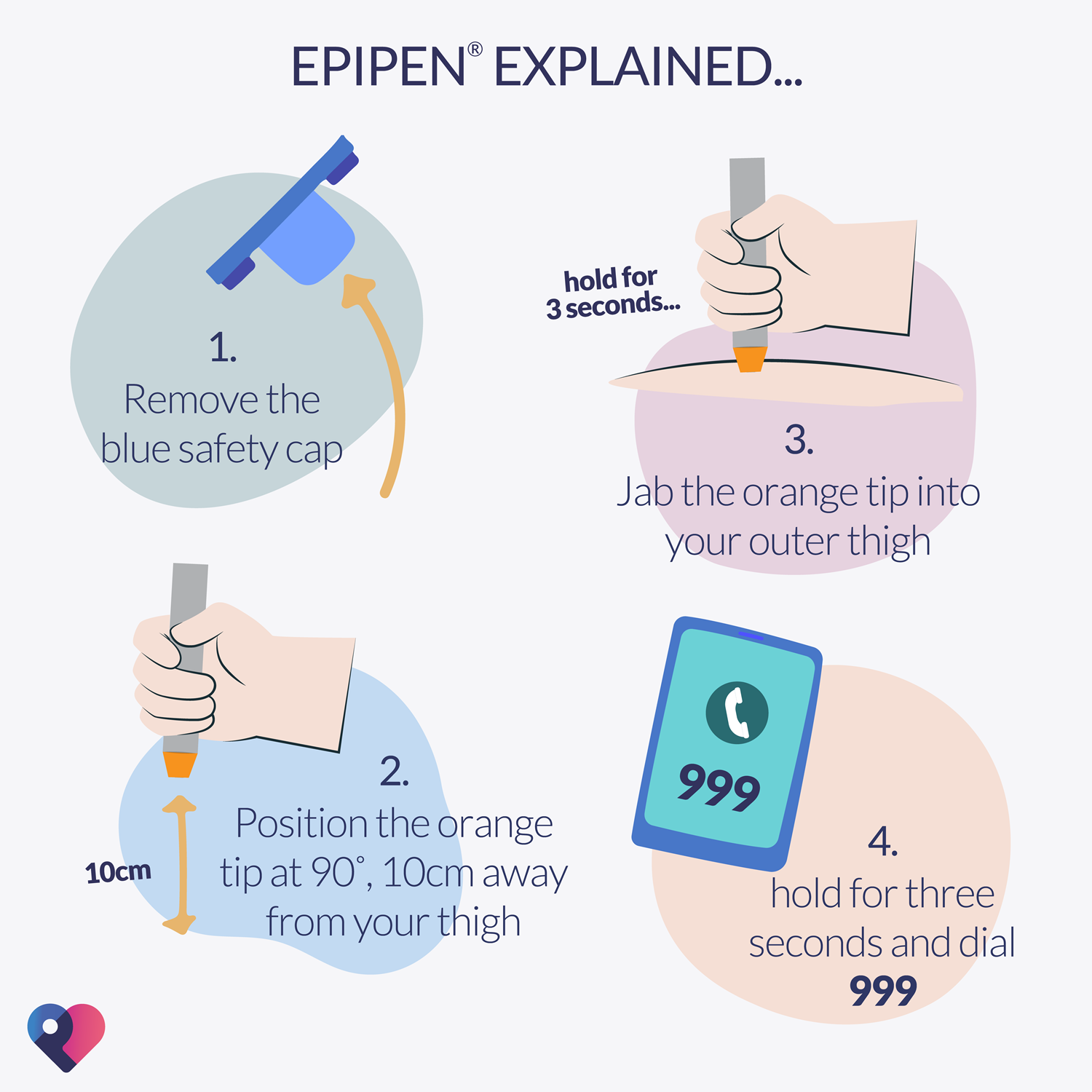
Use this device as soon as you can - the quicker it's administered, the more effective it can be. If you yourself have been prescribed an AAI, Anaphylaxis UK strongly recommends ordering a trainer device so that you can practise using it. Your doctor will provide training for you and for people who may be required to give you an injection - such as close family or school staff.
2. Call emergency services
Anaphylactic shock is potentially life-threatening, and you must call 999 (if in the UK) and request an ambulance as soon as possible. Hospital treatments depend on the severity of the reaction. They include adrenaline injection, resuscitation, and allergy medicines (such as Antihistaminika und Steroide).
How to prevent anaphylactic shock
Once you've identified the cause of your allergy, you may be able to prevent anaphylaxis by avoiding triggers. This means:
Checking labels and ingredients on food and drinks packets as well as products such as shampoo and toothpaste, even for trace amounts of the allergen.
Informing restaurant staff of your allergies and their severity.
Using insect repellent.
Moving calmly away from insects you're allergic to in order to prevent being stung.
Not walking around barefoot.
Being careful when drinking out of cans - insects are attracted to sugar and may crawl inside and sting you when you take a sip.
If you're allergic to certain medicines, there are usually alternatives a doctor can prescribe instead.
Weiterführende Lektüre
Learn about adrenaline auto-injectors
Erhalten Sie fachkundige medizinische Beratung bequem von zu Hause aus. Füllen Sie eine kurze Online-Konsultation aus, die rund um die Uhr verfügbar ist. Ihre Anfrage wird von einer in Großbritannien registrierten medizinischen Fachkraft geprüft. Für ausgewählte Behandlungen ist eine Lieferung am nächsten Tag möglich.
Patientenauswahl für Allergien
Allergien, Blut und Immunsystem
What is Skeeter syndrome? When a mosquito bite is more than just an itch
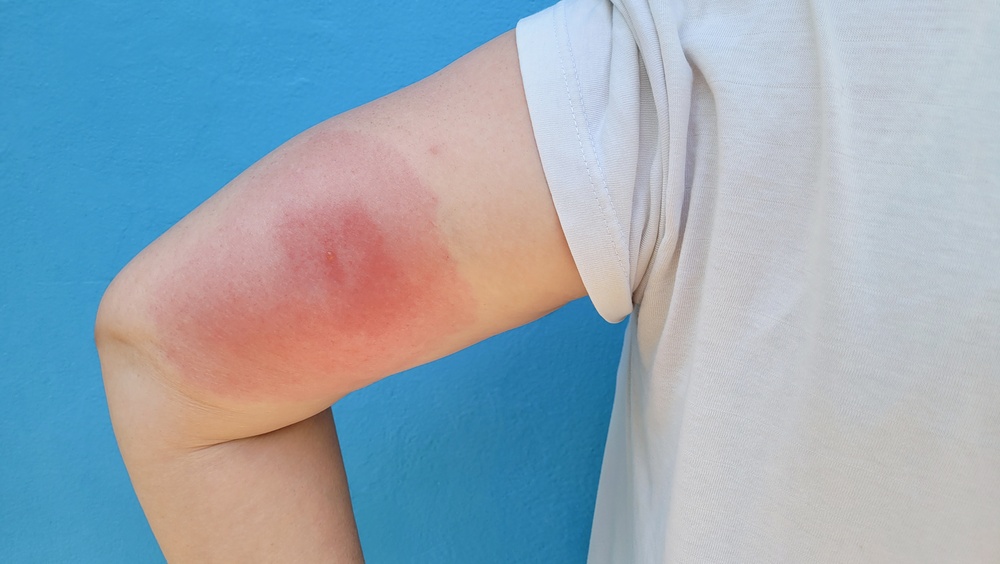
For most people, a mosquito bite is no more than an itchy nuisance. But for some people, a bite can trigger a much more dramatic reaction, with extensive swelling, redness, warmth, and itching that can last for several days. This reaction is known as Skeeter syndrome.
von Heather Ainsworth

Allergien, Blut und Immunsystem
Kokosnussallergie: Kann Kokosnussöl Ihre Haut jucken lassen?
Kokosnuss ist in einer Vielzahl von Produkten enthalten, sei es in Lebensmitteln oder in der Haarpflege. Obwohl eine Kokosnussallergie sehr selten ist, kann sie für diejenigen, die darunter leiden, sehr belastend sein. Glücklicherweise gibt es Behandlungsmöglichkeiten.
von Emily Jane Bashforth
Über den AutorVollständige Biografie anzeigen
Verfasst von

Amberley Davis
Senior-Autorin
BA (Hons), CPD
Amberley ist eine leitende Autorin bei Patient und hat umfangreich über eine Vielzahl von Gesundheits- und Wohlfühlthemen geschrieben.
Über den RezensentenVollständige Biografie anzeigen

Dr Krishna Vakharia, MRCGP
Chief Medical Officer für Gesundheit, Optum UK
MBChB, MRCGP(2013), BMedSci (hons), DFSRH, DRCOG, PGDipDerm (Distn)
Dr. Krishna Vakharia ist eine NHS-Hausärztin. Sie ist auch regelmäßige Prüferin für das postgraduale Diplom in Praktischer Dermatologie an der Cardiff University und zudem Chief Medical Officer für Gesundheit bei Optum UK.
Artikelverlauf
Artikel auch verfügbar in Englisch, Deutsch, Spanisch, Französisch, Italienisch, Portugiesisch, Hindi, Hebräisch, Arabisch, und Schwedisch.
19 Jun 2022 | Ursprünglich veröffentlicht
Verfasst von:
Amberley DavisBegutachtet von
Dr Krishna Vakharia, MRCGP
Teilen Sie Ihre Gedanken oder Erfahrungen mit anderen in unserem Patientengemeinschaften.
Einfacher Zugang zu vertrauenswürdigen Behandlungen und Gesundheitsdiensten online.
Common conditions
Get help with common conditions through the NHS, without a GP appointment.





Abonnieren Sie den Patienten-Newsletter
Ihre wöchentliche Dosis klarer, vertrauenswürdiger Gesundheitsberatung - geschrieben, um Ihnen zu helfen, sich informiert, selbstbewusst und in Kontrolle zu fühlen.
Durch das Abonnieren akzeptieren Sie unsere Datenschutzrichtlinie. Sie können sich jederzeit abmelden. Wir verkaufen Ihre Daten niemals.