Wie man mehr Gemüse isst, ohne es zu versuchen
Begutachtet von Dr Sarah JarvisVerfasst von Natalie HealeyUrsprünglich veröffentlicht 5. Jan 2018
Erfüllt die redaktionelle Richtlinien
- HerunterladenHerunterladen
- Teilen
- Language
- Diskussion
- Audio-Version
- Zu bevorzugten Quellen bei Google hinzufügen
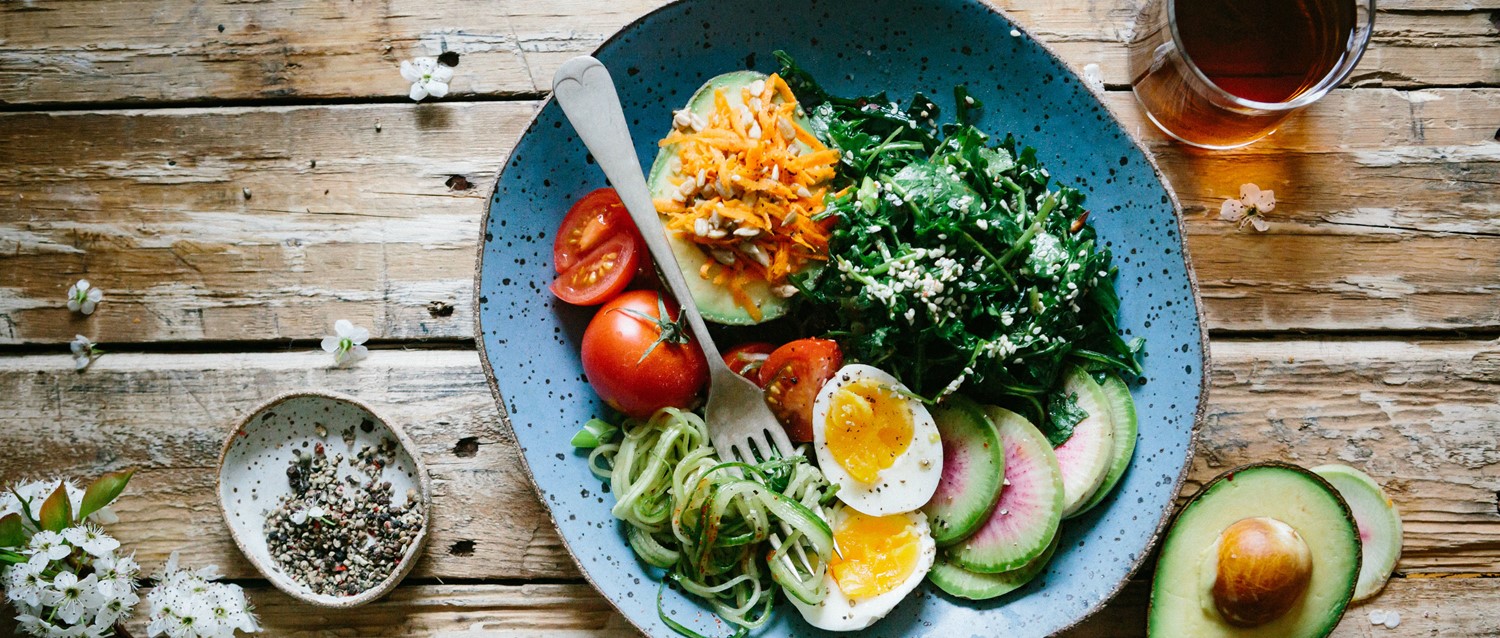
Trying to eat more fruit and veg is a promise most of us make to ourselves on a regular basis. But it doesn't often feel like the easiest (or most appealing) undertaking. Luckily, we ask an expert how to sneakily up your tally.
Veg benefits
We all know that fruit and vegetables are good for us, but why? Well, if we go back to that recent study, researchers found that a plate piled high with greens boosts your chances of living a long life and reduces your risk of many chronic conditions, from cancer to Typ-2-Diabetes.
GP and nutrition expert Jan Sambrook explains further:
"Having a low intake of fruit and vegetables is estimated to cause about 19% of cancers of the digestive system, 31% of heart disease and 11% of Schlaganfälle."
GP Dr Rupy Aujla agrees. In his recipe book The Doctor's Kitchen, he says: "You can lower your risk of stroke, cancer and Herzerkrankungen by increasing your fruit and vegetable intake. Eat mostly plants and you'll stand a better chance of living a healthier, more vibrant and fulfilling life, free of disease."
But how do fruit and vegetables prevent disease?
Antioxidantien
Fruit and vegetables are rich in vitamins and minerals which keep the body healthy. They also contain chemicals called antioxidants which are thought to protect the body against damaging chemicals.
Ballaststoffe
Fruit and vegetables are packed with Ballaststoffe. This can help to control Cholesterin levels and keep Blutzuckerwerte steady. Plus, fibre helps to keep you regular and avoid Verstopfung.
You eat less of the bad stuff
Eating fruit and vegetables can help to replace other foods that are high in fat, salt and sugar, which further helps to reduce our risk of these diet-related diseases.
What counts as a portion?
Sambrook suggests the following guide for those confused about what really counts as one of your five a day.
One large fruit such as an apple, pear, banana, orange, or a large slice of melon.
Two smaller fruits such as plums, kiwis, satsumas, clementines.
One cup of small fruits such as grapes, strawberries, raspberries, cherries.
Two large tablespoons of fruit salad, stewed fruit or canned fruit.
One tablespoon of dried fruit.
One glass of fresh fruit juice (150 ml).
A normal portion of any vegetable (about two tablespoons).
One dessert bowl of salad.
Three heaped tablespoons of beans, pulses or lentils.
A word on fruit juice
Sambrook points out that a 150 ml glass of fruit juice counts as only one of your 'five a day', even if you have more than one glass.
"This is because during processing much of the fibre has been removed and the sugar is released from the plant cells, meaning there are higher levels of 'free sugars'."
However, fruit juice still has many benefits not found in fizzy drinks, squashes and 'fruit juice drinks' and nectars. These all have added sugar, while by definition pure fruit juice isn't allowed to have any sugar added. In addition, fruit juice helps with absorption of iron if it's taken as part of a meal. A glass of juice provides 25% of your RDA (recommended daily allowance) of folate and contributes to the potassium in your diet. It contains a wide variety of phytonutrients, which aren't affected by processing. A glass of orange juice provides 100% of the RDA of vitamin C.
How much is enough?
The UCL team found that although the recommended five portions of fruit and vegetables a day reduced the risk of disease, the greatest benefit came from eating roughly ten portions. However, while this study and other research suggests that the more fruit and vegetables you eat, the better, five a day is still a much more realistic target for most people
Dr Alison Tedstone, chief nutritionist at Public Health England, explained to the BBC that, "Whilst consuming more than five portions of fruit and vegetables a day may be desirable, adding pressure to consume more fruit and vegetables creates an unrealistic expectation."
Don't feel too dismayed if ten just doesn't seem quite achievable and work on more generally boosting your vegetable intake.
How to sneak more veg into your meals
It's easier than you think. You'll soon see that fruit and veg add colour, flavour and texture to any dish and make it go a lot further too. Here are some easy ways to include more nutrients in your diet:
Taste the rainbow
No one fruit or vegetable contains all the nutrients you need, so it is good to have a variety and include fruit and vegetables of all different colours. Ditch the beige and embrace the rainbow.
"Different colours of fruits mean different combinations of vitamins, minerals and antioxidants," Sambrook reveals.
Branch out
Variety is the spice of life - so try a fruit or vegetable you've never tasted before. You might find something you absolutely love. Perhaps try one new fruit or vegetable each week.
Pimp up your porridge
Try adding chopped bananas, apples, or dried fruits to breakfast cereals. And instead of a fruit yoghurt, have a piece of fruit with a dollop of natural yoghurt.
Stock up on tinned tomatoes
Aim to include at least two different vegetables with most main meals. Add tomato purée and/or tinned chopped tomatoes as a pasta sauce or in casseroles and stews.
Get steamy
Sometimes nutrients are lost or destroyed during cooking, so Sambrook suggests eating fruit and vegetables raw when possible, and try to avoid over-cooking them.
"Try poaching, steaming or microwaving rather than boiling. These methods help to reduce the amounts of nutrients lost or destroyed. If you do boil vegetables, the water can be used in stocks, sauces or soups."
Packed lunch fun
Ditch those soggy sarnies. How about cherry tomatoes, carrot sticks, dried apricots, or other fruits as part of packed lunches? A pot of hummus counts too! A banana and peanut butter sandwich is another idea. And another easy fix when making sandwiches is to add in cucumber, tomato, lettuce or avocado to accompany the main filling.
Take the pulse
Bulk out meals with vegetables, beans (yes, that includes baked beans!) and pulses. For example, when making a Bolognese, add in chopped mushrooms, red peppers and some kidney beans. This also helps to make meals go further.
What doesn't count?
Sometimes, we might think something counts as a portion of fruit and vegetables, but we can be mistaken. Boo! Here are some common misunderstandings, according to Sambrook.
Kartoffeln
"Potatoes, yams, cassava and plantain: these contain more starch than anything else, so they don't count as a portion." Sweet potatoes do count though.
Fruitcake/fruit yoghurts
"These contain little fruit and also have added sugar, fat and other ingredients. So we should be trying to keep these to a minimum in the diet."
Fruit-flavoured soft drinks
"These usually contain minimal fruit and are high in sugar."
Tomato ketchup, jam and chutneys
"These have high salt/sugar content." Try tomato purée instead.
How to eat 'five a day' on a budget
Eating healthily doesn't always feel like bang for your buck, especially when supermarkets tempt you with 'buy one get one free' offers on confectionery and ready meals. But getting at least five portions of fruit and vegetables each day doesn't have to be expensive. Remember, vegetables are almost always going to be cheaper than meat.
Sambrook suggests: "Make use of markets. You can often get bargains there. And always choose loose fruit in the supermarkets - it's often much cheaper than buying pre-packaged."
Try to buy in season - that's when fruit and vegetables tend to be cheaper. And don't dismiss frozen veg - it's often cheaper, just as nutritious and you don't need to worry about it going off too quickly. What's more, tinned vegetables and fruit also count - although you should choose fruit preserved in juice rather than syrup. What's more, they retain their vitamin content for longer than fresh vegetables.
Adding beans and pulses to stews can eke out the more expensive meat. Even better, slow-cooked stews with added pulses allow you to choose cheaper cuts of meat as well as boosting your vegetable intake.
Finally, if you haven't managed to eat your vegetables fast enough, and they're looking a little sad at the back of your fridge, turn them into soup! You can even freeze it to eat later.
Suddenly, 10 a day doesn't seem so impossible after all. For starters, give our baked cod with ratatouille recipe a whirl.
Patientenauswahl für Gesunde Ernährung
Ernährung und Diät
Achtsames Essen: Wie man langsamer isst und das Essen genießt
Wenn Sie so sind wie ich, gibt es Zeiten, in denen Sie Ihre Mahlzeiten hastig einnehmen, ohne darüber nachzudenken, ob Sie mehr essen, als Ihr Körper benötigt. Achtsames Essen ist die Praxis, langsamer zu werden und auf die Signale Ihres Körpers zu achten - besonders wenn er Ihnen sagt, dass Sie satt sind.
von Victoria Raw

Ernährung und Diät
Was ist intuitives Essen - und kann es Ihre Beziehung zu Lebensmitteln verbessern?
Diet culture has reigned supreme for decades, telling us what to eat, how much, and when. It can be hard to break free of the vicious cycle that such restriction can create. So some nutritionists are now promoting 'intuitive eating' as an alternative. But what is intuitive eating and can this anti-diet concept really reset your problematic relationship with food? Or is it just another buzzword?
von Gemma Grange
Über den AutorVollständige Biografie anzeigen
Verfasst von

Natalie Healey
Freiberufliche Journalistin
BSc (Hons) Biomedizinische Wissenschaft
Sie ist eine in London ansässige Gesundheitsjournalistin, die seit mehreren Jahren über Wissenschaft und Medizin schreibt. Sie ist die ehemalige Leiterin der Redaktion bei Patient.
Über den RezensentenVollständige Biografie anzeigen

Dr. Sarah Jarvis
Klinische Beraterin
MA (Cantab), BM, BCh (Oxon), DRCOG, FRCGP, MBE
Nach ihrer medizinischen Ausbildung in Cambridge und Oxford wurde Dr. Sarah Jarvis MBE Hausärztin.
Artikelverlauf
Artikel auch verfügbar in Englisch, Deutsch, Spanisch, Französisch, Italienisch, Portugiesisch, Hindi, Hebräisch, Arabisch, und Schwedisch.
5. Jan 2018 | Ursprünglich veröffentlicht
Verfasst von:
Natalie HealeyBegutachtet von
Dr. Sarah Jarvis
Nehmen Sie an der Diskussion teil
Teilen Sie Ihre Gedanken oder Erfahrungen mit anderen in unserem Patientengemeinschaften.

Fragen, teilen, verbinden.
Durchsuchen Sie Diskussionen, stellen Sie Fragen und teilen Sie Erfahrungen zu Hunderten von Gesundheitsthemen.

Fühlen Sie sich unwohl?
Bewerten Sie Ihre Symptome online kostenlos
Abonnieren Sie den Patienten-Newsletter
Ihre wöchentliche Dosis klarer, vertrauenswürdiger Gesundheitsberatung - geschrieben, um Ihnen zu helfen, sich informiert, selbstbewusst und in Kontrolle zu fühlen.
Durch das Abonnieren akzeptieren Sie unsere Datenschutzrichtlinie. Sie können sich jederzeit abmelden. Wir verkaufen Ihre Daten niemals.