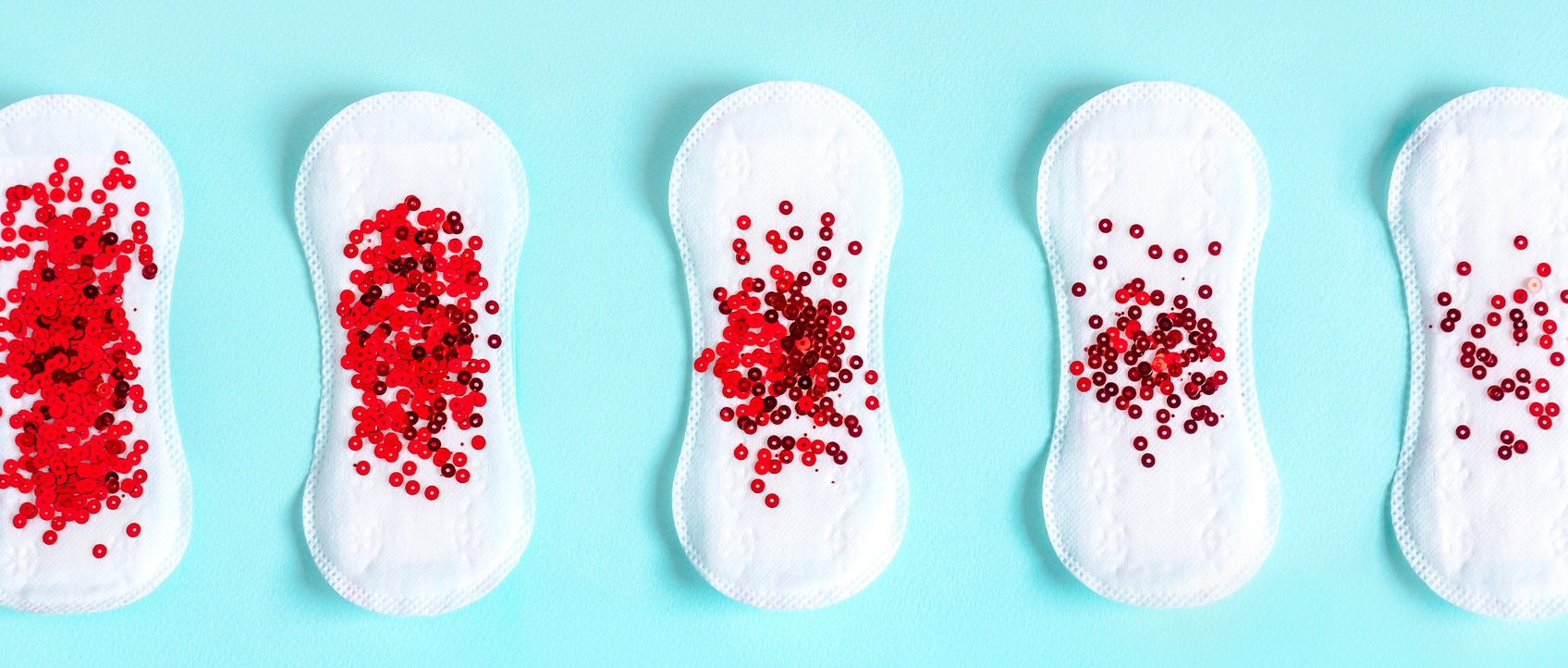
Wie sich Ihre Perioden während der Perimenopause verändern
Begutachtet von Dr Colin Tidy, MRCGPZuletzt aktualisiert von Lynn StephenZuletzt aktualisiert 20. Feb 2026
Erfüllt die redaktionelle Richtlinien
- HerunterladenHerunterladen
- Teilen
- Language
- Diskussion
- Audio-Version
- Zu bevorzugten Quellen bei Google hinzufügen
Perimenopause bedeutet „um die Menopause herum“. Es ist die Zeit, in der Ihr Körper sich auf die Menopause zubewegt, also wenn Ihre Perioden aufhören. Während der Perimenopause schwanken Ihre Hormonspiegel, was Ihre Perioden unregelmäßiger machen kann. Wir erklären, warum das passiert – und was Sie während der Perimenopause von Ihrem Menstruationszyklus erwarten können.
Explore support for menopause symptoms
Erhalten Sie fachkundige medizinische Beratung bequem von zu Hause aus. Füllen Sie eine kurze Online-Konsultation aus, die rund um die Uhr verfügbar ist. Ihre Anfrage wird von einer in Großbritannien registrierten medizinischen Fachkraft geprüft. Für ausgewählte Behandlungen ist eine Lieferung am nächsten Tag möglich.

The average length of time for Perimenopause is around 4 years, but it is different for each person. Once you've gone through 12 consecutive months without a period, you've officially reached Wechseljahre and the perimenopause period is over.
During perimenopause, your levels of the hormones oestrogen - one of the main female hormones - and progesterone rise and fall. This affects your menstrual cycle.
What to expect during perimenopause
Premenstrual symptoms
Dr Jayne Forrester-Paton, a GP and British Menopause Society accredited menopause specialist at Your Menopause Doctor, says it’s very common for your zyklen to gradually change as you enter perimenopause.
“One of the earliest signs of perimenopause can be a gradual worsening of premenstrual symptoms (PMS), these can be physical, as well as psychological,” she says. “For example, you may experience worsening Kopfschmerzen, Blähungen, breast tenderness, and mood changes in the days leading up to a period. For some women, the duration of PMS lengthens and they have less 'good' days each month.”
Forrester-Paton says some women may notice Nachtschweiß or hot flushes just in the days leading up to their period.
“Periods may still be regular at this stage,” she adds.
Unregelmäßige Perioden
As you progress through perimenopause, your zyklen may become more irregular than usual.
“A classic pattern is for your periods to get closer together before gradually becoming spaced further and further apart, until they eventually stop altogether,” explains Forrester-Paton.
Heavier or lighter periods
It is also common for periods to become heavier as the gaps between them widen. You may also experience spotting between periods.
“Some people may experience flooding or clots for the first time,” says the menopause specialist. “However, as with everything related to the Wechseljahre and perimenopause, the experience varies widely from person to person. Some will experience periods abruptly stopping with little warning, or others lighter and easier to manage periods.”
Anovulatory cycles
Ein anovulatory cycle is a menstrual cycle in which ovulation - the release of an egg from the ovaries - doesn’t happen. Anovulation is often due to hormonal imbalances and can occur during perimenopause.
Signs of an anovulatory cycle vary, but can include:
Irregular periods.
Missing periods.
Unusually starke or light bleeding
Sometimes, though, there are no obvious signs.
Blood colour changes
Your menstrual blood may also look different and sometimes, it can appear darker or brown. Menstrual blood appears red when it’s fresh and has left the body quickly, but it can look darker if it is old, oxidised blood that has been in the uterus for longer. This can happen during perimenopause because hormonal imbalances mean the uterine lining breaks down differently.
Discharge changes
You may notice changes in the consistency of your discharge, which may become thinner or thicker.
How to manage changes to your period
It can help to track your period on a calendar, so you can see how your menstrual cycle is changing. Note down any other symptoms, such as unusual bleeding or pain - so you can show your doctor if you need to.
Keeping tampons, sanitary towels, and a change of underwear in your bag can be a good idea if you’re not sure when your period will arrive, or how heavy it will be. It’s also helpful to have over-the-counter painkillers such as paracetamol or ibuprofen on hand too. You can also buy period-proof underwear, which will absorb unexpected leaks or spotting.
When to see a doctor about changes in your period
Sprechen Sie mit Ihrem Arzt
"It’s important not to ignore changes to your bleeding pattern or flow and to discuss this with your doctor to ensure any concerning causes can be ruled out," says Forrester-Paton.
Irregular bleeding can be a sign of other underlying conditions.
You should speak to your doctor if you have:
Heavy bleeding.
Bleeding that lasts longer than a week.
Bleeding that happens more frequently than every 3 weeks.
If you are worried about your menstrual cycle or any other symptoms, it's best to speak to your doctor to be safe.
If you’ve missed a period, and it’s possible you could be schwangere, you should take a pregnancy test. Even if you’re in perimenopause, you can still ovulate and become pregnant. If you are under 50, you can still get pregnant up to 2 years after your last period and if you are over 50, you can still get pregnant up to 1 year after your last period.
Explore support for menopause symptoms
Erhalten Sie fachkundige medizinische Beratung bequem von zu Hause aus. Füllen Sie eine kurze Online-Konsultation aus, die rund um die Uhr verfügbar ist. Ihre Anfrage wird von einer in Großbritannien registrierten medizinischen Fachkraft geprüft. Für ausgewählte Behandlungen ist eine Lieferung am nächsten Tag möglich.
Patientenauswahl für Wechseljahre und HRT

Hormone
Erleben Sie die Perimenopause?
Sie haben möglicherweise die Menopause noch nicht erreicht, wenn Sie unter Kopfschmerzen, nächtlichen Schweißausbrüchen, Gewichtszunahme, Angstzuständen und Depressionen leiden - aber Sie könnten in der Perimenopause sein. Das bedeutet, dass Ihr Körper sich auf die Menopause vorbereitet, aber es könnte noch Jahre dauern, bis Sie sie erreichen.
von Lawrence Higgins

Hormone
Wie man Hautprobleme in den Wechseljahren bewältigt
Sinkende Östrogenspiegel in den Wechseljahren können Hautveränderungen wie Trockenheit, Elastizitätsverlust, dunkle Flecken, Hautunreinheiten und langsame Wundheilung verursachen. Mit der richtigen Pflege ist es jedoch möglich, diese Effekte zu reduzieren. Hier zeigen wir, was Sie tun können, um Ihrer Haut in dieser Zeit des Wandels zu helfen.
von Lawrence Higgins
Über den AutorVollständige Biografie anzeigen
Aktualisiert von

Lynn Stephen
Inhaltsentwicklerin
MA (Hons)
Lynn trat 2023 dem Patient bei und ihre Rolle umfasst die Überprüfung aller professionellen Broschüren, Patienteninformationsblätter und Medikamentenbroschüren, um die Konsistenz von Rechtschreibung, Grammatik, Referenzmaterial und Markenstil sicherzustellen. Sie arbeitet mit den medizinischen Autoren und dem klinischen Direktor zusammen, um die Erstellung und Begutachtung der Broschüren zu koordinieren.
Verfasst von

Lydia Smith
Feature-Autorin
BA, MA, MSc
Lydia Smith ist eine preisgekrönte Journalistin und Feature-Autorin, die umfangreich über Frauengesundheit und psychische Gesundheit geschrieben hat. Derzeit studiert sie für einen MSc in Psychologie.
Über den RezensentenVollständige Biografie anzeigen

Dr Colin Tidy, MRCGP
Allgemeinmediziner, Medizinischer Autor
MBBS, MRCGP, MRCP (Paediatrics), DCH
Dr. Colin Tidy ist ein NHS-Arzt mit Sitz in Oxfordshire.
Artikelverlauf
Artikel auch verfügbar in Englisch, Deutsch, Spanisch, Französisch, Italienisch, Portugiesisch, Hindi, Hebräisch, Arabisch, und Schwedisch.
Nächste Überprüfung fällig: 20. Feb 2029
20. Feb 2026 | Neueste Version
19. Sept 2023 | Ursprünglich veröffentlicht
Verfasst von:
Lydia Smith
Nehmen Sie an der Diskussion teil
Teilen Sie Ihre Gedanken oder Erfahrungen mit anderen in unserem Patientengemeinschaften.

Fragen, teilen, verbinden.
Durchsuchen Sie Diskussionen, stellen Sie Fragen und teilen Sie Erfahrungen zu Hunderten von Gesundheitsthemen.

Fühlen Sie sich unwohl?
Bewerten Sie Ihre Symptome online kostenlos
Abonnieren Sie den Patienten-Newsletter
Ihre wöchentliche Dosis klarer, vertrauenswürdiger Gesundheitsberatung - geschrieben, um Ihnen zu helfen, sich informiert, selbstbewusst und in Kontrolle zu fühlen.
Durch das Abonnieren akzeptieren Sie unsere Datenschutzrichtlinie. Sie können sich jederzeit abmelden. Wir verkaufen Ihre Daten niemals.