Wie man Nacken-, Schulter- und Rückenschmerzen beim Arbeiten von zu Hause aus vermeidet
Begutachtet von Dr Sarah JarvisVerfasst von Andrea DowneyUrsprünglich veröffentlicht 11 May 2020
Erfüllt die redaktionelle Richtlinien
- HerunterladenHerunterladen
- Teilen
- Language
- Diskussion
- Ask Patient
- Audio-Version
- Zu bevorzugten Quellen bei Google hinzufügen
Haben Sie es schwer gefunden, während des Coronavirus-Lockdowns einen komfortablen Arbeitsplatz einzurichten? Vermissen Sie Ihren Stehschreibtisch oder Bürostuhl, während Sie von zu Hause aus arbeiten? Unser Arbeitsplatz kann unseren Muskeln erhebliche Schmerzen bereiten, wenn er nicht richtig eingerichtet ist, daher haben wir zwei Experten gebeten, zu erklären, wie man es am besten macht.
Verwenden Sie des Patienten Coronavirus-Checker-Tool wenn Sie Symptome von Fieber oder neuem Husten haben. Bis Sie das Tool verwendet haben und Ihnen mitgeteilt wurde, welche Maßnahmen zu ergreifen sind, bleiben Sie bitte zu Hause und vermeiden Sie den Kontakt mit anderen Personen.
Working from home takes some adjustment. Some parts of it are enjoyable; other parts like aches and pain from a poorly set-up workspace not so much. As the saying goes, prevention is better than a cure, which is why setting your workspace up properly is important.
Here Dr Kianoush Missaghi, neuroscientist and training specialist for Freeletics, and Darren Doak, personal trainer and national field manager for The Training Room, explain how you can ensure your workspace is ready to go.
Supporting your body
"It's all about trying to adapt your environment as much as possible to support your body's more natural and relaxed position," Missaghi says.
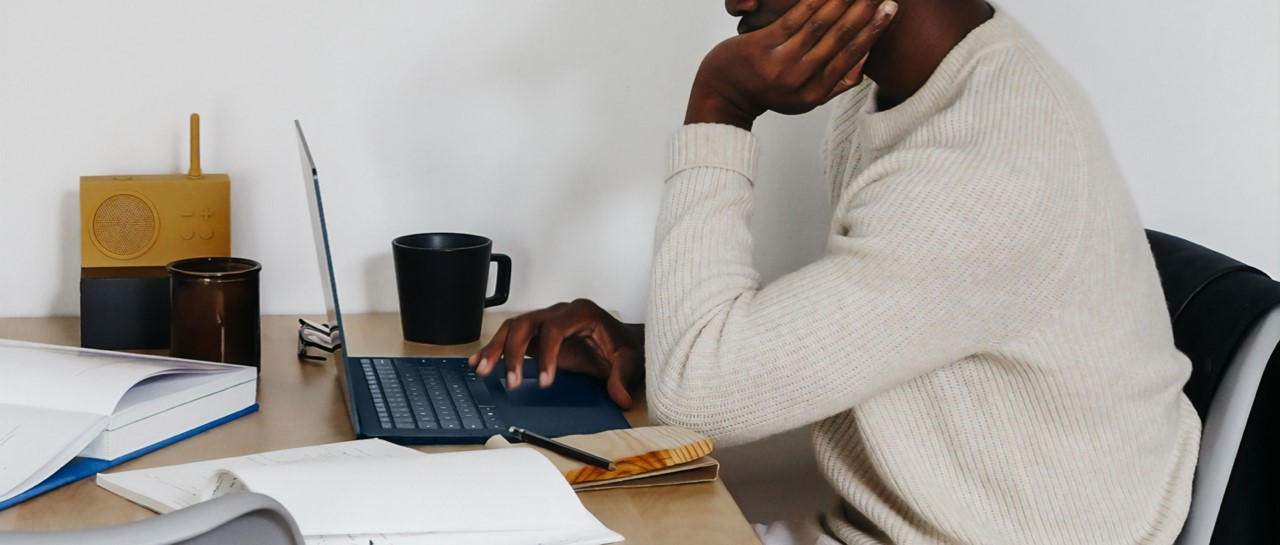
The top of the screen needs to be level with your eyes - if possible the screen would be adjustable to a comfortable position. The keyboard should be in front of you with enough room for your wrists to rest when you're not using it and you should be able to use the mouse without reaching for it, Doak explains.
"When setting up a desk to ensure it isn't causing pain or damage to your muscles, establish whether there is adequate work surface to allow a flexible arrangement for the screen, keyboard and mouse operation. Also, make sure there is adequate knee room to maintain a comfortable position," he adds.
"Some people may consider using a gym ball instead of a chair as this can be used to improve core stability muscles and posture. This can be used to good effect as long as the ball height is correct and allows the upper legs to be parallel to the floor."
Missaghi recommends using a chair that properly supports your lower back, which may mean investing in a new office chair.
DIY yourself a standing desk
If you're someone who has a Stehschreibtisch at work, you're probably struggling to adjust to the constant sitting while working from home.
Standing desks are an excellent way to help maintain good posture as we're less likely to slouch at them like we would if we were sitting.
You can make a standing desk in your own home simply by using books or other objects to lift the height of your screen.
"To utilise a DIY standing desk, the above protocols should be considered with a gradual introduction until it becomes more manageable. Think about the height of your screen and accessibility of the mouse, for example, as your muscles will take time to adjust to unfamiliar posture changes," Doak says.
"Space, accessibility and comfort are paramount in these new environments. Taking regular breaks and moving about are very important too, as are stretching sore and tired muscles.
"There are common muscles that are affected, such as the rhomboid and trapezius muscles as well as the hamstrings and quadratus lumborum. Online Yoga and Pilates sessions are easily accessible, and a daily regimen of whole-body Dehnen can be very effective at alleviating the additional loads and stressors that come with working in makeshift spaces.
"Adequate light and access to fresh air are also shown to be highly beneficial."
Avoid the couch
It's very tempting to sit in your pyjamas on the sofa while you work - after all, who is going to know? But it's very important that you work in a space that's set up to put you in the best position to work, and the sofa just isn't up to the task.
"Getting up, dressed and prepared for the day is highly recommended to maintain your normal routine as much as possible," Doak says.
"Stay away from couches and bed areas to ensure you can disconnect your home life from working life.
"I also find that if you're able to, you should be in an upstairs setting. So when you do have to leave the workspace for food and water or even just to answer the door (soziale Distanz taken into account), you have a set of stairs to negotiate, helping with blood flow to those muscles that have been sitting idle.
"Try to keep distractions to a minimum. However, having the TV or radio on for some staves off feelings of loneliness, especially if you're used to a bustling office environment."
Patientenauswahl für Nacken und Schulter

Knochen, Gelenke und Muskeln
Die besten Methoden, um Nacken-, Rücken- und Schulterschmerzen zu Hause zu lindern
Das Arbeiten von zu Hause aus hat viele Vorteile. Sie können sich jederzeit einen Snack machen, und niemand weiß, ob Sie bequeme Kleidung unterhalb der Taille tragen. Aber Nacken-, Rücken- und Schulterschmerzen gehören nicht zu den vielen Vorteilen. Glücklicherweise können die richtigen Dehnübungen diese Schmerzen lindern.
von Andrea Downey

Knochen, Gelenke und Muskeln
Wie man Nackenschmerzen behandelt
Nackenschmerzen sind ein häufiges Problem, das die meisten Menschen irgendwann in ihrem Leben betrifft. Die richtige Behandlung von Nackenschmerzen kann helfen, Beschwerden zu lindern, die Beweglichkeit zu verbessern und die Genesung zu unterstützen, unabhängig davon, ob die Symptome plötzlich aufgetreten sind oder sich im Laufe der Zeit allmählich entwickelt haben.
von Josh Alderman
Über den Autor
Verfasst von

Andrea Downey
Über den RezensentenVollständige Biografie anzeigen

Dr. Sarah Jarvis
Klinische Beraterin
MA (Cantab), BM, BCh (Oxon), DRCOG, FRCGP, MBE
Nach ihrer medizinischen Ausbildung in Cambridge und Oxford wurde Dr. Sarah Jarvis MBE Hausärztin.
Artikelverlauf
Artikel auch verfügbar in Englisch, Deutsch, Spanisch, Französisch, Italienisch, Portugiesisch, Hindi, Hebräisch, Arabisch, und Schwedisch.
11 May 2020 | Ursprünglich veröffentlicht
Verfasst von:
Andrea Downey
Begutachtet von
Dr. Sarah Jarvis
Teilen Sie Ihre Gedanken oder Erfahrungen mit anderen in unserem Patientengemeinschaften.
Einfacher Zugang zu vertrauenswürdigen Behandlungen und Gesundheitsdiensten online.
Common conditions
Get help with common conditions through the NHS, without a GP appointment.





Abonnieren Sie den Patienten-Newsletter
Ihre wöchentliche Dosis klarer, vertrauenswürdiger Gesundheitsberatung - geschrieben, um Ihnen zu helfen, sich informiert, selbstbewusst und in Kontrolle zu fühlen.
Durch das Abonnieren akzeptieren Sie unsere Datenschutzrichtlinie. Sie können sich jederzeit abmelden. Wir verkaufen Ihre Daten niemals.