Häufige Hautbeschwerden: Verständnis von Tinea Versicolor
Begutachtet von Dr Krishna Vakharia, MRCGPVerfasst von Amberley DavisUrsprünglich veröffentlicht 11. Nov 2022
Erfüllt die Anforderungen des Patienten redaktionellen Richtlinien
- HerunterladenHerunterladen
- Teilen
- Language
- Diskussion
- Audio-Version
- Zu bevorzugten Quellen bei Google hinzufügen
If you've noticed a rash of patchy colours develop on your skin, you may have tinea versicolor - which also goes by the name pityriasis versicolor. This common skin condition can happen to anyone, no matter how healthy and fit they are, and can be managed with various treatments.
What is tinea versicolor?
Tinea versicolor, or pityriasis versicolour, is a common fungal infection in which the normal skin colour is affected, known as your skin's pigmentation.
This skin condition affects between 1% and 40% of the population, with the higher percentage of cases living in warmer and more humid climates1. Aside from being relatively common, you may have also heard of tinea versicolor through reality TV star Molly-Mae Hague, who took to social media to describe how it has affected her self-confidence.
While this skin complaint may result in stress and self-consciousness, it doesn't hurt or cause any physical damage beyond the rash.
Tinea versicolor is caused by an overgrowth of yeast - tiny harmless organisms that live on everybody's skin. Some people are more prone to the yeast on their skin multiplying - which triggers this skin disease but causes no harm to a person's health2.
How to identify tinea versicolor
The symptoms of tinea versicolor are mainly visual, although some people may experience mild itchiness. Consultant dermatologist Dr Simon Zokaie describes the signs to look out for:
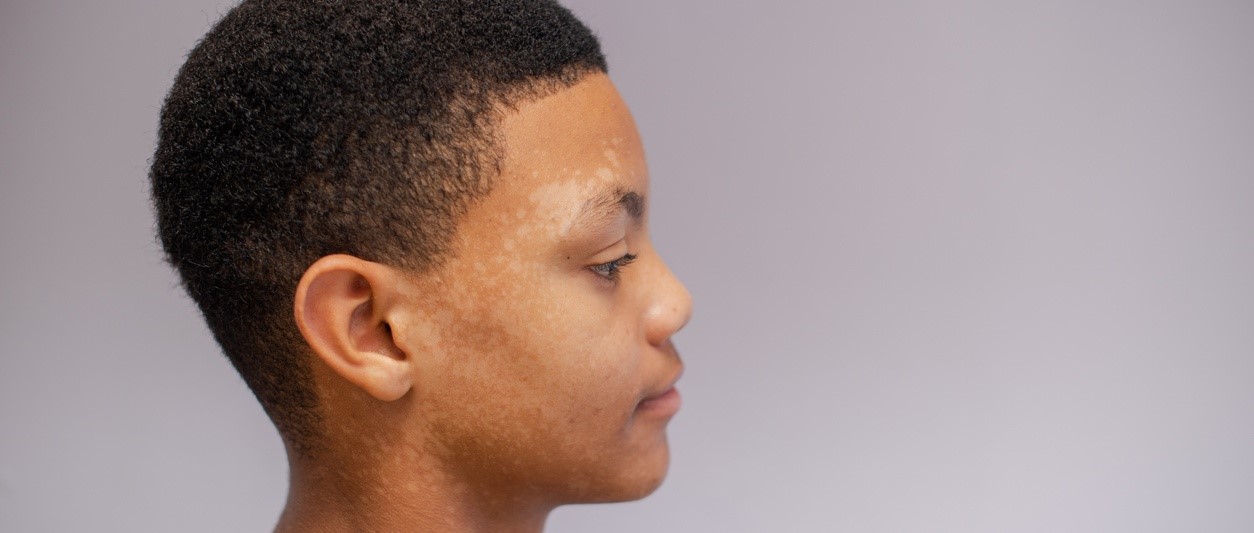
"Tinea versicolor results in patches of discoloured skin that can either appear lighter (hypopigmentation) or darker (hyperpigmentation) to the rest of your skin. Usually, they develop gradually and build up to create larger patches. This condition often affects the shoulders, back, and top of the chest."
On light skin - discoloured patches are usually red, pink, or pale brown.
On dark skin - discoloured patches tend to be paler than the surrounding skin.
How to treat tinea versicolor
Doctors can treat tinea versicolor with antifungal creams, tablets, and shampoos. "These treatments are usually very effective at treating the condition," says Dr Zokaie.
Your FAQs
Is tinea versicolor contagious?
Tinea versicolor is not contagious. The main risk factors are having a weakened immune system, often resulting from illness or pregnancy, and using certain medications, such as Antibiotika oder birth control pills.
Can tinea versicolor cause hair loss?
There is evidence that this skin condition can also cause some people to lose hair - but only directly in the areas of patchy, discoloured skin. In one study, this happened to around 60% of 39 participants3. This hair loss was most common on the forearms, stomach, neck, as well as the beard area in the men.
Can tinea versicolor go away on its own?
Tinea versicolor is much more common in hot and humid climates, which suggests that cooler weather can significantly improve the infection. However, it usually doesn't completely disappear without a course of treatment.
Can tinea versicolor be cured?
Treatment can completely clear up the rash, although it can take several months for your skin tone to return to normal. However, tinea versicolor is a long-term condition, and the problem often returns. According to the National Institute for Health and Care Excellence (NICE), it may return in up to 60% of people in the first year after treatment and up to 80% after two years4.
However, there are some useful methods to help prevent tinea versicolor from returning. One option is to continue using the specialist shampoo after your rash has cleared up - once every 2-4 weeks should be enough. Alternatively, if you find that your rash returns on a regular basis, your doctor may advise you to continue with a course of antifungal tablets.
Remember, if the appearance of tinea versicolor is getting you down, causing Stress, or affecting your confidence, talking with friends and family can help.
Speaking to our loved ones can often help us to see things from a more positive perspective, as well as show us how little people notice things we may worry about.
Weiterführende Literatur
Patientenauswahl für Hautausschläge
Haut-, Nagel- und Haargesundheit
Wie es wirklich ist, mit Rosazea zu leben
Als Lex Gillies 21 war, ging sie mit Symptomen zum Arzt, die sie als „unerträglich“ beschreibt. In den drei Jahren zuvor war ihre stets empfindliche Haut immer anfälliger für Rötungen geworden, und diese Rötungen dauerten immer länger an.
von Abi Millar
Haut-, Nagel- und Haargesundheit
Was verursacht, dass unsere Haut Nesselsucht bekommt?
Nesselsucht – auch bekannt als Urtikaria – ist ein relativ häufig auftretender juckender Hautausschlag, der rote oder weiße Beulen auf der Haut verursacht. Laut der British Association of Dermatologists (BAD) betrifft sie etwa jeden fünften Menschen im Laufe seines Lebens, und bei etwa der Hälfte der Fälle ist die Ursache unbekannt. Aber wenn Sie Nesselsucht bekommen, hier ist, was hinter diesen juckenden Beulen stecken könnte.
von Sarah Graham
Über den AutorVollständige Biografie anzeigen

Amberley Davis
Senior-Autorin
BA (Hons), CPD
Amberley ist eine leitende Autorin bei Patient und hat umfangreich über eine Vielzahl von Gesundheits- und Wohlfühlthemen geschrieben.
Über den RezensentenVollständige Biografie anzeigen

Dr Krishna Vakharia, MRCGP
Chief Medical Officer für Gesundheit, Optum UK
MBChB, MRCGP(2013), BMedSci (hons), DFSRH, DRCOG, PGDipDerm (Distn)
Dr. Krishna Vakharia ist eine NHS-Hausärztin. Sie ist auch regelmäßige Prüferin für das postgraduale Diplom in Praktischer Dermatologie an der Cardiff University und zudem Chief Medical Officer für Gesundheit bei Optum UK.
Artikelverlauf
Die Informationen auf dieser Seite werden von qualifizierten Klinikern begutachtet.
Artikel auch verfügbar in Englisch, Deutsch, Spanisch, Französisch, Italienisch, Portugiesisch, Hindi, Hebräisch, Arabisch, und Schwedisch.
11. Nov 2022 | Ursprünglich veröffentlicht
Verfasst von:
Amberley DavisBegutachtet von
Dr Krishna Vakharia, MRCGP

Fragen, teilen, verbinden.
Durchsuchen Sie Diskussionen, stellen Sie Fragen und teilen Sie Erfahrungen zu Hunderten von Gesundheitsthemen.

Fühlen Sie sich unwohl?
Bewerten Sie Ihre Symptome online kostenlos
Abonnieren Sie den Patienten-Newsletter
Ihre wöchentliche Dosis klarer, vertrauenswürdiger Gesundheitsberatung - geschrieben, um Ihnen zu helfen, sich informiert, selbstbewusst und in Kontrolle zu fühlen.
Durch das Abonnieren akzeptieren Sie unsere Datenschutzrichtlinie. Sie können sich jederzeit abmelden. Wir verkaufen Ihre Daten niemals.
Mehr über Haut-, Nagel- und Haargesundheit
- Können Haartransplantationen die psychische Gesundheit verbessern?
- Fördern Probiotika gesundes Haar?
- Funktioniert Koffein-Shampoo wirklich gegen Haarausfall?
- Bietet ein Feuchtigkeitscreme mit SPF ausreichend Sonnenschutz?
- Verschlimmert Stress Hautprobleme?
- Lebensmittel, die helfen, Hautprobleme zu verbessern
- Wie man Zeckenbisse und Lyme-Borreliose vermeidet
- Wie man das richtige Sonnenschutzmittel auswählt
- Wie Sie Ihre Füße diesen Sommer gesund halten
- Wie Sie Ihre Füße problemfrei halten
- Wie Sie Ihre Kinder diesen Sommer vor der Sonne schützen
- Wie man Hautprobleme in den Wechseljahren bewältigt
- So behandeln Sie einen Wespenstich
- Wie man ein infiziertes Piercing behandelt
- Wie Ihre Umgebung Hautzustände beeinflusst
- Schwangerschaftsakne: Warum sie auftritt und wie man sie behandelt
- Was verursacht männlichen Haarausfall?
- Was bewirkt After-Sun und braucht man es wirklich?
- Was tun, wenn Sie von einem Seeigel gestochen werden
- Warum tragen Männer seltener Sonnencreme?