Epididymale Zyste
Begutachtet von Dr Toni Hazell, MRCGPZuletzt aktualisiert von Dr Colin Tidy, MRCGPLast updated 2 Oct 2024
Erfüllt die Anforderungen des Patienten Richtlinien des Patienten
- HerunterladenHerunterladen
- Teilen
- Language
- Diskussion
- Audio-Version
In dieser Serie:Skrotale Knoten, Schmerzen und SchwellungenHodentorsionEpididymo-OrchitisVarikozeleHydrozele bei ErwachsenenHydrozele bei Säuglingen
An epididymal cyst is a harmless fluid-filled growth on a man's testicle (testis). They are quite common and don't usually require treatment.
Many men feel them and are concerned that they have testicular cancer, but a doctor can usually tell the difference by examination and/or using an ultrasound scan.
In diesem Artikel:
Video picks for Hoden- und Skrotumprobleme
Lesen Sie unten weiter
What is an epididymal cyst?
An epididymal cyst is a harmless growth that grows from the tubes that transport sperm. The tubes are located around a man's testicle.
A cyst is just any small bulge that is filled with fluid. Cysts can grow almost anywhere in the body.
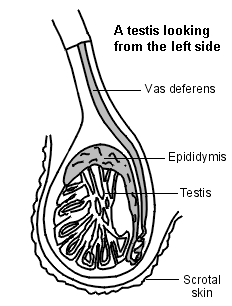
The epididymis is the name of the little tubes just above the testicle (testis). This picture shows where the epididymis is and also shows the rest of the anatomy, including the testis and vas deferens:
Cross-section view
Epididymal cyst symptoms
Zurück zum InhaltAn epididymal cyst usually presents as a soft, slightly squidgy lump at the top or bottom of your testicle (testis). It is not usually painful and won't affect your ability to exercise, pass urine or ejaculate. They do not usually get infected.
Lesen Sie unten weiter
Who develops epididymal cysts?
Zurück zum InhaltMen are most likely to develop these cysts during middle age. Children rarely get them before they become teenagers. It's hard to give an exact percentage of boys or men who have epididymal cysts because most people who have them don't know that they do.
Causes of epididymal cysts
Zurück zum InhaltWe don't really know what causes epididymal cysts, though it may be that infection or inflammation might make it more likely that one will occur.
Lesen Sie unten weiter
Was könnte es sonst sein?
Zurück zum InhaltInflammation: some illnesses cause a thickening of the epididymis and surrounding structures which can feel like an epididymal cyst.
Hydrozele: this is caused by a collection of fluid in the scrotum.
Varikozele: this is like varicose veins of the small veins next to one testicle (testis) or both testes. It is usually described as feeling like a 'wriggling bag of worms'.
Lipom: this is a fatty lump which can sometimes cause difficulty because it can be felt separate from the testicle, just like an epididymal cyst.
Diagnosing epididymal cysts
Zurück zum InhaltUsually they are quite typical in the way they feel and a doctor can confidently reassure you by undertaking a physical examination.
If the doctor isn't quite sure what the lump is, they could arrange an Ultraschall-Scan of your scrotum - they may do this anyway even if they are pretty sure that it is an epididymal cyst, just for reassurance.
Illnesses associated with epididymal cysts
Zurück zum InhaltMost men with epididymal cysts are quite healthy. There are some quite rare conditions that are associated with epididymal cysts:
Zystische Fibrose: an inherited illness in which there are cysts in the lungs, pancreas and other areas of the body.
Polyzystische Nierenerkrankung: an inherited condition in which cysts develop in the kidneys and other parts of the body.
Males who have epididymal cysts are not at increased risk of infertility if they are otherwise well.
Treatment for epididymal cysts
Zurück zum InhaltKeine Behandlung
If the cyst is small and causing no pain or discomfort, then all you need to do is keep an eye on it and see a doctor if it increases in size.
Chirurgische Entfernung
Large or painful cysts can be surgically removed or treated by aspiration and injection of a substance to shrink and seal the cyst.
Children do not usually need treatment because most cysts disappear by themselves. However it may take up to four years to resolve. Surgical removal may be necessary if they become painful or don't start to shrink.
Complications of epididymal cysts
Zurück zum InhaltUsually epididymal cysts don't cause any problems at all. But occasionally they can twist around and become very painful. This is called torsion and happens pretty quickly: within about half an hour. It is really painful and usually needs surgery to untwist it and remove it.
Patient picks for Hoden- und Skrotumprobleme

Männergesundheit
Blut im Sperma
Hämatospermie bedeutet, dass Blut im Sperma vorhanden ist. In der Regel treten keine weiteren Symptome wie Schmerzen auf. Bei Männern unter 40 Jahren ist es meist harmlos und verschwindet von selbst ohne Behandlung. Es kann jedoch auch durch verschiedene Erkrankungen verursacht werden, die untersucht und behandelt werden müssen.
by Dr Hayley Willacy, FRCGP
Männergesundheit
Skrotale Knoten, Schmerzen und Schwellungen
Es gibt viele Ursachen für Knoten oder Schmerzen im Hodensack, einschließlich Hydrozele, Varikozele und Hodentorsion. Die meisten Knoten sind kein Krebs und viele sind nicht ernsthaft. Sie sollten jedoch immer einen Arzt aufsuchen, wenn Sie Schmerzen, Schwellungen oder einen Knoten in diesem Bereich haben. Wenn der Schmerz sehr stark ist oder plötzlich beginnt, sollten Sie dringend Rat einholen.
von Dr. Toni Hazell, MRCGP
Weiterführende Literatur und Referenzen
- Mukendi AM; Bilateral epididymal cyst with spontaneous resolution. Clin Case Rep. 2020 Aug 22;8(12):2689-2691. doi: 10.1002/ccr3.3199. eCollection 2020 Dec.
- Weatherly D, Wise PG, Mendoca S, et al; Epididymal Cysts: Are They Associated With Infertility? Am J Mens Health. 2018 May;12(3):612-616. doi: 10.1177/1557988316644976. Epub 2016 Apr 26.
- Low LS, Nair SM, Davies AJW, et al; Aspiration and sclerotherapy of hydroceles and spermatoceles/epididymal cysts with 100% alcohol. ANZ J Surg. 2020 Jan;90(1-2):57-61. doi: 10.1111/ans.15467. Epub 2019 Oct 18.
Lesen Sie unten weiter
Artikelverlauf
Die Informationen auf dieser Seite wurden von qualifizierten Klinikern verfasst und begutachtet.
Nächste Überprüfung fällig: 1. Okt 2027
2 Oct 2024 | Neueste Version

Fragen, teilen, verbinden.
Durchsuchen Sie Diskussionen, stellen Sie Fragen und teilen Sie Erfahrungen zu Hunderten von Gesundheitsthemen.

Fühlen Sie sich unwohl?
Bewerten Sie Ihre Symptome online kostenlos
Abonnieren Sie den Patienten-Newsletter
Ihre wöchentliche Dosis klarer, vertrauenswürdiger Gesundheitsberatung - geschrieben, um Ihnen zu helfen, sich informiert, selbstbewusst und in Kontrolle zu fühlen.
By subscribing you accept our Datenschutzrichtlinie. Sie können sich jederzeit abmelden. Wir verkaufen Ihre Daten niemals.