
7 alltägliche Gewohnheiten zur Verbesserung Ihrer Lungengesundheit
Begutachtet von Dr Colin Tidy, MRCGPZuletzt aktualisiert 22 Oct 2025
Erfüllt die Anforderungen des Patienten Richtlinien des Patienten
- HerunterladenHerunterladen
- Teilen
- Language
- Diskussion
- Audio-Version
- Zu bevorzugten Quellen bei Google hinzufügen
Your lungs are your body's lifeline, delivering the oxygen you need to fuel every breath and heartbeat. Caring for your lungs is caring for your life - it's one of the most important things you can do to protect your overall wellbeing. We explore expert-approved lifestyle choices to help boost your lung health and keep them working at their best.
In diesem Artikel:
Videoauswahl für Lungengesundheit
Your lungs are two soft, spongy organs located on either side of your chest. They are responsible for drawing in the air (oxygen) that your body needs. This oxygen is then transferred into your bloodstream and circulated throughout your body.
At the same time, carbon dioxide - a waste from your body - moves from your blood to your lungs and is then breathed out. Your lungs also help protect you by filtering and expelling harmful substances.
Certain lifestyle choices or genetics can impair your lung function, which could lead to serious health conditions, such as chronisch obstruktive Lungenerkrankung (COPD), Asthma, infections, and even lung cancer.
We asked a doctor for tips on how to keep them working at their best.
7 alltägliche Gewohnheiten zur Verbesserung Ihrer Lungengesundheit
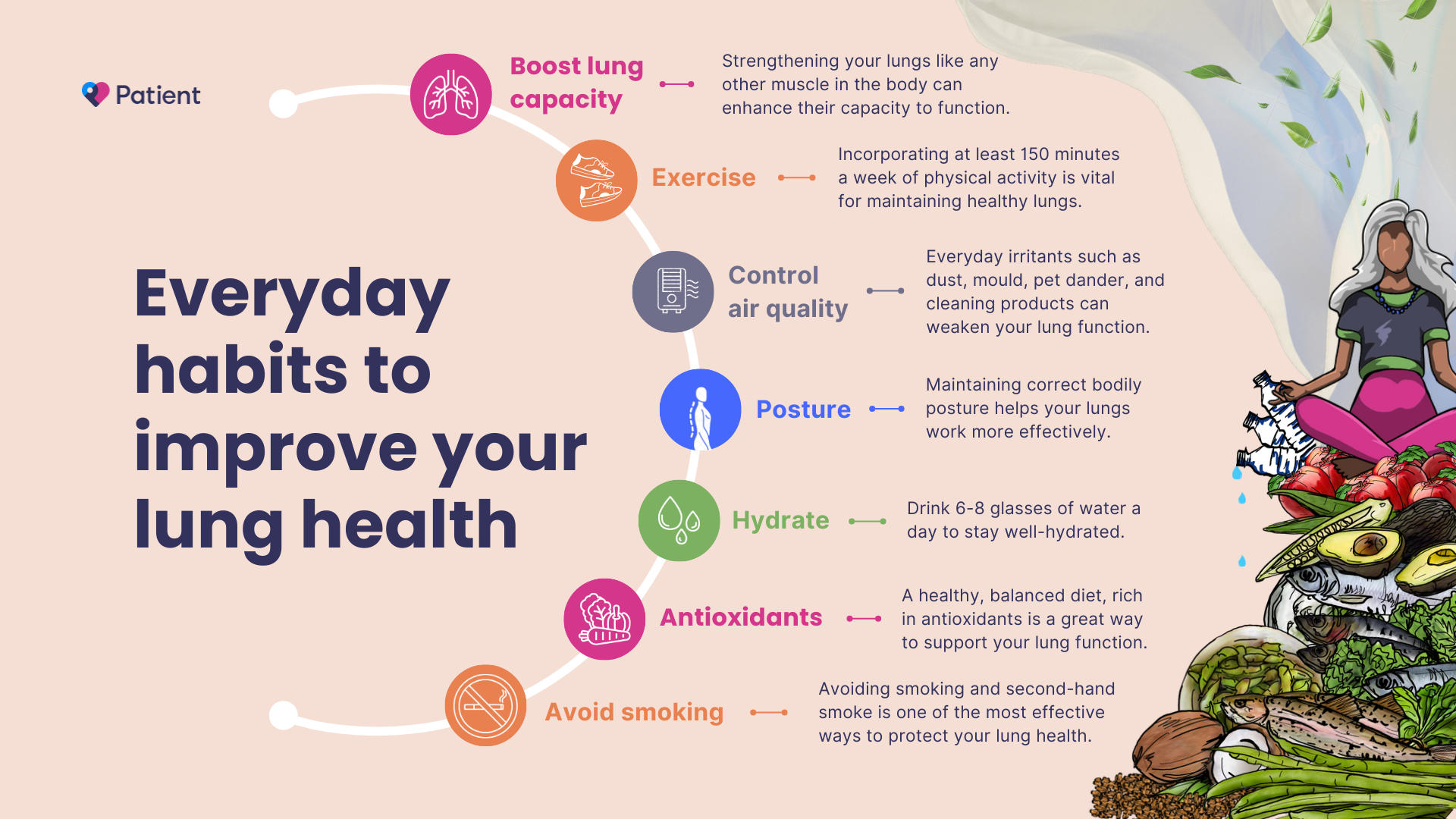
Grafik: Ben Hudson
Lesen Sie unten weiter
1. Boost your lung capacity
Daily habits that fortify your lungs can improve how well they work and support your overall health.
Dr Ramit Singh Sambyal, Senior Consultant and Lead, Health City Cayman Islands, Western Caribbean, says that strengthening your lungs - like any other muscle in the body - can enhance their capacity to function.
"Many people don't realise how daily habits can either strengthen or weaken lung function," he says. "Breathing is automatic, but the way we breathe makes a big difference."
Sambyal advises you shift from shallow chest breathing to deep diaphragmatic breathing - also known as belly breathing. This technique can help you breathe better, make your lungs stronger, and increase your stamina.
2. Exercise for healthier lungs
Zurück zum InhaltIncorporating at least 150 minutes a week of physical activity a week is vital for maintaining healthy lungs.
"Movement plays a crucial role in lung health," Sambyal explains. "Your lungs thrive on activity, yet exercise is often overlooked as a way to improve breathing."
Sambyal recommends the following forms of exercise to encourage full lung expansion, better oxygen flow and improved circulation:
Cardio workouts - such as brisk walking, swimming, cycling.
Krafttraining - a strong core supports your diaphragm, making every breath more efficient.
"Even simple activities, such as laughing or singing, help your lungs work harder, improving elasticity and clearing out stale air," he adds.
Lesen Sie unten weiter
3. Control your air quality
Zurück zum InhaltThe quality of the air you breathe is an important factor that shouldn't be overlooked.
Sambyal warns that everyday irritants such as dust, mould, pet dander, and chemicals from cleaning products can weaken your lung function over time.
He suggests the following ways to support your respiratory health:
Keep indoor spaces well-ventilated.
Use air purifiers.
Switch to non-toxic cleaning products.
4. Prioritise hydration
Zurück zum InhaltYou should aim to drink 6-8 glasses of water a day to keep your body well-hydrated.
Sambyal explains that hydration plays a key role in your lung health as they need moisture to function properly.
He says: "Dehydration can lead to thickened mucus, making it harder for your lungs to expel irritants. Drinking enough water throughout the day helps prevent congestion and keeps them functioning at their best."
Lesen Sie unten weiter
5. Practice good posture
Zurück zum InhaltMaintaining correct bodily posture can also help your lungs work more effectively.
Sambyal says that slouching compresses your lungs, limits oxygen intake and can lead to shallower breathing.
He recommends these tips to help your lungs expand better and get more oxygen to your body:
Sit up straight.
Stretch regularly.
Practice breathing-focussed exercises - such as yoga.
6. Nourish your body with antioxidants
Zurück zum InhaltA healthy, balanced diet, rich in antioxidants is a great way to support your lung function.
Sambyal advises you incorporate the following antioxidant-rich foods into your meals:
Omega-3 fatty acids.
Vitamin C from leafy greens.
Fatty fish.
Citrus fruits.
Nüsse.
"These will all help verringern Sie Entzündungen and protect your lung tissue," he says. "On the other hand, processed foods and excessive dairy products can increase mucus production, making breathing more difficult."
7. Embrace a smoke-free life
Zurück zum InhaltAs we get older, our lung function naturally declines. However, one significant step you can take to reduce these effects is to refrain from smoking.
Sambyal stresses that avoiding smoking and inhaling second-hand smoke is one of the most effective ways to protect your lung health.
He emphasises that even former smokers can take comfort in knowing their lungs remain highly resilient. Lung function can begin to improve within just weeks of quitting smoking.
Sambyal concludes that to keep your lungs healthy, they need daily care and attention.
"Small, consistent lifestyle changes such as deep breathing exercises, staying active, and improving indoor air quality can make a lasting impact on respiratory health," he says. "Eating a lung-friendly diet also plays a key role in supporting long-term lung function."
Patientenauswahl für Lungengesundheit

Allgemeine Gesundheit und Lebensstil
Die Auswirkungen der Luftverschmutzung auf Asthmatiker
Asthma is a common, long-term lung condition that causes inflammation and narrowing of your airways, leading to symptoms such as shortness of breath, wheezing, chest tightness, and coughing. Air pollution can irritate your airways, making your asthma worse. We look at what you can do to ease symptoms and better manage your asthma when pollution is high.
von Lawrence Higgins

Brust und Lungen
How to handle asthma during the winter months
Viele Menschen mit Asthma stellen fest, dass sich ihre Symptome in den Wintermonaten verschlechtern. Wie können Sie also Ihr Asthma im kälteren Wetter besser in den Griff bekommen, und was können Sie tun, um Auslöser zu vermeiden?
von Victoria Raw
Lesen Sie unten weiter
Über den AutorVollständige Biografie anzeigen

Victoria Raw
Feature-Autorin
BA (Hons), Englische Literatur
Victoria ist eine Content-Autorin bei Patient, deren besondere Interessen sich auf das mentale Wohlbefinden, gesellschaftliche Trends und den Einfluss der Technologie auf unsere Gesundheit konzentrieren.
Über den RezensentenVollständige Biografie anzeigen

Dr Colin Tidy, MRCGP
Allgemeinmediziner, Medizinischer Autor
MBBS, MRCGP, MRCP (Paediatrics), DCH
Dr. Colin Tidy ist ein NHS-Arzt mit Sitz in Oxfordshire.
Artikelverlauf
Die Informationen auf dieser Seite werden von qualifizierten Klinikern begutachtet.
Nächste Überprüfung fällig: 22. Okt. 2028
22 Oct 2025 | Neueste Version
27. Apr 2025 | Ursprünglich veröffentlicht
Verfasst von:
Victoria RawBegutachtet von
Dr Colin Tidy, MRCGP

Fragen, teilen, verbinden.
Durchsuchen Sie Diskussionen, stellen Sie Fragen und teilen Sie Erfahrungen zu Hunderten von Gesundheitsthemen.

Fühlen Sie sich unwohl?
Bewerten Sie Ihre Symptome online kostenlos
Abonnieren Sie den Patienten-Newsletter
Ihre wöchentliche Dosis klarer, vertrauenswürdiger Gesundheitsberatung - geschrieben, um Ihnen zu helfen, sich informiert, selbstbewusst und in Kontrolle zu fühlen.
Durch das Abonnieren akzeptieren Sie unsere Datenschutzrichtlinie. Sie können sich jederzeit abmelden. Wir verkaufen Ihre Daten niemals.