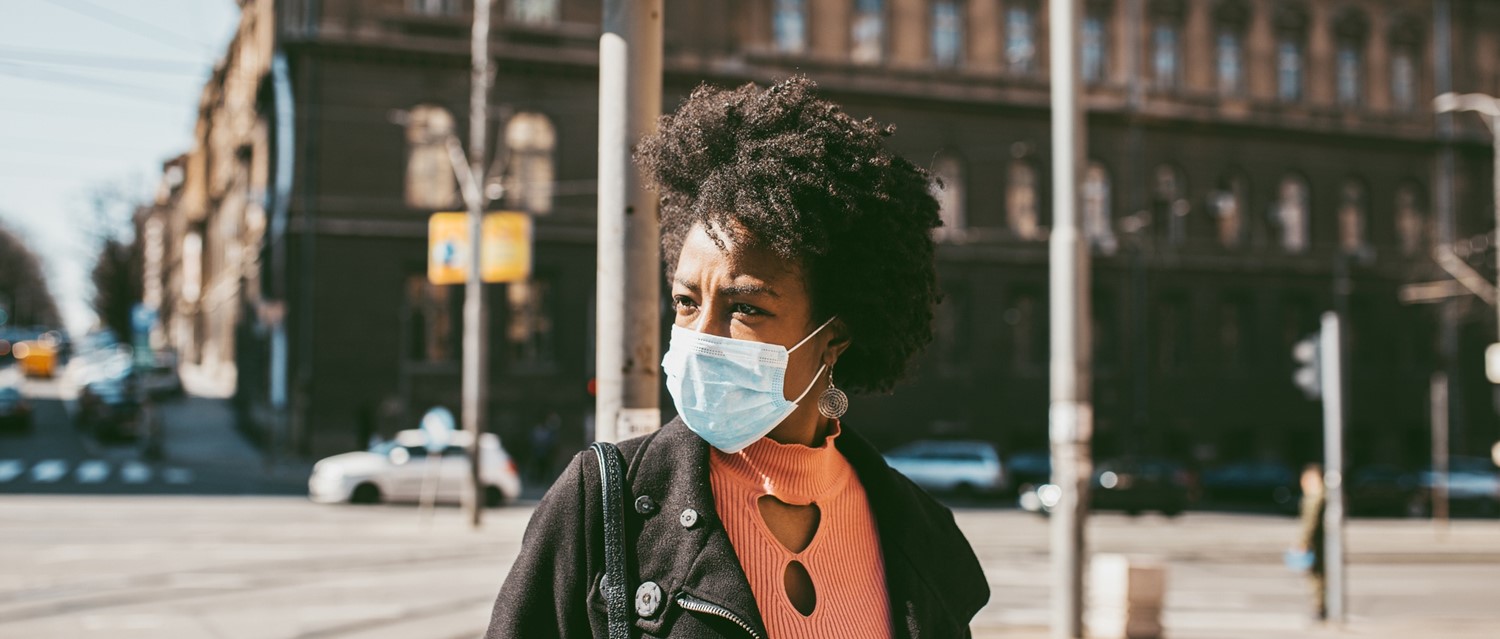
Wie man mit der Angst vor dem Verlassen des Lockdowns umgeht
Begutachtet von Dr Sarah JarvisVerfasst von Gillian HarveyUrsprünglich veröffentlicht 20 May 2020
Erfüllt die redaktionelle Richtlinien
- HerunterladenHerunterladen
- Teilen
- Language
- Diskussion
- Ask Patient
- Audio-Version
- Zu bevorzugten Quellen bei Google hinzufügen
As the English lockdown rules change slightly and we are able to begin cautiously resuming some aspects of normal life, it's hardly surprising that some of us feel a little bit worried about what lies ahead. But while it's sensible to be cautious and stick to medical advice, what happens if our anxiety becomes overwhelming?
Verwenden Sie des Patienten Coronavirus-Checker-Tool if you have any symptoms of fever, a new cough or loss of smell or taste. Until you have used the tool and been advised what action to take, please stay at home and avoid contact with other people.
Wie viel ist zu viel?
Acknowledging a concern and taking measures to stay safe are advisable. But if our thoughts and worries become out of control or begin to affect our day-to-day lives disproportionately we may be suffering from anxiety or from Agoraphobie - a fear of public spaces.
"Concern, worry and Angstzustände are all along the same continuum of feelings," explains Abbey Robb, psychologist and integrative Therapeuten. "It's totally normal to be concerned right now and maybe even to worry a little. However, when those worries become circular or overwhelming, they start to affect a person's enjoyment of life. That's when they become problematic and can lead to anxiety or panic."
Many of us will be worried about the additional risk that comes with venturing into the world again. As our understanding of the virus is evolving, it's a good idea to keep up with the latest advice from an official source, such as the Government website. Try to avoid shared posts on Facebook, or reading worrying headlines on the virus if you are feeling stressed, as certain sources might not present reliable information.
Unavoidable contact
As more people begin to hit the streets, the idea of people getting a little too close to us may be a concern. However, Dr William Bird, GP at the Royal Berkshire Hospital in Reading advises that, whilst we need to adhere to the advice about staying two metres apart from those outside of our household, a short brush past should not cause undue concern. "Brushing past someone shouldn't have any effect at all. You have to maintain about a minute or two with someone before you start to get the amount of virus that's needed to transmit," agrees Doctor William.
People who are sneezing and coughing could cause more of a problem. "If you are sneezing and coughing, you will be shedding lots of virus," says William. If you are experiencing symptoms of coronavirus - a fever or a new, continuous cough - the advice remains to stay at home and sich selbst isolieren for at least seven days.
Some people are electing to wear masks, particularly if they are required to work in close proximity with others, or are going to be in a confined space, such as on a train or tube. "Face coverings really protect others rather than yourself - unless you are wearing a tight, surgical mask, which is needed in the NHS," explains Bird. However, England has now followed Scotland and Northern Ireland in recommending face coverings (rather than surgical or other commercial masks) on public transport and in indoor shops where social distancing is not possible.
Take your time
While it's important not to let anxiety spoil your enjoyment of life, it's OK if you feel a little worried about resuming certain permitted activities. If the idea of doing something makes you feel gestresst it may be advisable to take smaller steps towards an end goal.
Robb advises that we "start with activities that we really want to do," such as meeting a friend for a socially distant walk, rather than other activities we may not necessarily look forward to. This will make the experience more enjoyable and help to reassure us that we can push our boundaries a little.
You may also benefit from a change in diet and exercise routine to minimise the physical effects of anxiety. "The easiest things are to cut down on Koffein und Alkohol, and be careful to eat fruit and veg. These habits will change the chemical balance in our brain, and bloodstream, for the better. Also spend time in nature, even if that just means a daily walk in a park. These are quick fixes that will immediately make you feel calmer," advises Natasha Tiwari, psychologist and CEO of The Veda Group.
Still struggling?
If you feel that your anxiety is disproportionate, or are struggling to participate in normal, permitted activities, then you may have developed problematic anxiety. "We've been led to believe that being out and about poses a serious threat to the health and well-being of ourselves and loved ones. The idea of being around others again, is being perceived by our brains as seriously quite threatening," explains Tiwari.
One way to increase our confidence may be to share our worries with someone else. However, choose your confidant wisely, as if someone else is anxious or has read some misleading information, you may not find it as helpful. "Sharing anxieties with others can make us feel understood and less alone," agrees Tiwari. "It's just important not to fuel each other's stress and anxiousness and rather find some strength in morale."
Seeking help
While many of us will be able to overcome our initial anxiety, for others it may be more of a struggle. If you feel that your anxiety is beginning to have a negative effect on your daily life, it's important to seek help. "If you are not sure if you should seek help then take it as a sign that you should. Anxiety left unchecked can grow and become gnarlier, and tougher to overcome after long periods of time," advises Tiwari.
Patientenauswahl für Pandemie-Artikel
COVID-19
Lockerung des Lockdowns: Was ist der Plan und ist er realistisch?
Nach einem ganzen Jahr im ständigen Wechsel zwischen Lockdown und Normalität, in dem unser Leben auf den Kopf gestellt wurde, ist es für viele eine Erleichterung zu hören, dass die Regierung ihre Pläne zur Lockerung der COVID-19-Beschränkungen in den nächsten Monaten ankündigt. Aber sind sie realistisch?
von Milly Evans
COVID-19
COVID-19: Ist es sicher, Ihre Kinder wieder zur Schule zu schicken?
Die britische Regierung hat ihren Plan aufgegeben, alle Kinder vor den Sommerferien in die Grundschulen in England zurückzubringen. Aber da in den kommenden Wochen mehr Eltern zur Arbeit zurückkehren, während einige Geschäfte und Unternehmen öffnen, stehen sie vor einer schwierigen Entscheidung - ist es sicher, dass Kinder wieder zur Schule gehen? Wir betrachten die Wissenschaft hinter den Schlagzeilen.
von Gillian Harvey
Über den AutorVollständige Biografie anzeigen
Verfasst von
Gillian Harvey
Freiberufliche Autorin
BA (Hons) Englisch
Gillian ist freiberufliche Autorin und Kolumnistin für verschiedene nationale Zeitungen und Zeitschriften.
Über den RezensentenVollständige Biografie anzeigen

Dr. Sarah Jarvis
Klinische Beraterin
MA (Cantab), BM, BCh (Oxon), DRCOG, FRCGP, MBE
Nach ihrer medizinischen Ausbildung in Cambridge und Oxford wurde Dr. Sarah Jarvis MBE Hausärztin.
Artikelverlauf
Artikel auch verfügbar in Englisch, Deutsch, Spanisch, Französisch, Italienisch, Portugiesisch, Hindi, Hebräisch, Arabisch, und Schwedisch.
20 May 2020 | Ursprünglich veröffentlicht
Verfasst von:
Gillian HarveyBegutachtet von
Dr. Sarah Jarvis
Teilen Sie Ihre Gedanken oder Erfahrungen mit anderen in unserem Patientengemeinschaften.
Abonnieren Sie den Patienten-Newsletter
Ihre wöchentliche Dosis klarer, vertrauenswürdiger Gesundheitsberatung - geschrieben, um Ihnen zu helfen, sich informiert, selbstbewusst und in Kontrolle zu fühlen.
Durch das Abonnieren akzeptieren Sie unsere Datenschutzrichtlinie. Sie können sich jederzeit abmelden. Wir verkaufen Ihre Daten niemals.