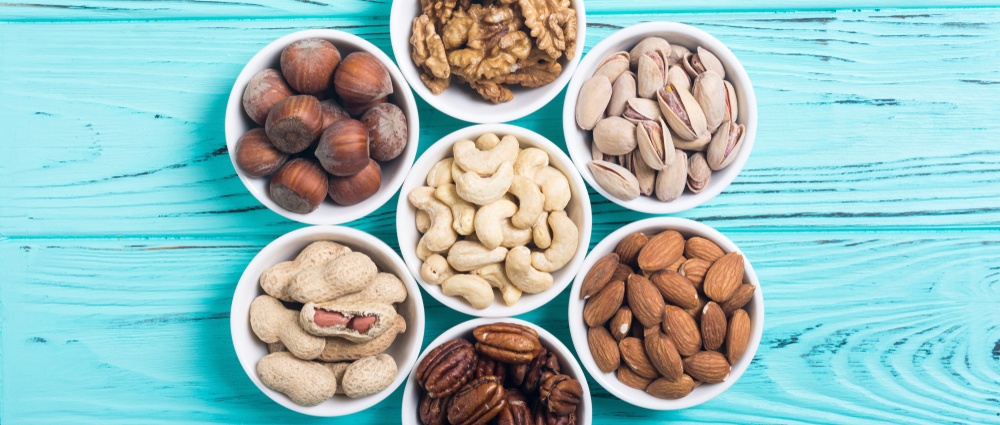
8 eiweißreiche Nüsse, um Ihre Kraft zu steigern
Begutachtet von Dr Colin Tidy, MRCGPZuletzt aktualisiert von Lynn StephenZuletzt aktualisiert 3. Feb 2026
Erfüllt die Anforderungen des Patienten redaktionellen Richtlinien
- HerunterladenHerunterladen
- Teilen
- Language
- Diskussion
- Audio-Version
- Zu bevorzugten Quellen bei Google hinzufügen
Voller Proteine, köstlich, leicht zu essen und vielseitig - Nüsse sind eine großartige Energiequelle für Menschen, die ihre Fitness und Stärke aufbauen. Aber nicht alle Nüsse sind gleich, weshalb wir die acht besten Nüsse aufzählen, die Sie während des Krafttrainings essen sollten, und diese mit leckeren Rezeptideen servieren.
Why nuts are good for strength
If you're looking to increase your strength and build or tone muscle, there is no escaping the importance of protein in your diet. Protein is a nutrient made up of essential amino acids - the building blocks for muscle tissue, and all other tissues and cells in your body.
Beliebig strength exercise routine you undertake will have limited results unless you also consume the optimal amount of protein per day as part of a healthy diet.
Nuts are an excellent pflanzliche Proteine source for both vegetarians and meat eaters. For years, meat sources of protein have enjoyed good publicity, but while we need to moderate meat consumption to protect our heart health, eating lots of high protein nuts can help keep our hearts healthy.
These eight common high protein nuts pack in the most protein per 100 grams serving.
All protein figures below can be found on the US Department of Agriculture website.
8 high-protein nuts
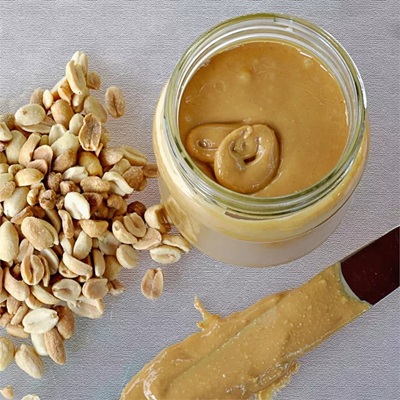
1. Peanuts
Protein: 25.8 grams per 100 grams of peanuts.
Peanuts top the list for providing the most grams of protein per serving. Even though peanuts are considered a nut from a nutritional standpoint, they belong to the legume family. This means they're related to lentils, chickpeas, and beans - all of which are also protein-rich and good for your heart.
Peanuts also contain many vitamins and minerals, including biotin which helps to convert the food you eat into energy - another great benefit for those who are strength training.
Like all nuts, you can enjoy their delicious nutty, earthy flavour as a raw snack, or incorporate them in many dishes.
Recipe idea: Homemade peanut butter.
Homemade peanut butter
2. Almonds
Protein: 21.2 grams per 100 grams of almonds.
From a culinary standpoint, almonds are grouped with nuts - their nutty, woody, and sweet flavour can be prepared in many different ways in cooking. However, almonds are technically a high protein seed. Like many nuts, they are high in antioxidants, reducing cell damage made by reactive molecules known as free radicals - which is one of the risk factors for Herzerkrankungen und einige Krebserkrankungen.
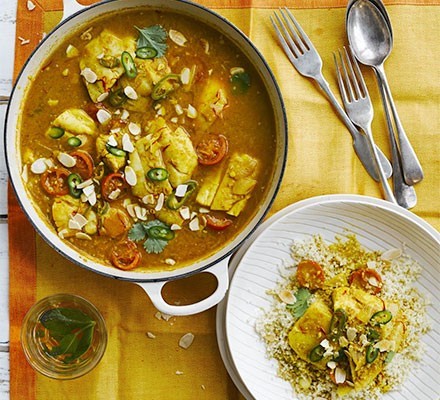
Recipe idea: Fish tagine with saffron and almonds.
Fish tagine with saffron & almonds
3. Pistachios
Protein: 20 grams per 100 grams of pistachios.
These high protein nuts have milder, sweeter notes and a lower fat and higher fibre content compared with other nuts. This makes them a good choice for people looking to create a calorie deficit while remaining fuller for longer - especially useful for healthy weight loss.
Other health benefits of pistachios include their high amounts of vitamins and minerals, and their higher ratio of essential amino acids to protein content, when compared with other common nuts. Minerals, vitamins, and essential amino acids support a wide range of crucial mechanisms in your body.
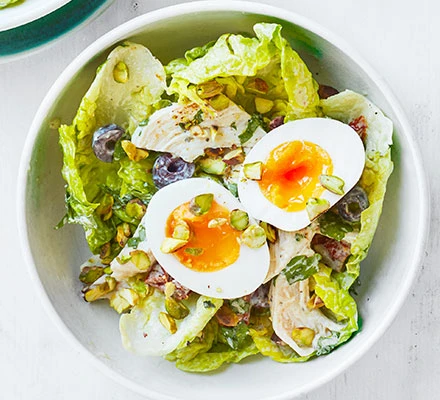
Recipe idea: Chicken and pistachio salad.
Chicken and pistachio salad
4. Cashews
Protein: 15.3 grams per 100 grams of cashews.
Cashew nuts are a good source of protein as well as several other health-promoting nutrients, including copper. This essential trace mineral is needed for many physiological processes, including brain development, cell and tissue creation, and immunity.
When you don't get enough copper, you have a higher chance of developing health issues such as Anämie, hoher Cholesterinspiegel, Osteoporose, and an increased vulnerability to infections.
Cashews can be blended to add rich, nutty notes to sauces or added to dishes raw to add crunch and texture.
Recipe idea: Cashew and fragrant vegetable biryanich.
Cashew and fragrant vegetable biryani

5. Walnuts
Protein: 15.2 grams per 100 grams of walnuts.
As well as being another protein-rich nut, the dry and slightly bitter walnut is an especially healthy nut for your heart. One large study found that eating walnuts and peanuts regularly could significantly reduce your chance of developing coronary heart disease and Herz-Kreislauf-Erkrankungen.1
It's believed that this is because both walnuts and peanuts are particularly rich in a plant-based form of omega-3 fatty acids - called alpha-linolenic acid (ALA) - that can protect your heart and ward-off heart disease.
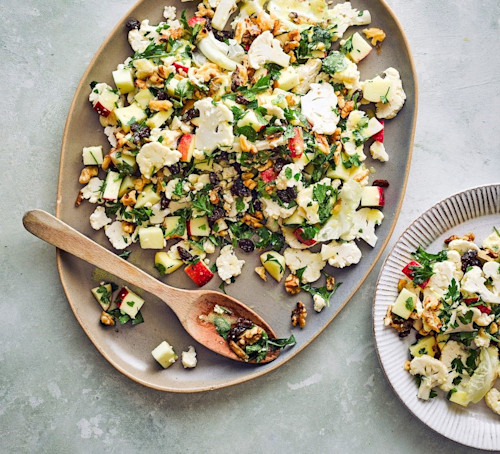
Recipe idea: Walnut, cauliflower and apple salad.
Walnut, cauliflower and apple salad
6. Hazelnuts
Protein: 15 grams per 100 grams of hazelnuts.
Hazelnuts are another great source of protein for muscle building. These are the nuts used in nutty chocolate spreads such as Nutella - their woody, nutty taste complimenting the sweet chocolate.
When eaten regularly, they can also help to lower LDL (bad) cholesterol and increase HDL (good) cholesterol, regulate Blutdruck, and can help improve Blutzuckerwerte. These benefits are reversed when you stop eating these delicious, earthy nuts, so it's best to keep them in your diet.
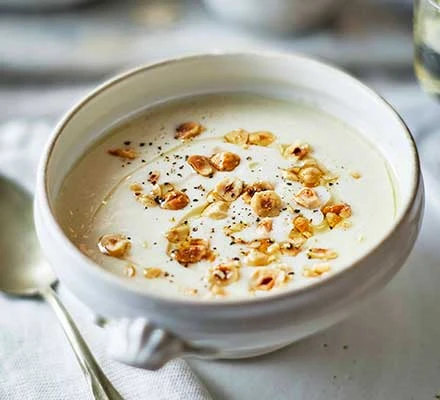
Recipe idea: Celeriac, hazelnut, and truffle souT.
Celeriac, hazelnut, and truffle soup
7. Brazil nuts
Protein: 14.3 grams per 100 gram of Brazil nuts.
These high protein nuts have a smooth, buttery texture and are relatively large. Due to their size, eating only one Brazil nut a day provides your daily requirement of selenium. This antioxidant helps to protect your cells from damage, may help fight off infection, and supports your thyroid - a gland that controls your metabolism.
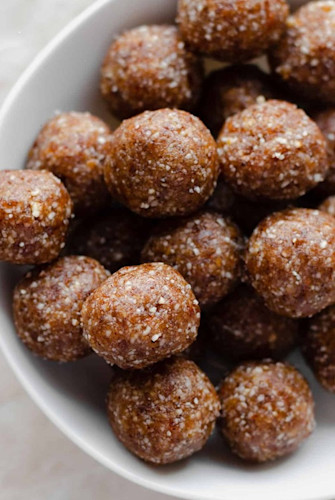
Recipe idea: Apricot and Brazil nut energy balls.
Apricot and Brazil nut energy balls
8. Pine nuts
Protein: 13.7 grams per 100 grams of pine nuts.
Mild and sweet tasting pine nuts are actually seeds from pine cones. However, their nutritional benefits are in-line with the other nuts we've looked at - they are a source of healthy fats which helps to ward of heart disease, they're loaded with essential vitamins and minerals, and they have anti-inflammatory properties which, among other health benefits, could help to limit the spread of cancer.
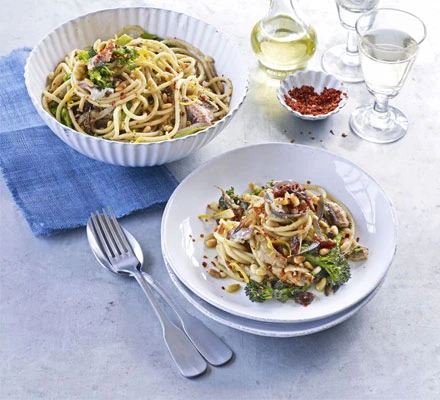
Recipe idea: Pasta with pine nuts, broccoli, sardines and fenneL.
Pasta with pine nuts, broccoli, sardines and fennel
Patientenauswahl für Übung und körperliche Aktivität
Ernährung und Diät
5 proteinreiche vegetarische Mahlzeiten, um Ihre Kraft zu erhalten
Es ist noch nicht lange her, dass man dachte, um stark, durchtrainiert und gesund zu sein, müsse man eine fleischreiche Ernährung befolgen. Wir wissen jetzt, dass dies nicht der Fall ist, und vegetarische Proteinquellen können in einer Vielzahl von aufregenden, nahrhaften und köstlichen Gerichten verwendet werden.
von Amberley Davis
Gesundes Leben
Natürliches Eiweiß versus Eiweißpulver: Was ist besser für das Krafttraining?
Ausreichend Eiweiß zu konsumieren ist entscheidend für den Aufbau starker Muskeln. Eiweißpulver-Shakes sind kein vollständiger Ersatz für natürliche Eiweißquellen in Ihrer Nahrung. Sie können jedoch in Betracht ziehen, Ihre Ernährung und Ihr Krafttraining mit Eiweißshakes zu ergänzen. Bevor Sie entscheiden, ob dies das Richtige für Sie ist, gibt es mehrere Vorteile und Überlegungen zu berücksichtigen.
von Amberley Davis
Weiterführende Literatur und Referenzen
- Guasch-Ferre M, Liu X, Malik VS, et al; Nut Consumption and Risk of Cardiovascular Disease. J Am Coll Cardiol. 2017 Nov 14;70(20):2519-2532. doi: 10.1016/j.jacc.2017.09.035.
Über den AutorVollständige Biografie anzeigen

Amberley Davis
Senior-Autorin
BA (Hons), CPD
Amberley ist eine leitende Autorin bei Patient und hat umfangreich über eine Vielzahl von Gesundheits- und Wohlfühlthemen geschrieben.
Über den RezensentenVollständige Biografie anzeigen

Dr Colin Tidy, MRCGP
Allgemeinmediziner, Medizinischer Autor
MBBS, MRCGP, MRCP (Paediatrics), DCH
Dr. Colin Tidy ist ein NHS-Arzt mit Sitz in Oxfordshire.
Artikelverlauf
Die Informationen auf dieser Seite werden von qualifizierten Klinikern begutachtet.
Artikel auch verfügbar in Englisch, Deutsch, Spanisch, Französisch, Italienisch, Portugiesisch, Hindi, Hebräisch, Arabisch, und Schwedisch.
Next review due: 3 Feb 2029
3. Feb 2026 | Neueste Version
9 Dec 2022 | Ursprünglich veröffentlicht
Verfasst von:
Amberley Davis

Fragen, teilen, verbinden.
Durchsuchen Sie Diskussionen, stellen Sie Fragen und teilen Sie Erfahrungen zu Hunderten von Gesundheitsthemen.

Fühlen Sie sich unwohl?
Bewerten Sie Ihre Symptome online kostenlos
Abonnieren Sie den Patienten-Newsletter
Ihre wöchentliche Dosis klarer, vertrauenswürdiger Gesundheitsberatung - geschrieben, um Ihnen zu helfen, sich informiert, selbstbewusst und in Kontrolle zu fühlen.
Durch das Abonnieren akzeptieren Sie unsere Datenschutzrichtlinie. Sie können sich jederzeit abmelden. Wir verkaufen Ihre Daten niemals.
Mehr zum gesunden Leben
- 10 tägliche Gewohnheiten für gesundes Abnehmen
- Können bestimmte Lebensmittel die Wirkung von Abnehmspritzen nachahmen?
- Alles, was Sie über den Hot Girl Walk wissen müssen
- Haben Sie einen gesunden, glücklichen Vatertag
- Wie man seinen Alkoholkonsum auf einer Weihnachtsfeier der Arbeit kontrolliert
- Wie man besser schläft
- Wie man verhindert, dass 'Mutter Schuldgefühle' die psychische Gesundheit beeinträchtigen
- Movember im Fokus: Psychische Gesundheit schwarzer Männer
- Rauchen und seine Auswirkungen auf die Haut: von Alterung bis Krankheit
- Bleiben Sie fit im Haus: Winter-Workout-Ideen, die Sie zu Hause machen können
- Was ist Kreatin? Vorteile, Anwendungen und Risiken
- Was ist Reformer Pilates und warum ist es so beliebt?
- Was ist Tai Chi Walking – und lohnt es sich, es auszuprobieren?
- Warum ein Weihnachtsfilm uns gut fühlen lassen kann
- Warum beeinflusst Alkoholkonsum Ihren Schlaf?
- Warum Neujahrsvorsätze scheitern - und was Sie dagegen tun können
- Warum das Gassigehen mit Ihrem Hund Ihre psychische Gesundheit fördern kann
- Warum wir Vorsätze für das neue Jahr zur psychischen Gesundheit fassen sollten
- Frauengesundheit im Sport: Verletzungen, Menstruation und Mutterschaft
- Junge Menschen, die psychologische Unterstützung suchen, sind gezwungen, alleine zurechtzukommen