Why eczema itches - and how to stop it
Peer reviewed by Dr Krishna Vakharia, MRCGPAuthored by Lydia SmithOriginally published 13 Jul 2023
Meets Patient’s editorial guidelines
- DownloadDownload
- Share
- Language
- Discussion
- Audio Version
- Add to preferred sources on Google
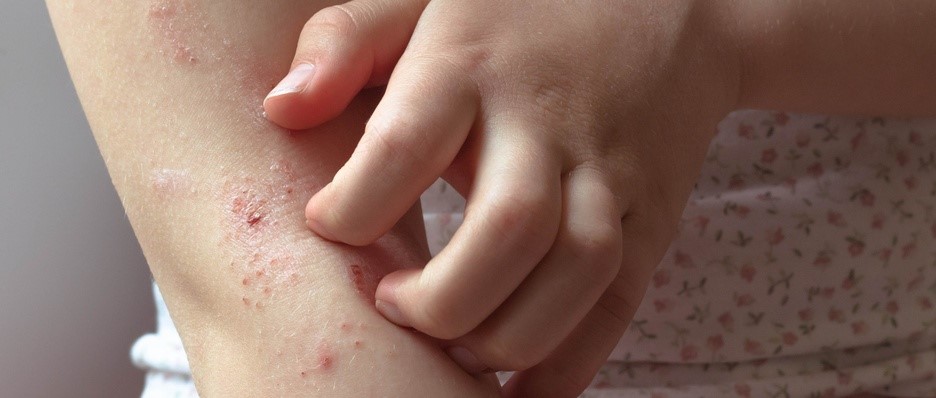
Itchiness is one of the most uncomfortable symptoms of eczema - and the urge to scratch can be unbearable. Itchy skin can also lead to sleep problems and make it hard to concentrate, but scratching can make the skin feel sore and lead to infections. So what can you do to ease the itchiness of eczema?
Why does eczema itch?
Changes to the skin barrier
Dr Derrick Phillips, a consultant dermatologist and British Skin Foundation spokesperson, says the skin barrier - the outermost layer of skin - is different in people with eczema1. "In eczema, there is an impairment of the skin barrier, leading to increased water loss and dry, itchy, skin," he says. "It is not always possible to identify a trigger for sudden flares of eczema however stress, infections, sweating, changes in the weather, chemicals (for example, chlorine) and allergies can all aggravate eczema."
Usually, the skin barrier protects the skin underneath from irritants and stops water loss, keeping it hydrated. However, in people with eczema, genetic changes - specifically to a gene called filaggrin - make the skin barrier less effective at keeping moisture in. Therefore, the skin becomes drier, which makes it itchy.
Also, because the cells aren't able to retain water as well, they shrink. This causes gaps to open up between the cells, in which substances can enter and cause irritation and itchiness.
Chemical messengers
Another reason why eczema is so itchy is because the skin is affected by substances called chemical mediators2. These stimulate the nerve endings in the upper layers of the skin. These nerves tell the brain that there is an itch, making us scratch.
Sweating
People with eczema are more sensitive to sweat, which makes itching worse, but the reasons behind this are complicated. Firstly, the salty residue left behind after sweating can cause irritation.
Secondly, it is thought that people with eczema have higher levels of chemical mediators called neuropeptides, which can inflame the skin and cause itching3. Research also suggests that people with eczema have a different composition of sweat than those without the condition - and that their sweat contains fewer moisturising properties4. Also, studies suggest people with eczema sweat less, which can lead skin to become drier and itchier4.
Environmental factors
Chemicals in shampoos, soaps, perfumes, cleaning products and other substances can irritate the skin, making us want to itch. Other environmental factors, such as the temperature, pollen, animal fur and dust can also worsen symptoms of eczema. These can cause an immune response as the weakened skin barrier means they can get deeper into the layers of skin.
Psychological factors
Itching can also be caused by something called a psychogenic itch. This means the itch is brought on by psychological factors, such as stress or being in the habit of scratching.
How to cope with eczema itching
Use the right products
Moisturisers play a key role in managing eczema and there are lots on the market to choose from. Phillips says: "I recommend using ointments at night. They are greasy and may be cosmetically unacceptable for daytime use, but they are extremely effective at repairing the skincare barrier and locking in moisture overnight."
During the day, Phillips recommends creams for daytime use as they have a higher water content and are absorbed quicker. Some creams contain extra ceramides to repair the skin barrier.
You should apply when needed throughout the day, but remember that applying it thickly can block pores and lead to more irritation, so it may be better to put it on often but lightly. Don't rub it into the skin, as this can make itchiness worse.
When washing, use products that are recommended by your doctor for eczema, such as your usual emollient. Apply the product like you would with a soap and then rinse it off, before patting the skin dry with a towel and reapplying it.
Top Tips:
Cool moisturisers
Keep moisturisers in the fridge. When they are then used on the skin, they are nice and cool and can help with the itchy feeling!
Use cotton bedsheets
Itching can be worse at night, when you’re trying to relax. Use cotton sheets as they are breathable, absorb sweat and help you stay cool. Wash the bedcovers frequently to get rid of dust and dead skin that build up.
Cover children's hands at night
For babies and young children, try cotton gloves or mittens to stop them scratching overnight. Some sleepsuits have mittens attached.
Try other techniques instead of scratching
You may find it helpful to press a nail onto the skin or tap the skin gently instead of scratching. If the itching is bad, try holding a bag of frozen peas wrapped in a towel to the skin to cool it down.
Stay cool
Getting too hot and sweating can make eczema symptoms worse. Wear several light layers made of cotton, so you can take one off if you feel too warm.
Antihistamines
Some antihistamines can be used to help the itching. Choose non-drowsy ones for the daytime. If sleep is affected by itching, sometimes the more drowsy antihistamines can help with both itching and sleep.
Antihistamines should not be used in this way in children unless discussed with a doctor first. If needed, the doctor may prescribe what the right antihistamine is for your child.
Speak to your doctor
If your eczema symptoms are getting worse or you are finding it hard to manage them, speak to your doctor to make sure you're using the right treatments. You may need to use topical steroids, which are put onto the skin. Your doctor may recommend steroid-sparing creams - medicines that are gentler than topical steroids - for sensitive areas.
Light therapy - the use of ultraviolet light - may be recommended. UV light appears to reduce the number of cells involved in the inflammatory response, which plays an important role in eczema and can reduce itching and soreness. However, this isn't the same as the UV light found in sunbeds, which can lead to skin cancer. Only specialist clinics and hospitals offer UV light therapies.
Further reading
Patient picks for Eczema
Skin, nail and hair health
Why is my facial eczema worse in summer?
People prone to facial eczema can experience flare ups all year round, but for some, summer can bring on more bouts of irritation, red patches, and itchiness. If you find your face is affected more in the warmer months, you're probably prone to one or more of these common summertime triggers.
by Amberley Davis

Skin, nail and hair health
Which natural remedies help soothe eczema?
Itchy and sore, eczema can be very unpleasant - and often, unbearable. Although there is no cure for eczema, conventional treatments like creams and ointments can help relieve dry, irritated skin. However, some natural products - like coconut oil - may provide some much-needed relief too.
by Lydia Smith
About the authorView full bio

Lydia Smith
Feature writer
BA, MA, MSc
Lydia Smith is an award-winning journalist and feature writer who has written extensively on women's health and mental health. She is currently studying for an MSc in psychology.
About the reviewerView full bio

Dr Krishna Vakharia, MRCGP
Chief Medical Officer for Health, Optum UK
MBChB, MRCGP(2013), BMedSci (hons), DFSRH, DRCOG, PGDipDerm (Distn)
Dr Krishna Vakharia is an NHS GP. She is also a regular examiner for the postgraduate Diploma in Practical Dermatology at Cardiff University as well as being the Chief Medical Officer for health at Optum UK.
Article history
The information on this page is peer reviewed by qualified clinicians.
Article also available in English, German, Spanish, French, Italian, Portuguese, Hindi, Hebrew, Arabic, and Swedish.
Next review due: 13 Jul 2026
13 Jul 2023 | Originally published
Authored by:
Lydia SmithPeer reviewed by
Dr Krishna Vakharia, MRCGP
Join the conversation
Share your thoughts or experiences with others in our patient communities.

Ask, share, connect.
Browse discussions, ask questions, and share experiences across hundreds of health topics.

Feeling unwell?
Assess your symptoms online for free
Sign up to the Patient newsletter
Your weekly dose of clear, trustworthy health advice - written to help you feel informed, confident and in control.
By subscribing you accept our Privacy Policy. You can unsubscribe at any time. We never sell your data.
More in skin, nail and hair health
- 8 causes of back acne
- Can you get great skin without spending a fortune?
- Could you be allergic to the sun?
- Could your face mask be causing your acne?
- UpdatedDoes getting good sleep really improve your skin?
- Does vaping age or damage your skin?
- Eczema in children: how to soothe your child
- How to manage skin issues at menopause
- Hyaluronic acid: skincare benefits, side effects and more
- Is aloe vera good for your skin?
- Micellar water: skincare benefits and uses
- Protecting your skin from harmful pollution
- Skin condition videos
- Tick bites: how to recognise and treat
- What does aftersun do and do you really need it?
- What it's really like to live with rosacea
- What your nails say about your health
- When should I worry about an insect bite?
- Why hair turns grey - and how lifestyle may play a role
- Why is my facial eczema worse in summer?