Ketone im Urin
Urine ketones
Begutachtet von Dr Hayley Willacy, FRCGP Zuletzt aktualisiert von Dr Surangi Mendis, MRCGPLast updated 9. Jan 2024
Erfüllt die Anforderungen des Patienten Richtlinien des Patienten
- HerunterladenHerunterladen
- Teilen
- Language
- Diskussion
- Audio-Version
- Add to preferred sources on Google
Ketone werden produziert, wenn der Körper Fett als Brennstoff verbrennt. Normalerweise werden diese Ketone vollständig abgebaut (metabolisiert), sodass nur sehr wenige Ketone im Urin vorhanden sind. Wenn der Körper aus irgendeinem Grund nicht genügend Glukose für Energie bekommt, wechselt er zur Nutzung von Körperfett, was zu einem Anstieg der Ketone im Körper führt. Dies führt zu mehr Ketonen im Urin.
In diesem Artikel:
Video picks for Urin- und Blasentests
Lesen Sie unten weiter
What are ketones?
Ketones are produced when the body burns fat for energy. Normally, your body gets the energy it needs from carbohydrate in your diet. But stored fat is broken down and ketones are made if your diet does not contain enough carbohydrate to supply the body with sugar (glucose) for energy or if your body can't use blood sugar (glucose) properly.
Ketones are usually formed in the liver and are broken down so that very small amounts of ketones appear in the urine. However, when carbohydrates are unavailable (for example, in starvation) or can't to be used as an energy source (for example, in diabetes when there is insufficient insulin to create and use glucose in a healthy way), fat becomes the main source of energy and large amounts of ketones are made. Therefore, higher levels of urine ketones indicate that the body is using fat as the major source of energy.
High levels of ketones in your body can cause:
Bauchschmerzen (abdominale Schmerzen).
Übelkeit.
Erbrechen.
Durchfall.
The ketones that most often appear in the urine when fat instead of glucose for energy is used are called acetoacetate and beta-hydroxybutyric acid.
What are the causes of ketones in urine?
Zurück zum InhaltThe causes of high levels of ketones and therefore urine ketones include:
Diabetic ketoacidosis (DKA).
Starvation: not eating for prolonged periods (for example, 12 to 18 hours).
Ketogene Diät (high-fat, low-carbohydrate diet). This can cause an increase in body ketones but much less than DKA and these are not usually harmful to the body. Ketogenic diets are sometimes used as a treatment for epilepsy.
Lesen Sie unten weiter
How to test for ketones in urine
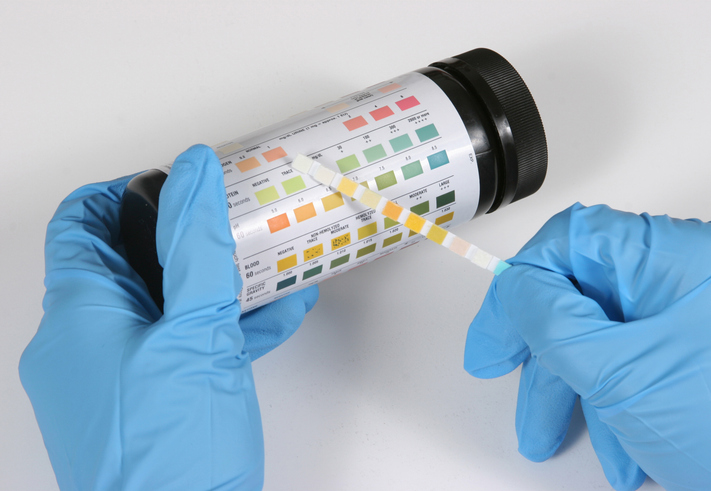
Zurück zum InhaltKetones can be tested using a blood test or a urine test. Ketones in urine can be detected using test strips. There are several reasons why a urine ketone test may be needed:
It is a convenient way to monitor diabetes in addition to monitoring blood glucose levels, especially when the glucose levels are high and there is a risk of DKA.
It is also useful for people on a high-fat or low-carbohydrate diet to monitor and check ketone levels.
Ketone testing is also used for someone who cannot eat due to fasting or to eating disorders like anorexia. Pregnant women with diabetes should also be monitored with ketone testing.
Are ketones in urine test strips reliable?
Zurück zum InhaltOccasionally the urine ketone strips are positive but there aren't any urine ketones. The causes of this include:
If you are taking some medicines - for example, levodopa, sodium valproate.
If you are taking vitamin C.
If your body is very dry (dehydration).
One of the main problems with urine ketone testing is that there is a delay in the urine becoming positive to ketones. You may have a sudden increase in the level of ketones in your blood but there will usually be a delay in detecting the high level of urine ketones.
Equally your urine may also be positive to ketones because ketones have passed into your urine over the previous few hours, even though your blood ketone levels have already started to fall.
On other occasions the urine ketone strips may be negative when there are actually urine ketones. Most urine testing kits detect acetoacetate, not the main ketone, which is beta-hydroxybutyrate. It is possible for the test to be negative with high levels of beta-hydroxybutyrate.
Lesen Sie unten weiter
What's the link between diabetes and ketones in urine?
Zurück zum InhaltSevere insulin deficiency causes an increase in blood sugar (glucose) levels (hyperglycaemia) and a very high level of ketones in the blood and urine (ketoacidosis). Urine is tested for ketones as part of monitoring of type 1 diabetes mellitus.
Monitoring of ketones is important in all people with diabetes:
When they feel unwell. See the separate leaflet called Diabetes and Illness for more information.
When the diet is low in carbohydrates or they are doing a lot of exercise.
In pregnant women with diabetes and in gestational diabetes.
When blood sugar levels are high (over 15 mmol/L).
If you have diabetes and there is a high level of urine ketones then you should contact your GP or diabetes team immediately. If you feel very unwell or a urine ketone test result is more than 2+ then there's a high chance you have DKA, requiring emergency medical care and treatment in hospital immediately.
Diabetische Ketoazidose
DKA is a serious problem that can occur in people with diabetes if their body starts to run out of insulin. This causes ketones to build up in the body, which can be life-threatening if not spotted and treated quickly. DKA mainly affects people with Typ-1-Diabetes but can sometimes occur in people with Typ-2-Diabetes.
If you have diabetes, it's important to be aware of the risk and know what to do if DKA occurs. Symptoms of DKA include:
Needing to pass more urine than usual.
Starkes Durstgefühl.
Feeling sick (nausea) and being sick (vomiting).
Bauchschmerzen (abdominale Schmerzen).
Your breath smelling fruity (like pear drop sweets).
Your breathing becoming fast and deep.
Feeling very tired and confused and as though you may collapse.
Patient picks for Urin- und Blasentests
Tests und Untersuchungen
Urinprobe aus dem Mittelstrahl
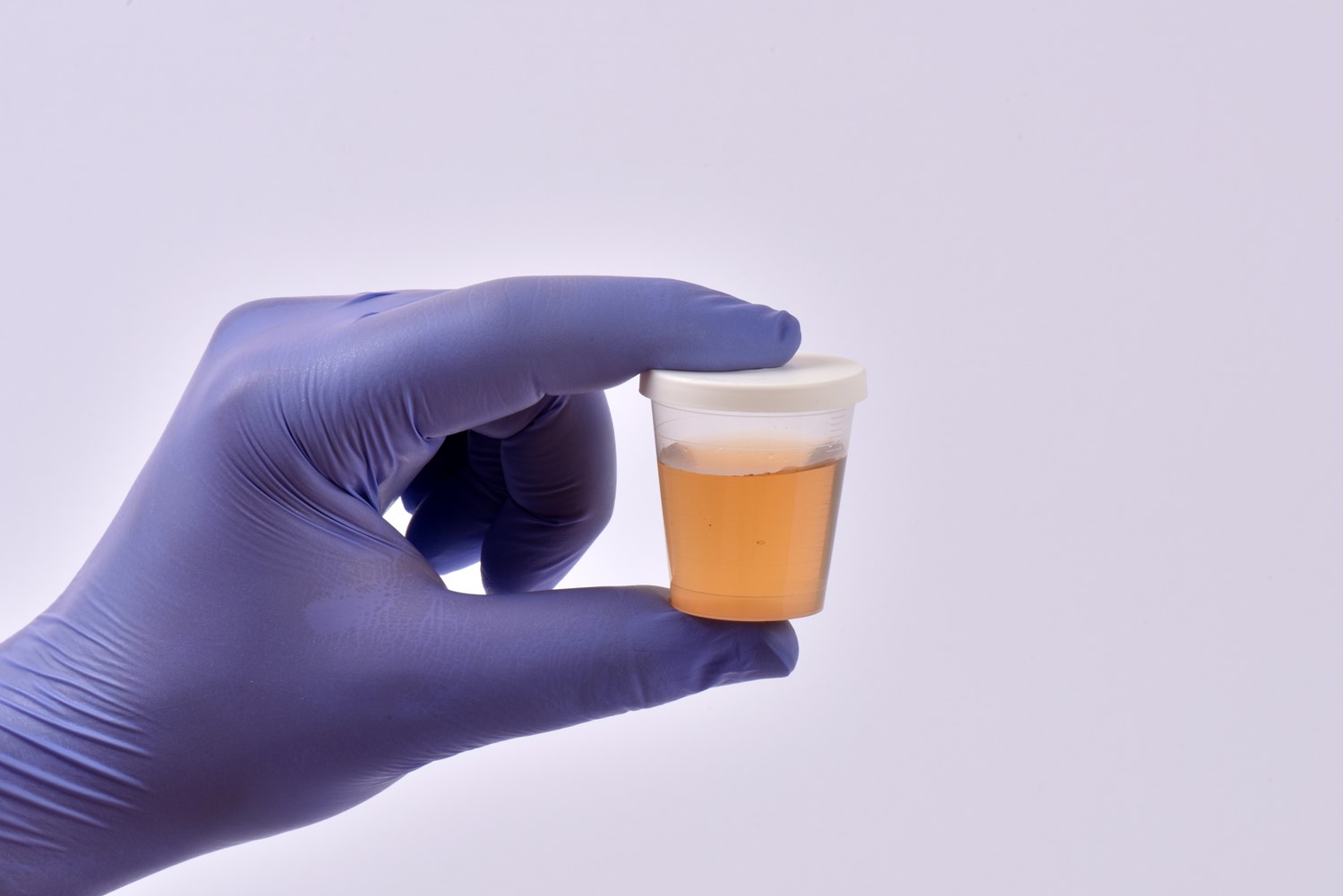
Ein Mittelstrahlurin (MSU oder MSSU) wird normalerweise getestet, um nach Infektionen zu suchen, obwohl in einigen Fällen auch andere Krankheiten als Infektionen diagnostiziert werden können, basierend teilweise auf dem, was in einem MSU zu sehen ist.
von Dr. Rachel Hudson, MRCGP
Tests und Untersuchungen
Urinteststreifen
Ein Urinteststreifen-Test untersucht den Urin mit einem speziellen Papierstreifen, der in eine Urinprobe getaucht wird. Das Ergebnis ist fast sofort verfügbar. Manchmal wird er auch als Schnelltest für Urin bezeichnet.
von Dr. Philippa Vincent, MRCGP
Weiterführende Literatur und Referenzen
- Mitchell R, Thomas SD, Langlois NE; How sensitive and specific is urinalysis 'dipstick' testing for detection of hyperglycaemia and ketosis? An audit of findings from coronial autopsies. Pathology. 2013 Oct;45(6):587-90. doi: 10.1097/PAT.0b013e3283650b93.
- What is DKA [Diabetic Ketoacidosis]?; Diabetes UK
- Arora S, Henderson SO, Long T, et al; Diagnostic accuracy of point-of-care testing for diabetic ketoacidosis at emergency-department triage: {beta}-hydroxybutyrate versus the urine dipstick. Diabetes Care. 2011 Apr;34(4):852-4. doi: 10.2337/dc10-1844. Epub 2011 Feb 9.
- Dhatariya K; Blood Ketones: Measurement, Interpretation, Limitations, and Utility in the Management of Diabetic Ketoacidosis. Rev Diabet Stud. 2016 Winter;13(4):217-225. doi: 10.1900/RDS.2016.13.217. Epub 2017 Feb 10.
- Veneti S, Grammatikopoulou MG, Kintiraki E, et al; Ketone Bodies in Diabetes Mellitus: Friend or Foe? Nutrients. 2023 Oct 16;15(20):4383. doi: 10.3390/nu15204383.
Lesen Sie unten weiter
About the authorView full bio

Dr Colin Tidy, MRCGP
Allgemeinmediziner, Medizinischer Autor
MBBS, MRCGP, MRCP (Paediatrics), DCH
Dr. Colin Tidy ist ein NHS-Arzt mit Sitz in Oxfordshire.
About the reviewerView full bio

Dr Hayley Willacy, FRCGP
Allgemeinmediziner, Medizinischer Autor
MBChB (1992), DRCOG, DFFP, MRCOG (Part 1) MRCGP (2007), DFSRH (2013), MSc - medical education (2020)
Dr Hayley Willacy was an NHS GP working in northwest England, who retired from clinical practice in 2022 after 30 years.
Artikelverlauf
Die Informationen auf dieser Seite wurden von qualifizierten Klinikern verfasst und begutachtet.
Nächste Überprüfung fällig: 5. Jan. 2029
9. Jan 2024 | Neueste Version
1 Aug 2017 | Ursprünglich veröffentlicht
Verfasst von:
Dr Colin Tidy, MRCGP

Fragen, teilen, verbinden.
Durchsuchen Sie Diskussionen, stellen Sie Fragen und teilen Sie Erfahrungen zu Hunderten von Gesundheitsthemen.

Fühlen Sie sich unwohl?
Bewerten Sie Ihre Symptome online kostenlos
Abonnieren Sie den Patienten-Newsletter
Ihre wöchentliche Dosis klarer, vertrauenswürdiger Gesundheitsberatung - geschrieben, um Ihnen zu helfen, sich informiert, selbstbewusst und in Kontrolle zu fühlen.
By subscribing you accept our Datenschutzrichtlinie. Sie können sich jederzeit abmelden. Wir verkaufen Ihre Daten niemals.