Urinprobe aus dem Mittelstrahl
Urinuntersuchung
Begutachtet von Dr Caroline Wiggins, MRCGP Zuletzt aktualisiert von Dr Rachel Hudson, MRCGPZuletzt aktualisiert 8. Okt 2024
Erfüllt die Anforderungen des Patienten Richtlinien des Patienten
- HerunterladenHerunterladen
- Teilen
- Language
- Diskussion
- Audio-Version
- Zu bevorzugten Quellen bei Google hinzufügen
Ein Mittelstrahlurin (MSU oder MSSU) wird normalerweise getestet, um nach Infektionen zu suchen, obwohl in einigen Fällen auch andere Krankheiten als Infektionen diagnostiziert werden können, basierend teilweise auf dem, was in einem MSU zu sehen ist.
Auf einen Blick
Ein Mittelstrahlurin-Test (MSU) überprüft auf Harnwegsinfektionen und andere Anomalien.
Es hilft Ärzten, das beste Antibiotikum auszuwählen, wenn eine Infektion vorliegt.
Um eine MSU zu entnehmen, lassen Sie zuerst etwas Urin in die Toilette und sammeln dann etwas in einer sterilen Flasche.
Waschen Sie Ihre Hände und Genitalien vor der Probenentnahme, um eine Kontamination zu vermeiden.
Geben Sie die Probe innerhalb von zwei Stunden ab oder bewahren Sie sie im Kühlschrank auf, bis Sie es können.
Für Kinder umfassen die Methoden sauberes Auffangen, Urin-Pads oder Urinauffangbeutel.
Was ist der Zweck einer Mittelstrahlurinprobe?
Um die Diagnose einer Harnwegsinfektion zu bestätigen
Die üblichen Symptome einer Harnwegsinfektion sind Schmerzen beim Wasserlassen und häufiges Wasserlassen. Allerdings sind die Symptome nicht immer typisch, insbesondere bei Kindern und älteren Menschen, sodass ein Urintest erforderlich sein kann.
Um das beste Antibiotikum auszuwählen
Einige Keime (Bakterien) sind gegen bestimmte Antibiotika resistent. Wenn der Test zeigt, dass Bakterien im Urin sind, werden die Bakterien gegen verschiedene Antibiotika getestet. Dies zeigt, welche Antibiotika wird die Bakterien im Urin abtöten.
Um nach anderen Auffälligkeiten im Urin zu suchen
Anomalien wie rote oder weiße Blutkörperchen, die nicht vorhanden sein sollten - in Abwesenheit einer Infektion, oder Blut im Urin können manchmal auf Krankheiten wie Blasenkrebs oder Nierenerkrankungen (renale Erkrankungen) hinweisen, und weiße Blutkörperchen im Urin ohne Infektion, die leicht wächst, könnten auf Tuberkulose hinweisen.
Wie mache ich eine Mittelstrahlurinprobe?
Das Ziel ist es, eine Urinprobe (Exemplar) aus der Mitte Ihrer Blase zu entnehmen. Urin enthält normalerweise keine Keime (Bakterien) (Urin sollte steril sein). Wenn im Exemplar Bakterien gefunden werden, bedeutet dies, dass der Urin infiziert ist. Eine Mittelstrahlurinprobe (MSU) ist am besten, da der erste Urin, den Sie abgeben, mit Bakterien von der Haut kontaminiert sein kann.
Bevor Sie eine MSU durchführen, waschen Sie Ihre Hände und idealerweise auch Ihre Genitalien.
Frauen
Halten Sie den Eingang zur Vagina (Ihre Schamlippen) offen. Lassen Sie etwas Urin in die Toilette. Fangen Sie dann, ohne den Urinfluss zu unterbrechen, etwas Urin in einer sauberen (sterilen) Flasche auf. (Die Flasche wird normalerweise von einem Arzt oder einer Krankenschwester bereitgestellt.) Sobald Sie genug Urin in der Flasche haben, lassen Sie den Rest Ihres Urins in die Toilette.
Männer
Ziehen Sie Ihre Vorhaut zurück und lassen Sie etwas Urin in die Toilette. Fangen Sie dann, ohne den Urinfluss zu unterbrechen, etwas Urin in einer sauberen (sterilen) Flasche auf, die Ihnen von einem Arzt oder einer Krankenschwester zur Verfügung gestellt wurde. Beenden Sie, indem Sie den Rest Ihres Urins in die Toilette entleeren.
Öffnen Sie die sterile Flasche erst, wenn Sie bereit sind, die Probe zu entnehmen. Vermeiden Sie es, mit der Flasche irgendeinen Teil Ihrer Genitalien zu berühren, da dies das Risiko einer Kontamination erhöht. Setzen Sie den Deckel wieder auf den Behälter. Sie müssen die Flasche nicht bis zum Rand füllen; eine kleine Menge reicht aus.
Einige Probenfläschchen enthalten ein Pulver, das hilft, die Probe für Tests länger haltbar zu machen (ein Konservierungsmittel). In diesem Fall zeigt eine Markierung auf der Flasche die ideale Menge an Urin an. Wenn das jedoch schwierig ist, ist jede Menge besser als keine.
Es ist wichtig sicherzustellen, dass Sie verstehen, welche Art von Probe Ihr Gesundheitsdienstleister angefordert hat. Ein MSU ist die am häufigsten angeforderte Probe, aber für einige Tests (z. B. Chlamydien und Gonorrhoe) werden Sie speziell gebeten, den ersten Teil des Urins abzugeben, anstatt die Mitte des Strahls.
Wie schnell muss eine Mittelstrahlurinprobe abgegeben werden?
Je früher die Probe in die Arztpraxis oder ins Labor gebracht wird, desto besser. Innerhalb von zwei Stunden ist ideal. Wenn das nicht möglich ist, stellen Sie die Probe in den Kühlschrank, bis Sie sie zum Arzt oder Labor bringen.
Es ist nicht ideal, wenn die Probe über Nacht in der Arztpraxis bleibt, und in vielen Fällen werden Proben zur Mittagszeit oder am frühen Nachmittag gesammelt und ins Labor gebracht. Erkundigen Sie sich in der Praxis, bis wann Sie die Probe spätestens abgeben können, damit sie noch am selben Tag ins Labor geht.
Wenn es schwierig ist, Ihren Urinstrahl in die Flasche zu zielen, können Sie einen anderen Behälter wie ein Marmeladenglas oder einen Einweg-Plastikbecher verwenden. Sie können dann den Urin in die sterile Flasche gießen. Wenn Sie dies tun, stellen Sie sicher, dass der Behälter, in den Sie Wasser lassen, so sauber wie möglich ist. Waschen Sie ihn gut und spülen Sie ihn mit kochendem Wasser aus. Sie sollten den ersten Teil Ihres Urinstrahls dennoch in die Toilette lassen. Auf diese Weise sammeln Sie den Urin aus der Blase.
Das vollständige Ergebnis einer MSU dauert 2-7 Tage - normalerweise liegt die Mikroskopie (Suche nach weißen und roten Blutkörperchen unter einem Mikroskop) zuerst vor, gefolgt von der Kultur und Empfindlichkeit (Versuch, Bakterien zu züchten und zu sehen, welche Antibiotika wirken) einige Tage später.
Urinproben und Kinder
Es ist nicht einfach, bei Kleinkindern und Babys eine reine Mittelstrahlurinprobe (MSU) zu erhalten. Die folgenden Methoden können verwendet werden:
Die Methode des sauberen Auffangens
Die übliche Methode besteht darin, etwas Urin in der Probenflasche aufzufangen, während das Kind uriniert. Dies wird als "Clean-Catch-Methode" bezeichnet. Für ein Kind, das bereits auf die Toilette geht, ist dies ziemlich einfach - halten Sie einfach die offene Flasche bereit, während das Kind uriniert. (Achten Sie darauf, den offenen Rand der Flasche nicht mit den Fingern zu berühren, da dies die Probe mit Keimen (Bakterien) von Ihren Fingern verunreinigen könnte.)
Für Babys oder Kleinkinder, die noch nicht stubenrein sind, kann es eine gute Möglichkeit sein, eine Urinprobe zu erhalten, wenn sie in der Stunde nach dem Füttern etwas windelfreie Zeit haben. Sanftes Reiben des suprapubischen Bereichs (der unterste Teil des Bauches, in der Mitte) mit Gaze oder Watte, die in kalte Flüssigkeit getränkt ist, hat sich ebenfalls als wirksam erwiesen, um die Wahrscheinlichkeit zu erhöhen, erfolgreich eine Probe zu erhalten.
Urinpolster
Eine Methode besteht darin, ein spezielles saugfähiges Pad in eine Windel zu legen. Ihr Arzt oder Ihre Krankenschwester wird Ihnen das spezielle Pad zur Verfügung stellen und Ihnen erklären, wie Sie es verwenden. Grundsätzlich sollten Sie, wenn Sie das Pad in die Windel legen, alle 10 Minuten überprüfen, ob es mit Urin nass ist. Lassen Sie es nicht länger als 30 Minuten drin, da dies das Risiko einer Kontamination erhöhen kann.
Ersetzen Sie daher das Pad alle 30 Minuten durch ein frisches, bis Urin abgegeben wurde. Verwenden Sie dann die bereitgestellte Spritze, um den Urin aus dem Pad zu saugen. Überführen Sie anschließend den Urin in der Spritze in einen sterilen Behälter. Verwenden Sie keine anderen Arten von Pads, Wattebällchen oder Gaze, da diese die Ergebnisse verfälschen könnten.
Urinbeutel
Dies sind Beutel, die in die Windel gelegt werden, um Urin zu sammeln. Sie werden an der Haut um die Genitalien befestigt. Wenn das Baby uriniert, sammelt sich der Urin im Beutel. Dann nehmen Sie den Beutel ab, schneiden die Ecke des Beutels ab und gießen den Urin in die sterile Flasche.
Waschen Sie immer den Genitalbereich Ihres Kindes und trocknen Sie ihn sorgfältig ab, bevor Sie den Beutel anbringen. So wird verhindert, dass Keime von der Haut mit dem Urin vermischt werden.
Was bedeuten die Testergebnisse?
Der MSU-Test wird hauptsächlich durchgeführt, um auf eine Infektion zu prüfen (siehe oben). Es gibt jedoch Gelegenheiten, bei denen der Urin frei von Infektionen ist, aber andere Anomalien festgestellt werden, wie zum Beispiel Blut im Urin.
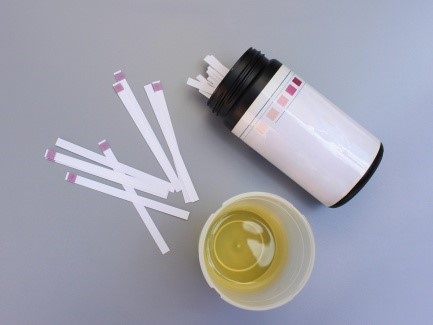
Diese Abnormalitäten können auch durch andere Tests wie den Urin-Teststreifen-Test erkannt werden. Für weitere Informationen siehe unsere separaten Broschüren mit dem Titel Urinteststreifen und Blut im Urin.
Sie können möglicherweise die Ergebnisse in Ihrem Online-Patientenakte einsehen. Der Arzt oder die Krankenschwester hat das Ergebnis mit einem Kommentar wie 'normal', 'zufriedenstellend', 'benötigt Termin' abgelegt - dies wird Ihnen sagen, ob Sie eine Nachsorge arrangieren müssen. Möglicherweise können Sie auch den Bericht aus dem Labor einsehen. Der Bericht gibt normalerweise an, ob rote Blutkörperchen (RBCs), weiße Blutkörperchen (WBCs) - was ein Hinweis auf eine Infektion sein kann - und Bakterien wie E. coli vorhanden sind. Rote Blutkörperchen sind nicht normal und erfordern in der Regel eine weitere Untersuchung. Bei älteren Erwachsenen ist es üblich, Bakterien im Urin zu finden, aber wenn keine weißen Blutkörperchen oder Symptome einer Infektion vorhanden sind, ist keine Behandlung erforderlich. Manchmal wurde die Probe durch Hautzellen und die verschiedenen Bakterien, die auf unserer Haut leben, kontaminiert. Dies wird manchmal im Ergebnis als 'gemischte Flora' berichtet.'
Patientenauswahl für Urin- und Blasentests

Tests und Untersuchungen
Urodynamische Untersuchung
Urodynamische Tests überprüfen die Füllung und Entleerung Ihrer Blase und helfen, die Ursache einer eventuellen Harninkontinenz zu untersuchen. Hinweis: Die nachstehenden Informationen sind nur eine allgemeine Orientierung. Die Abläufe und die Durchführung der Tests können in verschiedenen Krankenhäusern variieren. Befolgen Sie stets die Anweisungen Ihres Arztes oder des örtlichen Krankenhauses.
von Dr. Hayley Willacy, FRCGP
Tests und Untersuchungen
Ketone im Urin
Ketone werden produziert, wenn der Körper Fett als Brennstoff verbrennt. Normalerweise werden diese Ketone vollständig abgebaut (metabolisiert), sodass nur sehr wenige Ketone im Urin vorhanden sind. Wenn der Körper aus irgendeinem Grund nicht genügend Glukose für Energie bekommt, wechselt er zur Nutzung von Körperfett, was zu einem Anstieg der Ketone im Körper führt. Dies führt zu mehr Ketonen im Urin.
von Dr. Surangi Mendis, MRCGP
Häufig gestellte Fragen
Was untersucht ein Mittelstrahl-Urin-Test speziell?
Ein Mittelstrahlurin-Test (MSU) dient in erster Linie dazu, eine Harnwegsinfektion zu bestätigen, indem er auf das Vorhandensein von Keimen (Bakterien) überprüft. Wenn Bakterien gefunden werden, werden weitere Tests durchgeführt, um festzustellen, welche Antibiotika sie wirksam abtöten. Der Test untersucht auch andere Anomalien wie rote oder weiße Blutkörperchen oder Blut, die auf andere Erkrankungen wie Blasenkrebs oder Nierenerkrankungen hinweisen könnten, selbst in Abwesenheit einer Infektion.
Wofür steht 'MSU' in medizinischen Begriffen?
MSU steht für Mittelstrahlurinprobe. Es bezieht sich auf eine Methode der Urinsammlung, bei der nur der mittlere Teil des Urinflusses in einen sterilen Behälter gesammelt wird, um die Wahrscheinlichkeit einer Kontamination durch Bakterien auf der Haut zu verringern.
Warum ist es wichtig, eine Mittelstrahlurinprobe zu sammeln?
Das Sammeln einer Mittelstrahlurinprobe ist wichtig, da der erste Teil des Urins mit Bakterien von der Haut kontaminiert sein kann. Durch das Sammeln des 'Mittelstrahl'-Anteils repräsentiert die Probe eher den Urin direkt aus der Blase, was die Testergebnisse genauer macht, um Infektionen im Harntrakt zu erkennen.
Was soll ich tun, wenn es mir schwerfällt, meinen Urin in die sterile Flasche zu zielen?
Wenn es Ihnen schwerfällt, Ihren Urin direkt in die sterile Flasche zu zielen, können Sie einen anderen sehr sauberen Behälter verwenden, wie z.B. ein Marmeladenglas oder einen Einweg-Plastikbecher. Sie sollten diesen Behälter gut waschen und mit kochendem Wasser ausspülen. Nachdem Sie den ersten Teil Ihres Urins in die Toilette gelassen haben, sammeln Sie den Mittelstrahlurin in Ihrem sauberen temporären Behälter und gießen ihn dann vorsichtig in die von Ihrem Arzt oder Ihrer Krankenschwester bereitgestellte sterile Flasche.
Wie lange dauert es normalerweise, bis die vollständigen Ergebnisse eines Mittelstrahl-Urintests vorliegen?
Die vollständigen Ergebnisse eines Mittelstrahlurintests (MSU) dauern in der Regel zwischen 2 und 7 Tagen. Zunächst liegen die Mikroskopieergebnisse, die auf weiße und rote Blutkörperchen prüfen, früher vor. Die Kultur- und Sensibilitätsergebnisse, die identifizieren, welche Bakterien gewachsen sind und welche Antibiotika wirken, folgen typischerweise einige Tage später.
Weiterführende Literatur und Referenzen
- Gilbert R; Entnahme einer Mittelstrahlurinprobe. Nurs Times. 2006 Mai 2-8;102(18):22-3.
- Harnwegsinfektion bei unter 16-Jährigen: Diagnose und Behandlung; NICE-Richtlinie (Juli 2022)
- Kaufman J, Fitzpatrick P, Tosif S, et al; Schnellere saubere Urinprobenentnahme (Quick-Wee-Methode) bei Säuglingen: randomisierte kontrollierte Studie. BMJ. 2017 Apr 7;357:j1341. doi: 10.1136/bmj.j1341.
- Kaufman J; Wie man... Urinproben von Kleinkindern sammelt. Arch Dis Child Educ Pract Ed. 2020 Jun;105(3):164-171. doi: 10.1136/archdischild-2019-317237. Epub 2019 Aug 23.
Über den AutorVollständige Biografie anzeigen

Dr Rachel Hudson, MRCGP
Allgemeinmediziner und Medizinischer Autor
MBChB, MRCGP (2008), BSc (Medical Science), DFSRH, DRCOG, DCH
Dr. Rachel Hudson ist eine NHS-Ärztin, die im Nordwesten Englands arbeitet.
Über den RezensentenVollständige Biografie anzeigen

Dr Caroline Wiggins, MRCGP
Allgemeinmediziner, Medizinischer Autor
MBBS Auszeichnung (mit Auszeichnung), MRCGP (2016), MSc.SEM (mit Auszeichnung), BSc (Hons)
Dr. Caroline Wiggins ist derzeit als Vertretungsärztin im Südwesten Englands tätig.
Artikelverlauf
Die Informationen auf dieser Seite wurden von qualifizierten Klinikern verfasst und begutachtet.
Artikel auch verfügbar in Englisch, Deutsch, Spanisch, Französisch, Italienisch, Portugiesisch, Hindi, Hebräisch, Arabisch, und Schwedisch.
Nächste Überprüfung fällig: 7. Okt 2027
8. Okt 2024 | Neueste Version

Fragen, teilen, verbinden.
Durchsuchen Sie Diskussionen, stellen Sie Fragen und teilen Sie Erfahrungen zu Hunderten von Gesundheitsthemen.

Fühlen Sie sich unwohl?
Bewerten Sie Ihre Symptome online kostenlos
Abonnieren Sie den Patienten-Newsletter
Ihre wöchentliche Dosis klarer, vertrauenswürdiger Gesundheitsberatung - geschrieben, um Ihnen zu helfen, sich informiert, selbstbewusst und in Kontrolle zu fühlen.
Durch das Abonnieren akzeptieren Sie unsere Datenschutzrichtlinie. Sie können sich jederzeit abmelden. Wir verkaufen Ihre Daten niemals.
Mehr zu Tests und Untersuchungen
- Amniozentese
- Arterielle Blutgase
- Barium-Einlauf
- Blutzuckertest (Blutzucker) und HbA1c
- Knochenmarkbiopsie und Aspiration
- Darmkrebsvorsorge
- BRCA-Gene
- Herzkatheteruntersuchung
- Zystoskopie
- Echokardiogramm
- Endoskopischer Ultraschall-Scan
- Geschätzte glomeruläre Filtrationsrate
- Vollblutbild und Blutausstrich
- Hyponatriämie
- Ketone im Urin
- MRT-Scan
- Myokardperfusionsszintigraphie
- Routinemäßiger Bluttest zur Nierenfunktion
- Sigmoidoskopie
- Spermatest