
How to help your child with back-to-school anxiety
Peer reviewed by Dr Colin Tidy, MRCGPLast updated by Heather AinsworthLast updated 17 Aug 2025
Meets Patient’s editorial guidelines
- DownloadDownload
- Share
- Language
- Discussion
- Audio Version
- Add to preferred sources on Google
After the freedom of the summer holidays, it’s usual for kids to be reluctant to head back to the classroom. But sometimes, not wanting to go back to school can be a sign of anxiety.
Here we look at ways to recognise the signs of stress, providing support, and using strategies to settle your kids back into school life.
Mental health support for adults and children
Online CBT and psychological therapy for adults and children aged 8–17. Onebright’s accredited clinicians support people experiencing anxiety, depression and other emotional challenges.
Why your child might feel anxious about going back to school?
Lisa Bruton, Counselling Directory member, psychotherapist, and guest tutor at the University of Oxford, says there are many reasons why your child may feel anxious about going back to school after the holidays.
"Your child might feel anxious about seeing their friends again, or they may worry about a change in academic expectations or schedule," she says. "They might have spent a lot of time with their family and feel anxious about the separation."
Some children may find lessons confusing or feel pressured to learn in a certain way. And those starting a new school - or moving into secondary school - may be worried about making friends or fitting in.
Even experiences outside of school, such as a bereavement, trauma, or illness in the family, can make it difficult for a child to settle at school. Bullying can also be a problem - a child may feel like they’re heading back into their bully’s lair after the summer break.
For some young people, the typical school environment, which is often tailored to neurotypical children - those without a condition such as autism - can feel challenging. Children who have autism, ADHD or dyslexia may feel stressed, especially if they aren’t properly supported or their condition is undiagnosed.
Signs of school anxiety
Sometimes, your child may tell you that they’re feeling anxious, but they may find it difficult to talk about how they’re feeling. Because your child may be reluctant to speak up, it can help to be able to identify the signs of anxiety. Here are some of the main signs of anxiety:
School refusal
If your child is anxious about school, they may refuse to go, struggle to get there on time or leave before the school day ends.
Being sick or unwell
Anxiety can also cause stomach upsets. If you’ve ever felt stressed or anxious, you may have had an upset stomach. This is because our brain and gastrointestinal system are connected via the gut-brain axis. It works like a two-way street - the brain is able to send signals to the gut and vice versa.
When we are stressed, it can trigger our fight-or-flight response - releasing stress hormones such as cortisol. Our digestion slows down so our body can focus on what is worrying us - this disruption can lead to issues such as stomach aches and cramps. Anxiety can also lead to changes in our eating habits, such as eating less or more.
Being clingy
If a child is anxious, it’s usual for them to be clingy. They may also be restless or fidgety.
Trouble sleeping
The stress hormones cortisol and adrenaline - which are released when we feel anxious - prevent us from falling asleep and can mean we wake up more frequently in the night. An anxious child may have trouble sleeping - and it may be more obvious if they were sleeping better before.
Negative thoughts or worries
Your child may not be able to explain exactly how they feel, but they may tell you they feel funny, sad or worried. They may say they’re worried about making friends or make negative comments about themselves. For example, a child may say they’re not clever enough - which may mean they’re worried about grades or schoolwork, or struggling with their self-esteem.
Get upset or angry more quickly
Tantrums are a normal part of a child’s development - they simply don’t have the reasoning skills or emotional regulation that adults have. However, the hormonal changes caused by stress can lead to behavioural issues, such as getting upset or angry more quickly, or unexplained crying1.
Struggle to concentrate
Anxiety can make it difficult for a child to focus or concentrate on their work. They may be easily distracted.
What should you do if your child is anxious about going back to school?
If you think your child might be struggling, it’s important to try to find out what the problem may be. "You could have a chat with your child - ask them how they feel and what might help them," says Bruton.
They might not know what the problem is - only that they’re anxious. If this is the case, you may have to help them work it out. A gentle approach is usually best, which can mean talking to your child about school, their friends, their work or how they feel about themselves.
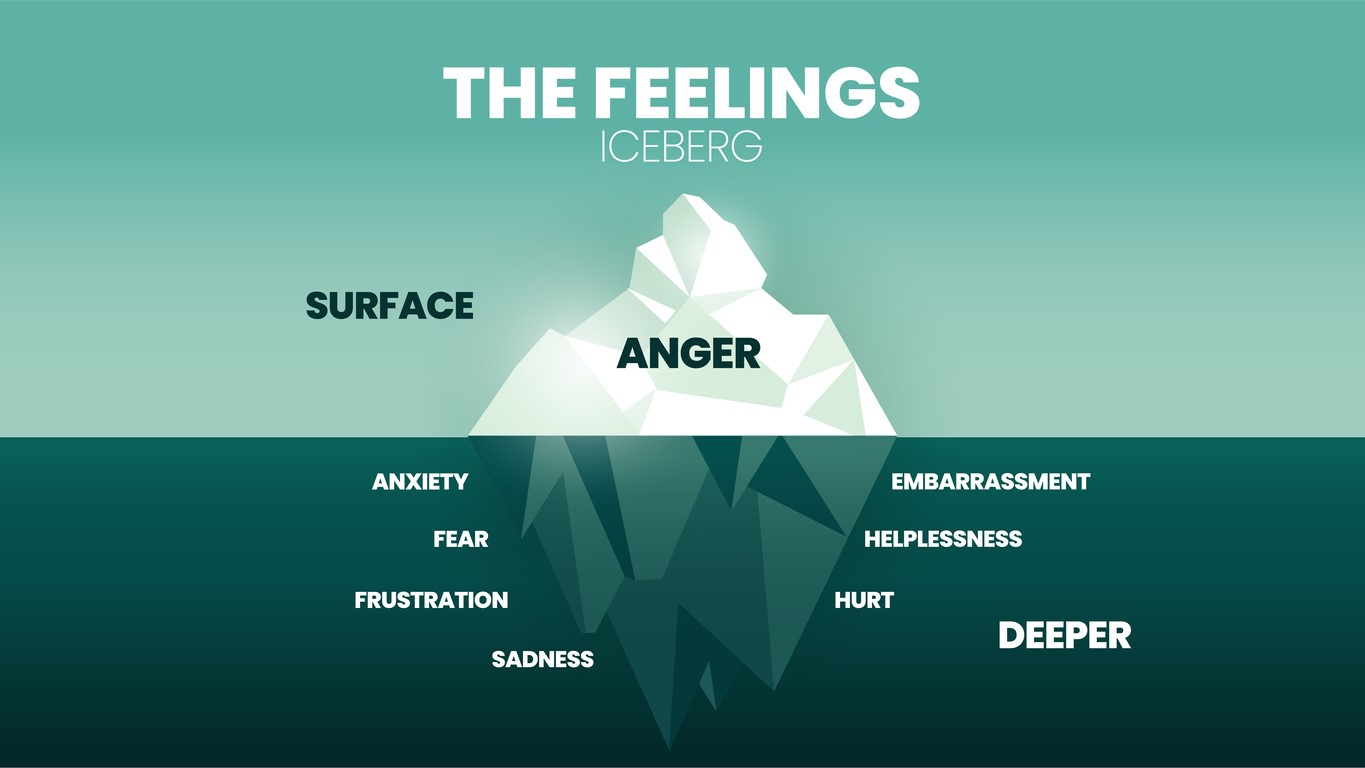
Anxiety iceberg
Some therapists recommend using an ‘anxiety iceberg’ metaphor to think about how anxiety can present itself. The obvious signs of anxiety - like anger, freezing up or feeling irritable - are at the tip of the iceberg. Then the more subtle signs are below the surface, such as feeling confused or out of control. You can talk to your child using the anxiety iceberg metaphor to explore what is bothering them together.
Anxiety iceberg
Get your child used to school
As the school year approaches, it's important to help your child feel more comfortable about their new school environment. Not knowing what to expect can lead to anxiety.
"Some of this is age-dependent, but you could arrange a playdate with some of their school friends," says Bruton. "You could go for a walk or drive around the school to acclimatise them to the buildings again. You could also speak with them about other beginnings they have had, that they have managed well."
Reintroduce a school routine
Getting back into the habit of a school routine can also help. "You could start moving back towards a school-based schedule, for example, going to bed and waking up earlier."
Find a comfort item
"You could give them an object that is comforting to bring with them - something small like a keyring, a stone or a photo," says Bruton.
Normalise talking about anxiety
Remind your kids that they're not the only ones who may be nervous about starting school again.
"You could also normalise those feelings and talk about your own experiences of feeling anxious at the beginning of something," says Bruton. "You could talk through with them what they could do if they felt anxious at school. For example, speaking to a teacher if they feel upset or stressed."
What support can you get for your child if they are anxious about school?
It’s also important to know when to get outside help. Listen to your instincts, if you think your child has an anxiety disorder or may have additional needs, you should speak to your doctor, who will be able to offer advice regarding suitable support and therapy. If you think your child is being bullied, speak to their teacher or other school staff members.
Further reading
Patient picks for Mental health and behaviour

Children's health
How to spot the signs that your child is depressed
People can sometimes dismiss mental health struggles in children, saying they will "grow out of it" or their problems are "frivolous" in comparison to those of adults. However, depression in children is a very real issue, and it's important you're able to spot the signs so it can be treated as early as possible.
by Emily Jane Bashforth
Healthy living
How to get your child the right support at school
Many pupils will need extra help or reassurance at times, particularly during their first term somewhere new. And some may require additional emotional or physical support to help them flourish in the school environment.
by Gillian Harvey
About the authorView full bio

Lydia Smith
Feature writer
BA, MA, MSc
Lydia Smith is an award-winning journalist and feature writer who has written extensively on women's health and mental health. She is currently studying for an MSc in psychology.
About the reviewerView full bio

Dr Colin Tidy, MRCGP
General Practitioner, Medical Author
MBBS, MRCGP, MRCP (Paediatrics), DCH
Dr Colin Tidy is an NHS Doctor, based in Oxfordshire.
Article history
Article also available in English, German, Spanish, French, Italian, Portuguese, Hindi, Hebrew, Arabic, and Swedish.
Next review due: 17 Aug 2028
17 Aug 2025 | Latest version
30 Aug 2023 | Originally published
Authored by:
Lydia Smith
Join the conversation
Share your thoughts or experiences with others in our patient communities.

Ask, share, connect.
Browse discussions, ask questions, and share experiences across hundreds of health topics.

Feeling unwell?
Assess your symptoms online for free
Sign up to the Patient newsletter
Your weekly dose of clear, trustworthy health advice - written to help you feel informed, confident and in control.
By subscribing you accept our Privacy Policy. You can unsubscribe at any time. We never sell your data.
More in children's health
- A guide to comfortable breastfeeding in public
- Bedwetting treatment options
- Breastfeeding: What is colostrum and what are the benefits?
- Grief and young people: how to cope with loss
- How to cope if your teen is self-harming
- How to look after your baby's first teeth
- How to protect your child's teeth
- How to spot the signs of anxiety in kids
- How to support your child if they are being cyberbullied
- Is your child eating too much sugar?
- PANDAS: what we know and what we don’t
- Toddler bedtime routine: how to get your child to sleep
- What are the benefits of baby-led weaning?
- What happens when you transfer from child to adult mental health services?
- What is a genetic disorder?
- What to do when your child can't sleep
- What to do when your child has a rash
- When should you worry about a fussy eater?
- When to worry about your baby's development
- Why isn't the chickenpox vaccine available on the NHS?