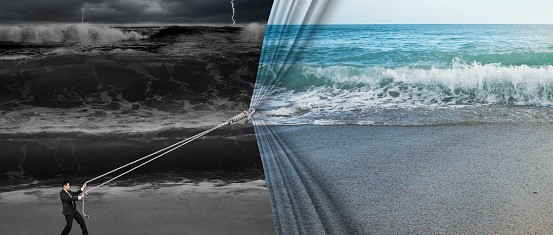
Thalassophobie: Wie man seine Angst vor dem Ozean bewältigt
Begutachtet von Dr Krishna Vakharia, MRCGPVerfasst von Amberley DavisUrsprünglich veröffentlicht 27. Jan 2023
Erfüllt die Anforderungen des Patienten Richtlinien des Patienten
- HerunterladenHerunterladen
- Teilen
- Language
- Diskussion
- Audio-Version
Die meisten Menschen haben eine gewisse Angst vor dem Ozean - ein natürlicher Überlebensinstinkt gegenüber dem Unbekannten, der einen davon abhält, mehrere Meilen vor der Küste von einem Schiff zu springen. Aber für Menschen mit Thalassophobie ist diese Angst so tief verwurzelt, dass sie ihre Lebensqualität beeinträchtigt.

In diesem Artikel:
Lesen Sie unten weiter
What is thalassophobia?
Thalassophobia is an intense fear of deep bodies of water. The word is a merge of two Greek words - thalassa meaning sea, and phobos meaning fear.
As such, thalassophobia is often taken literally to mean a fear of the ocean. In reality, someone with this Phobie could also be afraid of large bodies of water such as wide lakes or rivers - any expanse of water that's large and deep.
What are the symptoms of thalassophobia?
Zurück zum InhaltHaving a specific phobia such as thalassophobia, is a type of Angstzustände disorder. For a person with thalassophobia, like other anxiety disorders, it can cause both psychological and physical symptoms.
Psychological symptoms of thalassophobia might include:
Sudden and severe feelings of fear or anxiety.
A fear of losing control.
Panik.
Inability to concentrate.
Racing thoughts.
Schlaflosigkeit - difficulty sleeping.
Physical symptoms of thalassophobia might include:
Shaking or trembling.
Schwitzen.
Heart palpitations.
Atemnot.
Muskuläre Anspannung.
An upset stomach.
In severe cases, this fear may cause panic attacks. The symptoms of a panic attack can be so intense that they can be mistaken for a heart attack.
Lesen Sie unten weiter
What causes thalassophobia?
Zurück zum InhaltChristopher Paul Jones is a leading phobia specialist at Harley Street Phobia Therapy. He explains that finding the root cause of thalassophobia isn't always straightforward.
"Thalassophobia is usually caused by a bad experience or trauma that was related to water in childhood. However, sometimes it can be related to another phobia, for example a fear of sharks, whales, or wide-open spaces.
"I would never assume that it is as simple as being fearful of water, and getting to the underlying root cause of thalassophobia, just like any phobia for that matter, is vital."
What's more, phobias aren't always caused by a traumatic event, such as a near-drowning experience. There are also other possible factors:
Your genes - some people are more inherently likely to develop anxiety disorders like phobias than others1.
How your brain processes fear - if your brain can't process fear properly it may be easier for you to develop a phobia like thalassophobia2.
What can trigger thalassophobia?
Zurück zum InhaltHaving thalassophobia usually means your fear of deep water is so intense that it interferes with your life - even when you're not physically near any water.
"You do not have to be near the actual ocean in order to be triggered," Paul Jones explains. "It could be that you see the ocean on television or hear the sound of waves on a meditation audio. As thalassophobia isn't always as straightforward as a fear of the ocean, there could be all kinds of different triggers."
Lesen Sie unten weiter
How is thalassophobia diagnosed?
Zurück zum InhaltIf you have a fear of the ocean or any deep water that you find is negatively affecting your life, talk to your GP or a phobia specialist. Health professionals classify thalassophobia as a natural environment phobia, and you will be assessed to see:
How intense your fear of deep bodies of water is.
Whether deep water almost always causes you intense and sudden fear or anxiety.
Whether this fear is disproportionate to any actual danger - for example, looking at a photo of the sea may trigger fear even though this poses no risk of harm.
Whether you actively avoid certain triggers.
Whether the phobia results in clinically significant distress or physical symptoms.
How long you've experienced this fear - thalassophobia typically lasts for six months or more.
Whether this phobia is not better explained by the symptoms of another mental disorder, such as Posttraumatische Belastungsstörung (PTBS) oder Zwangsstörung (OCD).
How to manage thalassophobia
Zurück zum Inhalt1. Therapy
According to Paul Jones, the best way to manage thalassophobia is to seek help from a healthcare specialist or mental health professional who can help work out the root cause of your fear or anxiety.
"A therapist will work on releasing the negative emotions attached to your memory of the original incident that is behind the phobia, in order to help prevent you from feeling the same way again."
This is known as kognitive Verhaltenstherapie (KVT) - a type of Gesprächstherapie in which you're coached to retrain your thoughts in order to deal with trauma.
2. Medication
As phobias are anxiety disorders, you and your doctor might decide that anxiety medication may also help improve your quality of life. Medication can be used alongside therapy to help you better manage your emotions, or it could be prescribed to help you through specific situations, for example if you need to get on a boat.
3. Other coping techniques
There are also things you can try in your free time that may help you better deal with your fear of the ocean.
For example, Achtsamkeit and relaxation techniques have helped some people manage anxiety:
Healthy habits like eating a healthy, well-balanced diet and regular exercise has also been shown to effectively reduce anxiety, although this should support - and not replace - therapy to help you understand and address your specific phobia.
Weiterführende Lektüre
Zurück zum InhaltPatientenempfehlungen für Phobien und Ängste

Psychische Gesundheit
Der Angst vor dem Arzt begegnen: Tipps zur Linderung medizinischer Ängste
Viele von uns fühlen sich ängstlich oder nervös, wenn sie zum Arzt gehen. Aber Menschen mit Iatrophobie haben eine intensivere, irrationale Angst. Wenn Sie Angst vor dem Arzt haben, haben wir einige Ratschläge von einem medizinischen Fachmann, die Ihnen helfen, diese zu überwinden.
von Victoria Raw

Psychische Gesundheit
Wie man die Angst vor Bluttests überwindet
Blood tests are a great diagnostic tool, giving vital information to doctors about the state of a patient's health. But for many of us, the idea of having blood drawn from our arm can put us into a panic. If you're feeling nervous about an impending test, try our tips for managing the procedure.
von Gillian Harvey
Artikelverlauf
Die Informationen auf dieser Seite werden von qualifizierten Klinikern begutachtet.
27. Jan 2023 | Ursprünglich veröffentlicht
Verfasst von:
Amberley DavisBegutachtet von
Dr Krishna Vakharia, MRCGP

Fragen, teilen, verbinden.
Durchsuchen Sie Diskussionen, stellen Sie Fragen und teilen Sie Erfahrungen zu Hunderten von Gesundheitsthemen.

Fühlen Sie sich unwohl?
Bewerten Sie Ihre Symptome online kostenlos
Abonnieren Sie den Patienten-Newsletter
Ihre wöchentliche Dosis klarer, vertrauenswürdiger Gesundheitsberatung - geschrieben, um Ihnen zu helfen, sich informiert, selbstbewusst und in Kontrolle zu fühlen.
Mit dem Abonnieren akzeptieren Sie unsere Datenschutzrichtlinie. Sie können sich jederzeit abmelden. Wir verkaufen Ihre Daten niemals.