Wie man die Anzeichen eines abgestorbenen Zahns erkennt
Begutachtet von Dr Krishna Vakharia, MRCGPVerfasst von Amberley DavisUrsprünglich veröffentlicht 24. Nov 2022
Erfüllt die Anforderungen des Patienten Richtlinien des Patienten
- HerunterladenHerunterladen
- Teilen
- Language
- Diskussion
- Audio-Version
- Zu bevorzugten Quellen bei Google hinzufügen
Ein abgestorbener Zahn kann mehr als nur Ihr Lächeln ruinieren - er kann eine Quelle von Schmerzen, Unbehagen und Peinlichkeit sein, die Ihr tägliches Leben stören. Wie können Sie feststellen, ob Sie einen sterbenden oder abgestorbenen Zahn haben und welche Behandlungsmöglichkeiten gibt es?
What is a dead tooth?
A dead tooth, also called a non-vital tooth or pulpless tooth, is a tooth that's no longer receiving a fresh supply of blood. Cosmetic dentist Dr Sam Jethwa explains how a tooth can die:
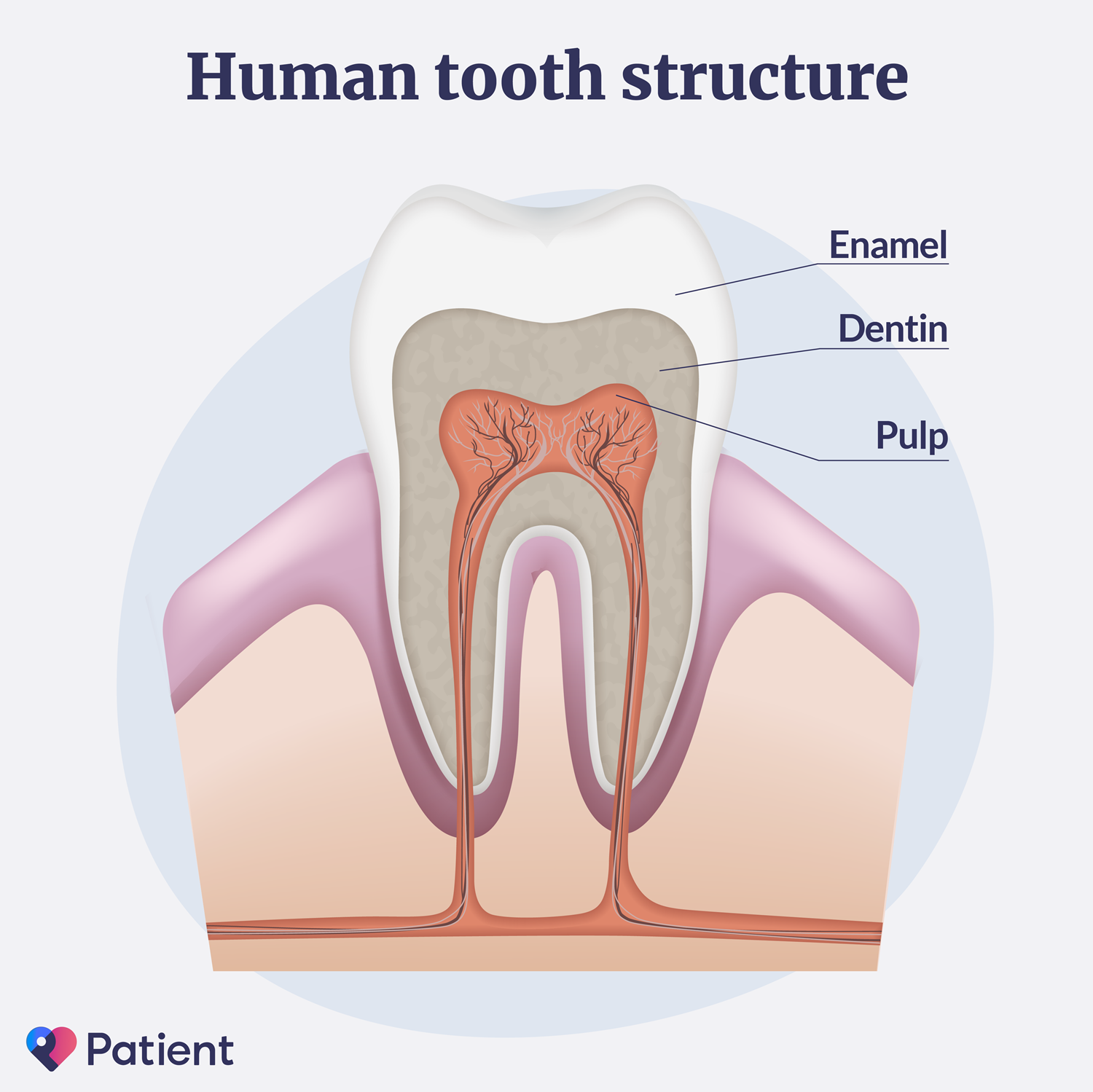
"Our teeth are made up of three layers; the enamel on the outside, the dentin on the inside, and in the middle the pulp. The pulp, a rich source of nerves and blood vessels, keeps a tooth alive and healthy. When these blood vessels and nerves die, then the tooth dies as well."
The three layers
What causes a dead tooth?
According to Dr Jethwa, there are three reasons that can cause these vessels and nerves to die; physical trauma and damage - usually from an injury or sometimes even the process of having a filling - or from tooth decay.
Tooth decay tends to be the result of poor Mundhygiene or a diet that's high in sugar. This prevents bacteria from building up, infecting the pulp, and cutting off its blood flow.
What does a dead tooth look like?
You can often identify a dying or dead tooth by the way it looks. This is because the tooth becomes discoloured, turning grey or black in appearance. This discolouration will continue to grow more obvious as the tooth continues to decay and the nerve dies.
Other dead tooth symptoms
Other signs of a dead tooth include:
Zahnschmerzen - this can be constant or happen at certain times, such as when the tooth comes into contact with hot or cold things.
Tooth sensitivity or a loss of sensation.
Swelling around the gum.
An abscess - a swollen, pus-filled bump.
Mundgeruch - sometimes a little bad breath is normal, especially Morgenatem, but it can be a sign of a dental problem.
How to treat a dead tooth
"It is possible to save a tooth that is dying, but time is of the essence," says Dr Jethwa. "For the tooth to be saved, you need an early diagnosis."
Can a dead tooth be saved?
This means you should visit a dental professional as soon as you notice the signs of a dead tooth. According to Dr Jethwa, your dentist may have materials that can be placed inside the tooth to regenerate the tooth tissue around the nerve and avoid root canal treatment.
He also explains the other treatment options:
A root canal is a procedure that drills into a tooth to remove the dead pulp and replace it with a man-made substance. It's then sealed to prevent further infection.
The third treatment option is extraction - the total removal of the dead tooth if it's too damaged to repair. It's your choice if you then want to fill in this gap with an implant, denture, or bridge.
The cost is one consideration - NHS dentists have fixed priced treatment plans but costs at private dentists can vary depending on the pratice, and the type and size of the replacement. The Oral Health Foundation recommends getting a written estimate and treatment plan before starting any dental treatment, to avoid any financial surprises1.
Possible reasons for replacing your extracted dead tooth:
Aesthetics - you may not like how having a gap looks.
More strain - a missing tooth could place more strain on the remaining teeth.
Your bite - over time, your teeth may lean into the gap, changing the way your upper and lower teeth bite together. This could then lead to a build-up of food particles in the gap, increasing the risk of Zahnfleischerkrankungen und tooth decay1.
Can you whiten a dead tooth?
"If the damage has already affected the tooth enamel and caused discolouration and brittleness, then an ultra-thin veneer could be an ideal way to hide the discoloration and protect the tooth from further damage," says Dr Jethwa.
However, this depends on how early the problem is identified. Your dentist will advise on the dental care options available to you, both in terms of your dental health and wellbeing, and also your cosmetic options.
Weiterführende Lektüre
Patientenauswahl für Zahnpflege
Mund- und Zahnpflege
Was Ihre Zähne über Ihre Gesundheit aussagen
Die meisten von uns kennen die Bedeutung der Zahnpflege. Zweimal täglich Zähneputzen, Zahnseide verwenden und gute Mundhygiene können dazu beitragen, unser Lächeln frisch zu halten, mit wenig Bedarf an teurer Zahnbehandlung. Wussten Sie jedoch, dass Zahnprobleme auch auf Probleme im Rest des Körpers hinweisen können?
von Lynn Stephen

Mund- und Zahnpflege
Wie Sie die Zähne Ihres Kindes schützen
Heutige Kinder müssen zunehmend mehrere verfaulte Zähne entfernen lassen, wie kürzlich veröffentlichte NHS-Ausgabedaten zeigen. Es ist ein besorgniserregender Zustand. Während der Zugang zu Zahnärzten teilweise als Ursache angesehen wird, sind sich die meisten Behörden einig, dass der Anstieg des Zuckergehalts in Lebensmitteln und Getränken der Hauptfaktor ist. Dringende Maßnahmen müssen ergriffen werden, um die Zähne unserer Kinder zu retten.
von Dr. Laurence Knott
Über den AutorVollständige Biografie anzeigen

Amberley Davis
Senior-Autorin
BA (Hons), CPD
Amberley ist eine leitende Autorin bei Patient und hat umfangreich über eine Vielzahl von Gesundheits- und Wohlfühlthemen geschrieben.
Über den RezensentenVollständige Biografie anzeigen

Dr Krishna Vakharia, MRCGP
Chief Medical Officer für Gesundheit, Optum UK
MBChB, MRCGP(2013), BMedSci (hons), DFSRH, DRCOG, PGDipDerm (Distn)
Dr. Krishna Vakharia ist eine NHS-Hausärztin. Sie ist auch regelmäßige Prüferin für das postgraduale Diplom in Praktischer Dermatologie an der Cardiff University und zudem Chief Medical Officer für Gesundheit bei Optum UK.
Artikelverlauf
Die Informationen auf dieser Seite werden von qualifizierten Klinikern begutachtet.
Artikel auch verfügbar in Englisch, Deutsch, Spanisch, Französisch, Italienisch, Portugiesisch, Hindi, Hebräisch, Arabisch, und Schwedisch.
24. Nov 2022 | Ursprünglich veröffentlicht
Verfasst von:
Amberley DavisBegutachtet von
Dr Krishna Vakharia, MRCGP

Fragen, teilen, verbinden.
Durchsuchen Sie Diskussionen, stellen Sie Fragen und teilen Sie Erfahrungen zu Hunderten von Gesundheitsthemen.

Fühlen Sie sich unwohl?
Bewerten Sie Ihre Symptome online kostenlos
Abonnieren Sie den Patienten-Newsletter
Ihre wöchentliche Dosis klarer, vertrauenswürdiger Gesundheitsberatung - geschrieben, um Ihnen zu helfen, sich informiert, selbstbewusst und in Kontrolle zu fühlen.
Durch das Abonnieren akzeptieren Sie unsere Datenschutzrichtlinie. Sie können sich jederzeit abmelden. Wir verkaufen Ihre Daten niemals.
Mehr über Mund- und Zahnpflege
- Sind Gesichtstrainings gut für Schlaf, Sprache und Mundgesundheit?
- Zahnmedizinische Ungleichheit: Was ist das und warum existiert sie?
- Wie lange dauert es, bis ein Mundgeschwür heilt?
- Wie man die Zähne seines Kindes putzt und pflegt
- Wie man mit empfindlichen Zähnen umgeht
- Wie man die Angst vor dem Zahnarzt überwindet
- Wie Sie die Zähne Ihres Kindes schützen
- AktualisiertWie man die Anzeichen von Mundkrebs erkennt
- Wie man diesen Winter spröde Lippen pflegt
- Ist Zahnaufhellung sicher?
- AktualisiertIst die Wasserflosser effektiv?
- Wissenschaftler haben möglicherweise einen Weg gefunden, Zahnschmelz nachwachsen zu lassen
- Überraschende Fakten, die jeder über Lippenherpes wissen sollte
- Die besten Snacks für gesunde Zähne
- Der Grund, warum Ihr Zahnfleisch blutet
- Der ultimative Leitfaden zum Zahnseide verwenden
- Was verursacht eine Schwellung auf der Zunge?
- Was verursacht Mundgeschwüre und wie man sie behandelt
- Was ist ein Prosecco-Lächeln? Tipps, um Ihre Zähne diesen Weihnachten zu schützen
- Was Ihre Zähne über Ihre Gesundheit aussagen