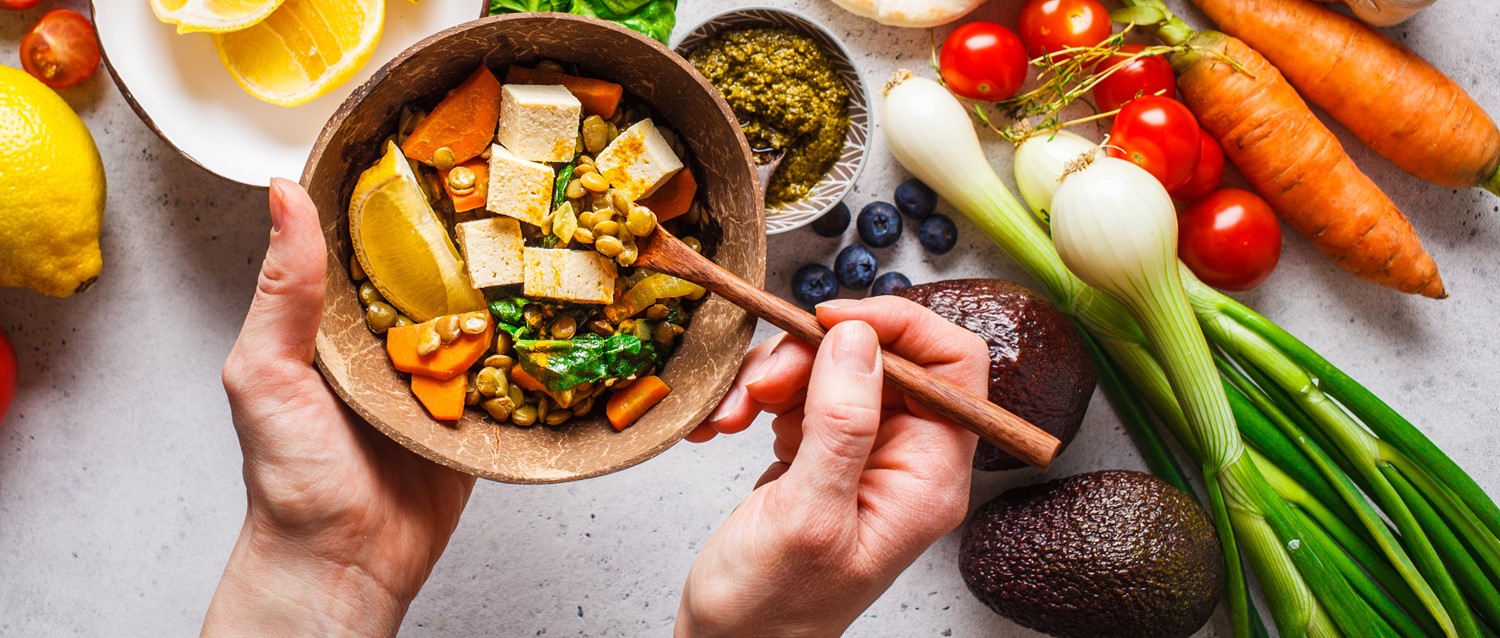
Was ist der Unterschied zwischen veganer und vegetarischer Ernährung?
Begutachtet von Dr Sarah Jarvis MBE, FRCGPZuletzt aktualisiert von Amberley DavisLast updated 9 Jun 2022
Erfüllt die Anforderungen des Patienten Richtlinien des Patienten
- HerunterladenHerunterladen
- Teilen
- Language
- Diskussion
- Audio-Version
Jedes Jahr entscheiden sich in Großbritannien immer mehr Menschen dafür, Fleisch wegzulassen und eine pflanzenbasierte Ernährung zu verfolgen. Was ist der Unterschied zwischen veganer und vegetarischer Ernährung, und wie können wir sicherstellen, dass wir alle notwendigen Nährstoffe erhalten?
In diesem Artikel:
Video picks for Vegan and vegetarian
Lesen Sie unten weiter
The rise of veganism and vegetarianism
In Britain, vegan and vegetarian diets are growing in popularity and the choice to not eat meat is becoming increasingly easier. In 2021, food delivery service Deliveroo reported a 117% growth in plant-based food orders, and 15,000 UK restaurants added meat-free meals to their standard menus.
According to a December 2021 YouGov survey:
46% of vegetarians switched to this lifestyle in the last five years.
63% of vegans switched to this lifestyle in the last five years.
81% of vegans graduated to this diet from vegetarianism.
Vegetarians are now thought to make up around 5-7% of the population, and vegans about 2-3%.
What is vegetarianism?
Zurück zum InhaltEven though meat-free diets are becoming more mainstream, many people are left confused as to what each diet involves. Clare Thornton-Wood, registered dietitian and Britische Diätetische Vereinigung (BDA) member, explains the difference between vegan and vegetarian diets:
"Vegetarians (also called lacto-ovo vegetarians) avoid eating fish, meat, poultry, insects, or any foods containing ingredients that are made from an animal (such as gelatine, rennet, or animal stock). However, they do consume eggs, milk, honey, and items made from or containing these ingredients."
This is because these types of products come from - but aren't made of - the animal itself. Therefore, they don’t require the animal to die.
Why people originally became vegetarian (December 2021 survey)
Not wanting to eat animals or animal products - 63%.
Believing the way animals are raised and killed for food is cruel - 59%.
Perceiving not eating animals as better for the environment - 32%.
Personal health reasons - 13%.
Raised vegetarian by their parents/guardians - 11%.
Because someone else wanted them to (eg, a partner) - 3%.
Religious reasons - 4%.
Other - 12%.
Lesen Sie unten weiter
What is veganism?
Zurück zum Inhalt"Vegans avoid all meat, fish, poultry, eggs, dairy products, and honey," says Thornton-Wood. Vegans follow a completely plant-based diet, not consuming any products that have come from animals.
For example, we all know that milk is not made of cow, but cows are raised on dairy farms for their milk which is harvested from their udders. Likewise, honey is not made from an animal, but it is a substance that bees make.
Why people originally became vegan (December 2021 survey)
Not wanting to eat animals or animal products - 70%.
Believing the way animals are raised and killed for food is cruel - 80%.
Perceiving not eating animals as better for the environment - 53%.
Personal health reasons - 27%.
Raised vegan by their parents/guardians - 5%.
Because someone else wanted them to (eg, a partner) - 5%.
Religious reasons - 1%.
Other - 9%.
"In both vegan and vegetarian diets, food labels need to be clearly checked for animal products," Thornton-Wood cautions. "Foods that might be missed include isinglass (used in some wine making and derived from fish bladders), gelatine (in sweets and drinks) and lanolin (used to produce vitamin D3 and often added to fortified foods)."
What are the health benefits of veganism and vegetarianism?
Zurück zum InhaltWhile health is often not the main reason people switch to meat-free diets, there are some promising benefits. According to the Academy of Nutrition and Dietetics, vegan and vegetarian diets are "healthful, nutritionally adequate, and may provide health benefits for the prevention and treatment of certain diseases".
They highlight that vegans and vegetarians:
Are at a lower risk of certain health conditions - this includes Herzerkrankungen, Typ-2-Diabetes, hoher Blutdruck (Hypertonie), certain types of Krebs, and Fettleibigkeit.
Tend to consume less saturated fat (found in a lot of meats like beef, pork, and lamb) - this is linked to higher cholesterol levels which can increase the risk of cardiovascular diseases such as stroke and heart attack.
Typically eat more fruits, vegetables, whole grains, nuts, seeds, beans, lentils, and soy products - these foods are low in salt and saturated fat and can help people to manage raised cholesterol.
These plant-based diets may also help some people reach their weight loss goals in a healthy way, particularly those who struggle with being overweight or obese. One Studie found that vegan and vegetarian diets were more effective for managing weight loss, obesity, and type 2 diabetes when compared to conventional diets.
Lesen Sie unten weiter
Do these diets carry any risks?
Zurück zum InhaltHowever, a vegetarian or vegan diet is no guarantee that you are gesund gegessen. There are many unhealthy non-meat foods which you should limit, and you will need to make sure that you consume a variety of nutrient-rich foods.
One difference between vegan and vegetarian diets is that the latter can include more saturated fats, which should be limited, due to certain animal products - for example, butter, hard cheeses, and cream - having a high content of saturated fats. Vegan sources of saturated fats are more limited, but include coconut milk, coconut oil, and palm oil.
Plant-based diets can also make it harder to meet certain nutritional requirements. For example, the following vitamins and nutrients are slightly more limited in meat-free options:
Vitamin B12 - supports your health in many ways, including helping to prevent heart disease, improving your memory, and giving you energy.
Kalzium - important for your bone health, heart health, and the health of your other muscles and nerves.
Eisen - needed to produce haemoglobin, a protein that helps your blood carry oxygen around the body.
How to eat healthily on vegan and vegetarian diets
Zurück zum InhaltYet, it is entirely possible to get all the nutrients you need if you choose to eat vegan or vegetarian food. To do this, Thornton-Wood recommends eating a range of foods from all the food groups and basing your intake around fresh ingredients rather than substituting with processed vegetarian/vegan products.
"An 'Eatwell Guide' is now available for both vegetarian and vegan diets," she adds.
"Protein - which plays a key role in the repair and growth of cells and tissues - is not generally an issue with either diet. There are many non-animal protein sources, such as lentils, pulses, nuts, and seeds. It is also found in smaller quantities in foods such as cereals and bread.
"However, some vitamins and minerals require more planning to ensure an adequate intake:"
Vitamin B12
Vitamin B12 is commonly found in dairy food and eggs, which means that vegans are more likely to struggle to consume enough. "It is generally advisable for vegans to take a supplement for vitamin B12. Fortified foods such as yeast extract, some breakfast cereals, and fortified plant milks are also good alternative sources," advises Thornton-Wood.
Kalzium
Thornton-Wood explains that one of the richest sources of calcium is dairy. This means another difference between vegan and vegetarian is that vegans may find it more difficult to consume enough calcium-rich foods. Tofu is vegan and is often fortified with calcium, but it's important to check the label as this isn't always the case.
Eisen
"Iron can be difficult to obtain in a plant-based diet, and non-haemoglobin iron often contains substances such as phytates which makes iron more difficult to absorb," says Thornton-Wood. "Good sources include black treacle, fortified breakfast cereal, nuts, pulses, dried fruit, kale, cabbage, and broccoli."
Omega 3
Omega 3 is an important nutrient for heart health. Fish - especially fatty fish such as fresh tuna, salmon, mackerel and sardines - are an excellent source of omega 3 which pescetarians (who eat fish and vegetarian foods but not meat) can access. For vegetarians, eggs are also a good source. For vegans, Thornton-Wood advises that omega 3 can be obtained through rapeseed oil, Chiasamen, ground linseeds, and walnuts.
Jod
"Iodine is needed for thyroid function and is found in cheese, eggs, and yoghurt for vegetarians. For vegans, alternative plant-based sources of iodine are seaweed and peanuts."
Zinc
"Zinc is needed for cell growth, a healthy immune system, and wound healing. Good plant-based food sources include beans, pulses, hummus, nuts, and seeds."
FAQs: the difference between vegan and vegetarian diets
1. Which is healthier?
Both diets have the potential to provide you with all the energy and nutrients you need. This said, vegetarians have a wider range of options when it comes to nutrient sources, especially for calcium, vitamin D, vitamin B12, and protein. This could make it easier to remain healthy as a vegetarian. However, by planning your meals, focusing on fresh produce, and limiting processed foods, vegans can enjoy a well-balanced diet.
2. Which is better for weight loss?
There is Beweise that vegan and vegetarian diets can aid weight loss when compared to meat-based diets. However, vegetarians should limit certain high-fat dairy products like full fat cheese, cream and butter.
3. Which is better for building muscle?
You need to consume a lot of protein to build muscle. While vegans and vegetarians can't eat animal protein found in meat and fish, there are plenty of high protein plant-based meals to support a muscle-building exercise regime.
Common myths
1. Vegan and vegetarian diets lack protein
"This is not generally an issue as there are many non-animal protein sources," says Thornton-Wood. These include chickpeas, lentils, beans, eggs, nuts, seeds, tofu, and soy products.
2. Vegan and vegetarian diets are always healthy
It's important to note that vegetarian and vegan diets are not automatically healthy. "If the diet is based on highly processed foods and/or high in fat and Zucker then there is the same risk to health as for meat eaters," adds Thornton-Wood.
3. Children cannot follow a vegan or vegetarian diet
"This is perfectly possible but should be supervised by a suitably qualified healthcare professional. Vegetarian and vegan diets can be high in fibre and low in fat, and this needs careful monitoring as small children do not need a high-fibre, low-fat diet."
According to the Academy of Nutrition and Dietetics, vegan and vegetarian diets are appropriate for all stages of the life cycle, including childhood, pregnancy, infancy, and adolescence.
Patient picks for Vegan and vegetarian
Ernährung und Diät
Pflanzliche Proteine könnten helfen, Bluthochdruck vorzubeugen
Eating a greater amount of minimally processed plant-based proteins - such as beans, nuts and lentils - may lower your chance of developing high blood pressure, according to new research.
von Laura Williamson
Ernährung und Diät
How to snack healthily when you are vegan
An increasing number of people are turning away from meat and dairy to follow a plant-based diet. Supermarkets offer a wide range of vegan substitutes, such as oat and almond milks, soya-based meat substitutes and more. However, navigating a vegan diet can be tricky - particularly if you're new to an entirely plant-based lifestyle.
von Lydia Smith
Lesen Sie unten weiter
Artikelverlauf
Die Informationen auf dieser Seite werden von qualifizierten Klinikern begutachtet.
9 Jun 2022 | Neueste Version

Fragen, teilen, verbinden.
Durchsuchen Sie Diskussionen, stellen Sie Fragen und teilen Sie Erfahrungen zu Hunderten von Gesundheitsthemen.

Fühlen Sie sich unwohl?
Bewerten Sie Ihre Symptome online kostenlos
Abonnieren Sie den Patienten-Newsletter
Ihre wöchentliche Dosis klarer, vertrauenswürdiger Gesundheitsberatung - geschrieben, um Ihnen zu helfen, sich informiert, selbstbewusst und in Kontrolle zu fühlen.
By subscribing you accept our Datenschutzrichtlinie. Sie können sich jederzeit abmelden. Wir verkaufen Ihre Daten niemals.