
Magnesium: Gesundheitliche Vorteile und Risiken
Begutachtet von Dr Colin Tidy, MRCGPAuthored by Josh AldermanUrsprünglich veröffentlicht 12 Mar 2026
Erfüllt die Anforderungen des Patienten Richtlinien des Patienten
- HerunterladenHerunterladen
- Teilen
- Language
- Diskussion
- Audio-Version
- Add to preferred sources on Google
Magnesium is an essential mineral that plays a role in hundreds of processes in the body.
From supporting muscle and nerve function to helping maintain healthy bones, magnesium is vital for overall health. But despite its importance, many people are unsure whether they’re getting enough or whether supplements are necessary.
In this article, we explore what magnesium does, the potential health benefits, and when supplementation might be appropriate.
Gesponsert
Patient recommends... HEIGHTS
A clean, gentle magnesium formula for head-to-toe health. 1 ingredient (magnesium glycinate), powering 300+ bodily functions.

In diesem Artikel:
Video picks for Vitamine und Nahrungsergänzungsmittel
Lesen Sie unten weiter
What is magnesium?
Magnesium is a mineral found naturally in many foods, including leafy green vegetables, nuts, seeds, whole grains and pulses.
It is also available as a dietary supplement in several different forms, such as magnesium citrate, magnesium oxide, and magnesium glycinate.
Around 60% of the body’s magnesium is stored in bones, with the rest found in muscles, soft tissues and bodily fluids. It plays a key role in energy production, muscle contraction, nerve signalling and maintaining a steady heart rhythm.1
Why is magnesium important?
Zurück zum InhaltMagnesium is involved in more than 300 biochemical reactions in the body. Without enough magnesium, several systems can be affected.
Some of its core functions include:
Supporting muscle and nerve function.
Helping regulate blood pressure.
Maintaining normal heart rhythm.
Supporting bone strength.
Contributing to energy production.
Helping regulate blood sugar levels.
Because magnesium is involved in so many processes, low levels - known as hypomagnesaemia - may cause a range of symptoms.
Symptoms of low magnesium
Possible symptoms include:
Muscle cramps or tremors.
Müdigkeit.
Numbness or tingling.
Abnormal heart rhythms.
Appetitlosigkeit.
Übelkeit.
People at higher risk of low magnesium include those with digestive disorders, Typ-2-Diabetes, alcohol dependence, or those taking certain medicines such as diuretics.
Lesen Sie unten weiter
Magnesium benefits
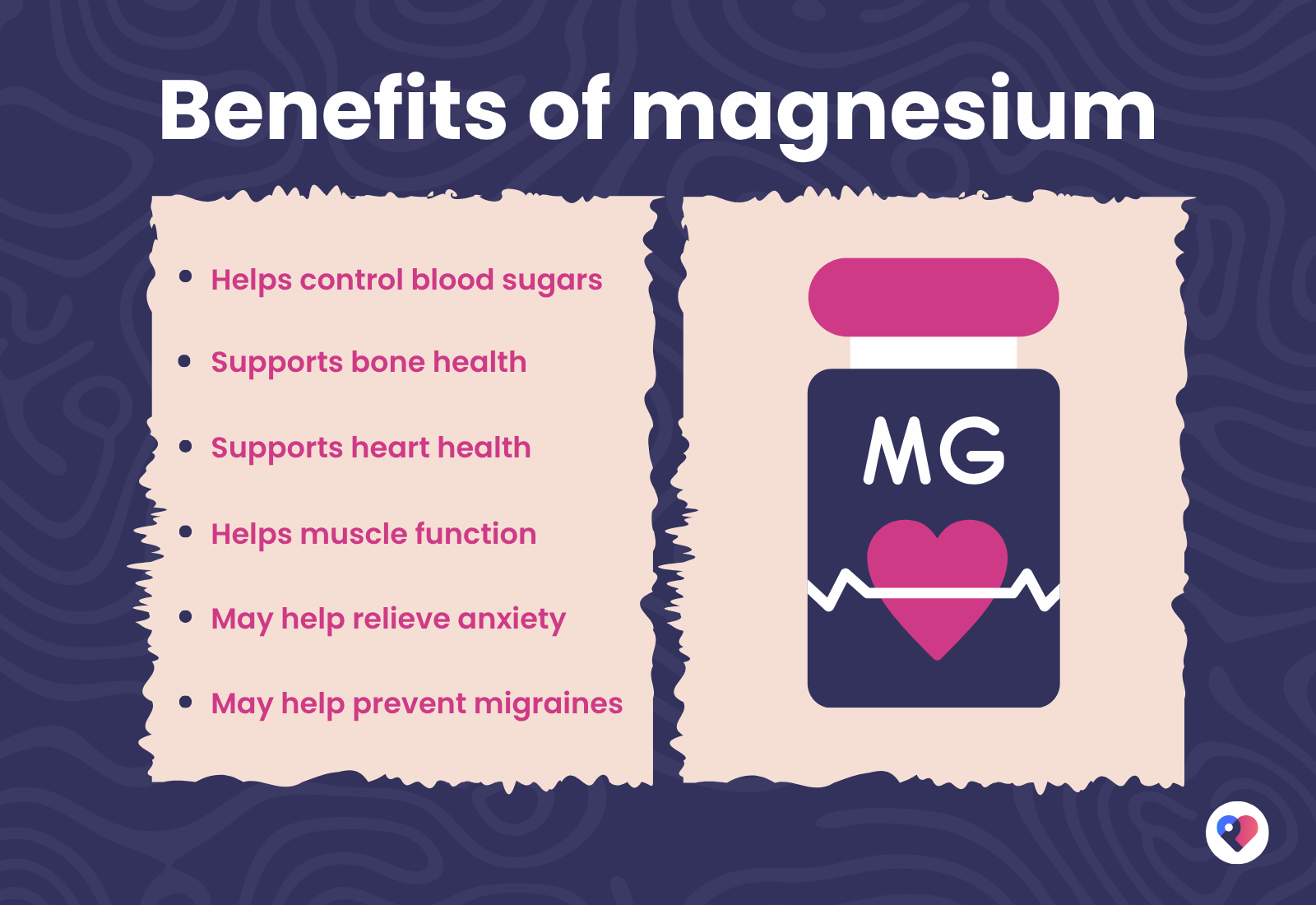
Zurück zum InhaltPotential health benefits of magnesium according to research2 are:
Helps muscle function
Magnesium helps muscles contract and relax properly. Low magnesium levels have been linked to muscle cramps, twitches and weakness. However, evidence for magnesium supplements preventing night-time leg cramps in otherwise healthy people is mixed.3
Supports bone health
Magnesium works alongside calcium and vitamin D to support bone strength. Adequate intake may help maintain healthy bones, particularly as we age. However, magnesium alone does not prevent Osteoporose.
Supports heart health
Magnesium plays a role in maintaining a regular heartbeat and supporting blood vessel function. Some studies suggest that higher magnesium intake may be linked with lower blood pressure, although supplements should not replace prescribed treatment.4
May improve energy levels
Magnesium contributes to normal energy metabolism. Low levels can cause fatigue, weakness and reduced exercise tolerance. If a deficiency is present, correcting it may improve energy levels.
Helps control blood sugar levels
Magnesium is involved in insulin function. Some research suggests that adequate magnesium intake may support healthy blood sugar levels, particularly in people with type 2 diabetes.
Magnesium should not be treated as a substitute for diabetes medicine.5
May help prevent migraines
Magnesium has been studied as a preventive treatment for Migräne. Some evidence suggests it may reduce frequency in certain people, although results vary.6
May help relieve anxiety
Because of its role in nerve function and how muscles relax, it has been suggested that magnesium might help with anxiety.
Low magnesium levels have been linked to symptoms such as irritability and low mood, so correcting a deficiency could, in theory, support emotional wellbeing.7
Some small studies suggest magnesium supplements may help mild anxiety, particularly in people who are deficient. But there isn’t strong enough evidence to recommend magnesium as a standalone treatment for anxiety.
If anxiety is ongoing, severe or affecting your daily life, it’s important to speak to a healthcare professional about appropriate support and treatment options.
Should you take magnesium supplements?
Zurück zum InhaltMost people can get enough magnesium through a varied diet. Good sources include:
Spinach and other leafy greens.
Almonds and cashews.
Pumpkin seeds.
Wholegrain bread and brown rice.
Bohnen und Linsen.
Magnesium supplements may be helpful if a deficiency is diagnosed or strongly suspected. They are also sometimes used for specific conditions such as migraine prevention or Verstopfung (certain forms of magnesium have a laxative effect).
Different forms of magnesium are absorbed differently and may cause varying side effects.
Lesen Sie unten weiter
Are magnesium supplements safe?
Zurück zum InhaltFor most healthy adults, magnesium from food is safe and unlikely to cause issues.
High doses of magnesium supplements can cause:
Durchfall.
Bauchkrämpfe.
Übelkeit.
Very high levels, usually due to excessive supplementation or kidney problems, can lead to more serious symptoms such as niedriger Blutdruck or irregular heartbeat.
People with kidney disease should not take magnesium supplements without medical supervision, as their bodies may struggle to clear the excess magnesium.
As with all supplements, it’s advisable to speak to a healthcare professional before starting magnesium if you have a long-term health condition or take regular medicine.
Zusammenfassung
Zurück zum InhaltMagnesium is an essential mineral involved in muscle function, nerve signalling, heart rhythm, bone strength and energy production. Many magnesium benefits are most noticeable when levels are low, and a balanced diet usually provides enough for healthy adults.
Magnesium supplements may be useful in certain situations, such as diagnosed deficiency or specific medical conditions, but they are not a cure-all. High doses can cause side effects, and they may not be suitable for everyone.
If you’re concerned about your magnesium intake or symptoms of deficiency, speak to a healthcare professional for advice rather than self-prescribing high-dose supplements.
Häufig gestellte Fragen
Zurück zum InhaltIs it safe to take magnesium every day?
Yes, for most people taking magnesium every day is generally safe. However, you should always check with a doctor or pharmacist before taking magnesium supplements, particularly if you use other medications.
Which type of magnesium is best?
The best type of magnesium depends on why you’re taking it. Choose citrate for constipation and digestion, oxide for heartburn and indigestion, or glycinate for stress, anxiety, or sleep. Seek advice from a pharmacist if unsure.
Can magnesium help with sleep?
Magnesium may support sleep by promoting relaxation, but it is not a treatment for insomnia. If sleep problems continue, speak to a healthcare professional to identify underlying causes.
Patient picks for Vitamine und Nahrungsergänzungsmittel

Ernährung und Diät
Was ist Ashwagandha? Gesundheitsvorteile, Anwendungen und Nebenwirkungen
Ashwagandha (Withania somnifera) ist ein jahrhundertealtes Kraut, das in der heutigen Wellness-Welt an Beliebtheit gewinnt. Auch bekannt als indischer Ginseng oder Winterkirsche, wird es traditionell verwendet, um Menschen zu helfen, sich ruhiger und energiegeladener zu fühlen. Hier betrachten wir, wofür es verwendet wird, evidenzbasierte Vorteile und die Nebenwirkungen, die Sie kennen sollten.
von Heather Ainsworth

Diabetes
Können Nahrungsergänzungsmittel helfen, Diabetes zu kontrollieren?
Laut Diabetes UK glauben einige Menschen mit Diabetes, dass bestimmte Vitamine und Nahrungsergänzungsmittel helfen können, ihren Blutzuckerspiegel zu kontrollieren. Obwohl sie kein Ersatz für die herkömmliche Behandlung sein sollten, werfen wir einen Blick auf einige der am häufigsten verwendeten Nahrungsergänzungsmittel und ihre angeblichen Vorteile.
von Victoria Raw
Gesponsert
Patient recommends... HEIGHTS
A clean, gentle magnesium formula for head-to-toe health. 1 ingredient (magnesium glycinate), powering 300+ bodily functions.
Weiterführende Literatur und Referenzen
- U. Gröber et al. "Magnesium in Prevention and Therapy."
- Gerry K Schwalfenberg et al. "The Importance of Magnesium in Clinical Healthcare."
- Noga Roguin Maor et al. "Effect of Magnesium Oxide Supplementation on Nocturnal Leg Cramps: A Randomized Clinical Trial."
- Zoe Argeros et al. "Magnesium Supplementation and Blood Pressure: A Systematic Review and Meta-Analysis of Randomized Controlled Trials."
- Nasiba Al Maqrashi et al. "Effect of Magnesium Supplements on Improving Glucose Control, Blood Pressure and Lipid Profile in Patients With Type 2 Diabetes Mellitus:"
- Ligia J. Domínguez et al. "Magnesium and Migraine."
- Botturi et al: "The role and the effect of magnesium in mental disorders - A systematic review."
Lesen Sie unten weiter
About the authorView full bio

Josh Alderman
SEO-Manager
BA (Hons) Medien- und Printjournalismus
Josh is an SEO executive at Patient with over 4 years experience working within the healthcare sphere.
About the reviewerView full bio

Dr Colin Tidy, MRCGP
Allgemeinmediziner, Medizinischer Autor
MBBS, MRCGP, MRCP (Paediatrics), DCH
Dr. Colin Tidy ist ein NHS-Arzt mit Sitz in Oxfordshire.
Artikelverlauf
Die Informationen auf dieser Seite werden von qualifizierten Klinikern begutachtet.
Next review due: 12 Mar 2029
12 Mar 2026 | Ursprünglich veröffentlicht
Verfasst von:
Josh AldermanBegutachtet von
Dr Colin Tidy, MRCGP

Fragen, teilen, verbinden.
Durchsuchen Sie Diskussionen, stellen Sie Fragen und teilen Sie Erfahrungen zu Hunderten von Gesundheitsthemen.

Fühlen Sie sich unwohl?
Bewerten Sie Ihre Symptome online kostenlos
Abonnieren Sie den Patienten-Newsletter
Ihre wöchentliche Dosis klarer, vertrauenswürdiger Gesundheitsberatung - geschrieben, um Ihnen zu helfen, sich informiert, selbstbewusst und in Kontrolle zu fühlen.
By subscribing you accept our Datenschutzrichtlinie. Sie können sich jederzeit abmelden. Wir verkaufen Ihre Daten niemals.