Whole grain heroes: Why eat ancient grains?
Begutachtet von Dr Colin Tidy, MRCGPZuletzt aktualisiert von Heather AinsworthZuletzt aktualisiert 17 Aug 2025
Erfüllt die Anforderungen des Patienten Richtlinien des Patienten
- HerunterladenHerunterladen
- Teilen
- Language
- Diskussion
- Audio-Version
Today, there are hardly any foods we eat that haven't been modified by humans in some way. As experts discover more health benefits of the planet's most natural foods, attention has turned to a food group that hasn't been altered for thousands of years - ancient grains.
In diesem Artikel:
Videoauswahl für Ernährung
Lesen Sie unten weiter
What are ancient grains?
Grains are an important and nutritious food group, but while they may be grown in a field, they are usually highly refined by the time they reach our homes - whether this be in the form of pasta, bread, cereals, or flour. This means that the grains have undergone manufacturing processes that end up removing lots of their nutrients.
Whole grains, on the other hand, are left whole after they have been grown. This means that the three edible parts of the grain - the bran, germ and endosperm - are left fully intact, along with their vitamin and mineral content.
Bran - the outer shell of the grain.
Germ - the inside part that contains the starch.
Endosperm - the inside part that contains most of the nutrients.
Doctors, nutritionists, and other health experts recommend choosing whole grain products because they contain more fibre and nutrients than their white alternatives. For example, whole wheat bread and brown rice contain more fibre than white bread and white rice. In fact, four servings (70g each) of whole grains a day could lower your risk of death by around 22%1.
Yet, many products that we consider to be whole grain have been modified by humans at some point, whether through crossbreeding with other grains or genetic modification.
Modern whole grains vs ancient grains
Ancient grains are the whole grains that have never been altered, as London-based dietitian Karine Patel explains: "Ancient grains are completely unrefined, known to have remained intact and unchanged in the human diet for thousands of years."
The ancient grain family includes, but is not limited to:
Quinoa.
Millet.
Gerste.
Bulgur.
Roggen.
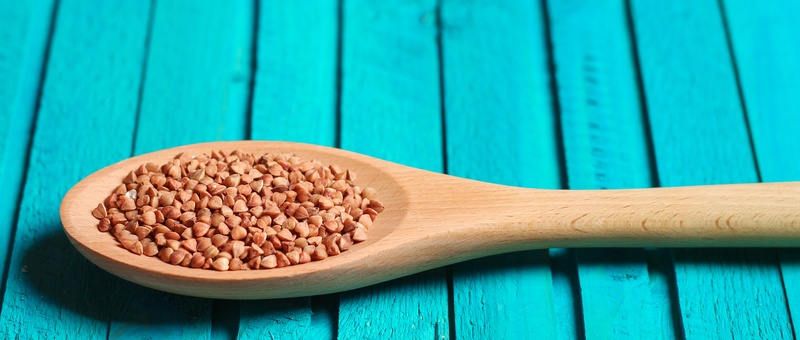
Buckwheat.
Amaranth.
Sorghum.
Teff.
Dinkel.
Flax seeds.
Linseeds.
Now, emerging research suggests that ancient grains pack in even more important vitamins, fibre, and protein than our so-called modern whole grains.
For example, one cup (225g) of cooked teff – an ancient grain - contains 7g of fibre and 10g of protein, whereas the same amount of cooked brown rice - a minimally processed modern whole grain - contains 3g of fibre and 5g of protein.
The benefits of ancient grains
Zurück zum InhaltAccording to Patel, eating ancient grains - which are filled with vitamins, minerals, Ballaststoffe, und protein - is associated with improved digestive health and a lower risk of several serious health conditions.
Help reduce the risk of heart disease
Modern whole grains are very heart healthy when compared to refined grains like white bread and white flour. However, it appears that ancient grains are even better at reducing the risk factors for Herzerkrankungen.
One study comparing bread made either with modern grains or ancient grains found that only the ancient varieties significantly reduced bad Cholesterin, called low-density lipoprotein cholesterol (LDL), and blood sugar levels2.
Help support better insulin control in type 2 diabetes
If you're managing Typ-2-Diabetes, choosing grains that are richer in fibre can help prevent spikes in blood sugar and support better Insulin control2. This is because fibre allows you to digest your food more slowly, which in turn slows down the rate at which sugar enters your bloodstream.
May protect against certain cancers
It's possible that unprocessed grains may protect us against certain cancers, according to the American Institute for Cancer Research. According to its study, the chances of developing Darmkrebs reduced by 17% with three 90g servings of whole grains a day3.
Currently, there isn't much data on cancer and ancient grains specifically, but it's likely they have a similar - if not greater - protective effect. Whole grains may also reduce the risk of other cancers, including Brustkrebs, but more research is needed3.
Help with digestion
Most varieties of ancient grains tend to be high in fibre and free from/low in gluten, which makes them easier for our bodies to digest, compared to modern wheat4. This makes ancient grains a good choice if you're prone to digestive problems such as Reizdarmsyndrom (IBS), or if you have Glutensensitivität.
Lesen Sie unten weiter
How to add ancient grains to your diet
Zurück zum InhaltAncient grains may be more nutritious than modern grains, but all whole grains have important health benefits. There's no need to replace modern whole wheat and corn with a fully ancient grain diet, and you'll probably find this quickly becomes too pricey.
Instead, we should aim to replace the refined grains in our diet with ancient grains and other whole grains, according to Patel. "This means replacing our usual potatoes, rice, and pasta as often as possible," says the dietitian.
Patel's tips for including ancient grains
Breakfast:
Sprinkle chia seeds or linseeds into your porridge, overnight oats, yoghurt, or breakfast cereal.
Use quinoa to make porridge, instead of refined oats.
Add chia seeds or flaxseeds to your morning smoothie.
Make pancakes with buckwheat flour instead of white flour - also gluten-free.
Replace wheat flour in a breakfast muffin with millet flour - also gluten-free.
Lunch and Dinner:
Make a risotto with barley, instead of common risotto rice like arborio and carnaroli rice.
Replace couscous with quinoa or farro in a cold feta salad.
Make a polenta with amaranth, instead of cornmeal.
Add barley to your warm winter vegetable soup.
Try rye bread in a sandwich.
All whole grains, including ancient grains, are carbohydrates. Patel reminds us that this food group should make up roughly one third of the food we eat.
If you're looking to lose weight healthily, all food groups are important, but bear in mind that ancient grains also tend to contain more calories than modern grains.
The key is to keep your portions modest - with ancient grains, you can have less and still get more nutrients and goodness.
References
Zurück zum InhaltPatientenempfehlungen für Ernährung
Ernährung und Diät
Einfache Wege, eine mediterrane Diät zu befolgen
Eine mediterrane Ernährung weckt das Bild von frischem Fisch und bunten Salaten, die in Olivenöl getränkt sind, begleitet von einem Glas Rotwein - natürlich alles unter der Sonne sitzend. Auch wenn wir im Vereinigten Königreich nicht auf zuverlässigen Sonnenschein zählen können, können wir sicherlich von den vielfältigen gesundheitlichen Vorteilen der mediterranen Ernährung profitieren.
von Lynn Stephen
Ernährung und Diät
10 Quellen für pflanzliches Eiweiß zur Knochengesundheit
Plant-based diets are growing in popularity. People choose this way of eating for various reasons - to boost their health, help animals, and protect the environment. But switching to a plant-based diet may mean you're missing out on vital, bone-friendly nutrients. One of these is protein.
von Victoria Raw
Lesen Sie unten weiter
Artikelverlauf
Die Informationen auf dieser Seite werden von qualifizierten Klinikern begutachtet.
Nächste Überprüfung fällig: 17. Aug 2028
17 Aug 2025 | Neueste Version
28 Nov 2023 | Ursprünglich veröffentlicht
Verfasst von:
Amberley Davis

Fragen, teilen, verbinden.
Durchsuchen Sie Diskussionen, stellen Sie Fragen und teilen Sie Erfahrungen zu Hunderten von Gesundheitsthemen.

Fühlen Sie sich unwohl?
Bewerten Sie Ihre Symptome online kostenlos
Abonnieren Sie den Patienten-Newsletter
Ihre wöchentliche Dosis klarer, vertrauenswürdiger Gesundheitsberatung - geschrieben, um Ihnen zu helfen, sich informiert, selbstbewusst und in Kontrolle zu fühlen.
Mit dem Abonnieren akzeptieren Sie unsere Datenschutzrichtlinie. Sie können sich jederzeit abmelden. Wir verkaufen Ihre Daten niemals.