
How my Ovarian Cancer was missed: Natasha tells her story
Peer reviewed by Dr Colin Tidy, MRCGPAuthored by Victoria RawOriginally published 16 Oct 2025
Meets Patient’s editorial guidelines
- DownloadDownload
- Share
- Language
- Discussion
- Audio Version
- Add to preferred sources on Google
Across the UK, thousands of women each year are only diagnosed with ovarian cancer once they reach emergency care.
Among them is Natasha Reynolds, who was just 22 when she began noticing the first signs of the disease. Despite repeatedly seeking help, her concerns were dismissed, even as her symptoms worsened. It was only after she sought emergency care that she finally received a diagnosis - stage one germ cell ovarian cancer, an extremely rare form of the disease that primarily affects young people.
Natasha’s story is a powerful reminder of the importance of taking women’s symptoms seriously and of how many lives could be saved through earlier detection of ovarian cancer.
Ovarian cancer claims more lives each year than all other gynaecological cancers combined. Yet awareness of its symptoms remains dangerously low. Nearly half of women with ovarian cancer are only taken seriously once their symptoms become so severe that they require emergency admission. Alarmingly, just 1 in 3 cases of ovarian cancer is identified at the earliest stages when treatment is most effective.
Ovarian Cancer Action, the UK charity dedicated to improving outcomes for those affected, calls this a national health crisis.
For more than a year and a half before her diagnosis, Natasha visited her doctor nearly every month, convinced that something was seriously wrong. Yet her healthcare providers consistently attributed her symptoms to irritable bowel syndrome (IBS) and endometriosis - common conditions she was already managing at the time.
Natasha Reynolds, who waited 18 months for an ovarian cancer diagnosis

When Natasha first realised something was wrong
When Natasha began showing symptoms of ovarian cancer, she was at university, balancing a busy schedule of studying, working a part-time job, and volunteering. The symptoms started as minor niggles but gradually developed into more noticeable changes, signalling that something unusual was happening in her body.
“I suddenly developed bad hormonal cystic acne,” she describes. “Then I noticed that I was becoming increasingly more bloated - a symptom that, as time went on, became considerably worse."
The bloating was constant for Natasha. She often went to sleep in discomfort, woke up the same way, and sometimes had no choice but to sleep sitting upright. She then started having heartburn - a symptom she had previously experienced only occasionally - followed by a frequent urge to pee.
She says: “I would have to get up midway through a lecture and go to the toilet, which is not something I was used to having to do.”
Over time, Natasha also began feeling full more quickly and often couldn’t finish her meals. As these symptoms piled up, she suspected they might be related to her IBS or endometriosis - especially the bloating.
“It's a very common overlapping symptom of both of them,” she explains. “But the longer it went on and the more severe it got, I knew that it couldn't have been that. I started to wonder whether I’d developed a food allergy. But food allergy symptoms weren't stacking up with what I was experiencing.”
Symptoms that didn’t feel normal
Although some of these symptoms overlapped with her IBS and endometriosis, Natasha was convinced that their intensity signalled a change in her body. The fact that she was experiencing entirely new symptoms - such as needing to pee more frequently and feeling full quickly during meals - made her worry that these weren’t just normal effects of her usual health conditions.
During this time, she also began experiencing what she describes as “horrific fatigue”.
“Fatigue is something that I have experienced before, because when I was younger, I had an iron deficiency,” says Natasha. “I do struggle with my mental health, so fatigue as a whole was not something new to me. However, it was almost crippling to the point where I didn't want to attend university.
“I also struggled going to work and keeping up with my volunteering activities. It was becoming increasingly difficult to live my life. It was at this point that I seriously started to suspect it wasn’t just my IBS or endometriosis.”
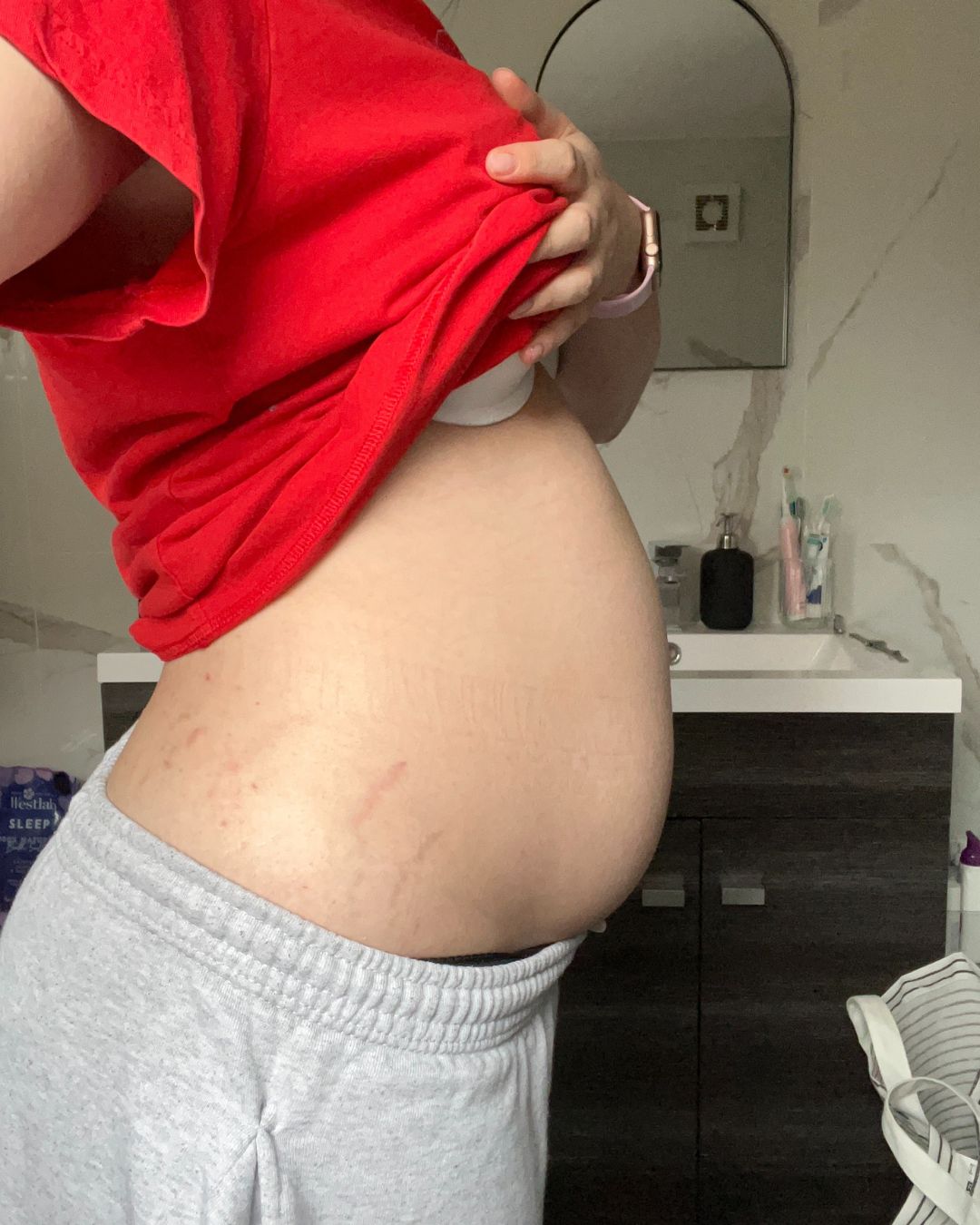
Natasha had persistent bloating that seemed unrelated to her IBS or endometriosis
Struggling to be heard by doctors
Natasha tried to manage the symptoms herself, but when they didn’t improve, she sought medical help. Despite several visits to her doctor, she felt that her worries weren’t being taken seriously. Though these symptoms were unlike anything she had experienced before and didn’t fit the pattern of her usual health conditions, they were brushed off as minor or less concerning.
“The GP I saw at the time was my university doctor, so most of their patients were between 18 and 25,” Natasha explains. “I think part of the reason my cancer took so long to diagnose was that I didn’t fit the expected age range, combined with the fact that women’s health concerns are often brushed off as overdramatic.
“But just because cancer is less common at my age doesn’t mean it can’t happen. And at no point before I was hospitalised did anyone even touch my tummy to examine it.”
Why Googling your symptoms may actually help
After her symptoms were repeatedly dismissed, Natasha took matters into her own hands and started researching online. As she looked into her symptoms, she began to notice a pattern that suggested she might have ovarian cancer.
“Everything I was experiencing suggested this was the case,’ she says. ‘The only thing that didn’t make sense was my age - and back then, I had no idea germ cell cancer even existed.”
Natasha’s condition becomes critical
After more than a year of obvious pain and growing discomfort, Natasha was rushed into emergency care in March 2024. In the weeks leading up to this, her condition had worsened so much that she could no longer wear tights or button her trousers, as the pressure on her stomach was unbearably painful.
“I had come home from university to Sheffield to celebrate both my birthday and my anniversary with my partner,” she recalls. “Then all of a sudden, I had the most severe, sudden abdominal pain I’ve ever experienced in my life.
“I was in so much pain, I couldn’t move, that I wondered whether my appendix had burst.”
After calling 111 - the NHS helpline for non-urgent medical advice - Natasha was told a doctor would call her back within two hours. More than eight hours later, she finally received a call with a diagnosis of a kidney infection.
“I didn’t think it was a kidney infection,’ she says. “I used to get them a lot when I was younger, and the pain was nothing like what I’d experienced before. I was advised to book an appointment with my GP, but I couldn’t, since I was at home rather than at my university, where I was registered.”
Unable to see her GP, Natasha decided to try a walk-in centre, where she was seen almost immediately. After a physical examination of her abdomen, she was admitted to the nearest accident and emergency department. There, she finally received a full examination, which eventually revealed a 20-centimetre cancerous tumour on one ovary and a 14-centimetre cyst on the other.
"Once I’d had those initial tears, I just felt numb,” Natasha recalls. “After so long, I was finally being listened to, and there was a sense of relief - that maybe now I was going to see the right people. But I still struggle to come to terms with how my diagnosis happened. It should never have gone that way.
“I had 34 centimetres of growth inside my body that shouldn’t have been there. And at no point before I was hospitalised did anyone put their hands on my tummy to feel it.”
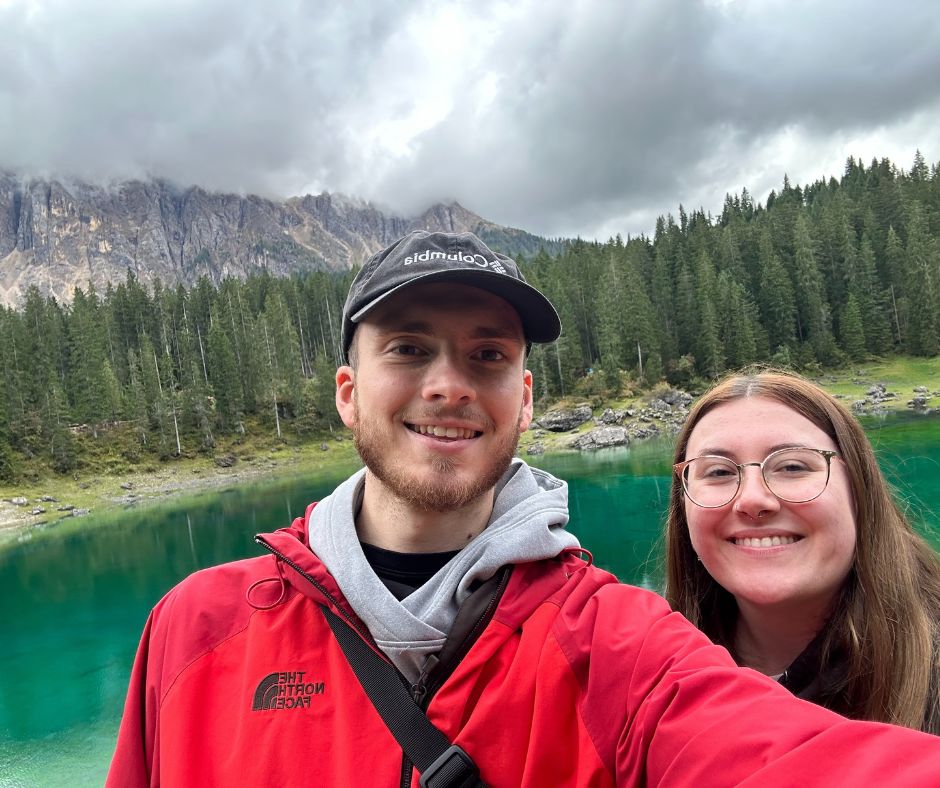
Natasha today with her partner Tom
The lasting emotional and physical effects
Since her diagnosis, Natasha has undergone two surgeries in which both her ovaries and fallopian tubes were removed. She still has her womb and cervix, but because she no longer has ovaries, she now relies on hormone replacement therapy (HRT) - at just 23 years old.
“I’m still really angry about how I was treated, but I think most people would be given the circumstances,” says Natasha. “My symptoms were textbook ovarian cancer, and it’s hard not to wonder how different things might have been if they’d been taken seriously from the start.
“It was a horrible experience that’s left me with a lot of health anxiety, and I’ve struggled mentally with having to put so much of my life on hold.”
What Natasha wants other women and doctors to know
Natasha urges women who notice unusual symptoms to seek medical advice without delay. And if their concerns are brushed aside, as hers were, she says it’s important to trust your own body and have the courage to insist on being heard.
“You understand what is normal for you,” she says. “You ultimately know, for the most part, when something isn't right. When your normal changes, there needs to be some investigation. For me, if I hadn’t taken the time to research my symptoms, and gone to A&E when I did, I can’t imagine how much longer my tumour might have been left to grow undetected.
“I think a health professional should always be very aware of that. You don't live in that person's body. You only know what they're experiencing by what they tell you. So believe them.”
Jess’s Rule: reflect, review and rethink
While Natasha remains concerned for other women whose ovarian cancer symptoms might be dismissed, she views the recent NHS initiative, Jess’s Rule, as a promising step forward.
Jess’s Rule takes its name from Jessica Brady, who made repeated visits to her GP with symptoms linked to cancer. Sadly, these warnings were overlooked, and she passed away in 2020 at the age of just 27.
Jess’s Rule came about thanks to Jess’s family, who successfully campaigned for doctors to take decisive action if a patient returns three times with the same symptom - or set of symptoms - that have previously been played down. Its aim is to ensure health professionals take patients’ concerns seriously, act promptly, and reconsider initial diagnoses - with the goal of potentially saving lives.
“My hope is that this empowers people to speak up for themselves and encourages health professionals to step back and reevaluate - especially when someone keeps returning with the same symptoms,” says Natasha.
“That’s why I want to speak out. I want people to feel confident in knowing what’s normal for their body and when something isn’t right.”
Patient picks for Gynaecological cancer

Cancer
Cervical cancer signs and what to look for
Cervical cancer is one of the most common cancers in women in the UK, with more than 3,000 cases being diagnosed each year. Survival rates for cervical cancer are lower than some other cancers - yet if caught early enough, it is very treatable - with a 95% survival rate for those diagnosed with stage 1 cancer.
by Lynn Stephen

Cancer
Spotting the signs of ovarian cancer: why acting early matters
In the UK, thousands of women are diagnosed with ovarian cancer only after reaching emergency care. Alarmingly, just one in three cases is identified at the earliest stages - when treatment is most effective. We sat down with Jo Stanford, Health Projects Manager and spokesperson for Ovarian Cancer Action, to discuss why so many women are still diagnosed late, the symptoms that should raise concern, and the steps to take if something doesn’t feel right.
by Victoria Raw
About the authorView full bio
Authored by

Victoria Raw
Feature Writer
BA (Hons), English Literature
Victoria is a content writer at Patient, with special interests spanning mental wellbeing, societal trends and the impact of technology on our health.
About the reviewerView full bio

Dr Colin Tidy, MRCGP
General Practitioner, Medical Author
MBBS, MRCGP, MRCP (Paediatrics), DCH
Dr Colin Tidy is an NHS Doctor, based in Oxfordshire.
Article history
Article also available in English, German, Spanish, French, Italian, Portuguese, Hindi, Hebrew, Arabic, and Swedish.
Next review due: 16 Oct 2028
16 Oct 2025 | Originally published
Authored by:
Victoria RawPeer reviewed by
Dr Colin Tidy, MRCGP
Join the conversation
Share your thoughts or experiences with others in our patient communities.

Ask, share, connect.
Browse discussions, ask questions, and share experiences across hundreds of health topics.

Feeling unwell?
Assess your symptoms online for free
Sign up to the Patient newsletter
Your weekly dose of clear, trustworthy health advice - written to help you feel informed, confident and in control.
By subscribing you accept our Privacy Policy. You can unsubscribe at any time. We never sell your data.