Discoider Lupus
Begutachtet von Dr Hayley Willacy, FRCGP Zuletzt aktualisiert von Dr Colin Tidy, MRCGPLast updated 16. Okt 2023
Erfüllt die Anforderungen des Patienten Richtlinien des Patienten
- HerunterladenHerunterladen
- Teilen
- Language
- Diskussion
- Audio-Version
- Add to preferred sources on Google
Discoider Lupus ist eine seltene Hauterkrankung, aber sie ist sehr langanhaltend. Sie ist normalerweise empfindlich gegenüber Sonnenlicht und verursacht Narbenbildung, wenn die Läsionen heilen.
At a glance
Discoid lupus is a chronic skin rash made worse by sun exposure.
It causes red scaly patches, mainly on the face, ears, and neck.
Discoid lupus is thought to be an autoimmune disease.
Doctors usually diagnose it by looking at the skin, sometimes with a biopsy.
Treatments include steroid creams, anti-malarial tablets, and sun protection.
Untreated discoid lupus can lead to permanent scarring.
A small number of people with discoid lupus may develop systemic lupus erythematosus.
In diesem Artikel:
Video picks for Hautausschläge
Lesen Sie unten weiter
What is discoid lupus?
Discoid lupus is an uncommon but long-lasting (chronic) skin rash, which is usually made worse by exposure to sunlight (it is photosensitive).
Discoid lupus is also called discoid lupus erythematosus (DLE). Discoid lupus can be localised to affect a small area of skin, or may be more widespread.
'Discoid' lupus erythematosus is confined to the skin and is not associated with symptoms from other organs.
A more severe form of lupus is called systemischer Lupus erythematodes (SLE), which can affect internal organs.
Discoid lupus can be divided into two groups:
Localised discoid lupus occurs when the head and neck only are affected. It is nearly always confined to the skin
Generalised discoid lupus occurs when other areas are affected. Those with widespread skin involvement are more likely to develop SLE, although the overall risk is still low.
DLE may be associated with other problems such as Raynaud-Phänomen, chilblains und hair loss (alopecia).
Discoid lupus can cause permanent scarring if it is not treated or if treatment is not effective.
What causes discoid lupus?
Zurück zum InhaltIt is thought that discoid lupus is an autoimmune disease. This means that some of the proteins made by the body to fight infection (antibodies), mistakenly attack normal cells in our body. in discoid lupus it is the skin cells that are attacked by these antibodies.
Some families may carry genes that increase the risk of developing discoid lupus. It is thought that discoid lupus is caused by a combination of environmental factors and genetics.
Lesen Sie unten weiter
How common is discoid lupus?
Zurück zum InhaltDiscoid lupus affects between 2 and 5 out of every 10,000 people. Women are much more often affected than men. Discoid lupus usually first starts in people aged between 20 and 40 years. Discoid lupus is more common in people who smoke.
Discoid lupus is the most common form of lupus and is responsible for most cases of lupus that only affects the skin (cutaneous lupus erythematosus).
A small number of people with systemic lupus erythematosus also have discoid lupus.
Discoid lupus may be triggered or made worse by stress, infection or trauma. Some medicines may also trigger discoid lupus.
What are the symptoms of discoid lupus
Zurück zum InhaltDiscoid lupus mainly affects the cheeks, nose and ears, and sometimes the front of the neck, the upper back, and the back of the hands. Occasionally it is more widespread.
Discoid lupus causes red scaly patches. When the lesions eventually resolve, they may leave areas of increased skin pigmentation, destruction (atrophy) of the affected skin, and white scars.
Discoid_lupus_erythematosus
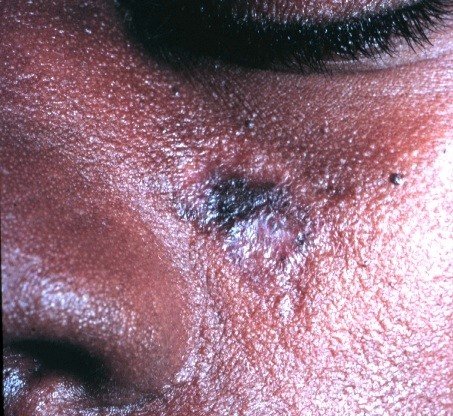
© Leonard C. Sperling, M.D., COL, MC, USA, Department of Dermatology, Uniformed Services University, Public domain, via Wikimedia Commons
Discoider Lupus erythematodes
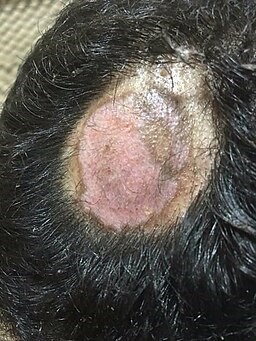
© Mohammad2018, CC BY-SA 4.0, über Wikimedia Commons
The lesions don't usually cause any other symptoms but may cause itching or pain. Discoid lupus mainly affects areas exposed to sunlight, such as the cheeks, nose, ears, upper back, neck and the backs of the hands. It may rarely occur on the palms or the soles.
The discoid lupus lesions may cause wart-like lesions, most often on the back of the arms.
Lesen Sie unten weiter
How can discoid lupus be diagnosed?
Zurück zum InhaltYour doctor will usually be able to make the diagnosis just on the appearance of your skin. However, you will usually be referred to a dermatologist for further assessment and treatment.
Sometimes tests are needed to confirm the diagnosis. These tests may include blood and urine tests, and taking a skin sample (skin biopsy).
What are the treatments for discoid lupus?
Zurück zum InhaltLike many autoimmune conditions, discoid lupus is generally a lifelong condition and there is no cure. However, there are treatments available that are usually effective and can help keep symptoms under control.
Allgemeine Ratschläge
Rauchen can make discoid lupus worse and may also result in a poor response to treatment.
Protect your skin with clothing and sunscreen. Wear a hat to protect your face. Wear a pair of UV protective sunglasses.
Use daily sunscreen when appropriate. You should use a sunscreen with a high sun protection factor (SPF 30 or more) to protect against UVB and UVA.
Strictly avoiding sunlight can reduce vitamin D levels. You should have a diet high in vitamin D (oily fish, eggs, meat, fortified margarines and cereals) and it may be worth taking vitamin D supplements.
Topische Behandlungen
Strong Kortikosteroid-Cremes or steroid injections into the lesions. These can help to reduce inflammation but can thin the skin if used for too long.
Steroid-sparing creams and ointments. Examples include calcineurin inhibitors (such as tacrolimus ointment oder pimecrolimus cream). These treatments do not contain steroid and they act on the immune system to help reduce inflammation.
Topical imiquimod cream is an alternative treatment for widespread discoid lupus.
Skin camouflage can be used where there are areas of plaque involvement or if scarring occurs.
Tablets and injections
Anti-malarial tablets including Hydroxychloroquin and mepacrine. These medications reduce inflammation and so help to control discoid lupus.
Steroidtabletten may be helpful for severe, extensive or scarring discoid lupus.
If there is no response to standard therapy, other medications may be used - for example, acitretin, Methotrexat oder Mycophenolatmofetil. There are risks associated with these treatments and so they are reserved for severe discoid lupus or when other treatments have not been effective.
Andere Behandlungen
Burned-out scarred lesions may be surgically removed.
Photodynamic therapy can be effective for some cases. Photodynamic therapy involves using a light-sensitive medicine and a light source to destroy abnormal cells.
Laser therapy may also be considered for lesions covered with prominent small 'spider' blood vessels (telangiectasias).
What are the complications of discoid lupus?
Zurück zum InhaltAbout 1 in 30 people with discoid lupus go on the develop systemic lupus erythematosus. The risk is greater for children who develop discoid lupus.
Skin cancers (basal cell carcinoma or squamous cell carcinoma) may occur but this is unusual.
Dark skin may lose its protection against sunlight because of loss of pigment (depigmentation).
Wie ist die Aussicht (Prognose)?
Zurück zum InhaltThe outcome can be greatly improved by early diagnosis and effective treatment. For about half of people with discoid lupus, the condition resolves completely over many years.
The outcome is worse if discoid lupus is associated with Raynaud’s phenomenon, chilblains and alopecia. Ultimately some people with discoid lupus will be left with scarring
Discoid lupus tends to heal with scarring, hair loss and pigment changes if effective treatment is not started early. Pain in the lesions may continue and scars and skin destruction (atrophy) will be permanent.
Patient picks for Hautausschläge

Haut-, Nagel- und Haargesundheit
Röschenflechte
Pityriasis rosea ist ein selbstbegrenzender Hautausschlag, mit anderen Worten, er verschwindet von selbst ohne Behandlung. Obwohl der Ausschlag ziemlich ausgeprägt sein kann, ist die Erkrankung sehr mild. Sie betrifft am häufigsten junge Erwachsene, kann aber alle Altersgruppen betreffen.
by Dr Hayley Willacy, FRCGP
Haut-, Nagel- und Haargesundheit
Nesselsucht
Nesselsucht (auch Urtikaria genannt) sind juckende rote oder weiße Beulen auf der Haut, die wie eine Brennnesselreaktion aussehen. Nesselsucht ist häufig und wird oft durch eine allergische Reaktion, Stress, Infektionen oder bestimmte Medikamente verursacht. Die meisten Nesselsuchterscheinungen bessern sich innerhalb weniger Tage von selbst. Dieses Informationsblatt erläutert die Ursachen, Arten und Behandlung von Nesselsucht.
von Dr. Philippa Vincent, MRCGP
Häufig gestellte Fragen
Can discoid lupus affect areas other than the skin?
Discoid lupus predominantly affects the skin, and when it is localised to the head and neck, it is nearly always confined to the skin. However, a more severe form called systemic lupus erythematosus (SLE) can affect internal organs. While discoid lupus is generally limited to the skin, widespread skin involvement can increase the likelihood of developing SLE.
I have discoid lupus; does this mean I will get systemic lupus erythematosus (SLE)?
No, not necessarily. While a small number of people with systemic lupus erythematosus also have discoid lupus, approximately 1 in 30 individuals with discoid lupus go on to develop SLE. The risk is slightly higher for children who develop discoid lupus, and for those with generalised discoid lupus affecting multiple body areas. However, the overall risk is still considered low.
What is the likelihood of regaining normal skin appearance after discoid lupus lesions resolve?
When discoid lupus lesions eventually resolve, they may leave permanent changes. These can include areas of increased or decreased skin pigmentation (dark or white spots), destruction (atrophy) of the affected skin, and white scars. Early diagnosis and effective treatment can greatly improve the outcome, but if treatment is not started early, scarring, hair loss, and pigment changes are more likely.
How can I protect my skin from sun exposure if I have discoid lupus?
It is important to protect your skin from sunlight, as discoid lupus is photosensitive. You should wear protective clothing and a hat to cover your face. Use a daily sunscreen with a high sun protection factor (SPF 30 or more) that protects against both UVB and UVA rays. Wearing UV protective sunglasses is also recommended.
Are there any side effects from the creams or injections used to treat discoid lupus?
Yes, some treatments can have side effects. Strong steroid creams or steroid injections can help reduce inflammation but may cause thinning of the skin if used for too long. Other creams like calcineurin inhibitors (tacrolimus ointment or pimecrolimus cream) act on the immune system to reduce inflammation and do not contain steroids.
Can diet help manage discoid lupus?
While diet is not a direct treatment for discoid lupus, strict avoidance of sunlight to protect your skin can reduce vitamin D levels. Therefore, it is advisable to have a diet rich in vitamin D, including oily fish, eggs, meat, and fortified margarines and cereals. It may also be beneficial to take vitamin D supplements.
What is the significance of discoid lupus being an autoimmune disease?
Discoid lupus is considered an autoimmune disease, meaning your body's immune system mistakenly attacks healthy cells. In discoid lupus, antibodies, which are proteins usually made to fight infection, target and attack your own skin cells. This understanding helps explain why treatments often focus on reducing inflammation and modulating the immune response.
Weiterführende Literatur und Referenzen
- Discoid Lupus Erythematosus (DLE); DermIS (Dermatologisches Informationssystem)
- Cutaneous lupus erythematosus; DermNet NZ
- Okon LG, Werth VP; Cutaneous lupus erythematosus: diagnosis and treatment. Best Pract Res Clin Rheumatol. 2013 Jun;27(3):391-404. doi: 10.1016/j.berh.2013.07.008.
- Bockle BC, Sepp NT; Smoking is highly associated with discoid lupus erythematosus and lupus erythematosus tumidus: analysis of 405 patients. Lupus. 2015 Jun;24(7):669-74. doi: 10.1177/0961203314559630. Epub 2014 Nov 19.
- Cutaneous lupus erythematosus; Gesellschaft für Dermatologie in der Primärversorgung.
Lesen Sie unten weiter
About the authorView full bio

Dr Colin Tidy, MRCGP
Allgemeinmediziner, Medizinischer Autor
MBBS, MRCGP, MRCP (Paediatrics), DCH
Dr. Colin Tidy ist ein NHS-Arzt mit Sitz in Oxfordshire.
About the reviewerView full bio

Dr Hayley Willacy, FRCGP
Allgemeinmediziner, Medizinischer Autor
MBChB (1992), DRCOG, DFFP, MRCOG (Part 1) MRCGP (2007), DFSRH (2013), MSc - medical education (2020)
Dr Hayley Willacy was an NHS GP working in northwest England, who retired from clinical practice in 2022 after 30 years.
Artikelverlauf
Die Informationen auf dieser Seite wurden von qualifizierten Klinikern verfasst und begutachtet.
Nächste Überprüfung fällig: 14. Okt. 2028
16. Okt 2023 | Neueste Version

Fragen, teilen, verbinden.
Durchsuchen Sie Diskussionen, stellen Sie Fragen und teilen Sie Erfahrungen zu Hunderten von Gesundheitsthemen.

Fühlen Sie sich unwohl?
Bewerten Sie Ihre Symptome online kostenlos
Abonnieren Sie den Patienten-Newsletter
Ihre wöchentliche Dosis klarer, vertrauenswürdiger Gesundheitsberatung - geschrieben, um Ihnen zu helfen, sich informiert, selbstbewusst und in Kontrolle zu fühlen.
By subscribing you accept our Datenschutzrichtlinie. Sie können sich jederzeit abmelden. Wir verkaufen Ihre Daten niemals.