Milzschmerzen
Begutachtet von Dr Hayley Willacy, FRCGP Zuletzt aktualisiert von Dr Colin Tidy, MRCGPLast updated 14 Mar 2023
Erfüllt die Anforderungen des Patienten Richtlinien des Patienten
- HerunterladenHerunterladen
- Teilen
- Language
- Diskussion
- Audio-Version
- Add to preferred sources on Google
In dieser Serie:Infektionen nach Splenektomie verhindernHereditäre Sphärozytose
Dieses Faltblatt gibt einen kurzen Überblick über die Milz und ihre Funktionen.
In diesem Artikel:
Video picks for Bauchschmerzen
Lesen Sie unten weiter
Was ist die Milz?
The spleen is an organ about the size of a clenched fist found on the left-hand side of your upper tummy (abdomen). Its main functions are to filter your blood, create new blood cells and store platelets. It is also a key part of the lymph system and part of your body's immune system.
Where is spleen pain felt?
Zurück zum InhaltThe spleen
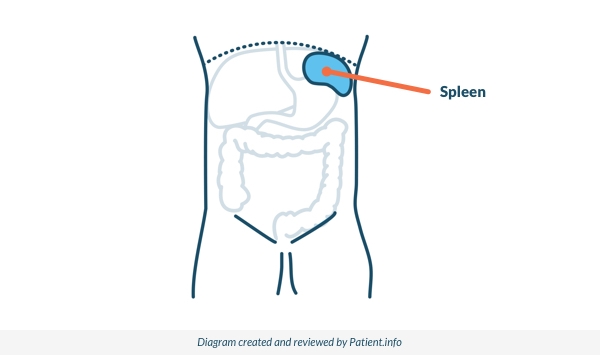
Spleen pain is felt in the upper left side (left upper quadrant) of the tummy (abdomen), behind the lower left ribs. Spleen pain may also cause referred pain in the left shoulder.
Lesen Sie unten weiter
Where is the spleen found?
Zurück zum InhaltThe spleen is found on the upper left side of your body, behind the stomach on a level with the 9th to 11th ribs. It is similar in structure to a lymph node and is the largest lymphatic organ in the body. The spleen contains two main types of tissue - white pulp and red pulp. White pulp is material which is part of the immune system (lymphatic tissue) mainly made up of white blood cells. Red pulp is made up of blood-filled cavities (venous sinuses) and splenic cords. Splenic cords are special tissues which contain different types of red and white blood cells.
What causes spleen pain?
Zurück zum InhaltThe causes of spleen pain include trauma or rupture of the spleen, which may occur following road traffic accidents (car or bicycle) or any other type of injury such as following an assault. Spleen pain may also be caused by a number of health conditions such as liver disease, Mumps, Sichelzellanämie, Malaria or lymphoma (Hodgkin oder Non-Hodgkin).
Therefore the cause of spleen pain may be obvious following serious injury or may need tests including Bluttests and scans (such as a CT-Scan oder MRT-Scan) to find the cause.
Can spleen pain come and go?
Spleen pain is usually constant but the severity of pain may vary in intensity, changing between severe and less severe pain.
Lesen Sie unten weiter
What does the spleen do?
Zurück zum InhaltBlood flows into the spleen where it enters the white pulp. Here, infection-fighting white blood cells called B and T cells screen the blood flowing through. T cells help to recognise invading germs such as bacteria and viruses (pathogens) that might cause illness and then attack them. B cells make antibodies that help to stop infections from taking hold.
Blood also enters red pulp. Red pulp has three main functions:
It removes old and damaged red blood cells. Red blood cells have a lifespan of about 120 days. After this time they stop carrying oxygen effectively. Special cells called macrophages break down these old red blood cells. Haemoglobin is a chemical which carries oxygen. It is found within the cells and is also broken down and then recycled. See the separate leaflet called Hereditary Spherocytosis as an example of a condition with abnormal red blood cells.
It also stores up to one third of the body's supply of platelets. Platelets are fragments of cells circulating in the bloodstream that help to stop bleeding when we cut ourselves. These extra stored platelets can be released from the spleen if severe bleeding occurs.
In unborn babies (fetuses) red pulp can also act like bone marrow, producing new red blood cells. Usually this stops after birth but may start again in some people with certain diseases.
While the spleen performs a number of important functions, it is not essential to life. Other organs such as the liver and bone marrow are able to take over many of its jobs. You can have surgery to have your spleen removed (splenectomy) for various reasons. It may, for example, be removed because of an illness that affects the spleen, you have suffered a ruptured spleen or if it is damaged by an injury. Also, the spleen may not work well in some diseases - for example, Sichelzellenanämie, Thalassämie and lymphomas.
However, people who have had their spleen removed are more likely to get infections and may be put on long-term antibiotics to prevent this. See the separate leaflet called Preventing Infection after Splenectomy for more details.
Patient picks for Bauchschmerzen
Verdauungsgesundheit
Bauchschmerzen
Abdominal pain means pain in the stomach. Usually it doesn't last long and is often due to a gut infection or a small upset - but there are many other possible causes. Pain that is severe or doesn't settle quickly may need attention from a doctor.
von Dr. Toni Hazell, MRCGP

Verdauungsgesundheit
Schmerzen im rechten oberen Quadranten
Dieses Informationsblatt befasst sich mit Schmerzen, die sich im oberen Teil des Bauches (Abdomen/Bauchhöhle) auf der rechten Seite entwickeln können. Es behandelt mögliche Ursachen, wie eine Diagnose gestellt werden könnte und welche Behandlungsmöglichkeiten es gibt.
by Dr Caroline Wiggins, MRCGP
Weiterführende Literatur und Referenzen
- Coco D, Leanza S; Indications for Surgery in Non-Traumatic Spleen Disease. Open Access Maced J Med Sci. 2019 Aug 30;7(17):2958-2960. doi: 10.3889/oamjms.2019.568. eCollection 2019 Sep 15.
- Girard E, Abba J, Cristiano N, et al; Management of splenic and pancreatic trauma. J Visc Surg. 2016 Aug;153(4 Suppl):45-60. doi: 10.1016/j.jviscsurg.2016.04.005. Epub 2016 Jul 9.
Lesen Sie unten weiter
About the author

Dr Colin Tidy, MRCGP
Allgemeinmediziner, Medizinischer Autor
MBBS, MRCGP, MRCP (Paediatrics), DCH
Dr. Colin Tidy ist ein NHS-Arzt mit Sitz in Oxfordshire.
About the reviewerView full bio

Dr Hayley Willacy, FRCGP
Allgemeinmediziner, Medizinischer Autor
MBChB (1992), DRCOG, DFFP, MRCOG (Part 1) MRCGP (2007), DFSRH (2013), MSc - medical education (2020)
Dr Hayley Willacy was an NHS GP working in northwest England, who retired from clinical practice in 2022 after 30 years.
Artikelverlauf
Die Informationen auf dieser Seite wurden von qualifizierten Klinikern verfasst und begutachtet.
Next review due: 12 Mar 2028
14 Mar 2023 | Neueste Version

Fragen, teilen, verbinden.
Durchsuchen Sie Diskussionen, stellen Sie Fragen und teilen Sie Erfahrungen zu Hunderten von Gesundheitsthemen.

Fühlen Sie sich unwohl?
Bewerten Sie Ihre Symptome online kostenlos
Abonnieren Sie den Patienten-Newsletter
Ihre wöchentliche Dosis klarer, vertrauenswürdiger Gesundheitsberatung - geschrieben, um Ihnen zu helfen, sich informiert, selbstbewusst und in Kontrolle zu fühlen.
By subscribing you accept our Datenschutzrichtlinie. Sie können sich jederzeit abmelden. Wir verkaufen Ihre Daten niemals.