Periphere arterielle Verschlusskrankheit
Begutachtet von Dr Colin Tidy, MRCGPZuletzt aktualisiert von Dr Hayley Willacy, FRCGP Zuletzt aktualisiert 21. Aug 2023
Erfüllt die redaktionelle Richtlinien
- HerunterladenHerunterladen
- Teilen
- Language
- Diskussion
- Audio-Version
- Zu bevorzugten Quellen bei Google hinzufügen
Periphere arterielle Verschlusskrankheit, auch periphere Gefäßerkrankung genannt, ist eine Verengung der Blutgefäße (Arterien). Zusätzlich zu der Bezeichnung periphere Gefäßerkrankung (PVD) wird sie manchmal auch als 'Verhärtung' der Arterien der Beine bezeichnet.
Auf einen Blick
Peripheral arterial disease (PAD) is the narrowing of blood vessels, mainly in the legs.
The main symptom is leg pain when walking, which eases with rest.
Poor hair/nail growth, cool feet, or weak pulses can indicate PAD.
Ankle brachial pressure index (ABPI) is a simple test to check for PAD.
Lifestyle changes, such as not smoking and regular exercise, are important.
Medicines are often advised to prevent blood clots and lower cholesterol.
Surgery is only needed in a small number of severe cases.
What is peripheral arterial disease?
Peripheral arterial disease (PAD) is narrowing of one or more blood vessels (arteries). It mainly affects arteries that take blood to your legs. (Arteries to the arms are rarely affected and are not dealt with further in this leaflet.) The narrowing of blood vessels (arteries) is caused by atheroma. The main symptom is pain in one or both legs when you walk.
In the UK, around 1 in 5 men and 1 in 8 women aged 50-75 years have PAD. It becomes more common with increasing age.
Symptoms of peripheral arterial disease
The typical symptom of peripheral arterial disease is pain which develops in one or both calves when you walk or exercise and is relieved when you rest for a few minutes. This pain varies between cases and you may feel aching, cramping or tiredness in your legs.
This is called intermittent claudication. It is due to narrowing of one (or more) of the blood vessels (arteries) in your leg. The most common artery affected is the femoral artery.
When you walk, your calf muscles need an extra blood and oxygen supply. The narrowed artery cannot deliver the extra blood and so pain occurs from the oxygen-starved muscles. The pain comes on more rapidly when you walk up a hill or stairs than when on the flat.
If an artery higher upstream is narrowed, such as the iliac artery or aorta, then you may develop pain in your thighs or buttocks when you walk.
If the blood supply to the legs becomes worse, the following may be found by a doctor who examines you:
Poor hair growth below your knee and poor toenail growth.
Cool feet.
Weak or no pulses in the arteries of your feet.
Severe cases of peripheral arterial disease
If the blood supply is very much reduced then you may develop pain even at rest, particularly at night when the legs are raised in bed. Typically, rest pain first develops in the toes and feet rather than in the calves.
Sores (ulcers) may develop on the skin of your feet or lower leg if the blood supply to the skin is poor. In a small number of cases, tissue death (gangrene) of a foot may result. However, this is usually preventable (see below).
Peripheral arterial disease tests
The diagnosis is usually made by the typical symptoms. A simple test that your doctor or nurse may do is to check the blood pressure in your ankle and compare this to the blood pressure in your arm. This is called the ankle brachial pressure index (ABPI).
If the blood pressure in your ankle is much different to that in your arm then this usually means that one or more blood vessels (arteries) going to your leg, or in your leg, are narrowed. However, the ABPI can be normal in some cases. Although this test can help your doctor find out if PAD is affecting your legs, it will not identify which blood vessels are blocked.
More sophisticated tests are not needed in most cases. They may be done if the diagnosis is in doubt, or if surgery is being considered (which is only in the minority of cases). For example, a Computertomographie (CT) Scan, a MRT-Scan (Magnetresonanztomographie) oder ein Ultraschall of the arteries can build up a map of your arteries and show where they are narrowed.
What is the outlook (prognosis) for peripheral arterial disease?
Studies that have followed up people with PAD have shown that:
Symptoms remain stable or improve in about 15 out of 20 cases.
Symptoms gradually become worse in about 4 out of 20 cases.
Symptoms become severe in about 1 out of 20 cases.
So, in most cases, the outlook for the legs is quite good.
However, if you have PAD, it means that you have an increased risk of developing fatty patches (atheroma) in other blood vessels (arteries). You have around a 6-7 higher-than-average risk of developing heart disease (such as Angina oder ein Herzinfarkts) or of having a stroke.
The main concern for most people with PAD is this increased risk of having a heart attack or stroke.
Hinweis: your chance of developing severe PAD (and heart disease or a stroke) is viel reduced by the self-help measures and treatments described below.
What self-help measures can I do?
Peripheral arterial disease treatment
The self-help measures above are the most important part of treatment. In addition, medication is often advised. Surgery is only needed in a small number of cases.
Medikamente
Ein Medikament namens Clopidogrel is usually advised. This does not help with symptoms of PAD but helps to prevent blood clots (thromboses) forming in blood vessels (arteries). It does this by reducing the stickiness of platelets in the bloodstream. If you cannot take clopidogrel then alternative antiplatelet medicines such as Niedrigdosis-Aspirin may be advised.
A statin medicine is usually advised to lower your cholesterol level. This helps to prevent a build-up of fatty patches (atheroma).
Wenn Sie Diabetes then good control of your blood sugar (glucose) level will help to prevent PAD from worsening.
Wenn Sie hoher Blutdruck (Hypertonie) then you will normally be advised to take medication to lower it.
Andere Medikamente are sometimes used to try to open up the arteries - for example, cilostazol und naftidrofuryl. One may be given and may help. However, they do not work in all cases. Therefore, there is no point in continuing with these medicines if you do not notice an improvement in symptoms within a few weeks.
Operation
Most people with PAD do not need surgery. Your GP may refer you to a surgeon if symptoms of PAD become severe, particularly if you have pain when you are resting. Surgery is considered a last resort. There are three main types of operation for PAD:
Angioplastie - in this procedure, a tiny balloon is inserted into the artery and blown up at the section that is narrowed. This widens the affected segment of artery. This is only suitable if a short segment of artery is narrowed.
Bypass surgery - in this procedure, a flexible pipe (graft) is connected to the artery above and below a narrowed section. The blood is then diverted around the narrowed section.
Surgical removal (amputation) of a foot or lower leg - this is needed in an extremely small number of cases. It is only offered when all other options have been considered. It is needed when severe PAD develops and a foot has tissue death (becomes gangrenous) due to a very poor blood supply.
Patientenauswahl für Blutgefäßerkrankungen
Herzgesundheit und Blutgefäße
Krampfadern
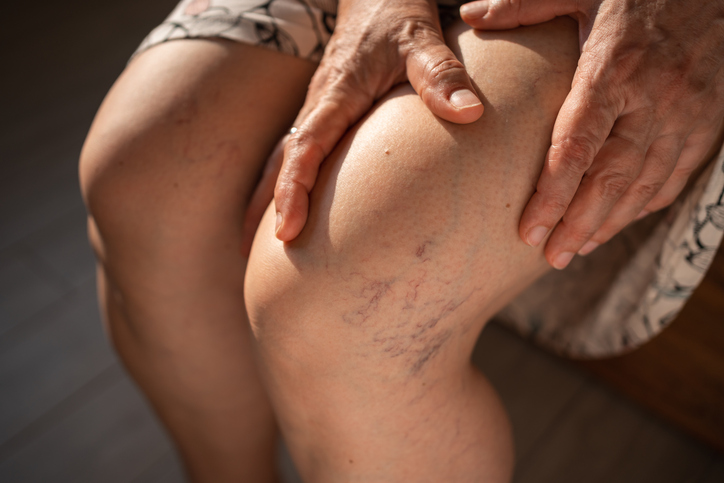
Studien legen nahe, dass Krampfadern bei 10-20 von 100 Männern und 25-33 von 100 Frauen auftreten. Die meisten Menschen mit Krampfadern haben keine zugrunde liegende Krankheit. Sie treten oft ohne ersichtlichen Grund auf, obwohl sie in einigen Fällen mit Lebensstilfaktoren in Verbindung gebracht werden. Krampfadern verursachen in den meisten Fällen keine Symptome oder Komplikationen, obwohl einige Menschen sie unansehnlich finden. Wenn eine Behandlung empfohlen wird oder aus kosmetischen Gründen gewünscht ist, wird ein Verfahren zur Versiegelung angewendet. Es stehen mehrere Verfahren zur Verfügung: Hitze, Laser oder in die Venen injizierte Chemikalien. Diese Methoden haben weitgehend die altmodischen chirurgischen Methoden wie das Herausziehen der Venen ersetzt.
von Dr. Colin Tidy, MRCGP

Herzgesundheit und Blutgefäße
Koarktation der Aorta
Die Aortenisthmusstenose ist eine Art von angeborenem Herzfehler, bei dem es zu einer Verengung eines Teils der Aorta kommt, der Hauptarterie, die die linke Seite des Herzens verlässt.
von Dr. Toni Hazell, FRCGP
Häufig gestellte Fragen
Does peripheral arterial disease only affect the legs?
Peripheral arterial disease predominantly affects the arteries supplying blood to your legs. While arteries in the arms are rarely affected, the underlying cause, atheroma, can be present in other blood vessels throughout the body, including those that supply the heart and brain.
What is atheroma and how does it cause peripheral arterial disease?
Atheroma refers to the build-up of fatty patches within the walls of your blood vessels. This accumulation causes the blood vessels to narrow and harden, which can restrict blood flow. In peripheral arterial disease, this narrowing primarily affects the arteries in the legs, leading to symptoms like pain during walking due to reduced blood supply to the muscles.
Can peripheral arterial disease be confused with other conditions?
The main symptom of peripheral arterial disease is pain in one or both calves when walking, which is relieved by rest (intermittent claudication). While specific diagnostic tests like the ankle brachial pressure index (ABPI) can help confirm PAD, your doctor may consider other conditions if the symptoms are atypical or if the ABPI test doesn't provide a clear diagnosis.
How important is exercise in managing peripheral arterial disease?
Regular exercise is a crucial part of managing peripheral arterial disease. It is considered one of the most important self-help measures you can take. Engaging in regular physical activity can help to improve blood flow and can often stabilise or even improve symptoms over time.
Why is it important to control blood sugar and blood pressure if I have PAD?
If you have diabetes, good control of your blood sugar level is important to prevent peripheral arterial disease from worsening. Similarly, if you have high blood pressure, taking medication to lower it is usually advised. Both high blood sugar and high blood pressure can contribute to the progression of atheroma, which is the underlying cause of PAD.
Weiterführende Lektüre und Referenzen
- Clopidogrel and modified-release dipyridamole for the prevention of occlusive vascular events; NICE Technology appraisal guidance, December 2010
- Peripheral arterial disease - cilostazol, naftidrofyryl oxalate, pentoxifylline and inositol nicotinate; NICE Technology Appraisal Guidance, May 2011
- Periphere arterielle Verschlusskrankheit der unteren Extremitäten; NICE Clinical Guideline (August 2012, updated December 2020)
- Aboyans V, Ricco JB, Bartelink MEL, et al; 2017 ESC-Leitlinien zur Diagnose und Behandlung peripherer arterieller Erkrankungen, in Zusammenarbeit mit der Europäischen Gesellschaft für Gefäßchirurgie (ESVS): Dokument über atherosklerotische Erkrankungen der extrakraniellen Karotis- und Wirbelarterien, mesenterialen, renalen, oberen und unteren Extremitäten. Unterstützt von: der Europäischen Schlaganfallsorganisation (ESO). Die Arbeitsgruppe für die Diagnose und Behandlung peripherer arterieller Erkrankungen der Europäischen Gesellschaft für Kardiologie (ESC) und der Europäischen Gesellschaft für Gefäßchirurgie (ESVS). Eur Heart J. 26. August 2017. doi: 10.1093/eurheartj/ehx095.
- Periphere Arterielle Verschlusskrankheit; NICE CKS, März 2024 (nur Zugang in Großbritannien)
- Zemaitis MR, Boll JM, Dreyer MA; Peripheral Arterial Disease.
Über den AutorVollständige Biografie anzeigen
Aktualisiert von

Dr Hayley Willacy, FRCGP
Allgemeinmediziner, Medizinischer Autor
MBChB (1992), DRCOG, DFFP, MRCOG (Part 1) MRCGP (2007), DFSRH (2013), MSc - medical education (2020)
Dr. Hayley Willacy war eine NHS-Hausärztin, die in Nordwestengland arbeitete und 2022 nach 30 Jahren aus der klinischen Praxis ausschied.
Über den RezensentenVollständige Biografie anzeigen

Dr Colin Tidy, MRCGP
Allgemeinmediziner, Medizinischer Autor
MBBS, MRCGP, MRCP (Paediatrics), DCH
Dr. Colin Tidy ist ein NHS-Arzt mit Sitz in Oxfordshire.
Artikelverlauf
Artikel auch verfügbar in Englisch, Deutsch, Spanisch, Französisch, Italienisch, Portugiesisch, Hindi, Hebräisch, Arabisch, und Schwedisch.
Nächste Überprüfung fällig: 19. Aug 2028
21. Aug 2023 | Neueste Version
Nehmen Sie an der Diskussion teil
Teilen Sie Ihre Gedanken oder Erfahrungen mit anderen in unserem Patientengemeinschaften.

Fragen, teilen, verbinden.
Durchsuchen Sie Diskussionen, stellen Sie Fragen und teilen Sie Erfahrungen zu Hunderten von Gesundheitsthemen.

Fühlen Sie sich unwohl?
Bewerten Sie Ihre Symptome online kostenlos
Abonnieren Sie den Patienten-Newsletter
Ihre wöchentliche Dosis klarer, vertrauenswürdiger Gesundheitsberatung - geschrieben, um Ihnen zu helfen, sich informiert, selbstbewusst und in Kontrolle zu fühlen.
Durch das Abonnieren akzeptieren Sie unsere Datenschutzrichtlinie. Sie können sich jederzeit abmelden. Wir verkaufen Ihre Daten niemals.