Transitorische ischämische Attacke
Fachlich geprüft von Dr Colin Tidy, MRCGPZuletzt aktualisiert von Dr Doug McKechnie, MRCGPZuletzt aktualisiert 5. Sept. 2024
Entspricht den redaktionellen Richtlinien
- HerunterladenHerunterladen
- Teilen
- Language
- Diskussion
- Audio-Version
- Zu bevorzugten Quellen bei Google hinzufügen
In dieser Serie:Schlaganfall
A transient ischaemic attack (TIA) causes symptoms similar to a stroke. Some people call a TIA a mini-stroke. With a TIA, the symptoms go completely within 24 hours (whilst with a stroke, the symptoms are usually more permanent). The most common cause is a tiny blood clot in a blood vessel in the brain.
Call 999/112/911 if you have symptoms of a stroke or TIA - act FAST. Unless the symptoms get better within a few minutes you need emergency treatment, as the cause might be a stroke rather than a TIA.
It is important that you don't wait to see if the symptoms get better on their own. Even if the symptoms have got better quickly and completely, you need to see a doctor urgently for further tests and treatment.
Auf einen Blick
A transient ischaemic attack (TIA) is caused by a temporary lack of blood to part of the brain.
Symptoms are like a stroke but are short-lived and go away completely.
Common symptoms include weakness, speech difficulties, or sudden vision loss.
A TIA is a serious warning sign that a stroke might happen soon.
If you suspect a TIA or stroke, use the FAST test and call 999 immediately.
Was ist ein transitorischer ischämischer Anfall?
A transient ischaemic attack (TIA) is a set of symptoms that lasts a short time and occurs because of a temporary lack of blood to part of the brain.
The symptoms are the same as those of a Schlaganfall but, unlike a stroke, the symptoms are short-lived and soon go away completely. This means that you recover fully, back to normal. (The word ischaemic means a reduced supply of blood and oxygen to a part of the body.)
TIAs are important because they are a warning sign that someone might go on to have a stroke in the next few days or weeks. Rapid treatment can greatly reduce the risk of this happening.
TIAs are sometimes called 'mini-strokes'.
How common is a transient ischaemic attack (TIA)?
In the UK, about 1 in every 2000 people get a TIA for the first time, each year.
The true number might be higher, though. It's likely that some people have a TIA, but don't recognise it as one, or don't report it to their doctor.
Symptoms of a transient ischaemic attack (TIA)
The symptoms that develop depend on which part of the brain is affected. Different parts of the brain control different parts of the body.
Symptoms may include one or more of the following:
Weakness or clumsiness of a hand, arm, or leg.
Difficulties with speech.
Difficulties with swallowing.
Numbness or Kribbeln of a part of the body.
Sudden loss of vision in one or both eyes, or double vision.
Hinweis: headache is nicht a typical feature of a TIA (or of a stroke).
How long do symptoms of a TIA last?
Symptoms of a TIA are temporary. They develop suddenly and usually peak in less than a minute. The duration of symptoms varies; however, symptoms usually go within an hour (typically within 2-15 minutes). Sometimes symptoms last up to 24 hours.
Causes of a transient ischaemic attack (TIA)
In most cases, a TIA is caused by a tiny blood clot that becomes stuck in a small blood vessel (artery) in the brain. This blocks the blood flow, and a part of the brain is starved of oxygen.
In a TIA, the blood clot rapidly breaks up on its own, allowing blood flow to return to normal, and the brain to recover.
The blood clot usually starts elsewhere in the body, travelling through blood vessels until it reaches an artery in the brain and gets stuck. The two most common causes of this are:
Vorhofflimmern, a heart condition. This can cause blood clots to form in the heart, which can then travel through blood vessels to reach other parts of the body, including the brain.
Atherosclerosis (thickening and hardening) and stenosis (narrowing) of the arteries in the neck that supply blood to the brain. Areas of thickening inside the arteries, called plaques, can sometimes burst, causing a blood clot to form. This blood clot, or part of it, can then travel up to the brain.
Cross-section diagram showing main arteries of the brain and a TIA blood clot
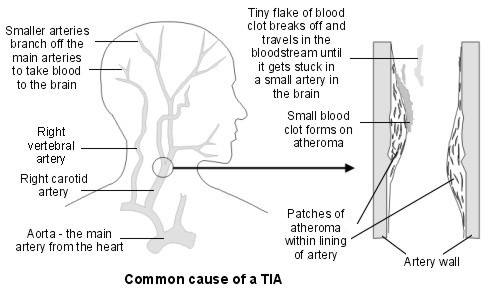
There are other rarer causes of a TIA. These include:
Blutgerinnungsprobleme.
Tiny bleeds into the brain.
Blood disorders such as Polyzythämie und Sichelzellanämie where the blood is very thick.
Spasm of a small artery in the brain.
A blood clot from the veins of the leg (a Tiefe Venenthrombose) that travels through a hole in the heart to reach the arteries that supply the brain.
Other uncommon problems of the brain or its blood vessels.
However, these are not dealt with further in this leaflet.
How serious is a transient ischaemic attack (TIA)?
A TIA is serious and needs emergency medical attention.
In the early stages of a TIA, when the symptoms are still present, it's not possible to tell if the symptoms are due to a TIA or a stroke.
A TIA is also a warning sign that a stroke might happen within the next few days, but prompt treatment can significantly reduce the risk of this happening.
Der FAST test can help you identify signs of a stroke or TIA:
Facial weakness. Has their face fallen on one side? Can they smile?
Arm weakness. Can the person raise both arms and keep them there?
Speech disturbance. Is their speech slurred?
Time. Time to call 999/112/911 if you see any single one of these signs.
The FAST checklist does not cover every possible symptom of stroke or TIA. However, it is easy to remember. It is estimated that about 8 or 9 in 10 people with a stroke or TIA will have one or more FAST symptoms.
If you have symptoms of a stroke, you need to be seen in a hospital immediately (even if you later turn out to have a different problem, or a TIA).
Diagnosing a transient ischaemic attack (TIA)
TIAs are usually diagnosed on the basis of your symptoms, although this can be difficult sometimes, because other conditions can cause similar symptoms. The diagnosis is usually confirmed by a stroke specialist.
Tests are usually done to look for other conditions, and to find the cause of the TIA.
The main aim of these tests is:
To check for any underlying problems that might have caused the TIA.
To check if you have a problem that increases your risk of blood clots forming.
To make sure that you haven't had a stroke rather than a TIA.
Brain scan
A special type of MRT-Scan can look for signs of damage to the brain from reduced blood flow, as well as for other problems like bleeding into the brain, or a brain tumour.
MRI scans are increasingly used because they can pick up very small areas of brain damage, which may mean that someone has had a small stroke instead of a TIA. In someone who has had a TIA with no lasting injury to the brain, the MRI scan may be normal.
Sometimes, a CT-Scan is done first, if someone is taking blood-thinning drugs (anticoagulants) or has a condition that makes them more likely to bleed. A CT scan can quickly rule out bleeding inside the brain (a haemorrhagic stroke). It isn't as good as an MRI at picking up small strokes, though.
Bluttests
Blood tests are usually done to look for any risk factors for TIA and stroke that could be treated, such as Diabetes und hoher Cholesterinspiegel.
Blood glucose (sugar) is checked as well, as low blood glucose can cause similar symptoms to a stroke or TIA.
Ultraschalluntersuchung
If you have had a TIA, you are likely to be offered an ultrasound scan of your carotid arteries. This is to see if you have severe narrowing of one of these arteries, caused by atheroma. Atheroma plaques are like fatty lumps that develop within the inside lining of arteries.
Narrowing (stenosis) of the carotid arteries is a risk factor for TIA and stroke. If one or both of your carotid arteries are more than 50% furred up, you may be referred urgently for surgery to unblock them. You can find out more from the section on surgery below.
EKG
An electrocardiogram (ECG) is done to check for abnormal heart rhythms such as an irregular heartbeat (atrial fibrillation).
If the initial ECG is normal, you might be offered an ECG monitor that you wear continuously for 24 hours or more, to see if you are having intermittent episodes of abnormal heart rhythms.
Blood pressure measurement
Although this is not strictly speaking a test, it is important that your blood pressure should be checked. High blood pressure is a risk factor for TIA and, if present, you should be offered treatment.
Treatment for a transient ischaemic attack (TIA)
The aim of treatment after a TIA is to reduce your risk of having a stroke, heart attack, or further TIAs. Aspects of treatment include the following:
Medication to reduce the risk of blood clots forming.
To reduce any risk factors that you may have.
Surgery (but this is only suitable in some cases).
Medikation
Medication reduces the risk of further blood clots forming.
Thrombozytenaggregationshemmer
Platelets are tiny particles in the blood which help blood to clot. Thrombozytenaggregationshemmer is usually advised if you have had a TIA. Antiplatelet medication reduces the stickiness of platelets. This helps to prevent blood clots forming inside arteries, which helps to prevent a further TIA or a stroke.
Immediately after a TIA, you should be started on a daily dose of aspirin until your hospital investigations have been completed. If you were already taking low-dose (75 mg) aspirin, you may be advised to increase this to 300 mg a day.
Aspirin is usually given immediately if a TIA or stroke is suspected. The most commonly used long-term antiplatelet medicine following a stroke or TIA is Clopidogrel.
Sometimes, once a TIA or minor stroke has been diagnosed, people are offered a short course of two antiplatelet medications together (aspirin and clopidogrel, or aspirin and ticagrelor) for two to three weeks, and then stopping the aspirin and continuing on the clopidogrel or ticagrelor long-term.
Sometimes medication to protect your stomach lining may be used alongside aspirin or clopidogrel. This might be the case if you have a lot of indigestion, especially with anti-inflammatory medicines (such as aspirin and ibuprofen). It may also be the case if you are considered as being at high risk for stomach problems caused by aspirin.
Orale Antikoagulantien
An oral anticoagulant medicine (Warfarin, Dabigatran, Apixaban, edoxaban oder Rivaroxaban) is usually advised if you have a TIA where the source of the blood clot is from your heart (usually if you have the condition atrial fibrillation).
Oral anticoagulant medicines work by reducing some of the chemicals in the blood that are needed to make blood clot. The aim is to get the dose just right so the blood is 'thinner' than normal (less able to form clots) but not so much as to cause bleeding problems.
See the separate leaflet called Preventing Stroke for more information.
Operation
Surgery to remove a narrowing of the carotid artery (carotid stenosis) caused by atheroma may be an option in some people. It depends on several factors, such as:
How bad the narrowing is.
Whether you have had symptoms (such as a TIA or stroke).
What your general fitness is like (in terms of the risks of having major surgery).
The main surgical procedure is called carotid endarterectomy (another procedure called carotid artery angioplasty and stenting is sometimes used for blocked carotid arteries).
Endarterectomy is an open operation. This means the surgeon has to open up the artery (via a cut in the skin) to remove the atheroma inside the artery.
Angioplasty is a less invasive operation. Usually it is done by threading a small wire up to the neck from a puncture in the groin (in the femoral artery). In simple terms, it is a bit like using a pipe cleaner to clean and unblock a blocked pipe. A stent is a tiny mesh tube that folds up telescopically. It can be inserted into the carotid artery to hold the walls of the artery open and to prevent blockage.
At present, only carotid endarterectomy is recommended after TIA or stroke.
Successful surgery reduces the risk of a future stroke by about a half. However, like all operations, there is a small risk from the operation itself. One of these risks is of causing a stroke. A specialist (vascular surgeon) will advise on the pros and cons of the different operations if you are found to have severe narrowing of a carotid artery.
Preventing a transient ischaemic attack (TIA)
To try to lessen the chances of having a TIA or stroke, it is important to reduce your risk factors. The risk factors are the things that make the build-up of atheroma in blood vessels (arteries) happen more readily.
Atheroma is a bit like the scale that furs up the inside of your kettle. Atheroma increases your risk of having serious problems such as TIA, stroke and heart attacks. The risk factors that can be changed are:
Mit dem Rauchen aufhören
If you smoke, you should make every effort to stop. The chemicals in tobacco are carried in your bloodstream and can damage your arteries. If you smoke, stopping smoking can greatly cut your risk of having a stroke (and also many other diseases such as heart attacks and lung cancer).
Monitor high blood pressure
Make sure your blood pressure is checked at least once a year. If it is high it can be treated. Hoher Blutdruck usually causes no symptoms but can be damaging to the arteries.
If you have high blood pressure, treatment of the blood pressure is likely to have the greatest effect on reducing your risk of having a stroke.
If you have diabetes, good blood pressure control is even more essential.
Gewicht verlieren
If you are overweight or obese losing weight is advised. This can be achieved by eating fewer calories, eating more healthily and exercising more.
If you are obese and you are finding it difficult to lose weight through these lifestyle measures, it is worth discussing this further with your GP. Some areas have weight loss programmes, some people benefit from seeing a dietician and others lose weight by taking weight loss medication.
In extreme cases, weight loss (bariatric) surgery may be advised if all other methods have failed.
Lower cholesterol levels
High cholesterol levels can be lowered with medication, usually a statin. If you have had a stroke, a statin should be started whether or not your cholesterol level is high. This is because it reduces your overall risk of blood vessel (vascular) diseases - such as stroke, TIA and heart attack, even if your cholesterol levels are normal.
Siehe die separaten Broschüren mit dem Titel hohen Cholesterinspiegel und Statine und andere lipidsenkende Medikamente für weitere Details.
Bewegung
Lack of physical activity increases your risk of developing atheroma. You should aim to do some moderate physical activity on most days of the week for at least 30 minutes. Examples of suitable activities include brisk walking, swimming, cycling, dancing and gardening.
Ask your doctor or nurse if you are not sure which exercises and how much exercise would be best for you.
Ernähre dich gesund
You should aim to eat a healthy diet. Briefly, a healthy diet means:
At least five portions, or ideally 7-9 portions, of a variety of fruit and vegetables per day.
A third of most meals should be starch-based foods (such as cereals, wholegrain bread, potatoes, rice, pasta), plus fruit and vegetables.
Not much fatty food such as fatty meats, cheeses, full-cream milk, fried food, butter, etc. Use low-fat, mono-unsaturated or polyunsaturated spreads.
Include 2-3 portions of fish per week. At least one of these should be oily (such as herring, mackerel, sardines, kippers, pilchards, salmon, or fresh tuna).
If you eat meat it is best to eat lean meat, or poultry such as chicken.
If you do fry, choose a vegetable oil such as sunflower, rapeseed or olive.
Try not to add salt to food. Limit foods which are salty.
Reduce alcohol intake
Do not drink more than the recommended safe limits. That is, men should drink no more than 14 units of alcohol per week, no more than four units in any one day, and have at least two alcohol-free days a week.
Women should drink no more than 14 units of alcohol per week, no more than three units in any one day, and have at least two alcohol-free days a week. Pregnant women should not drink at all.
One unit is in about half a pint of normal-strength beer, or two thirds of a small glass of wine, or one small pub measure of spirits.
Manage diabetes
Diabetes is a risk factor. If you have diabetes, eine Behandlung, um Ihren Blutzucker so nah wie möglich am Normalwert zu halten, ist wichtig.
Siehe das separate Merkblatt mit dem Titel Herz-Kreislauf-Erkrankung (Atherom) für weitere Details.
Transient ischaemic attack (TIA) and driving
If you've had, or currently have, a medical condition or disability that may affect your driving you must tell the Driver and Vehicle Licensing Agency (DVLA). The DVLA has a guide to the 'Medical Standards of Fitness to Drive'. This includes a TIA.
Following a TIA you will have to stop driving for a month if you have a Group 1 (car and motorcycle) licence. You do not need to inform the DVLA.
If you have a Group 1 licence and have multiple TIAs, you must stop driving and must inform the DVLA. If you have several TIAs over a short period, you will have to stop driving until at least three months after your last TIA.
The rules are different if you drive lorries or buses. So-called 'Group 2' drivers have much higher medical standards to reach. Return to driving depends on a satisfactory recovery to normal or minimal nerve (neurological) impairment. Every individual case is different. This is why it is important to obtain advice directly from the DVLA.
You should also contact your motor insurance company for advice.
Weitere Ratschläge
If you have had a TIA or stroke and plan to travel, you need to ensure that you have adequate medical cover on your travel insurance. This will mean informing your insurer of your pre-existing medical conditions.
Never withhold medical information or fail to declare medical illnesses - if you do so, your insurance may be invalidated. Invalid insurance leaves you open to having to pay full costs (often extremely high) if you need to seek medical attention when abroad.
Patientenauswahl für Schlaganfall

Häufig gestellte Fragen
Can a TIA happen without any noticeable symptoms?
The article states that some people might have a TIA without recognising it or reporting it to their doctor, suggesting that symptoms might be mild or overlooked. However, it also clarifies that a TIA is a set of symptoms, so it implies there are always some symptoms, even if subtle.
How soon after a TIA do I need to start taking medication?
Immediately after a TIA, you should be started on a daily dose of aspirin until your hospital investigations are completed. If you were already taking low-dose aspirin, you may be advised to increase this to 300 mg a day. Other medications, like clopidogrel or oral anticoagulants, may be advised after diagnosis, depending on the cause.
Are there any specific lifestyle changes that are most important for preventing another TIA?
The article lists several important lifestyle changes. If you smoke, stopping is highlighted as greatly reducing your risk. Treating high blood pressure is also mentioned as having the greatest effect on reducing stroke risk. Managing diabetes and lowering high cholesterol with medication are also crucial.
Can stress cause a TIA?
The article does not directly list stress as a cause of TIA. The main causes discussed are tiny blood clots usually originating from atrial fibrillation or atherosclerosis in the neck arteries, and other rarer causes like blood clotting problems or blood disorders. Stress is not mentioned in this context.
What does it mean if my ECG is normal after a TIA?
If your initial ECG is normal after a TIA, you might be offered an ECG monitor to wear continuously for 24 hours or more. This is done to check for intermittent episodes of abnormal heart rhythms, such as atrial fibrillation, which might not be captured during a single, brief ECG.
What should I do if I have multiple TIAs in a short period?
If you have several TIAs over a short period, you must stop driving and inform the DVLA immediately. You will have to stop driving until at least three months after your last TIA. The article also advises contacting your motor insurance company for advice.
Weiterführende Literatur und Referenzen
- Schlaganfall und transitorische ischämische Attacke bei über 16-Jährigen: Diagnose und Erstbehandlung; NICE-Leitlinien (Mai 2019 - zuletzt aktualisiert April 2022)
- Schlaganfall und TIA; NICE CKS, Dezember 2023 (nur für UK-Zugang)
Über den AutorVollständige Biografie anzeigen

Dr Doug McKechnie, MRCGP
Medizinischer Autor
MA, MBBS, MSc, DRCOG, MRCP(UK), MRCGP(2021), FHEA
Dr. Doug McKechnie ist ein NHS-Hausarzt, der in London arbeitet. Er arbeitet klinisch in Vollzeit und ist außerdem stellvertretender Leiter des Moduls für klinische und berufliche Praxis an der University College London Medical School.
Über den RezensentenVollständige Biografie anzeigen

Dr Colin Tidy, MRCGP
Allgemeinmediziner, Medizinischer Autor
MBBS, MRCGP, MRCP (Paediatrics), DCH
Dr. Colin Tidy ist ein NHS-Arzt mit Sitz in Oxfordshire.
Artikelverlauf
Die Informationen auf dieser Seite wurden von qualifizierten Klinikern verfasst und begutachtet.
Artikel auch verfügbar in Englisch, Deutsch, Spanisch, Französisch, Italienisch, Portugiesisch, Hindi, Hebräisch, Arabisch, und Schwedisch.
Nächste Überprüfung fällig: 4. Sept. 2027
5. Sept. 2024 | Neueste Version

Fragen, teilen, verbinden.
Durchsuchen Sie Diskussionen, stellen Sie Fragen und teilen Sie Erfahrungen zu Hunderten von Gesundheitsthemen.

Fühlen Sie sich unwohl?
Bewerten Sie Ihre Symptome online kostenlos
Abonnieren Sie den Patienten-Newsletter
Ihre wöchentliche Dosis klarer, vertrauenswürdiger Gesundheitsberatung - geschrieben, um Ihnen zu helfen, sich informiert, selbstbewusst und in Kontrolle zu fühlen.
Durch das Abonnieren akzeptieren Sie unsere Datenschutzrichtlinie. Sie können sich jederzeit abmelden. Wir verkaufen Ihre Daten niemals.