Hyperlipidämie
Begutachtet von Dr Colin Tidy, MRCGPZuletzt aktualisiert von Dr Toni Hazell, MRCGPZuletzt aktualisiert 24. Jul 2025
Erfüllt die Anforderungen des Patienten Richtlinien des Patienten
- HerunterladenHerunterladen
- Teilen
- Language
- Diskussion
- Audio-Version
In dieser Serie:hohen CholesterinspiegelFamiliäre HypercholesterinämieStatine und andere lipidsenkende Medikamente
Hyperlipidaemia means a high level of cholesterol or triglycerides in your blood.
In diesem Artikel:
Videoauswahl für hohen Cholesterinspiegel
Lesen Sie unten weiter
What causes hyperlipidaemia?
Hyperlipidaemia is often found when people are overweight or have an unhealthy diet. It can also be the result of drinking too much alcohol. It can be something that you may have inherited through your family genes (known as primary hyperlipidaemia) and approximately 1 person in 500 will have this cause.
Andere Erkrankungen
It may be because of another medical condition that you may have, such as diabetes, when it is known as secondary. Other causes include:
Medicine side-effects
Some prescribed medicines can affect your cholesterol level, including:
Thiazid-Diuretika (used to control blood pressure).
Ciclosporin (used after organ transplants).
Antiretroviral therapy (used to treat HIV infection).
Betablocker (used to control heart rate).
Atypical antipsychotics (used in some mental health problems).
Retinoic acid derivatives (used in some skin conditions).
How do I know if I have hyperlipidaemia?
Zurück zum InhaltHyperlipidaemia is often found during routine screening when your doctor is trying to assess your risk of having heart attacks or strokes. This may be as part of an annual health check if you are over 40 years of age, or if you have a close relative who had these problems at a young age.
Usually, the diagnosis is made after a blood test. It used to be the case that we always asked people to fast (not eat) for 8-12 hours before the blood test, but this is now usually not needed. The person who requests the blood test will tell you if you need to fast for it.
There are also changes that may be visible on your body if you have the inherited form of hyperlipidaemia:
Premature arcus senilis - this is a white or grey ring that is visible when your doctor looks at the front of your eyes.
Arcus senilis
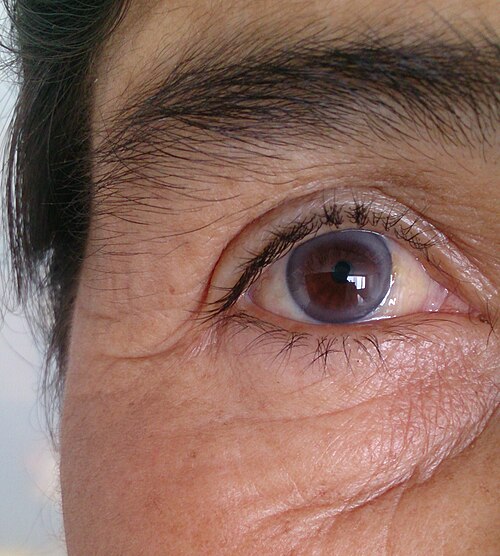
© Afrodriguezg, CC BY-SA 4.0, via Wikimedia Commons
Sehnenxanthome - these are hard nodules that you may find in the tendons of the knuckles and the Achilles (at the back of your ankle).
Xanthelasma - fatty deposits in the eyelids.
Xanthelasma_palpebrarum
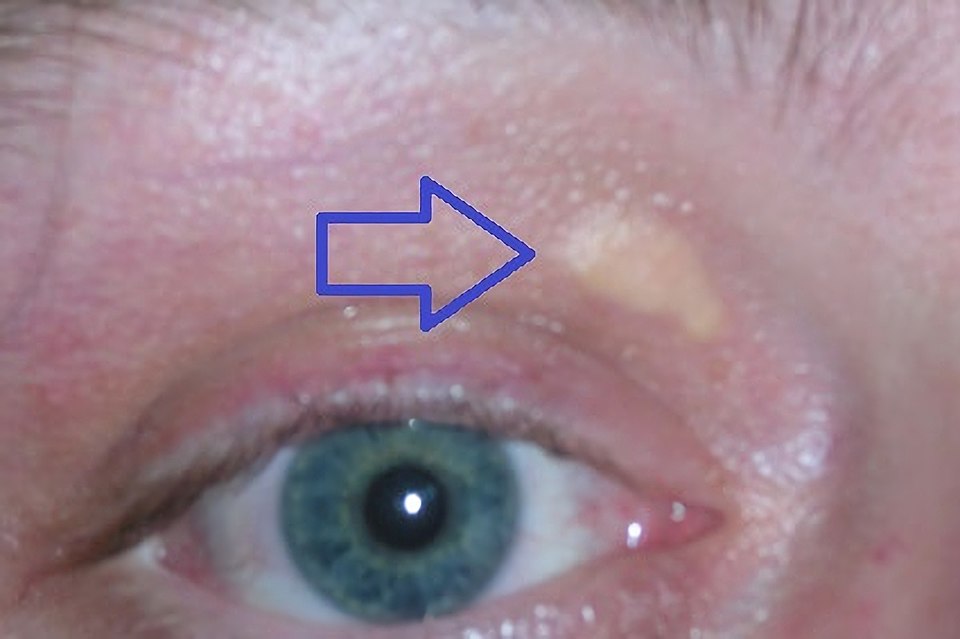
© Bobtheowl2 at the English Wikipedia, CC BY-SA 3.0 , via Wikimedia Commons
See the separate leaflet called Familial hypercholesterolaemia.
Lesen Sie unten weiter
What can I do to lower my lipid levels?
Zurück zum InhaltHyperlipidaemia can be treated both by eating a healthy diet and by taking a medicine to reduce your cholesterol level. It is also very important to lower any other risk factors for cardiovascular diseases, such as doing regular körperliche Aktivität and not smoking. See the separate leaflet called Cardiovascular disease (Atheroma) for more information.
The decision as to whether you need medication is usually taken by your healthcare professional by putting your information into an online calculator. This uses a variety of factors to predict your risk of having a cardiovascular event such as a heart attack or stroke. If your risk is over 10% then you will usually be offered medication, however if you would like to first try diet and other lifestyle change then you can do that and arrange a re-test in 6-12 months. Some people are always offered medication, with no need to do a risk calculation. This includes those who have already been found to have arterial disease (for example, angina, heart attack, stroke), and those who have type 1 diabetes, chronic kidney disease, or a type of raised cholesterol which is inherited.
Ernährung
Changing from an unhealthy diet to a healthy diet can reduce a cholesterol level. However, dietary changes alone rarely lower a cholesterol level enough to change a person's risk of cardiovascular disease from a high-risk category to a lower-risk category. A healthy diet has other benefits too, apart from reducing the level of cholesterol. See also the separate leaflet called Healthy eating.
Medikation
If you are at high risk of developing a cardiovascular disease then medication is usually advised along with advice to tackle any lifestyle issues, including diet. Medication can be used to lower your cholesterol or triglyceride level, usually with a statin medicine. Read more about statins and other lipid-lowering medicines for further details. Most medication is taken by mouth, but there is some newer medications (for example, evolocumab and incliseran) which are given by injection. They are usually prescribed by specialists rather than by GPs.
Patientenempfehlungen für hohen Cholesterinspiegel

Herzgesundheit und Blutgefäße
hohen Cholesterinspiegel
Cholesterol is a fat chemical (lipid) that is made in the cells in your body. Many different cells make cholesterol but cells in the liver make about a quarter of the total. You need some cholesterol to keep healthy.
von Dr. Rosalyn Adleman, MRCGP
Herzgesundheit und Blutgefäße
Familiäre Hypercholesterinämie
Familial hypercholesterolaemia is inherited high cholesterol. It is a condition where you have a very high cholesterol level in your blood.
von Dr. Colin Tidy, MRCGP
Weiterführende Lektüre und Referenzen
- Kardiovaskuläre Erkrankungen: Risikobewertung und -reduktion, einschließlich Lipidmodifikation; NICE-Leitlinien (Dezember 2023)
- Familiäre Hypercholesterinämie: Identifikation und Management; NICE Klinische Leitlinie (2008, zuletzt aktualisiert im Oktober 2019)
- Richtlinien für das Management von Dyslipidämien: Lipidmodifikation zur Reduzierung des kardiovaskulären Risikos; Europäische Gesellschaft für Kardiologie/Europäische Atherosklerose-Gesellschaft (2019)
- Lipid modification - CVD prevention; NICE CKS, March 2025 (UK access only).
- Europäische Leitlinien 2021 zur Prävention von Herz-Kreislauf-Erkrankungen in der klinischen Praxis; Europäische Gesellschaft für Kardiologie (2021)
- Familiäre Hypercholesterinämie; NICE CKS, April 2024 (nur in Großbritannien zugänglich)
Lesen Sie unten weiter
Artikelverlauf
Die Informationen auf dieser Seite wurden von qualifizierten Klinikern verfasst und begutachtet.
Nächste Überprüfung fällig: 23. Juli 2028
24. Jul 2025 | Neueste Version
14 Oct 2011 | Ursprünglich veröffentlicht

Fragen, teilen, verbinden.
Durchsuchen Sie Diskussionen, stellen Sie Fragen und teilen Sie Erfahrungen zu Hunderten von Gesundheitsthemen.

Fühlen Sie sich unwohl?
Bewerten Sie Ihre Symptome online kostenlos
Abonnieren Sie den Patienten-Newsletter
Ihre wöchentliche Dosis klarer, vertrauenswürdiger Gesundheitsberatung - geschrieben, um Ihnen zu helfen, sich informiert, selbstbewusst und in Kontrolle zu fühlen.
Mit dem Abonnieren akzeptieren Sie unsere Datenschutzrichtlinie. Sie können sich jederzeit abmelden. Wir verkaufen Ihre Daten niemals.