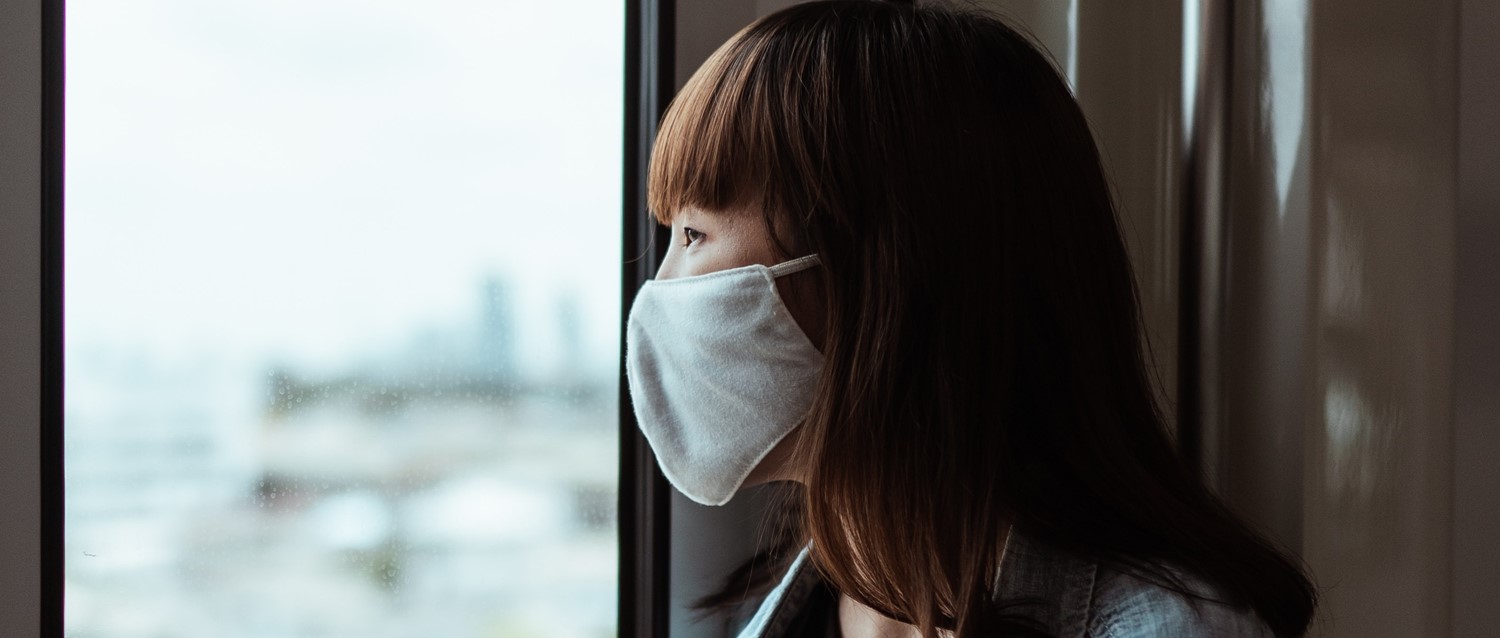
Sollten wir nach der Pandemie weiterhin Gesichtsmasken tragen?
Begutachtet von Dr Sarah Jarvis MBE, FRCGPVerfasst von Lydia SmithUrsprünglich veröffentlicht 4 Nov 2021
Erfüllt die Anforderungen des Patienten Richtlinien des Patienten
- HerunterladenHerunterladen
- Teilen
- Language
- Diskussion
- Audio-Version
Wearing face masks has been a crucial part of the strategy to contain COVID-19, alongside the vaccination programme and social distancing. However, fewer people have been wearing face coverings in public since restrictions were eased in the UK over the summer. But should we continue wearing them to prevent the spread of diseases in the future, even after the pandemic?
In diesem Artikel:
Videoauswahl für Allgemeine Informationen
Lesen Sie unten weiter
Why wearing a face mask is important to stop the spread of COVID-19
Wearing face masks can provide both personal protection against COVID-19 and is also a public health measure to prevent the spread of the disease to others, particularly vulnerable people.
"Eine mask of appropriate quality like N95, KN95 and in some instances cloth can help reduce risk and offer protection in a respiratory agent pandemic, such as Grippe oder SARS," says Rodney E. Rohde, a professor of clinical laboratory science and an infectious disease specialist at Texas State University.
"They can offer people protection - especially in high-risk environments - from not only respiratory pathogens but also from seasonal Allergien. It is especially a positive if someone is an immunocompromised individual," he adds. "The global health community must do a better job of communicating the reasons for masks to build confidence."
Sollten wir nach der Pandemie weiterhin Gesichtsmasken tragen?
Zurück zum InhaltWith cases of COVID-19 rising alongside the flu and colds, some experts have suggested it might be prudent to reinforce mandatory mask-wearing in busy indoor areas. But should we continue wearing masks even after the pandemic has ended?
"In my professional and personal opinion, I think this will be an individual choice unless a public health emergency requires a mandate," says Rohde. "However, I do plan to continue to wear a mask after the pandemic. For context, I plan to wear a mask in high-risk environments. For example, when I travel by airline, train or bus."
Rohde says he will also wear a mask in crowded areas in which the vaccination status or health of others is unknown. "For example, large ceremonies in crowded, poorly-ventilated areas such as concerts, meetings and conferences," he says.
"Research and personal information continue to show the value of risk reduction a mask can offer from respiratory pathogens as well as allergens."
While it might not make sense to wear a mask 24/7 once COVID-19 is contained, masking is easy and may be justifiable in risky settings. It may be logical during Erkältung und Grippe season, too. Ultimately, each person who chooses to wear a mask would be doing a little something extra to keep themselves and those around them healthy in a post-COVID future.
Lesen Sie unten weiter
How face masks protect against COVID-19
Zurück zum InhaltFace masks can help curb the spread of COVID-19 because the virus that causes the disease is primarily transmitted in the air. This means that people with the virus - especially those who may be asymptomatic and unaware that they have it - spread it through respiratory droplets that are exhaled when they Husten, sneeze or talk. These droplets are then inhaled by somebody else.
In addition, COVID-19 infection can be spread through much smaller particles which we breathe out - so-called aerosol spread. Because these particles are so small and light, they remain suspended in the air, building up in the air surrounding an infected person if ventilation is inadequate.
Multiple Studien have shown face masks help to block these droplets and particles from escaping into the air. Another Studie of people who had flu or the common Erkältung found that wearing a surgical mask significantly reduced the amount of these respiratory viruses emitted in droplets and aerosols.
Epidemiological data also suggest face masks can help curb the spread of disease. Last year, US researchers compared the COVID-19 growth rate before and after mask mandates in 15 states and the District of Columbia. It found that mask mandates led to a slowdown in daily COVID-19 growth rate, which became more apparent over time.
It's important to remember that cloth face coverings offer much less protection to the wearer than personal protective equipment (PPE) alternatives such as FFP3 respirators. However, they appear to play a significantly greater role in reducing the risk to others nearby. To a large extent, where cloth masks are concerned, the mantra of 'mine protects you, yours protects me' applies.
Are there any downsides to mask-wearing after COVID-19?
Zurück zum InhaltIn countries like China, Singapore and Taiwan, mask-wearing was already common before coronavirus. After the outbreak of severe acute respiratory syndrome (SARS) in 2002, masks became increasingly popular to prevent infection.
In western countries including the UK, however, mask-wearing is a new phenomenon. While some see it as an important means to halt the virus's spread and a sign of social consideration, others have politicised masks - claiming they infringe on individual rights.
Therefore, widespread mask-wearing may be unlikely in the future. While masks can reduce the transmission of COVID-19, there are some downsides. For some, masks can be uncomfortable and cause communication problems for those who use lip reading. However, mask-wearing is just one form of protection, alongside being vaccinated, staying home when unwell and social distancing.
"I try to educate others that a mask is mostly about risk reduction. It is not 100% protective, but neither is wearing a seat belt," says Rohde. "It is about lowering the risk to respiratory pathogens. We still will need vaccines and other healthcare and public health mitigation measures to protect ourselves and each other."
Patientenempfehlungen für Allgemeine Informationen

COVID-19
Noch nicht ganz 'zurück zur Normalität': Ein Leitfaden für die familiäre Heilung nach der Pandemie
Als im späten Jahr 2019 die Nachricht verbreitet wurde, dass sich ein Virus schnell auf der ganzen Welt ausbreitet, wurde das Wort „beispiellos“ in den folgenden Monaten schnell Teil des alltäglichen Wortschatzes. Der Ausbruch von Covid-19 markierte die bedeutendste öffentliche Gesundheitskrise der Welt seit mindestens einem Jahrhundert und erschütterte die Grundlagen des einen Ortes, an dem wir uns normalerweise am sichersten fühlen – das Zuhause. Es ist keine Überraschung, dass Jahre disruptiver Routinen einen bleibenden Eindruck auf die Familie hinterlassen haben. Vom plötzlichen Verlust von Unterstützungsnetzwerken bis hin zur Verschmelzung der Grenzen zwischen Zuhause, Schule und Arbeit hat die Pandemie die Funktionsweise von Familien neu gestaltet. Wir haben mit einem Psychotherapeuten gesprochen, um diese langfristigen psychologischen Auswirkungen zu erforschen und warum es wichtig ist, auf diese Zeit zurückzublicken, um die Familienstruktur heute zu verstehen – und zu heilen.
von Victoria Raw
COVID-19
Ist es diesen Winter COVID-19 oder Grippe?
Grippe- und COVID-19-Fälle nehmen in diesem Winter beide zu. Wie können Sie die Unterschiede zwischen diesen Viren erkennen? Zu wissen, welche Krankheit Sie haben, kann Ihnen helfen, andere zu schützen und möglicherweise schneller wieder gesund zu werden.
von Lawrence Higgins
Lesen Sie unten weiter
Artikelverlauf
Die Informationen auf dieser Seite werden von qualifizierten Klinikern begutachtet.
4 Nov 2021 | Ursprünglich veröffentlicht
Verfasst von:
Lydia SmithBegutachtet von
Dr Sarah Jarvis MBE, FRCGP

Fragen, teilen, verbinden.
Durchsuchen Sie Diskussionen, stellen Sie Fragen und teilen Sie Erfahrungen zu Hunderten von Gesundheitsthemen.

Fühlen Sie sich unwohl?
Bewerten Sie Ihre Symptome online kostenlos
Abonnieren Sie den Patienten-Newsletter
Ihre wöchentliche Dosis klarer, vertrauenswürdiger Gesundheitsberatung - geschrieben, um Ihnen zu helfen, sich informiert, selbstbewusst und in Kontrolle zu fühlen.
Mit dem Abonnieren akzeptieren Sie unsere Datenschutzrichtlinie. Sie können sich jederzeit abmelden. Wir verkaufen Ihre Daten niemals.