Schluckauf
Hiccoughs
Begutachtet von Dr Colin Tidy, MRCGPZuletzt aktualisiert von Dr Hayley Willacy, FRCGP Last updated 3 Jun 2025
Erfüllt die Anforderungen des Patienten Richtlinien des Patienten
- HerunterladenHerunterladen
- Teilen
- Language
- Diskussion
- Audio-Version
- Add to preferred sources on Google
Ein Schluckauf ist eine unwillkürliche Kontraktion des Zwerchfells, gefolgt vom Schließen des Kehlkopfs – des oberen Teils der Luftröhre – was das 'Hick' Geräusch verursacht. Schluckauf ist häufig und kein Grund zur Sorge.
In diesem Artikel:
Video picks for Andere Anzeichen und Symptome
Wichtige Punkte
A hiccup is a reflex you can’t control. It happens when your diaphragm suddenly tightens, followed by your glottis (the top of your windpipe) closing, making the 'hic' sound.
Many things can trigger hiccups including eating or drinking too quickly, swallowing air, sudden temperature changes, excitement, stress, or an overly full stomach.
Hiccups usually go away on their own but there are some things you can do to help stop them, these include holding your breath, breathing into a paper bag, sipping cold water, and swallowing granulated sugar.
Lesen Sie unten weiter
What are hiccups?
Diagram of lungs and airways
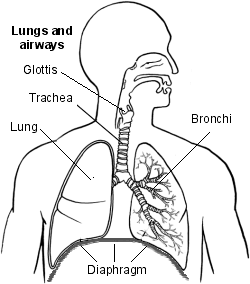
Everyone has had hiccups, and knows exactly what they are and what they feel like. Hiccups can be divided into three groups:
Acute hiccups lasting for minutes or hours. They are usually harmless and last for less than 48 hours.
Persistent (chronic) hiccups lasting for more than 48 hours, or occurring in recurrent attacks.
Intractable hiccups lasting for more than one month.
Hiccups affect women and men equally, although persistent hiccups occur much more commonly in men. They happen mainly in the evening.
Persistent or intractable hiccups are more likely to be linked to an underlying illness and you may need medical tests.
There is a medical term for hiccups - singultus.
What causes hiccups?
Zurück zum InhaltMost people have bouts of hiccups from time to time. In most cases they start for no apparent reason, last a short while and then stop. Sometimes they are due to:
Sudden excitement or emotional stress.
A temporary swollen stomach caused by overeating or eating too fast, drinking fizzy drinks, or swallowing air.
A sudden change in temperature (very hot or cold food or drinks, a cold shower, etc).
Alkohol.
Excess smoking.
Lesen Sie unten weiter
What causes persistent hiccups?
Zurück zum InhaltPersistent hiccups are rare.
In some cases, persistent hiccups are caused by an underlying disease. Over 100 diseases have been reported to cause hiccups. Some are common, such as acid reflux, and some are rare. You would normally have other symptoms apart from the hiccups.
In some cases of persistent hiccups there is no apparent cause. However, the persistent hiccups can become exhausting and distressing.
Examples of conditions which can cause persistent hiccups are:
Certain medicines - examples are Steroide, tranquillisers, painkillers containing opiates (such as morphine) and methyldopa (for blood pressure).
Changes in blood chemistry such as from alcohol, high blood sugar, or lack of calcium or potassium in the blood.
Gut problems such as Sodbrennen, stretching (distension) of the stomach, infection of the gallbladder or infection under the diaphragm.
Other gut conditions that can cause hiccups include Zwerchfellbruch und Speiseröhrenkrebs.
Abdominalmassen, such as enlargement of the liver (hepatomegaly) or enlargement of the spleen (splenomegaly).
A general anaesthetic.
Conditions affecting the neck, chest or tummy (abdomen). For example, surgery, infections (such as Halsschmerzen oder Lungenentzündung), swellings or tumours in these parts of the body.
Some heart conditions - a Herzinfarkt oder inflammation around the heart.
Brain conditions such as Schlaganfall, head injury or brain infection.
Hiccups which sometimes occur in the late stages of a terminal illness such as when a person is very ill with advanced cancer.
Benötige ich irgendwelche Tests?
Zurück zum InhaltYou are unlikely to need any tests unless you have persistent hiccups lasting more than 48 hours or frequent recurring short bouts of hiccups Unless your doctor can find an obvious cause, they will most likely want to do some tests.
The initial tests are usually:
Blutuntersuchungen.
A chest Röntgenbild.
These look for changes such as blood chemistry, chest problems or heart disease.
Other tests may be advised, depending on your individual situation and whether any other medical condition is suspected.
Lesen Sie unten weiter
How to get rid of hiccups
Zurück zum InhaltShort bouts of hiccups
Most cases need no treatment, as a bout of hiccups usually soon goes. There are many popular remedies that are said to stop a short bout of hiccups but they are based on people's individual experiences. It is not clear how effective they are, as they have not been tested by research trials. They include the following:
First, block off all airways by putting fingers in your ears and blocking your nostrils. Then, take a sip or two of water from a glass. It is possible to do this alone (looks a bit silly - but is possible) but you may find it easier with an assistant.
Drinking water (or cold water).
Swallowing granulated sugar.
Biting on a lemon or tasting vinegar.
Holding your breath, breathing fast, or breathing into a paper bag.
Gasping after a sudden fright, or sneezing.
Pulling your knees up to your chest and/or leaning forward to compress the chest.
Using a technique called the Valsalva manoeuvre. (The Valsalva manoeuvre means trying to push your breath out while you hold your throat and voice box closed.) The way to do this is to take a deep breath in, then keep the air inside you while pushing with your muscles as if to force the air out. This is like pushing in childbirth or straining on the toilet.
Persistent hiccups
If an underlying cause is found then treatment of the underlying cause, if possible, may cure the hiccups. For example, one research study found that many people with persistent hiccups had a gut condition called acid reflux. See the separate leaflet called Acid reflux and oesophagitis (Heartburn) for more details. Treating the reflux seemed to help stop hiccups in many cases.
Firstly, try any of the popular remedies used to treat short bouts of hiccups (explained above). Also, treat any underlying cause, if possible.
Secondly, medication is sometimes needed to stop persistent hiccups. Various medicines have been used for this. The following medicines may be used for treating adults with hiccups (for children, specialist advice is recommended):
Chlorpromazin und Haloperidol are medicines which can relax the diaphragm muscle or its nerve supply and may stop persistent hiccups.
For stomach problems such as acid reflux or a stretched (distended) stomach: anti-acid medicines (various types, such as Omeprazol) or medicines which help the stomach to empty faster (such as Metoclopramid).
Baclofen - this is a medicine which helps to relax muscles.
Gabapentin - this can help to relax the nerve supply to the muscle under your lungs that helps you breathe in (the diaphragm).
Ketamine - an intravenous anaesthetic - is sometimes effective when other treatments have failed.
Giving a medication called metoclopramide by intravenous injection has been reported to cure hiccups occurring after anaesthetic.
For people with a terminal illness, sedatives such as midazolam can help to control hiccups and relieve the stress they cause.
Referral to a specialist is often advised for persistent hiccups, either to look for a cause, or to offer more treatment options. Some examples of treatments that have been successfully used for persistent hiccups are:
Acupuncture or hypnotherapy.
A device similar to a pacemaker. This is used to stimulate or pace the nerve to the diaphragm (the phrenic nerve) or to stimulate another important nerve in the neck, called the vagus nerve.
For hiccups that continue despite treatment, a phrenic nerve block is occasionally used. This involves interrupting the phrenic nerve - for example, by injecting a local anaesthetic near the nerve. However, this treatment needs to be considered carefully: it carries risks because the phrenic nerve is important in breathing.
Are there any complications of hiccups?
Zurück zum InhaltShort bouts of hiccups do not normally cause any problems or complications.
Persistent hiccups may cause complications such as:
Tiredness, or exhaustion.
Schlechter Schlaf.
They may also cause psychological distress or embarrassment.
For people who have had recent surgery to the tummy (abdomen), persistent hiccups may delay healing of the scar (wound), because hiccups move the abdominal muscles. This increases the risk of complications with the wound.
Häufig gestellte Fragen
Zurück zum InhaltHow to stop reflux hiccups?
Reflux hiccups often improve by treating the underlying acid reflux. Try eating smaller meals, avoiding spicy or fatty foods, and staying upright after eating. If hiccups persist or become frequent, speak to your doctor as you may need medication to reduce stomach acid.
Can hiccups kill you?
Hiccups themselves won’t kill you, but ongoing or severe bouts can sometimes signal an underlying medical problem. If your hiccups last more than 48 hours or affect your ability to eat, drink, or sleep, it’s important to see your doctor.
Why do babies get hiccups in the womb?
Babies get hiccups in the womb as part of their normal development. These tiny spasms help strengthen the baby’s diaphragm and prepare them for breathing after birth. It’s usually harmless and a good sign of healthy growth.
Patient picks for Andere Anzeichen und Symptome

Anzeichen und Symptome
Juckender Po
Ein juckender Po (Pruritus ani) ist ein anhaltender Juckreiz um den Anus. Es gibt viele verschiedene Ursachen, wie Hämorrhoiden, Hauterkrankungen oder Infektionen. Die Behandlungen hängen von der Ursache ab, umfassen jedoch Hygienemaßnahmen sowie Cremes oder Salben zur Behandlung des Juckreizes.
von Dr. Doug McKechnie, MRCGP
Anzeichen und Symptome
Schwitzende Füße
Many people experience sweaty feet occasionally. However, for some people excessive foot sweating is a persisting problem which can be both difficult to manage and embarrassing. It may lead to smelly feet, and nobody likes stinky feet. This leaflet explains why feet sweat (which is normal) and how to stop your feet from being sweaty or smelly.
von Dr. Philippa Vincent, MRCGP
Weiterführende Literatur und Referenzen
- Schluckauf; NICE Clinical Knowledge Summary, February 2022 (UK access only)
- Seifi A, Fox MR; 'What puts the 'Hic' into Hiccups?'. BMJ Open Gastroenterol. 2022 Jun;9(1):e000918. doi: 10.1136/bmjgast-2022-000918.
- Cole JA, Plewa MC; Singultus.
- Kishi Y, Nakawaga M, Inumaru A, et al; Interventions for Hiccups in Adults: A Scoping Review of Western and Eastern Approaches. Palliat Med Rep. 2025 Apr 17;6(1):171-178. doi: 10.1089/pmr.2024.0109. eCollection 2025.
Lesen Sie unten weiter
About the authorView full bio

Dr Hayley Willacy, FRCGP
Allgemeinmediziner, Medizinischer Autor
MBChB (1992), DRCOG, DFFP, MRCOG (Part 1) MRCGP (2007), DFSRH (2013), MSc - medical education (2020)
Dr Hayley Willacy was an NHS GP working in northwest England, who retired from clinical practice in 2022 after 30 years.
About the reviewerView full bio

Dr Colin Tidy, MRCGP
Allgemeinmediziner, Medizinischer Autor
MBBS, MRCGP, MRCP (Paediatrics), DCH
Dr. Colin Tidy ist ein NHS-Arzt mit Sitz in Oxfordshire.
Artikelverlauf
Die Informationen auf dieser Seite wurden von qualifizierten Klinikern verfasst und begutachtet.
Nächste Überprüfung fällig: 2. Jun. 2028
3 Jun 2025 | Neueste Version

Fragen, teilen, verbinden.
Durchsuchen Sie Diskussionen, stellen Sie Fragen und teilen Sie Erfahrungen zu Hunderten von Gesundheitsthemen.

Fühlen Sie sich unwohl?
Bewerten Sie Ihre Symptome online kostenlos
Abonnieren Sie den Patienten-Newsletter
Ihre wöchentliche Dosis klarer, vertrauenswürdiger Gesundheitsberatung - geschrieben, um Ihnen zu helfen, sich informiert, selbstbewusst und in Kontrolle zu fühlen.
By subscribing you accept our Datenschutzrichtlinie. Sie können sich jederzeit abmelden. Wir verkaufen Ihre Daten niemals.