Welche Lebensmittel lösen das Reizdarmsyndrom aus?
Fachlich geprüft von Dr Colin Tidy, MRCGPZuletzt aktualisiert von Lynn StephenZuletzt aktualisiert 6 Apr 2026
Erfüllt die Anforderungen des Patienten für redaktionelle Inhalte
- HerunterladenHerunterladen
- Teilen
- Language
- Diskussion
- Audio-Version
- Zu bevorzugten Quellen bei Google hinzufügen
Wenn Sie an Reizdarmsyndrom (IBS) leiden, wissen Sie wahrscheinlich, dass bestimmte Lebensmittel Ihre Symptome auslösen können. Obwohl es keinen universellen Ansatz für eine IBS-Diät gibt, sind einige Lebensmittel möglicherweise eher problematisch als andere.
Reizdarmsyndrom (IBS) is a common condition that affects the digestive system.
It causes symptoms such as:
Symptome können kommen und gehen und Tage oder Monate andauern.
The exact cause of IBS is unknown. It has been linked to things such as food passing through your gut too quickly - or too slowly - sensitive nerves in your gut, stress, and a family history of the condition. Although there's no cure, knowing which foods may cause symptoms can help create a diet that works for you.
Julie Thompson, Information Manager at Guts UK, explains that foods which trigger a flare-up of symptoms vary from person-to-person. However, there are some common themes.
Welche Lebensmittel können IBS-Symptome auslösen?
Kaffee
Many people reach for a Kaffee first thing in the morning. But caffeine - found in coffee, tea, cola, and chocolate - can lead to diarrhoea, especially if you have a more sensitive gut.
Caffeine is a gastrointestinal stimulant which means that it speeds up peristalsis - the muscle contractions that move food through your digestive tract. Both caffeinated and decaf coffee also stimulate the production of a hormone called gastrin, which promotes digestion and can increase your urge to go to the toilet. The acidic nature of coffee can also stimulate your bowels.
Ob Kaffee problematisch ist, kann jedoch von der Person abhängen.
Thompson says: “For some people with IBS and constipation, a cup of coffee in the morning might help to get your bowel moving."
Süßstoffe
Many foods contain sugar-free artificial sweeteners - such as sorbitol and xylitol - but these can cause diarrhoea. According to some studies, sweeteners may affect the good bacteria in your gut. Also, chewing gum leads to more swallowed air, which can make Blähungen and bloating worse.
Fruchtsaft
Drinking too much fruit juice can cause unpleasant symptoms for some people with IBS as it contains a Zucker called fructose. Research shows that around one third of people with suspected IBS have fructose intolerance. Fructose is found in higher quantities in juice, honey and sweets, as well as in fruits and some vegetables.
Some people - including those with IBS - are unable to fully absorb fructose in the small intestine, which can lead to Blähungen, stomach pain, and Durchfall. Infolgedessen gelangt der unverdauter Fruktose in den Dickdarm, wo er von Bakterien fermentiert wird, was IBS-Symptome verursacht.
Es kann helfen, die Menge an Saft, die Sie trinken, zu begrenzen. Thompson fügt jedoch hinzu, dass Obst gesund ist und nicht vollständig aus der Ernährung gestrichen werden sollte.
Kohlensäurehaltige Getränke
Kohlensäurehaltige Getränke können aufgrund der Kohlensäure zu Blähungen und Völlegefühl führen. Dies kann zu einem Übermaß an Gas führen, das Ihr Verdauungssystem reizen kann. Darüber hinaus enthalten normale kohlensäurehaltige Getränke hohe Mengen an Zucker, und Diätgetränke enthalten künstliche Süßstoffe, die Ihren Darm weiter reizen können.
Fettreiche Lebensmittel
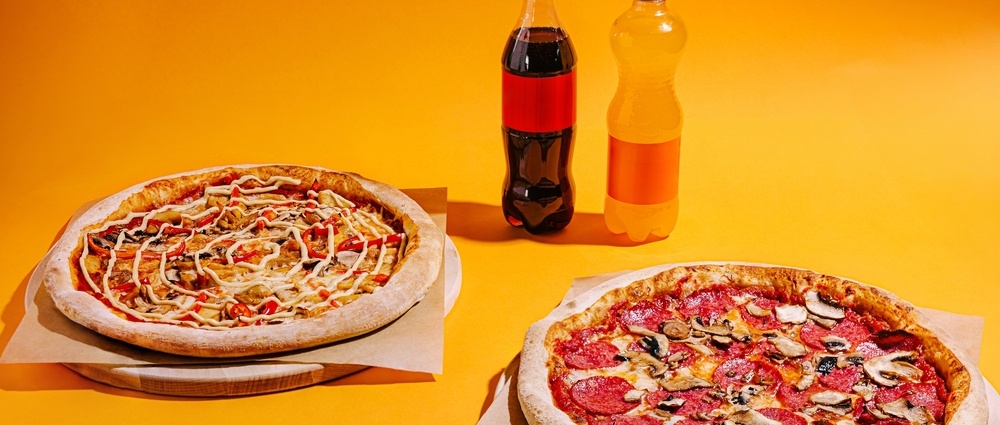
Greasy or deep-fried foods that are high in Fett, such as chips or pizza, can cause stomach cramps and diarrhoea in some people with IBS. It’s not known exactly why this is, but research has suggested that eating fatty foods can slow down the movement of gas in your gut.
Thompson says: High levels of dietary fat can also trigger a gut reflex called the gastrocolic reflex. This signals your colon to empty food once it gets to your stomach in order to make room for more food. For some people, this can cause diarrhoea immediately when fats enter the stomach.”
Milch
Laktose is a type of sugar found in Kuhmilch and dairy products such as cheese or ice cream. For some people with RDS, an inability to break down lactose - because of a lack of an enzyme called lactase - causes issues such as bloating, gas, Bauchschmerzen, and diarrhoea.
Allerdings erklärt Thompson, dass Laktose nicht die Ursache aller IBS-Fälle ist. Es ist wichtig, dass Menschen mit IBS ihre eigenen Auslöser identifizieren, bevor sie ihre Ernährung ändern. Wenn Laktose IBS-Symptome auslöst, können Sie Kuhmilch durch Alternativen wie Hafer- oder laktosefreie Milch ersetzen.
Alkohol
Alcohol is believed to stimulate your digestive tract, which can lead to IBS symptoms. In the small intestine, alcohol can reduce the absorption of nutrients including carbohydrates. This can lead to gas and diarrhoea as these substances interact with bacteria in your large intestine. As with coffee, Alkohol can speed up the movement of the muscles of the intestine, increasing the chance of diarrhoea in people with a sensitive gut.
FODMAPS
FODMAPs (fermentierbare Oligosaccharide, Disaccharide, Monosaccharide und Polyole) sind Zucker in bestimmten Lebensmitteln, die der Dünndarm schlecht aufnimmt.
“These non-absorbable carbohydrates are found in many foods and are fermented by bacteria in the large bowel,” explains Thompson. “This can cause symptoms in people with RDS."
Foods which contain FODMAPs include:
Rye.
Milk.
Peaches.
Cherries.
Äpfel.
Birnen.
Peas.
Bohnen.
Linsen.
Savoy cabbage.
Cauliflower.
There is a specific low FODMAPS diet for IBS which involves removing high FODMAPs for several weeks, then re-introducing them one at a time to see which ones you can tolerate. You then continue on your personalised diet with certain FODMAPs removed.
The diet can be challenging to follow, and nutritionally restrictive so you should speak to your dietitian for advice.
Wie man die Symptome von IBS verwaltet
Obwohl es keine Heilung für IBS gibt, ist es möglich, Ihre Symptome zu kontrollieren. Zuerst sollten Sie mit Ihrem Arzt sprechen, der Sie nach Ihren Symptomen fragen wird - ob sie kommen und gehen, wie oft Sie sie haben und wann Sie sie bekommen.
Before diagnosing IBS, your doctor may want to rule out other causes of digestive issues, such as Zöliakie - a condition caused by an allergy to gluten. Gluten is mostly found in flour-based foods, such as breads and pastas.
If you are diagnosed with IBS, it’s important to take note of foods which trigger symptoms before changing your diet. Keeping a food diary can help. Finding ways to zu entspannen, getting plenty of Bewegung, and trying Probiotika may help ease your symptoms.
People who struggle with diarrhoea may benefit from cutting down on high-fibre foods, such as brown bread, as well as caffeine. It’s also important to drink plenty of water to avoid dehydration. However, if you are verstopft, you should eat more fibre-rich foods, such as beans, carrots, and linseeds. Your doctor may recommend medicines to control diarrhoea or relieve constipation.
Your doctor or dietitian may recommend a diet which is low in FODMAP foods.
Patientenauswahl für Reizdarmsyndrom
Verdauungsgesundheit
Was ist der Zusammenhang zwischen IBS und Angst?
Das Reizdarmsyndrom (RDS) kann eine Kombination aus Bauchkrämpfen, Durchfall, Blähungen und Verstopfung verursachen. Es ist eine langfristige Gesundheitsstörung, die Ihre Lebensqualität beeinträchtigen kann. Obwohl eine Ernährungsumstellung und bestimmte Medikamente helfen können, können sich schlechte psychische Gesundheit und RDS-Symptome gegenseitig verschlimmern.
von Victoria Raw

Verdauungsgesundheit
Probiotika bei Reizdarmsyndrom: Funktionieren sie?
Von Ihrem Berufsleben bis zu Ihrem Sexualleben kann das Reizdarmsyndrom (IBS) Störungen und Unannehmlichkeiten verursachen. Können Probiotika bei IBS helfen, diese Symptome zu lindern, und welche probiotischen Ergänzungsmittel können Sie vertrauen?
von Amberley Davis
Über den AutorVollständige Biografie anzeigen

Lydia Smith
Feature-Autorin
BA, MA, MSc
Lydia Smith ist eine preisgekrönte Journalistin und Feature-Autorin, die umfangreich über Frauengesundheit und psychische Gesundheit geschrieben hat. Derzeit studiert sie für einen MSc in Psychologie.
Über den RezensentenVollständige Biografie anzeigen

Dr Colin Tidy, MRCGP
Allgemeinmediziner, Medizinischer Autor
MBBS, MRCGP, MRCP (Paediatrics), DCH
Dr. Colin Tidy ist ein NHS-Arzt mit Sitz in Oxfordshire.
Artikelverlauf
Die Informationen auf dieser Seite werden von qualifizierten Klinikern begutachtet.
Artikel auch verfügbar in Englisch, Deutsch, Spanisch, Französisch, Italienisch, Portugiesisch, Hindi, Hebräisch, Arabisch, und Schwedisch.
Next review due: 6 Apr 2029
6 Apr 2026 | Neueste Version
11 Apr 2023 | Ursprünglich veröffentlicht
Verfasst von:
Lydia Smith

Fragen, teilen, verbinden.
Durchsuchen Sie Diskussionen, stellen Sie Fragen und teilen Sie Erfahrungen zu Hunderten von Gesundheitsthemen.

Fühlen Sie sich unwohl?
Bewerten Sie Ihre Symptome online kostenlos
Abonnieren Sie den Patienten-Newsletter
Ihre wöchentliche Dosis klarer, vertrauenswürdiger Gesundheitsberatung - geschrieben, um Ihnen zu helfen, sich informiert, selbstbewusst und in Kontrolle zu fühlen.
Durch das Abonnieren akzeptieren Sie unsere Datenschutzrichtlinie. Sie können sich jederzeit abmelden. Wir verkaufen Ihre Daten niemals.
Mehr zur Verdauungsgesundheit
- Sodbrennen-Diät: Lebensmittel, die man essen und vermeiden sollte
- Sind die Symptome des Reizdarmsyndroms bei Männern und Frauen unterschiedlich?
- Häufige Ursachen von Durchfall
- Morbus Crohn bei Kindern: Wie Sie Ihr Kind unterstützen können
- Sodbrennen in der Nacht: So verbessern Sie die Schlafqualität bei Sodbrennen
- Wie man mit Gastroenteritis umgeht
- Wie man Verdauungsstörungen loswird
- Wie man Madenwürmer loswird
- Wie man Blähungen loswird: Hausmittel, die wirken
- So pflegen Sie Ihre Leber
- Wie man während der Einführungswoche auf seine Leber achtet
- Reizdarmsyndrom-Diät: Lebensmittel, die man essen und vermeiden sollte
- Ist es wirklich Reflux? Warum Ihnen möglicherweise fälschlicherweise PPIs verschrieben werden
- Gibt es einen Zusammenhang zwischen Darmgesundheit und Migräne?
- Behandlungsoptionen für Hämorrhoiden
- Was verursacht nächtliche Bauchkrämpfe?
- Was sagt dein Stuhlgang über dich aus?
- Wie es ist, eine unsichtbare Behinderung zu haben
- Was Sie über Hepatitis wissen müssen
- Was ist der Unterschied zwischen Hepatitis A, B und C?