Chronische Prostatitis
Begutachtet von Dr Philippa Vincent, MRCGPZuletzt aktualisiert von Dr Toni Hazell, FRCGPZuletzt aktualisiert 24. Mai 2023
Erfüllt die Anforderungen des Patienten Richtlinien des Patienten
- HerunterladenHerunterladen
- Teilen
- Language
- Diskussion
- Audio-Version
- Zu bevorzugten Quellen bei Google hinzufügen
In dieser Serie:ProstataproblemeVergrößerte ProstataHarnverhaltPSA-TestHarnröhrenstrikturSymptome des unteren Harntrakts bei Männern
Prostatitis bedeutet, dass Sie eine Entzündung Ihrer Prostata haben. Es gibt zwei Haupttypen von Prostatitis: kurzlebig (akut) oder anhaltend (chronisch). Sie kann auch durch eine Infektion (infektiös) verursacht werden oder nicht infektiös sein. Weniger als 1 von 10 Fällen von Prostatitis sind auf eine bakterielle Infektion zurückzuführen.
Für die Diagnose einer chronischen Prostatitis müssen die Symptome seit mindestens drei Monaten vorhanden sein. In akute Prostatitis, Symptome treten normalerweise schneller auf und verschwinden auch schneller.
Etwa 9 von 10 Männern mit chronischer Prostatitis haben das chronische Prostatitis/chronisches Beckenschmerzsyndrom (CPPS). Etwa 1 von 10 Männern mit chronischer Prostatitis hat eine chronische bakterielle Prostatitis.
Auf einen Blick
Chronische Prostatitis kann Schmerzen um den Penis, den Anus, den Unterbauch oder den unteren Rücken verursachen.
Sie können auch Harnsymptome wie leichte Schmerzen beim Wasserlassen oder einen dringenden Harndrang haben.
Sexuelle Probleme wie Schwierigkeiten mit Erektionen oder schmerzhafte Ejakulation können auftreten.
Wenn Sie Symptome haben, kann Ihr Arzt Ihre Prostata untersuchen oder Ihren Urin testen.
Die Behandlung kann Schmerzmittel, Abführmittel oder Antibiotika bei bakterieller Prostatitis umfassen.
Einige Männer profitieren von anderen Medikamenten, Stressbewältigung oder speziellen Behandlungen.
Die Symptome verbessern sich oft im Laufe der Zeit, wobei viele Männer innerhalb eines Jahres eine Verbesserung zeigen.
Symptome der chronischen Prostatitis
Die Symptome der chronischen Prostatitis/des chronischen Beckenschmerzsyndroms umfassen:
Schmerzen
Dies ist normalerweise um die Basis des Penis, um den Anus, im unteren Bauch (Abdomen) und im unteren Rücken. Manchmal breitet sich der Schmerz bis zur Spitze des Penis und/oder in die Hoden (Testikel) aus. Schmerz ist das Hauptsymptom bei chronischer Prostatitis. Die Schmerzintensität kann von Tag zu Tag variieren.
Harnwegssymptome
Diese können leichte Schmerzen beim Wasserlassen, gelegentlich einen dringenden Harndrang, Zögern beim Versuch, Wasser zu lassen, oder einen schwachen Harnstrahl umfassen.
Sexuelle Probleme
Sie könnten Schwierigkeiten haben, eine Erektion zu bekommen (Impotenz), Ejakulation kann manchmal schmerzhaft oder vorzeitig sein, und einige Männer haben nach dem Sex stärkere Schmerzen (wie oben beschrieben).
Andere Symptome
Sie fühlen sich möglicherweise müde und haben allgemeine Schmerzen. Sie könnten sich ängstlich, gestresst oder deprimiert fühlen und Ihre Lebensqualität könnte sich verschlechtern.
Männer mit chronischer bakterieller Prostatitis neigen dazu, Symptome zu haben, die kommen und gehen:
Während eines Schubs können Schmerzen und Unbehagen auftreten. Diese spüren Sie hauptsächlich an der Basis Ihres Penis, um Ihren Anus, direkt über Ihrem Schambein und/oder im unteren Rückenbereich. Schmerzen können sich auf Ihren Penis und Ihre Hoden (Testikel) ausbreiten. Der Stuhlgang kann schmerzhaft sein.
Sie können auch Symptome von einem Harnwegsinfektion, wie Schmerzen beim Wasserlassen, häufiges Wasserlassen oder ein dringendes Bedürfnis, Wasser zu lassen.
Diese Symptome ähneln den Symptomen einer akuten bakteriellen Prostatitis. Männer mit einem Schub einer chronischen bakteriellen Prostatitis sind jedoch in der Regel weniger krank als diejenigen mit akuter Prostatitis. Zum Beispiel ein hohe Temperatur (Fieber) ist weniger wahrscheinlich und Sie haben weniger wahrscheinlich allgemeine Schmerzen und Beschwerden.
Wenn Sie an chronischer bakterieller Prostatitis leiden, werden Ihre Symptome in der Regel durch die Behandlung mit Antibiotika gelindert. Wenn die Antibiotika jedoch die Infektion nicht vollständig aus der Prostatadrüse beseitigen, besteht das Risiko, dass die Infektion erneut auftritt (aufflammt).
Zwischen den Schüben können Sie leichte Restschmerzen und einige milde Harnsymptome haben (wie häufiges Wasserlassen oder einen dringenden Harndrang).
Wie häufig ist chronische Prostatitis?
Bis zu 8 % der Männer werden irgendwann in ihrem Leben von Symptomen einer Prostatitis betroffen sein. Es ist jedoch schwierig zu wissen, wie viele tatsächlich eine chronische Prostatitis haben, da die Symptome manchmal auf eine andere Erkrankung zurückzuführen sein können. Das Risiko, eine chronische Prostatitis zu haben, steigt mit dem Alter und ist bei Männern im Alter von 50 - 59 Jahren dreimal häufiger als bei denen im Alter von 20 - 39 Jahren.
Wie bekommt man chronische Prostatitis?
Die genaue Ursache ist oft unbekannt und es kann mehrere verschiedene Ursachen oder Arten von Prostatitis geben. Chronische bakterielle Prostatitis ist eine Möglichkeit - verursacht durch eine anhaltende (chronische) Infektion mit einem Keim (eine bakterielle Infektion). Ein Mann mit chronischer bakterieller Prostatitis wird normalerweise gehabt haben wiederkehrende Harnwegsinfektionen. Chronische bakterielle Prostatitis tritt häufiger bei Männern auf, deren Immunsystem nicht richtig funktioniert (immungeschwächt sind) - dies kann auf eine Krankheit wie unbehandeltes HIV zurückzuführen sein oder darauf, dass sie an einer Erkrankung wie Arthritis leiden, die mit Medikamenten behandelt werden muss, die das Immunsystem unterdrücken.
Chronische bakterielle Prostatitis wird normalerweise durch die gleiche Art von Keimen (Bakterien) verursacht, die auch Harnwegsinfektionen hervorrufen. Die Prostata kann Infektionen beherbergen, wodurch wiederkehrende Infektionen auftreten können. Chronische bakterielle Prostatitis ist keine sexuell übertragbare Infektion, aber es kann manchmal durch sexuell übertragbare Bakterien verursacht werden.
Was verursacht das chronische Beckenschmerzsyndrom (CPPS)?
CPPS ist eine Art chronische Prostatitis, die Unbehagen oder Schmerzen in Ihrem unteren Beckenbereich verursacht - hauptsächlich an der Basis Ihres Penis und um Ihren Anus herum. Sie wird normalerweise diagnostiziert, wenn Sie in den letzten sechs Monaten mindestens drei Monate lang Schmerzen hatten. Die Ursache dieser Art von chronischer Prostatitis ist nicht vollständig verstanden.
Wie wird chronische Prostatitis diagnostiziert?
Untersuchung Ihrer Prostata
Ihr Arzt kann Ihre Prostata untersuchen. Der Arzt führt einen behandschuhten Finger in Ihren Enddarm (Rektum) ein. Ihre Prostata kann bei der Untersuchung bei chronischer Prostatitis empfindlich sein. Dies ist jedoch nicht in jedem Fall so.
Eine Urinprobe
Eine Urinprobe wird normalerweise durchgeführt, um eine Harnwegsinfektion auszuschließen. Dies ist besonders wichtig bei chronischer bakterieller Prostatitis, obwohl es zwischen den Schüben keine Anzeichen einer Infektion geben kann.
Weitere Untersuchungen Ihrer Nieren und Harnwege
Wenn Ihr Arzt vermutet, dass Sie an chronischer bakterieller Prostatitis leiden, könnte er vorschlagen, dass Sie weitere Tests durchführen lassen, um Probleme mit Ihrem Harntrakt auszuschließen, die zur Infektion beigetragen haben könnten (oder sie verursacht haben). Zum Beispiel, ein Ultraschall Ihrer Nieren nach Auffälligkeiten suchen.
Tests, um andere Ursachen für Ihre Symptome auszuschließen
Dies umfasst:
Flüssigkeitsprobe aus der Prostata.
Abstrich- oder Urintests werden durchgeführt, um eine sexuell übertragbare Infektion (STI) auszuschließen, die ähnliche Symptome wie chronische Prostatitis hervorrufen kann.
Manchmal kann Ihr Arzt eine Blutuntersuchung vorschlagen, um andere Probleme mit Ihrer Prostata auszuschließen. Diese werden durchgeführt, um andere Erkrankungen Ihrer Prostata oder benachbarter Organe auszuschließen, wenn Ihre Symptome nicht typisch sind.
Wenn Sie an einen Urologen überwiesen werden, kann eine Probe von Flüssigkeit ('Sekrete') aus der Prostata entnommen werden, um eine Infektion in Ihrer Prostata auszuschließen. Dies wird manchmal bei chronischer Prostatitis durchgeführt.
Um dies zu tun, kann ein Arzt sanft Ihre Prostata massieren, mit einem behandschuhten Finger in Ihrem Rektum. Dadurch wird Flüssigkeit aus der Prostata in die Harnröhre gedrückt und kommt aus dem Penis heraus, um gesammelt und auf Keime (Bakterien) getestet zu werden. Wenn Sie CPPS haben, werden keine Bakterien in der Prostataflüssigkeit oder im Urin gefunden.
Was ist die Prostata?
Schnittdiagramm der Prostata und benachbarter Organe
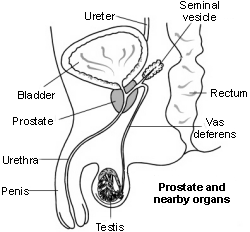
Die Prostata ist nur bei Männern zu finden und ist Teil des männlichen Fortpflanzungssystems. Sie liegt direkt unter der Blase. Normalerweise ist sie etwa so groß wie eine Kastanie.
Die Harnröhre ist der Schlauch, der den Urin aus der Blase leitet und durch die Mitte der Prostata verläuft. Die Prostata hilft bei der Produktion von Samen und Samenflüssigkeit, aber der größte Teil des Samens wird von einer anderen Drüse (der Samenblase) produziert.
Behandlung der chronischen Prostatitis
Die Behandlung von chronischer Prostatitis kann schwierig sein. Bei den meisten Menschen verbessern sich die Symptome jedoch im Laufe von Monaten oder Jahren.
Wenn Ihr Hausarzt den Verdacht hat, dass Sie an chronischer Prostatitis leiden, wie oben erwähnt, wird er Sie in der Regel zur weiteren Beurteilung an einen Spezialisten überweisen. In der Zwischenzeit kann Ihr Hausarzt Ihnen eines oder mehrere der folgenden Dinge vorschlagen, während Sie auf Ihren Termin beim Spezialisten warten:
Schmerzmittel wie zum Beispiel Paracetamol oder Ibuprofen kann den Schmerz lindern.
Abführmittel kann hilfreich sein, wenn es schmerzhaft oder schwierig ist, Stuhlgang zu haben.
Antibiotika werden empfohlen, wenn Ihr Arzt vermutet, dass Sie eine chronische bakterielle Prostatitis haben. Die Antibiotikatherapie sollte 2-4 Wochen dauern. Antibiotika werden in der Regel empfohlen, wenn Sie im letzten Jahr eine Harnwegsinfektion oder eine Episode einer akuten Prostatitis hatten. Dies dient dazu, absolut sicherzustellen, dass keine Infektion vorliegt.
Behandlungen, die ein Spezialist vorschlagen könnte
Verschiedene Behandlungen wurden bei chronischer Prostatitis ausprobiert. Sie können einigen Menschen helfen, aber bisher gibt es nur wenige Forschungsstudien, die bestätigen, ob sie in den meisten Fällen helfen. Es handelt sich nicht um 'standardmäßige' oder routinemäßige Behandlungen, aber ein Spezialist könnte Ihnen raten, eine auszuprobieren.
Mögliche Behandlungen für chronische bakterielle Prostatitis umfassen die folgenden:
Ein längerer Antibiotikakurs. Wenn der Spezialist vermutet, dass Sie an chronischer bakterieller Prostatitis leiden und Ihre Symptome nach einer vierwöchigen Antibiotikakur nicht abgeklungen sind, könnte er eine längere Behandlung vorschlagen. Manchmal wird eine Behandlung von bis zu drei Monaten angewendet.
Entfernung der Prostata (Prostatektomie) kann sehr gelegentlich in Betracht gezogen werden, wenn Sie kleine Steine (Konkremente) in der Prostata haben. Es ist nicht klar, wie sehr dies helfen kann, aber es wurde vorgeschlagen, dass diese kleinen Steine ein Grund dafür sein könnten, warum einige Menschen wiederkehrende Infektionen bei chronischer bakterieller Prostatitis haben. Dies ist jedoch keine übliche Behandlungsform und nicht für jeden geeignet. Ihr Spezialist wird Sie beraten.
Für chronische Prostatitis/CPPS, mögliche Behandlungen können Folgendes umfassen:
Antibiotika - diese können zunächst ausprobiert werden, obwohl die Beweise für ihre Wirksamkeit begrenzt sind. Es könnte sein, dass einige Antibiotika auch entzündungshemmende Eigenschaften haben oder dass sie einige Keime (Bakterien) beseitigen, die schwer zu finden sind, wenn Ihr Urin getestet wird.
Alpha-Blocker - sind Medikamente, die zur Behandlung verwendet werden Vergrößerung der Prostata. Sie entspannen das Muskelgewebe der Prostata und den Ausgang der Blase. Es gibt mehrere verschiedene Marken. Es gibt einige Hinweise darauf, dass sie bei CPPS helfen, und es könnte sich lohnen, sie auszuprobieren.
Andere Medikamente - zum Beispiel Bioflavonoide (wie Quercetin) und finasteride (ein Medikament, das die Prostata 'verkleinern' kann).
Stressbewältigung - diese und andere schmerzlindernde Techniken werden manchmal ausprobiert, um mit den anhaltenden Schmerzen besser umzugehen.
Wie ist der Ausblick?
Es ist schwierig, eine Prognose zu geben. Ihre Symptome können lange anhalten, obwohl sie 'kommen und gehen' oder in ihrer Schwere variieren können. Schmerzmittel können das Unbehagen auf ein Minimum reduzieren.
Einige Menschen befürchten, dass sie an einer schweren Krankheit wie Prostatakrebs leiden könnten. Allerdings sind Sorgen und Angstzustände kann die Symptome einer chronischen Prostatitis verschlimmern, daher wird empfohlen, eine formelle Diagnose zu suchen.
Die meisten Männer, bei denen chronische Prostatitis/CPPS diagnostiziert wurde, neigen dazu, innerhalb der folgenden sechs Monate eine Verbesserung ihrer Symptome zu erfahren. In einer Studie hatten etwa ein Drittel der Männer ein Jahr später keine weiteren Symptome. In einer anderen großen Studie zeigten ein Drittel der Männer eine moderate bis deutliche Verbesserung über zwei Jahre.
Kann chronische Prostatitis Unfruchtbarkeit verursachen?
Es wird angenommen, dass chronische Prostatitis die Menge und Qualität der Spermien verringern kann, was sich auf die Fruchtbarkeit auswirken kann.
Patientenauswahl für Prostataerkrankungen

Männergesundheit
Prostataprobleme
Prostata- und Harnröhrenprobleme können den reibungslosen Urinfluss bei Männern beeinträchtigen. Dieses Merkblatt gibt Ihnen eine kurze Erklärung der verschiedenen Prostata- und Harnröhrenerkrankungen und wie das Harnsystem betroffen sein kann.
von Dr. Rachel Hudson, MRCGP

Männergesundheit
Vergrößerte Prostata
Die Prostata wird bei älteren Männern häufig größer. Frauen haben keine Prostata. Diese Vergrößerung der Prostata wird auch gutartige Prostatahyperplasie (oder Hyperplasie) genannt. Sie kann Probleme beim Wasserlassen verursachen. Die Symptome sind oft mild. Ohne Behandlung verschlechtern sich die Symptome nicht immer und können sich im Laufe der Zeit sogar verbessern. Wenn die Symptome störend oder belastend werden, können sie durch Medikamente oder Operationen verbessert werden.
von Dr. Toni Hazell, FRCGP
Häufig gestellte Fragen
Kann sich eine chronische Prostatitis von selbst lösen?
Die Symptome der chronischen Prostatitis können schwanken, was bedeutet, dass sie kommen und gehen oder im Laufe der Zeit in ihrer Intensität variieren können. In vielen Fällen können sich die Symptome über Monate oder sogar Jahre hinweg verbessern. Einige Studien zeigen, dass eine erhebliche Anzahl von Männern eine Verbesserung erfährt, wobei einige nach einem Jahr keine weiteren Symptome mehr haben. Selbst wenn die Symptome anhalten, können Schmerzmittel helfen, das Unbehagen zu lindern.
Kann chronische Prostatitis zu Prostatakrebs führen?
Es gibt keinen Hinweis darauf, dass chronische Prostatitis direkt Prostatakrebs verursacht. Allerdings können verständliche Sorgen und Ängste über Symptome diese manchmal verschlimmern. Wenn Sie Bedenken haben, kann eine formelle Diagnose helfen, ernsthafte Erkrankungen auszuschließen und Ihnen Sicherheit geben.
Gibt es bestimmte Änderungen des Lebensstils, die helfen können, die Symptome einer chronischen Prostatitis zu bewältigen?
Obwohl sich der Artikel hauptsächlich auf medizinische Behandlungen konzentriert, wird erwähnt, dass Stressbewältigung und andere schmerzlindernde Techniken manchmal helfen können, mit anhaltenden Schmerzen umzugehen. Informiert zu bleiben über Ihren Zustand und mit Gesundheitsfachleuten an Strategien zu arbeiten, kann ebenfalls vorteilhaft sein, obwohl spezifische Lebensstiländerungen im Artikel nicht detailliert beschrieben werden.
Was ist der Unterschied zwischen chronischer bakterieller Prostatitis und chronischem Beckenschmerzsyndrom (CPPS)?
Chronische bakterielle Prostatitis wird durch eine anhaltende bakterielle Infektion in der Prostata verursacht, oft nach wiederkehrenden Harnwegsinfektionen. Die Symptome neigen dazu, mit der Antibiotikabehandlung aufzuflammen und nachzulassen. Das chronische Beckenschmerzsyndrom (CPPS) hingegen ist eine Art der chronischen Prostatitis, bei der die Ursache nicht vollständig verstanden wird und keine Bakterien in der Prostataflüssigkeit oder im Urin gefunden werden. Beide verursachen Schmerzen im Beckenbereich, aber ihre zugrunde liegenden Ursachen und folglich ihre Behandlungsansätze unterscheiden sich.
Weiterführende Literatur und Referenzen
- Bowen DK, Dielubanza E, Schaeffer AJ; Chronische bakterielle Prostatitis und chronisches Beckenschmerzsyndrom. BMJ Clin Evid. 27. Aug 2015;2015. pii: 1802.
- Holt JD, Garrett WA, McCurry TK, et al; Häufige Fragen zur chronischen Prostatitis. Am Fam Physician. 2016 Feb 15;93(4):290-6.
- Urologische Infektionen; Europäische Gesellschaft für Urologie (2022 -aktualisiert 2024)
- Prostatitis - chronisch; NICE CKS, Juni 2024 (nur in Großbritannien zugänglich)
Über den AutorVollständige Biografie anzeigen

Dr Toni Hazell, FRCGP
MBBS, BSc, FRCGP, DFSRH, Dip GU med, DRCOG, DCH (London, UK, 2000)
Dr. Toni Hazell hat ihren Abschluss an der St. Mary’s Hospital Medical School gemacht und ihr VTS am Northwick Park Hospital absolviert.
Über den RezensentenVollständige Biografie anzeigen

Dr Philippa Vincent, MRCGP
Allgemeinmediziner, Medizinischer Autor
MB BS, Bsc, MRCGP (2000), DCH, DFSRH, DRCOG
Dr Philippa Vincent ist ein NHS-Arzt, der in Nordlondon arbeitet.
Artikelverlauf
Die Informationen auf dieser Seite wurden von qualifizierten Klinikern verfasst und begutachtet.
Artikel auch verfügbar in Englisch, Deutsch, Spanisch, Französisch, Italienisch, Portugiesisch, Hindi, Hebräisch, Arabisch, und Schwedisch.
Nächste Überprüfung fällig: 12. Mai 2028
24. Mai 2023 | Neueste Version

Fragen, teilen, verbinden.
Durchsuchen Sie Diskussionen, stellen Sie Fragen und teilen Sie Erfahrungen zu Hunderten von Gesundheitsthemen.

Fühlen Sie sich unwohl?
Bewerten Sie Ihre Symptome online kostenlos
Abonnieren Sie den Patienten-Newsletter
Ihre wöchentliche Dosis klarer, vertrauenswürdiger Gesundheitsberatung - geschrieben, um Ihnen zu helfen, sich informiert, selbstbewusst und in Kontrolle zu fühlen.
Durch das Abonnieren akzeptieren Sie unsere Datenschutzrichtlinie. Sie können sich jederzeit abmelden. Wir verkaufen Ihre Daten niemals.