Arthritis
Begutachtet von Dr Colin Tidy, MRCGPZuletzt aktualisiert von Dr Toni Hazell, MRCGPZuletzt aktualisiert 22. Jan 2023
Erfüllt die Anforderungen des Patienten Richtlinien des Patienten
- HerunterladenHerunterladen
- Teilen
- Language
- Diskussion
- Audio-Version
Arthritis means inflammation in a joint (like your knee, hip, elbow or fingers). It is a common problem and generally affects older people, although there are some rare conditions that cause arthritis in children and teenagers. There are lots of types of arthritis. Some give you short-term aches in the joints and then resolve completely, others can cause long-term problems and permanently affect how your joints move.
This leaflet will explain a bit about how joints work and then go through the main causes of arthritis in easy-to-read language.
In diesem Artikel:
Videoauswahl für Arthritis
Lesen Sie unten weiter
What is arthritis?
Arthritis means inflammation of joints. Arthritis is very common. There are many causes of arthritis. Children and adults of all ages can be affected by arthritis, although the most common type is osteoarthritis and that affects older people. It is also more common in women than it is in men. See the separate leaflet called Osteoarthritis for more details.
Arthritis may affect just one joint, a few joints or many joints. Each cause of arthritis tends to have a typical pattern in terms of which joints are affected and the age of people most likely to be affected.
Verständnis der Gelenke
Normales Gelenk
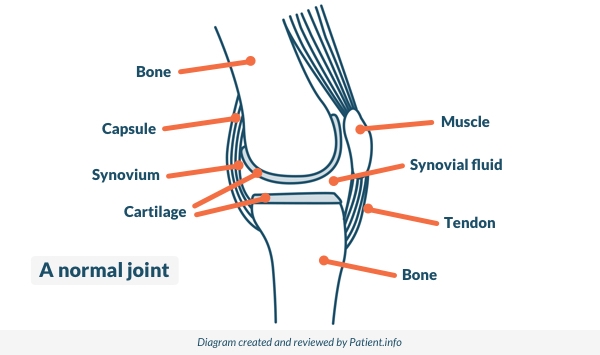
© Patient.info
A joint is situated where two bones meet. Joints allow movement and flexibility of various parts of the body. The movement of the bones is caused by muscles which pull on tendons that are attached to bone. Cartilage covers the end of bones. Between the cartilage of two bones that form a joint there is a small amount of thick fluid called synovial fluid. This lubricates the joint, which allows smooth movement between the bones.
The synovium is the connective tissue that surrounds a joint. Synovial fluid is made by cells of the synovium. The outer part of the synovium is called the capsule. This is tough, gives the joint stability, and stops the bones from moving out of joint. Surrounding ligaments and muscles also help to give support and stability to joints.
What causes arthritis?
Zurück zum InhaltThe two most common types of arthritis are osteoarthritis and rheumatoid arthritis. However, there are many different causes of arthritis.
The following list includes some of the common conditions that mainly affect joints. For further information, each condition has a separate leaflet.
Rheumatoide Arthritis
Rheumatoid arthritis (RA) causes inflammation, pain, and swelling of joints. Persistent inflammation over time can damage affected joints. The severity can vary from mild to severe. The earlier treatment is started, the less joint damage is likely to occur.
Osteoarthritis
Osteoarthritis (OA) causes pain and stiffness in joints. Symptoms may be helped by exercises, some physical devices and treatments, and losing weight if you are overweight. It can be caused or worsened by trauma, in which case it may be known as post-traumatic arthritis.
Septische Arthritis
Septische Arthritis is an infection in a joint. Symptoms of this arthritis include pain and tenderness over a joint, pain on moving the joint, and feeling unwell. It is an uncommon infection but very serious. Emergency treatment in hospital is needed.
Morbus Bechterew
Morbus Bechterew is a form of arthritis. It mainly affects the lower back. Other joints and other parts of the body are sometimes affected. Treatment includes regular exercise and anti-inflammatory medicines. The severity of ankylosing spondylitis varies from mild to severe. An eye complication called uveitis can be serious but can be treated successfully if treatment is given promptly.
Gicht
Gicht causes attacks of pain and swelling when uric acid in the body crystalises in one or more joints. An anti-inflammatory painkiller usually eases an attack quickly. Lifestyle factors may reduce the risk of having gout attacks. These include losing weight (if overweight), eating a healthy diet, and not drinking much alcohol or sugar-sweetened soft drinks.
Calcium-Pyrophosphat-Ablagerung
Calcium pyrophosphate is a substance produced in the cartilages of the joints. It can become deposited as crystals on joint tissues. This is called calcium pyrophosphate deposition (CPPD). CPPD can cause a number of problems of which the most well known is pseudogout. This is almost identical to gout, causing attacks of pain and swelling in one or more joints. Some people get damage to the joint, causing a type of long-term arthritis. CPPD may cause no symptoms and is sometimes picked up on an X-ray done for an unrelated condition. Unlike gout, there is no special therapy for pseudogout.
Psoriasis-Arthritis
Psoriatic arthritis causes inflammation, pain, and swelling of joints in some people who have Psoriasis (a skin condition). Other parts of the body may also be affected. For example, inflammation may also affect tendons and ligaments. The severity can vary from mild to severe. In some cases, affected joints become damaged which can cause disability.
Reaktive Arthritis
Reaktive Arthritis means that you develop inflammation in joints after you have had an infection in some other part of the body. Other symptoms usually develop in addition to the arthritis. Symptoms commonly last 3-6 months. In some cases the arthritis persists long-term. There is a rare 'triad' syndrome where arthritis, urethritis and conjunctivitis occur at the same time.
Juvenile idiopathische Arthritis
Juvenile idiopathische Arthritis (JIA) is an unusual condition in which joint inflammation occurs in children under the age of 16 years. It lasts for at least six weeks. Arthritis causes inflammation, pain and swelling of the affected joints. The severity can vary from mild to severe. The earlier the treatment is started, the less joint damage is likely to occur.
Lesen Sie unten weiter
Conditions similar to arthritis
Zurück zum InhaltThere are some medical problems which don't affect the joints predominantly, but can cause joint problems as they progress. Examples include:
Systemischer Lupus erythematodes
Systemischer Lupus erythematodes (SLE) can cause various symptoms, the most common being joint pain and stiffness, skin rashes and tiredness. Problems with kidneys and other organs can occur in severe cases.
Gut (bowel) conditions
Some gut conditions, especially inflammatory bowel diseases such as Morbus Crohn und Colitis ulcerosa, may cause arthritis.
Zervikale Spondylose
Zervikale Spondylose is a 'wear and tear' of the bones (vertebrae) and discs in the neck. It is a normal part of ageing and does not cause symptoms in many people. However, it is sometimes a cause of neck pain. Symptoms tend to come and go. In severe cases, the degeneration may cause irritation or pressure on the spinal nerve roots or spinal cord. This can cause arm or leg symptoms.
Polymyalgia rheumatica
Polymyalgia rheumatica (PMR) causes pain, stiffness and tenderness in large muscles, typically around the shoulders, upper arms and hips. The cause is not known. Some people with PMR develop a related condition called giant cell arteritis (GCA) which can be more serious and may threaten sight.
Fibromyalgie
Fibromyalgia causes pains and tenderness in many areas of the body, and tiredness. You may also have other symptoms.
Arthritis symptoms
Zurück zum InhaltThe symptoms of arthritis vary depending on the type of arthritis and severity of the underlying cause. The symptoms include:
Joint pain, tenderness and stiffness.
Restricted movement of the joints.
Warmth and red skin over the affected joint.
Weakness and muscle wasting around the joint.
Lesen Sie unten weiter
How is arthritis diagnosed?
Zurück zum InhaltAs with all medical conditions, the diagnosis is made by a combination of a history, examination and investigations. Some patients will need to be referred to a specialist. For inflammatory arthritis (eg, rheumatoid and psoriatic), all patients will be seen by a rheumatologist (joint specialist). For a non-inflammatory arthritis such as osteoarthritis, management is usually fully in primary care, by a GP and sometimes other healthcare professionals such as a physiotherapist, with referral being reserved for those who may need surgery.
Arthritis treatment
Zurück zum InhaltAlthough there is no cure for arthritis, there are treatments available for all forms. However, the treatment will depend on the cause of arthritis.
Treatments may include:
Medicines (such as NSAIDs, used by mouth or topically).
Weight loss, and diet changes.
Regelmäßige Bewegung, sometimes in a supervised session.
Heat and cold compresses.
Mobility assistance devices, such as canes or walkers.
Operation.
Some causes of arthritis only need treatment for a short time. Other causes of arthritis may need lifelong treatment. If it affects the hip or the knee, treatment for osteoarthritis includes surgery to replace the entire joint. See the separate leaflets called Knee Replacement und Hip Replacement.
For elbow arthritis there is a technique known as elbow joint resurfacing, but this is not currently recommended by the National Institute for Health and Care Excellence (NICE) as there is not enough evidence for its safety and effectiveness. Some patients may be offered this procedure as part of a trial.
What is the outlook (prognosis) for arthritis?
Zurück zum InhaltSome types of arthritis are short-lived and don't leave you with any problems.
Examples are reactive arthritis, which usually goes away by itself and juvenile arthritis which may sometimes clear up without any long-term problems. Other types come and go, like gout.
Rheumatoid arthritis tends to stay with you for the long term, but can be controlled with medication.
Osteoarthritis can usually be controlled with a combination of painkillers, physiotherapy, and surgery, and by reducing pressure on the joint by avoiding being overweight.4
Although there is no sure way to prevent arthritis, our article on the topic can help you look after your joint health, reduce risk factors, and alleviate symptoms.
Patientenempfehlungen für Arthritis
Knochen, Gelenke und Muskeln
Gicht
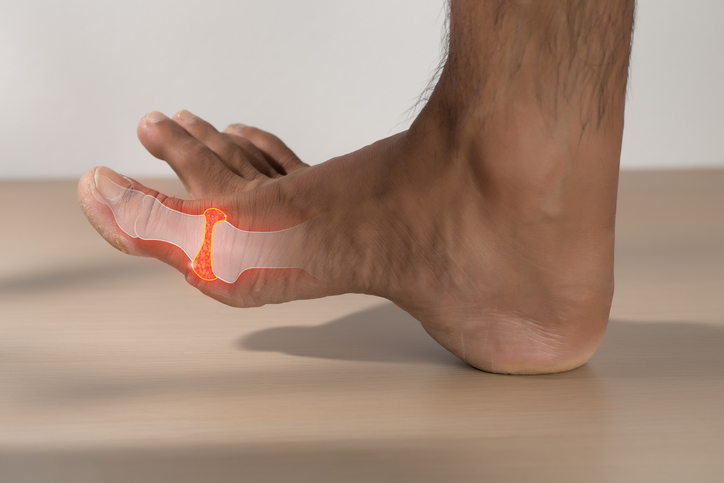
Gout causes attacks of pain and swelling in one or more joints. An anti-inflammatory painkiller usually eases an attack quickly. Lifestyle factors may reduce the risk of having gout attacks. These include losing weight (if overweight), eating a healthy diet and not drinking a lot of alcohol or sugar-sweetened soft drinks. If gout attacks are frequent then taking a medicine (such as allopurinol) each day can prevent them.
von Dr. Hayley Willacy, FRCGP
Knochen, Gelenke und Muskeln
Psoriasis-Arthritis
Psoriasis-Arthritis verursacht Entzündungen, Schmerzen und Schwellungen der Gelenke bei einigen Menschen, die an Psoriasis leiden. Auch andere Körperteile können betroffen sein. Zum Beispiel können Entzündungen auch Sehnen und Bänder betreffen. Die Schwere kann von mild bis schwer variieren. In einigen Fällen werden die betroffenen Gelenke beschädigt, was zu Behinderungen führen kann. Behandlungen umfassen Medikamente zur Schmerzlinderung und Medikamente zur Verlangsamung des Krankheitsverlaufs. Eine Operation ist manchmal erforderlich, wenn ein Gelenk oder eine Sehne stark beschädigt ist.
von Dr. Colin Tidy, MRCGP
Weiterführende Lektüre und Referenzen
- Rheumatoide Arthritis bei Erwachsenen: Behandlung; NICE-Richtlinie (Juli 2018 - zuletzt aktualisiert Oktober 2020)
- Versus Arthritis
- Lateral elbow resurfacing for arthritis; NICE Interventional procedures guidance, September 2021
- Arthrose bei über 16-Jährigen: Diagnose und Behandlung; NICE-Richtlinie (Oktober 2022)
- Gicht; NICE CKS, Juni 2023 (nur UK-Zugang)
Lesen Sie unten weiter
Artikelverlauf
Die Informationen auf dieser Seite wurden von qualifizierten Klinikern verfasst und begutachtet.
Nächste Überprüfung fällig: 21. Jan. 2028
22. Jan 2023 | Neueste Version
11 Mar 2015 | Ursprünglich veröffentlicht
Verfasst von:
Dr Colin Tidy, MRCGP

Fragen, teilen, verbinden.
Durchsuchen Sie Diskussionen, stellen Sie Fragen und teilen Sie Erfahrungen zu Hunderten von Gesundheitsthemen.

Fühlen Sie sich unwohl?
Bewerten Sie Ihre Symptome online kostenlos
Abonnieren Sie den Patienten-Newsletter
Ihre wöchentliche Dosis klarer, vertrauenswürdiger Gesundheitsberatung - geschrieben, um Ihnen zu helfen, sich informiert, selbstbewusst und in Kontrolle zu fühlen.
Mit dem Abonnieren akzeptieren Sie unsere Datenschutzrichtlinie. Sie können sich jederzeit abmelden. Wir verkaufen Ihre Daten niemals.