Akute Bronchitis
Begutachtet von Dr Colin Tidy, MRCGPZuletzt aktualisiert von Dr Toni Hazell, MRCGPZuletzt aktualisiert 18. Jan 2023
Erfüllt die Anforderungen des Patienten Richtlinien des Patienten
- HerunterladenHerunterladen
- Teilen
- Language
- Diskussion
- Audio-Version
In dieser Serie:BrustinfektionPneumonieAspirationspneumoniePostoperative BrustinfektionBronchoskopie
Acute bronchitis is a common chest infection that causes inflammation of the airways. It is usually caused by viral infections and often gets better on its own within a few weeks. See a doctor if symptoms don't improve or you have trouble breathing.
This leaflet explains the symptoms to look out for and how to manage them.
In diesem Artikel:
Videoauswahl für Brust- und Lungeninfektionen
Wichtige Punkte
Acute bronchitis is a lung infection that causes inflammation of the airways. It is mainly caused by viral infections such as the common cold or flu.
Common symptoms include a persistent cough with mucus, chest tightness, mild fever, wheezing, and tiredness.
Most cases often improve on their own with plenty of rest, fluids, and symptom management.
You should see a doctor if bronchitis symptoms are severe, last longer than three weeks, or include high fever, chest pain, or difficulty breathing.
Lesen Sie unten weiter
What is acute bronchitis?
What is bronchitis?
Acute bronchitis is an infection of the large airways (the bronchi). It is common and is usually due to a viral infection. A bacterial Infection is less common and causes around 1% to 10% of cases of bronchitis.
Atmungstrakt
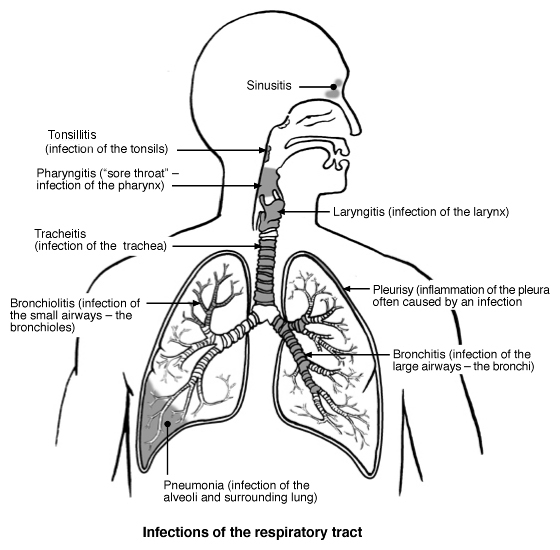
The diagram above shows the sites of a range of respiratory infections. This leaflet just deals with acute bronchitis. See the separate leaflets called Akute Sinusitis, Mandelentzündung, Halsschmerzen, Laryngitis, Pleuritis, Bronchiolitis, und Pneumonie for the other types of infection shown in the diagram.
Hinweis: chronic bronchitis is a separate illness and is not dealt with here. See the separate leaflet called Chronic obstructive pulmonary disease (COPD) for more details.
Is bronchitis contagious?
As with any infection, bronchitis is contagious and so it is important to cough into a tissue and wash your hands regularly to reduce the risk of passing it to others.
You are usually contagious with acute bronchitis for as long as your symptoms, particularly the cough, are present. Most cases are caused by viruses, and the highest risk of spreading the infection is during the first few days.
Acute bronchitis symptoms
Zurück zum InhaltThe main symptom of acute bronchitis is a Husten. You may also develop:
Allgemeine Schmerzen und Beschwerden.
Symptoms typically peak after 2-3 days and then gradually clear. However, it can take 2-3 weeks for the cough to go completely after the other symptoms have gone. This is because inflammation in the airways caused by the bronchitis infection may take some time to settle.
Emergency symptoms
Consult a doctor if any of the following occur:
If high temperature (fever), wheezing or headaches become worse or severe.
Wenn Sie schnelle Atmung, Atemnot oder Brustschmerzen entwickeln.
If you cough up blood or if your phlegm (sputum) becomes dark or rusty coloured.
Wenn Sie schläfrig oder verwirrt werden.
If a cough persists for longer than 3-4 weeks.
If you have repeated (recurring) bouts of acute bronchitis.
Falls weitere Symptome auftreten, die Sie beunruhigen.
Lesen Sie unten weiter
Diagnosing acute bronchitis
Zurück zum InhaltYour doctor will listen to the history and examine you - this is usually enough to make a diagnosis and tests are rarely needed. If further tests are needed, they could include blood tests, a chest X-ray or sending a sample of sputum to the laboratory for analysis.
Acute bronchitis treatment
Zurück zum InhaltA main aim of treatment is to ease symptoms whilst your immune system clears the infection. The most useful treatments are:
Taking pain relievers such as Paracetamol, Ibuprofen, oder Aspirin to reduce high temperature (fever) and to ease any aches, pains and headaches. (Children aged under 16 years should not take aspirin.)
Viel zu trinken haben if you have a fever, to prevent mild lack of fluid in the body (Dehydrierung).
If you smoke, trying to stop for good. Bronchitis, Brustinfektionen and serious lung diseases are more common in smokers.
Taking plenty of rest.
What about cold and cough remedies?
You can buy many other 'cold and cough remedies' at pharmacies. There is little evidence of any impact on the infection but they may be useful for certain symptoms. For example, a decongestant nasal spray may help to clear a blocked nose.
Remember, cold and cough remedies often contain several ingredients. Some may make you drowsy. This may be welcome at bedtime if you have difficulty sleeping with a bronchitis. However, do not drive if you are drowsy. Some contain paracetamol, so be careful not to take more than the maximum safe dose of paracetamol if you are already taking paracetamol tablets. Always follow the advice of your pharmacist about which medicines can be used for children of different ages.
What about antibiotics?
The National Institute for Health and Care Excellence (NICE) has confirmed that otherwise healthy people who have acute bronchitis should not be prescribed antibiotics. Your immune system can usually clear the infection. Antibiotics do not kill viruses. Even if a germ (bacterium) is the cause, antibiotics usually do little to speed up recovery of an acute bronchitis. Antibiotics may even make symptoms worse, as some people develop side-effects such as loose or watery stools (diarrhoea), feeling sick (nausea) and rashes.
NICE recommends that your doctor should consider either an immediate prescription for antibiotics or a 'delayed prescription' (to be taken if symptoms do not improve or get worse) for the following people:
Over-80s who have been in hospital in the preceding year, are taking steroids, have Diabetes or have Herzinsuffizienz.
Over-65s who have two of the risk factors in the line above.
People with long-term kidney, liver, heart, lung or nervous system conditions.
People with cystic fibrosis.
People with conditions which can stop their immune system from working properly.
NICE does not recommend prescribing bronchodilators (to open up the airways) or steroids in either inhaled or tablet form.
It recommends that you should consult your doctor if your symptoms have not settled within 3-4 weeks, or if your symptoms get rapidly worse or you become very unwell in yourself.
Antibiotics may also be prescribed if a complication develops such as pneumonia - but this is unlikely to occur if you are otherwise healthy.
Lesen Sie unten weiter
Preventing acute bronchitis
Zurück zum InhaltWashing your hands regularly is important to reduce the risk of catching bronchitis or other respiratory tract infections from those around you who may have them. Smoking causes lung problems such as COPD which predispose to bronchitis and so stopping smoking may help to reduce the risk of catching bronchitis.
Häufig gestellte Fragen
Zurück zum InhaltCan bronchitis go away on its own?
Most acute bronchitis cases improve on their own within a few weeks. Rest, fluids, and avoiding irritants can help, but see a doctor if symptoms worsen or persist.
How long does acute bronchitis last?
Acute bronchitis usually clears without complications within 3-4 weeks. Occasionally, the infection travels to the lung tissue to cause pneumonia.
What’s the difference between bronchitis and pneumonia?
Bronchitis and pneumonia are both infections of the lungs, but they affect different parts. Bronchitis affects the airways, whilst pneumonia infects the lung air sacs and causes more severe symptoms, often needing immediate medical care.
Is menthol vapour rub good for acute bronchitis?
Menthol vapour rub may ease symptoms of bronchitis, such as a blocked nose or chest congestion, by creating a cooling effect, but it does not treat the infection. You should always use it as instructed and do not apply it to babies or young children.
Can children get acute bronchitis?
Children are more likely to get bronchiolitis (an infection of the smaller parts of the respiratory tree) than bronchitis.
Patientenempfehlungen für Brust- und Lungeninfektionen

Brust und Lungen
SARS- und MERS-Virus
Severe acute respiratory syndrome (SARS) and Middle East respiratory syndrome (MERS) are viral infections. Both infections can cause very serious illnesses that particularly affect the lungs. SARS caused many infections, especially in Asia, in 2002-2004 but was not heard of for some time. A SARS-CoV-2 (COVID-19) outbreak emerged in Wuhan, China in December 2019. This spread rapidly and was declared a global pandemic in 2020. MERS was first recognised in the Middle East in 2012. Most of the initial infections were in the Middle East. However, by February 2018, the World Health Organization (WHO) had reported cases in many other countries.
von Dr. Hayley Willacy, FRCGP

Brust und Lungen
Aspirationspneumonie
Aspirationspneumonie ist eine Infektion der unteren Atemwege (Brustkorb), die durch Bakterien verursacht wird, die in die Lunge gelangt sind, weil Flüssigkeit aus dem Magen oder Mund eingedrungen ist. Dies kann durch Erbrechen oder eine Unfähigkeit, richtig zu schlucken, verursacht werden. Sie verursacht Symptome einer Infektion der unteren Atemwege (Husten, Fieber, Atemnot) und wird in der Regel mit Antibiotika behandelt.
von Dr. Philippa Vincent, MRCGP
Weiterführende Lektüre und Referenzen
- Husten (akut): Antibiotikaverschreibung; NICE-Leitlinien (Februar 2019)
- Singh A, Avula A, Zahn E; Acute Bronchitis
- Brustinfektionen - Erwachsene; NICE CKS, Mai 2024 (nur Zugang in Großbritannien)
Lesen Sie unten weiter
Artikelverlauf
Die Informationen auf dieser Seite wurden von qualifizierten Klinikern verfasst und begutachtet.
Nächste Überprüfung fällig: 17. Jan. 2028
18. Jan 2023 | Neueste Version

Fragen, teilen, verbinden.
Durchsuchen Sie Diskussionen, stellen Sie Fragen und teilen Sie Erfahrungen zu Hunderten von Gesundheitsthemen.

Fühlen Sie sich unwohl?
Bewerten Sie Ihre Symptome online kostenlos
Abonnieren Sie den Patienten-Newsletter
Ihre wöchentliche Dosis klarer, vertrauenswürdiger Gesundheitsberatung - geschrieben, um Ihnen zu helfen, sich informiert, selbstbewusst und in Kontrolle zu fühlen.
Mit dem Abonnieren akzeptieren Sie unsere Datenschutzrichtlinie. Sie können sich jederzeit abmelden. Wir verkaufen Ihre Daten niemals.