Trockene Augen
Begutachtet von Dr Doug McKechnie, MRCGPZuletzt aktualisiert von Dr Colin Tidy, MRCGPZuletzt aktualisiert 24 Feb 2023
Erfüllt die Anforderungen des Patienten Richtlinien des Patienten
- HerunterladenHerunterladen
- Teilen
- Language
- Diskussion
- Audio-Version
In dieser Serie:AugenproblemeInfektiöse BindehautentzündungAllergische KonjunktivitisEpiscleritis und SkleritisUveitisSubkonjunktivale Blutung
Trockene Augen können jeden betreffen. Sie sind in der Regel nichts, worüber man sich Sorgen machen muss, und können oft zu Hause behandelt werden. Künstliche Tränen, Gele und beruhigende Salben lindern normalerweise die Symptome.
In diesem Artikel:
Videoauswahl für Andere Anzeichen und Symptome
Wichtige Punkte
Dry eyes happen when your eyes don’t produce enough tears or the tears evaporate too quickly, leaving the eyes irritated and uncomfortable.
Common symptoms include stinging, burning, redness, blurred vision, and a gritty or scratchy feeling in the eyes.
Dry eyes can be caused by ageing, looking at a screen for too long, wearing contact lenses, dry environments, certain medications, or medical conditions such as blepharitis or autoimmune diseases.
You can treat dry eyes yourself by using over-the-counter eyedrops, reducing screen time, removing contact lenses, and using a humidifier.
Lesen Sie unten weiter
What are dry eyes?
Dry eyes (also known as dry eye syndrome or keratoconjunctivitis sicca) occurs when there is a change in the tear film that normally keeps the eye moist and lubricated. It can occur as a result of various conditions.
What is the tear film?
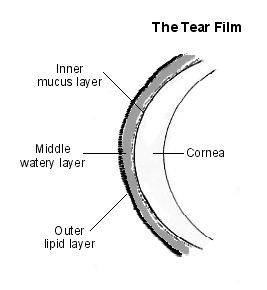
Your tear film has three layers - the main middle watery layer, the thin outer oily layer, and the thin inner mucus layer. The main middle watery layer is what we usually think of as tears.
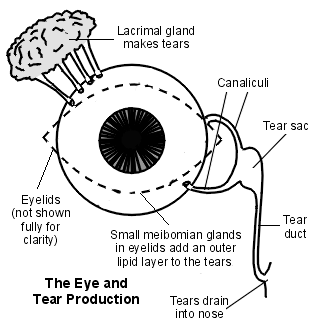
Each eye has a lacrimal gland just above, and to the outer side, tucked right up underneath the eyelid. These glands make the watery part of the tear film, and release it on to the front of the eye. When you blink, your eyelid spreads the fluid over the front of the eye.
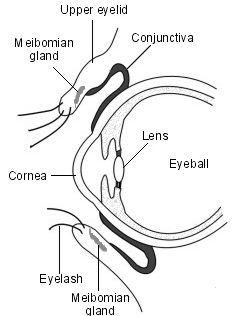
Eye with eyelid detail
Tear film
Eye and tear production
Your eyelids contain multiple tiny glands, called Meibomian glands. These make the oily liquid which covers the outer layer of the tear film. Only a tiny amount is needed; however, this oily layer helps to keep the tear surface smooth and to slow down the evaporation and drying of the watery tears.
Finally, the clear coating that covers the front of your eye and the underside of your eyelids, the conjunctiva, makes a small amount of mucus-like fluid which is the third layer of your tear film. This mucus allows the watery tears to spread evenly over the surface of the eye.
The tear fluid is produced constantly. It drains away from your eye down small channels (canaliculi) on the inner side of your eye, and into a tear sac. From here it flows down a channel called the tear ducts (also called the nasolacrimal duct) into the nose. You can see the entrance to the nasolacrimal duct in the inner corner of your eye, just inside the lower lid.
Who develops dry eyes?
Zurück zum InhaltDry eyes can affect anyone, but it becomes more common with increasing age. Dry eyes affect as many as a third of older people, and about 1 in 10 younger people. Women are affected more often than men.
Lesen Sie unten weiter
What causes dry eyes?
Zurück zum InhaltThe causes of dry eyes include:
Altern
People tend to make fewer tears as they become older. Women often first notice dry eyes developing after the menopause.
Medikation
Some medicines can have a side-effect of causing our eyes to feel dry. These include:
'Wassertabletten' (Diuretika).
Einige Antidepressiva.
Antihistaminika, often used for Heuschnupfen and allergy.
Some treatments for anxiety and other psychological problems.
Betablocker wie Propranolol, Atenolol.
Some treatments for Akne, usw.
Some eye drops used to treat other eye conditions.
Some cough medicines.
Tell your doctor if you suspect that a medicine is causing your dry eyes.
Medizinische Bedingungen
Some people with dry eyes develop the condition as a symptom of another medical condition. Dry eyes are particularly associated with rheumatoide Arthritis, systemischer Lupus erythematodes (SLE) und Sjögren-Syndrom. In each of these conditions you would normally have other symptoms, such as joint pains or skin rashes.
Increased evaporation of tears
Your environment has a huge effect on your eyes. Dry warm air, solar radiation and wind all increase evaporation and tend to dry the eyes. The most common environmental causes of dry eye are:Low humidity - for example, from central heating or air conditioning, or living in a hot dry climate.
Having a low blinking rate, often combined with opening your eyes wider than normal, increases evaporation of tears and stops you spreading new tears as effectively. Some people blink less than others. You will blink less if you spend long periods concentrating on computer screens, TV or microscope. People with Parkinson-Krankheit often blink less than normal.
Wearing contact lenses
Wearing contact lenses can cause dry eyes as it limits oxygen flow into the eye that is essential in developing natural tears.
Windy conditions
The air moving across the eye more quickly can cause tears to evaporate more quickly causing dryness.
Not covering the eyes completely when closing the eyelids
For example, due to eye problems related to Schilddrüsenerkrankungen. Some elderly people have a condition called ectropion, when the eyelids tend to turn outwards and this can expose part of the eye during sleep. Some people sleep with their eyes partly open.
Damage to the outer part of the eyes, eyelids, etc, from disease, injury or surgery
This can affect our natural ability to produce enough tears and result in damage to the general functioning of the eye.
Skin rashes such as seborrhoeic dermatitis or rosacea
Seborrhoische Dermatitis and ocular Rosazea can cause or exacerbate Meibomian gland dysfunction, and can lead to worsened symptoms of dry eye disease.
Inflammation of the eyelids (blepharitis)
Blepharitis is often associated with dry eyes.
Unbekannt
Some younger people have no apparent cause. They simply produce less than the normal amount of tears.
Dry eyes symptoms
Zurück zum InhaltBoth eyes are usually affected. Symptoms include:
Irritation in the eyes. The eyes may feel gritty or burning. However, the eyes do not go red. If they do, another eye problem or a complication is usually present.
Very slight temporary blurring of vision from time to time. However, dry eyes do not affect the seeing part of the eye, and dry eyes do not usually cause permanent damage to vision.
Discomfort in your eyes when looking at bright lights.
If you wear contact lenses, you may find they become uncomfortable.
The eye usually feels dry - but it doesn't always feel dry.
Lesen Sie unten weiter
Are dry eyes dangerous?
Zurück zum InhaltComplications are uncommon. They are more likely if you have an underlying medical condition AND are exposed to a dry environment, so that the eyes become extremely dry.
Inflammation of the conjunctiva (conjunctivitis) or the cornea at the front of the eye (keratitis) can occur. If this becomes severe, small ulcers may develop on the cornea. Very rarely, the cornea can puncture (perforate).
You should see a doctor or optician if your eye becomes red or if your vision is affected by dry eyes. you should also seek medical advice if you know you have dry eyes but eye pain develops which seems more than the usual grittiness or irritation. Pain and altered vision are not normally symptoms of dry eyes and may indicate another eye condition or a complication of dry eyes.
How are dry eyes diagnosed?
Zurück zum InhaltA doctor or optician can usually diagnose dry eyes from the symptoms, and from examining your eye. However, as dry eyes can be a symptom of an underlying disease (such as Sjögren's syndrome), don't be surprised if your doctor asks about all sorts of other symptoms.
Sometimes a test is done to confirm the diagnosis of dry eyes. This is called Schirmer's Tear Test, and it measures the quantity of tears that you form. Special paper is placed under the lower lid of your eye and left for five minutes. Your tear production can be assessed by how wet the filter paper becomes after five minutes. Further examination with an instrument called a slit lamp - usually by an optician or a specialist eye doctor (ophthalmologist) - is sometimes needed. This can show up dry patches or ulcers on the surface of the eye. If your dry eyes are associated with another disease, your doctor may refer you to an ophthalmologist for advice and treatment.
How to treat dry eyes
Zurück zum InhaltMost treatments for dry eyes are aimed at moisturising and re-lubricating the eye. A few treatments are aimed at altering your tear production. You can also help yourself by:
Trying to keep your environment less dry. This might mean turning your heating down, or using a humidifier.
Wearing glasses or sunglasses can help in protecting your eyes from wind and dust when out in a hot, dry environment.
Resting your eyes by taking regular breaks if you spent long periods in front of a screen or staring down a microscope.
Keeping your eyelids healthy: your eyelids produce the oily part of your tear film and if they become swollen or inflamed they may do this less well. If you wear eye make-up use gentle removers and don't scrub at your eyelids. Change your mascara regularly and, if your eyelids become puffy or sore, consider a change of brand.
Artificial tears
These come as eye drops and gels, and are usually good at relieving symptoms. You can buy them over the counter at pharmacies. At first, you may need to use them every hour or more to improve symptoms. Once symptoms improve, you may then only need to use them three or four times a day. You may need to use them regularly to keep symptoms away.
There are several types of artificial tear drops and gels, with different ingredients. Occasionally, some people find one type may irritate. A change to a different, preservative-free preparation may help if the first does not suit. Ask your pharmacist or optician for advice.
Some artificial tears contain preservatives such as benzalkonium hexachloride. Using these for long periods can damage the front of the eye (the cornea). If you use artificial tears more than four times per day long-term, you should use a preservative-free brand.
Augensalbe
It may also help to use a soothing and lubricating ointment at bedtime for overnight. You can buy this too at pharmacies. You should not use ointment during the day as it can make the artificial tear drops less effective and can make your vision blurry.
Do not use eye ointment if you use other eye drops for other conditions such as raised pressure in the eye (glaucoma).
Andere Behandlungen
Artificial tears and soothing ointments work well in most cases. Other treatments may be advised by a specialist in severe cases not helped by the above.
Examples of other treatment options sometimes used for severe cases include:
Anti-inflammatory eye drops or tablets (for example, steroid eye drops or Tetracyclin tablets).
Medicines to boost tear production by the tear gland (for example pilocarpine).
Surgery to stop the tears from draining away.
Temporary plugs inserted in your lacrimal ducts to block the tears from draining away.
The fluid contained in your own blood can be used to make special tear drops which are not artificial. These are called autologous serum tears.
Special lenses or goggles are used to try to keep the moisture in your eyes.
Also, some people may need other treatments if they have an underlying cause for their dry eyes.
Ernährungsumstellung
Fats from fish oils (omega-3) in the diet, or as supplements, seem to improve dry eyes. Therefore, including oily fish in your diet once or twice a week may be beneficial. Some groups of people should be careful about the amount of oily fish in their diet, or omega-3 supplements (for example, pregnant women) so check with a healthcare professional or pharmacist.
Contact lens wearers
Zurück zum InhaltYou should not wear contact lenses whilst using many types of eye drops. Check with your doctor or pharmacist. It is often the preservative in the drops that may cause problems. Some types of drops are available without preservative, which are suitable for contact lens wearers.
You should not wear contact lenses whilst using eye ointment.
Häufig gestellte Fragen
Zurück zum InhaltDoes dry eye ever go away?
Dry eye can go away with treatment and lifestyle changes, but it doesn’t always go away completely. For many people, it’s a long-term condition that can be managed with eye drops, good eyelid hygiene, and by avoiding triggers such as smoke or screen strain.
What are the symptoms of chronic dry eyes?
Common symptoms of chronic dry eyes include a gritty or burning sensation, redness, blurred vision, and sensitivity to light. Some people also experience watery eyes, as the eyes try to compensate for dryness by producing more tears.
Can dry eyes cause blindness?
Severe or untreated dry eyes can lead to damage to the cornea, which may affect vision, but complete blindness is very rare. Most cases can be managed effectively with treatment and lifestyle changes.
Can dry eyes cause headaches?
Yes, dry eyes can sometimes cause headaches, especially if your eyes are strained or tired from trying to stay focused. The discomfort from dryness and irritation can trigger tension around the eyes and forehead.
Dr. Mary Lowth ist eine Autorin oder die ursprüngliche Autorin dieses Merkblatts.
Patientenempfehlungen für Andere Anzeichen und Symptome

Anzeichen und Symptome
Trockener Mund
Trockener Mund hat verschiedene Ursachen. Einfache Maßnahmen wie häufiges Trinken von Wasser, Eiswürfel lutschen und zuckerfreier Kaugummi kauen helfen oft. In vielen Fällen sind sie alles, was benötigt wird. Manchmal werden künstlicher Speichel oder Medikamente zur Anregung der Speicheldrüsen verwendet.
von Dr. Doug McKechnie, MRCGP

Anzeichen und Symptome
Übelkeit und Erbrechen
Übelkeit ist das Gefühl, sich übergeben zu wollen, während Erbrechen das tatsächliche Erbrechen oder „Sich Übergeben“ ist. Diese häufigen Symptome werden oft durch kurzfristige Probleme wie Magen-Darm-Infektionen, Lebensmittelvergiftungen, Schwangerschaft oder Reisekrankheit verursacht. Die meisten Fälle klären sich von selbst, aber anhaltende oder schwere Symptome können eine medizinische Behandlung erfordern. Dieses Faltblatt erklärt die häufigsten Ursachen, Tipps zur Selbstpflege, Behandlungsmöglichkeiten und wann ein Arzt aufgesucht werden sollte.
von Dr. Doug McKechnie, MRCGP
Weiterführende Lektüre und Referenzen
- Kastelan S, Tomic M, Salopek-Rabatic J, et al; Diagnostic procedures and management of dry eye. Biomed Res Int. 2013;2013:309723. doi: 10.1155/2013/309723. Epub 2013 Aug 19.
- Pan Q, Angelina A, Marrone M, et al; Autologous serum eye drops for dry eye. Cochrane Database Syst Rev. 2017 Feb 28;2:CD009327. doi: 10.1002/14651858.CD009327.pub3.
- O'Neil EC, Henderson M, Massaro-Giordano M, et al; Advances in dry eye disease treatment. Curr Opin Ophthalmol. 2019 May;30(3):166-178. doi: 10.1097/ICU.0000000000000569.
- Pellegrini M, Senni C, Bernabei F, et al; The Role of Nutrition and Nutritional Supplements in Ocular Surface Diseases. Nutrients. 2020 Mar 30;12(4):952. doi: 10.3390/nu12040952.
Lesen Sie unten weiter
Artikelverlauf
Die Informationen auf dieser Seite wurden von qualifizierten Klinikern verfasst und begutachtet.
Next review due: 23 Feb 2028
24 Feb 2023 | Neueste Version

Fragen, teilen, verbinden.
Durchsuchen Sie Diskussionen, stellen Sie Fragen und teilen Sie Erfahrungen zu Hunderten von Gesundheitsthemen.

Fühlen Sie sich unwohl?
Bewerten Sie Ihre Symptome online kostenlos
Abonnieren Sie den Patienten-Newsletter
Ihre wöchentliche Dosis klarer, vertrauenswürdiger Gesundheitsberatung - geschrieben, um Ihnen zu helfen, sich informiert, selbstbewusst und in Kontrolle zu fühlen.
Mit dem Abonnieren akzeptieren Sie unsere Datenschutzrichtlinie. Sie können sich jederzeit abmelden. Wir verkaufen Ihre Daten niemals.