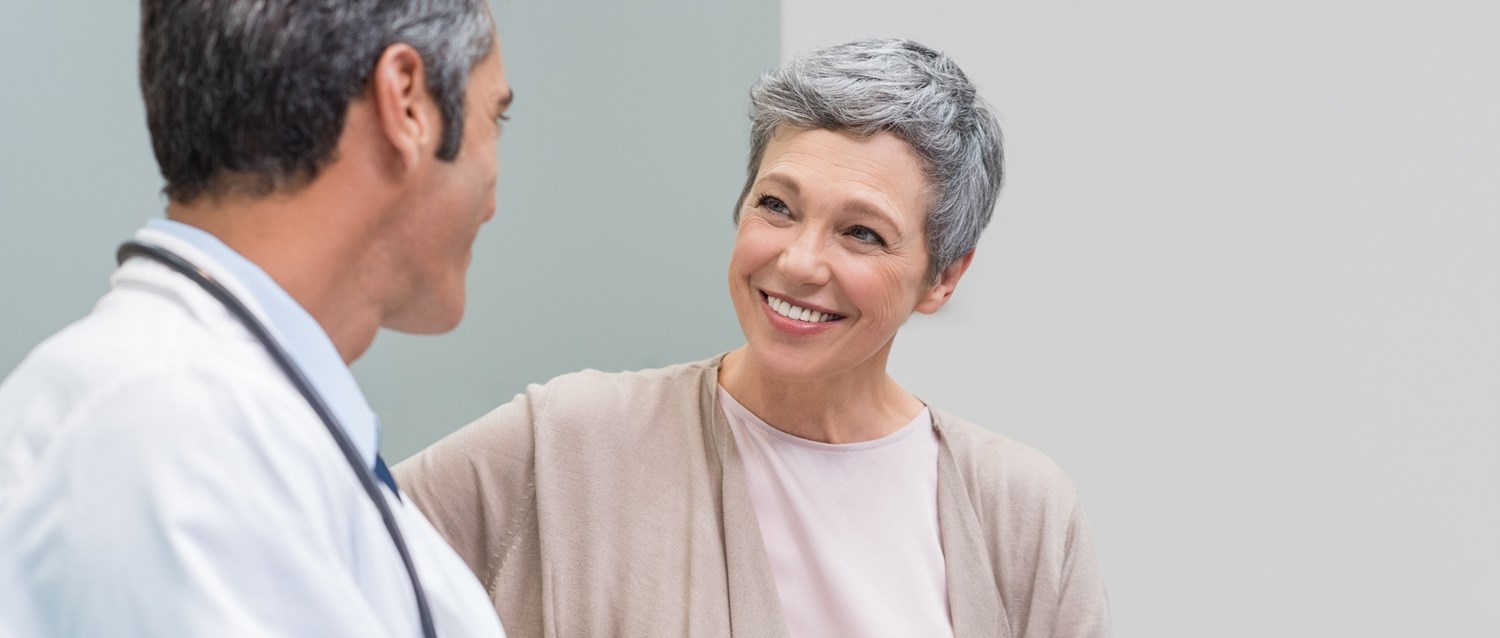
Gesundheit während der Wechseljahre pflegen
Begutachtet von Dr Krishna Vakharia, MRCGPZuletzt aktualisiert von Lydia SmithZuletzt aktualisiert 24. Nov 2022
Erfüllt die redaktionelle Richtlinien
- HerunterladenHerunterladen
- Teilen
- Language
- Diskussion
- Ask Patient
- Audio-Version
- Zu bevorzugten Quellen bei Google hinzufügen
The menopause is a normal part of life, but that doesn't mean it's an easy process. Not everyone gets hot flushes, night sweats and vaginaler Trockenheit, and some women breeze through this natural phase in their lives - but some of us need a little extra help.
Get support with menopause symptoms
Erhalten Sie fachkundige medizinische Beratung bequem von zu Hause aus. Füllen Sie eine kurze Online-Konsultation aus, die rund um die Uhr verfügbar ist. Ihre Anfrage wird von einer in Großbritannien registrierten medizinischen Fachkraft geprüft. Für ausgewählte Behandlungen ist eine Lieferung am nächsten Tag möglich.

Der Wechseljahre usually occurs between the ages of 45 and 55, but sometimes it can happen earlier - and everyone is different. About 80%1 of women get hot flushes and night sweats, which last seven years on average. Statistically, the most effective way to banish hot flushes is Hormonersatztherapie (HRT). This does increase your risk of Brustkrebs, but the risk is small if you just take HRT for a few years and it drops when you stop it.
Other common problems associated with the menopause include vaginal dryness, mood changes, loss of sex drive, and bladder problems. Again, you don't have to suffer in silence - there are lots of solutions out there.
Lebensstiländerungen
There are plenty of non-drug alternatives to help with hot flushes. Lifestyle changes, such as avoiding caffeine, keeping your bedclothes light and wearing breathable clothes - ideally in layers, so you can whip off a layer when needed - may be enough.
Increasing the soya in your diet may well protect against hot flushes, because of the phyto-oestrogen it contains, which has a similar chemical structure to oestrogen2. While it's thought to be the oestrogen in HRT that contributes to the increased risk of breast cancer, the same doesn't seem to be true of phyto-oestrogens in soya. Some studies have suggested that even among breast cancer survivors, eating soya isn't associated with an increased risk of recurrence or progression3.
Prevent weight gain
Research suggests that Wechseljahre can lead to significant changes in a woman's metabolism, which has been linked with weight gain3. However, lifestyle factors can also contribute to weight changes.
At around the age of the menopause, you may become less physically active. The menopause can also reduce the firmness of your muscles, making it feel as if you've put on more weight. As you get older, your metabolism slows down, which means you burn fewer calories. And some women are more prone to gaining weight around their midriffs after the menopause.
It can be hard to exercise if you're suffering from hot flushes, but it's more important than ever after the menopause. It helps keep weight down, tone your muscles, improve balance and guard against Osteoporose.
Swimming is great for keeping you cool but it's not weight-bearing exercise, which is important for keeping bones strong. But don't worry - you don't have to sweat in body-hugging lycra to get fit. Try alternating swimming with any other aerobic exercise, such as brisk walking, tennis, keep fit classes, or dancing. Find an exercise buddy to reduce the chance of giving up when life is too busy, or join a rambling club to meet new friends and take in our glorious countryside too.
Keep your bones strong
Bone health is key after the menopause. You can't feel it, but your bones become less strong from your 40s or even sooner, and this process speeds up after the menopause5. This puts you at higher risk of breaking a bone due to osteoporosis. Regular exercise, avoiding smoking and excess alcohol, taking a daily 10 microgram vitamin D supplement and increasing the calcium in your diet will help. Sources of calcium include dairy products, tinned fish with bones and green leafy vegetables.
It's important to remember that there are other risk factors for your bones, including going through the menopause before the age of 45, taking regular Steroide-Tabletten, having rheumatoide Arthritis or bowel disease (Zöliakie oder Morbus Crohn). Being very immobile, having osteoporosis in the family and being very underweight can also be risk factors.
HRT protects against osteoporosis. If you reach menopause below 45, speak to your GP - you should take HRT until you're at least 50 to protect your bones.
Look after your skin
After the menopause, lower levels of the female hormone Östrogen mean you make less collagen, making you more prone to wrinkles6. Protect your skin from the sun more carefully than ever and opt for a hydrating moisturiser. Avoid long hot baths, be liberal with body moisturisers and pay special attention to hands, too.
Thinning hair is a fact of life for some women as they get older, and it can run in families. It's worth making sure you have enough protein and iron in your diet, as being short of either of these can affect your hair quality.
Weiterführende Lektüre
Efficacy of phytoestrogens for menopausal symptoms: a meta-analysis and systematic review.
American Institute for Cancer Research, Soy: Intake does not increase risk for breast cancer survivors.
Diet may counteract menopause metabolism change, ZOE study shows.
Stevenson et al, Effect of oestrogens on skin aging and the potential role of SERMs.
Get support with menopause symptoms
Erhalten Sie fachkundige medizinische Beratung bequem von zu Hause aus. Füllen Sie eine kurze Online-Konsultation aus, die rund um die Uhr verfügbar ist. Ihre Anfrage wird von einer in Großbritannien registrierten medizinischen Fachkraft geprüft. Für ausgewählte Behandlungen ist eine Lieferung am nächsten Tag möglich.
Patientenauswahl für Wechseljahre und HRT
Hormone
Die Wahrheit über HRT
Die Hormonersatztherapie (HRT) ist wirksam bei der Linderung der Symptome der Menopause, wurde jedoch von Problemen hinsichtlich Sicherheit, Nebenwirkungen und Fehlinformationen geplagt. Wir untersuchen die neuesten Erkenntnisse zur HRT und bieten Einblicke in die Patientenerfahrungen, um Fakten von Fiktion zu trennen.
von Sally Turner
Hormone
Die 'zweite Pubertät': Warum Sie in Ihren Dreißigern Hautprobleme bekommen könnten
Wenn Sie in Ihren späten Dreißigern sind, haben Sie möglicherweise einen plötzlichen Ausbruch von Hautunreinheiten bemerkt - etwas, das sich sehr nach Akne anfühlt, obwohl Sie dachten, Sie hätten Ihre Teenagerhaut hinter sich gelassen. Einige Leute nennen es sogar eine 'zweite Pubertät'. Aber laut der Dermatologin Dr. Shamsa Kanwal handelt es sich tatsächlich um eine hormonelle Veränderung, die beeinflusst, wie sich Ihre Haut verhält, wenn Sie sich der Lebensmitte nähern.
von Victoria Raw
Über den AutorVollständige Biografie anzeigen
Aktualisiert von

Lydia Smith
Feature-Autorin
BA, MA, MSc
Lydia Smith ist eine preisgekrönte Journalistin und Feature-Autorin, die umfangreich über Frauengesundheit und psychische Gesundheit geschrieben hat. Derzeit studiert sie für einen MSc in Psychologie.
Verfasst von

Dr. Sarah Jarvis
Klinische Beraterin
MA (Cantab), BM, BCh (Oxon), DRCOG, FRCGP, MBE
Nach ihrer medizinischen Ausbildung in Cambridge und Oxford wurde Dr. Sarah Jarvis MBE Hausärztin.
Über den RezensentenVollständige Biografie anzeigen

Dr Krishna Vakharia, MRCGP
Chief Medical Officer für Gesundheit, Optum UK
MBChB, MRCGP(2013), BMedSci (hons), DFSRH, DRCOG, PGDipDerm (Distn)
Dr. Krishna Vakharia ist eine NHS-Hausärztin. Sie ist auch regelmäßige Prüferin für das postgraduale Diplom in Praktischer Dermatologie an der Cardiff University und zudem Chief Medical Officer für Gesundheit bei Optum UK.
Artikelverlauf
Artikel auch verfügbar in Englisch, Deutsch, Spanisch, Französisch, Italienisch, Portugiesisch, Hindi, Hebräisch, Arabisch, und Schwedisch.
24. Nov 2022 | Neueste Version
30 Okt 2017 | Ursprünglich veröffentlicht
Verfasst von:
Dr. Sarah Jarvis
Teilen Sie Ihre Gedanken oder Erfahrungen mit anderen in unserem Patientengemeinschaften.
Einfacher Zugang zu vertrauenswürdigen Behandlungen und Gesundheitsdiensten online.
Common conditions
Get help with common conditions through the NHS, without a GP appointment.





Abonnieren Sie den Patienten-Newsletter
Ihre wöchentliche Dosis klarer, vertrauenswürdiger Gesundheitsberatung - geschrieben, um Ihnen zu helfen, sich informiert, selbstbewusst und in Kontrolle zu fühlen.
Durch das Abonnieren akzeptieren Sie unsere Datenschutzrichtlinie. Sie können sich jederzeit abmelden. Wir verkaufen Ihre Daten niemals.