Pelvic pain in women
Peer reviewed by Dr Doug McKechnie, MRCGPLast updated by Dr Hayley Willacy, FRCGP Last updated 21 Feb 2023
Meets Patient’s editorial guidelines
- DownloadDownload
- Share
- Language
- Discussion
- Audio Version
- Add to preferred sources on Google
In this series:Pelvic inflammatory diseaseOvarian cystEndometriosis
Pelvic pain is more common in women. There are many different causes of pain in your pelvic area. They can be separated by when they tend to happen, if you are pregnant and if they are accompanied by other symptoms such as vaginal bleeding. The most common causes are mentioned below. Most will improve with painkillers. Most recurring causes have treatments available.
At a glance
Pelvic pain originates from organs, bones, muscles, nerves, or joints in the pelvic area.
It is more common in women and can be acute (new) or chronic (lasting over six months).
Symptoms can include pain during bowel movements, urination, or sex.
Common causes include ovulation, period pain, infections, and conditions like endometriosis.
Pelvic pain during pregnancy can indicate miscarriage, ectopic pregnancy, or premature labour.
If the pain is severe, you are unsure of the cause, or it keeps returning, see a doctor.
Seek urgent medical help if an ectopic pregnancy is suspected.
What is pelvic pain?
Pelvic pain usually means pain that starts from one of several organs located in the pelvis (the lowest part of your tummy). These pelvic organs include the bowel, bladder, womb (uterus), Fallopian tubes and ovaries. In some cases the pain comes from your pelvic bones that lie next to these organs, or from nearby muscles, nerves, blood vessels or joints. So, there are many causes of pelvic pain.
Pelvic pain is more common in women than in men. This leaflet will deal with the most common causes of pelvic pain in women.
Pelvic pain can be acute or chronic. Acute means that it is the first time you have had this type of pain. Chronic means that pain has been a problem for a long time - more than six months.
Playlist: Pelvic Pain Q&A
4 videos
What causes pelvic pain in women?
Dr Sarah Jarvis
What causes pelvic pain in women?
Dr. Sarah Jarvis

When is pelvic pain normal?
Dr. Sarah Jarvis

How much pelvic pain is normal during pregnancy?
Dr. Sarah Jarvis

How do you diagnose pelvic pain?
Dr. Sarah Jarvis
Symptoms of pelvic pain in women
Symptoms of pelvic pain include:
Pain associated with your gut, such as during a bowel movement.
Pain associated with your bladder, or passing urine.
Pain during sex.
Bowel
Pain may occur in different parts of the tummy (abdomen). Pain usually comes and goes. The length and severity of each bout of pain can vary greatly. The pain often eases when you pass stools (faeces) or wind. Many people describe the pain as a spasm or colic. Other symptoms might include bloating and swelling of your tummy which may develop from time to time. You may pass more wind than usual. Some people have bouts of diarrhoea, some have bouts of constipation and some get a combination of both. This group of symptoms might be called irritable bowel syndrome but occasionally there are bladder symptoms as well.
Bladder
In painful bladder syndrome it is common to experience mild discomfort, pressure, tenderness or intense pain in your bladder and pelvic area. These symptoms often persist for many weeks. The intensity of your symptoms can often fluctuate and so be different on different days. Some days your symptoms are likely to be more severe than on other days.
In addition to this pain, you are likely to have symptoms such as needing to pass urine more frequently and/or pain on passing urine. You may also find that you are not able to hold on to urine for as long as you used to. Such symptoms will have lasted for more than six weeks and not have been found to be due to another cause such as infection.
Pain during sex (dyspareunia)
Pain felt in the genital or pelvic area during (or after having) vaginal sex is called dyspareunia. It can be divided into either superficial or deep dyspareunia. Superficial means it is felt on the surface of the genital region.
Deep dyspareunia is felt deep in the pelvis. They have different causes and treatments and, although it's possible to experience both at the same time, most women find that their dyspareunia is predominantly one or the other type.
Deep dyspareunia can be caused by the genital organs themselves but may also be caused by other structures in the tummy (abdomen) that can be easily knocked during sex (intercourse). There are therefore many possible causes of deep pain in the tummy during sex. Endometriosis, ovarian cysts, pelvic inflammatory disease and sexually transmitted infections are some of the possible causes.
What causes pelvic pain in women?
Ovulation
Ovulation means producing an egg from your ovary. Some women develop a sharp pain when an egg is released. This ovulation pain is called "Mittelschmerz" (middle pain - because it occurs mid-cycle). The pain may be on a different side each month, depending on which ovary releases the egg. This pain only lasts a few hours but some women find it is severe.
Period pains (menstrual pains)
Most women have some pain during their periods (menstrual cycle). The pain is often mild but, in about 1 in 10 women, the pain is severe enough to affect day-to-day activities. The pain can be so severe that they are unable to go to school or work. Doctors may call period pain 'dysmenorrhoea'. See the separate leaflet called Period Pain (Dysmenorrhoea) for more details.
Pelvic inflammatory disease (PID)
PID is an infection of your womb. Germs (bacteria) that cause the infection usually travel into your womb from your vagina or cervix. Most cases are caused by chlamydia or gonorrhoea. Symptoms of PID include pain in your lower abdomen or pelvis, high temperature (fever), abnormal vaginal bleeding and a vaginal discharge. Read more about pelvic inflammatory disease.
Rupture or torsion of ovarian cyst
An ovarian cyst is a fluid-filled sac which develops in an ovary. Most ovarian cysts are non-cancerous (benign) and cause no symptoms. Some cause problems such as pain and irregular bleeding.
Pain may happen when they burst (rupture) or twist (called torsion). No treatment may be needed for certain types of ovarian cysts which tend to go away on their own. Read more about ovarian cysts.
Degenerative changes in a fibroid
Fibroids are non-cancerous growths which can occur in your womb. They are common and usually cause no symptoms. However, they can sometimes cause heavy periods, abdominal swelling and urinary problems. Rarely, the fibroid outgrows its blood supply. This can make it shrink (degenerate) which can be very painful. See the separate leaflet called Fibroids for more details.
Endometriosis
This is a condition found in women between the ages of 13 and 50. It is most commonly diagnosed in women in their thirties. It is more common in women who are having trouble conceiving. In these women it can be found in 1 out of 5 of them.
In endometriosis, patches of uterine tissue are found outside the womb and could also be on the Fallopian tubes and ovaries. It causes pain around the time of your period. It may also cause pain when you have sex. Read more about endometriosis.
Chronic pelvic pain
This is the term used when a woman has had pain for at least six months. Chronic pelvic pain can occur in around 1 in 6 women so it is very common. Sometimes a cause is found (such as those above) and sometimes there is no obvious cause. If the source of your chronic pelvic pain can be found, treatment focuses on that cause. Some women never receive a specific diagnosis that explains their pain.
If no cause can be found, your treatment will focus on managing the pain. Keeping a symptom diary is helpful. This may identify a pattern to the pain and triggers in your life that may be responsible. Depression, chronic stress or a past history of sexual or physical abuse increases your risk of developing chronic pelvic pain.
In addition, any emotional distress often makes pain worse and living with chronic pain contributes to emotional distress. Your doctor will often consider psychological treatments to help with the pain. For more information see Further reading & references below.
Appendicitis
Appendicitis means inflammation of your appendix. The appendix is a small pouch that comes off the gut wall. Appendicitis is common. Typical symptoms include abdominal pain and being sick (vomiting) that gradually get worse over 6-24 hours.
Some people have less typical symptoms. An operation to remove the inflamed appendix is usually done before it bursts (perforates). A perforated appendix is serious. See the separate leaflet called Appendicitis for more details.
Irritable bowel syndrome (IBS)
IBS is a common gut disorder. The cause is not known. Symptoms can be quite variable and include abdominal pain, bloating, and sometimes bouts of diarrhoea and/or constipation. Symptoms tend to come and go. There is no cure for IBS but symptoms can often be eased with treatment. See the separate leaflet called Irritable Bowel Syndrome for more details.
Cystitis (urine infection)
This is a urinary tract infection in the bladder. It is common in women. A short course of antibiotic medication is a common treatment. It may improve spontaneously without the need for antibiotics. Cystitis clears quickly without complications in most cases. See the separate leaflet called Cystitis (Urine Infection) in Women for more details.
If you have symptoms of cystitis but there are no signs of infection when your urine is tested, you may have interstitial cystitis. This is a poorly understood condition where the walls of the bladder are inflamed. It is a cause of long-term pain. It is also called 'painful bladder syndrome'.
Adhesions
Adhesions may happen after abdominal or pelvic surgery. As your body tries to heal after surgery, the tissues become sticky. The stickiness may accidentally cause tissues to stick together. The most common organ affected is the bowel. This may cause pain.
Strangulated hernia
A hernia occurs where there is a weakness in the wall of the abdomen. As a result, some of the contents within the abdomen can then push through (bulge) under the skin. You can then feel a soft lump or swelling under the skin. There is a small chance that the hernia might strangulate.
A hernia strangulates when too much bowel has come through the gap in the muscle or ligament and then becomes squeezed. This can cut off the blood supply to the portion of intestine in the hernia. This can lead to severe pain and some damage to the part of the intestines in the hernia. See the separate leaflet called Hernia for more details.
Muscle and bone problems
Problems with your lower back, bones in your pelvis and nearby joints such as your hip joints can cause pain. Often it is clear where the pain is coming from. However, in some cases, the pain can feel like it is in your pelvis and it can be difficult to pinpoint its origin.
Sexually transmitted infections
A sexually transmitted infection (STI) is an infection that can be passed from person to person when having sex. You can get an STI by having vaginal, oral, or anal sex. There are several different types of STI. S
ymptoms of each STI can vary, from local symptoms affecting the genitals, to symptoms that affect various other parts of the body. Common symptoms to look out for include vaginal discharge, abnormal vaginal bleeding, a sore or ulcer, rash, or lump that appears around the vagina, vulva or back passage (anus), pain when you have sex or pain when you pass urine (although the common reason for this is a urine infection and not an STI).
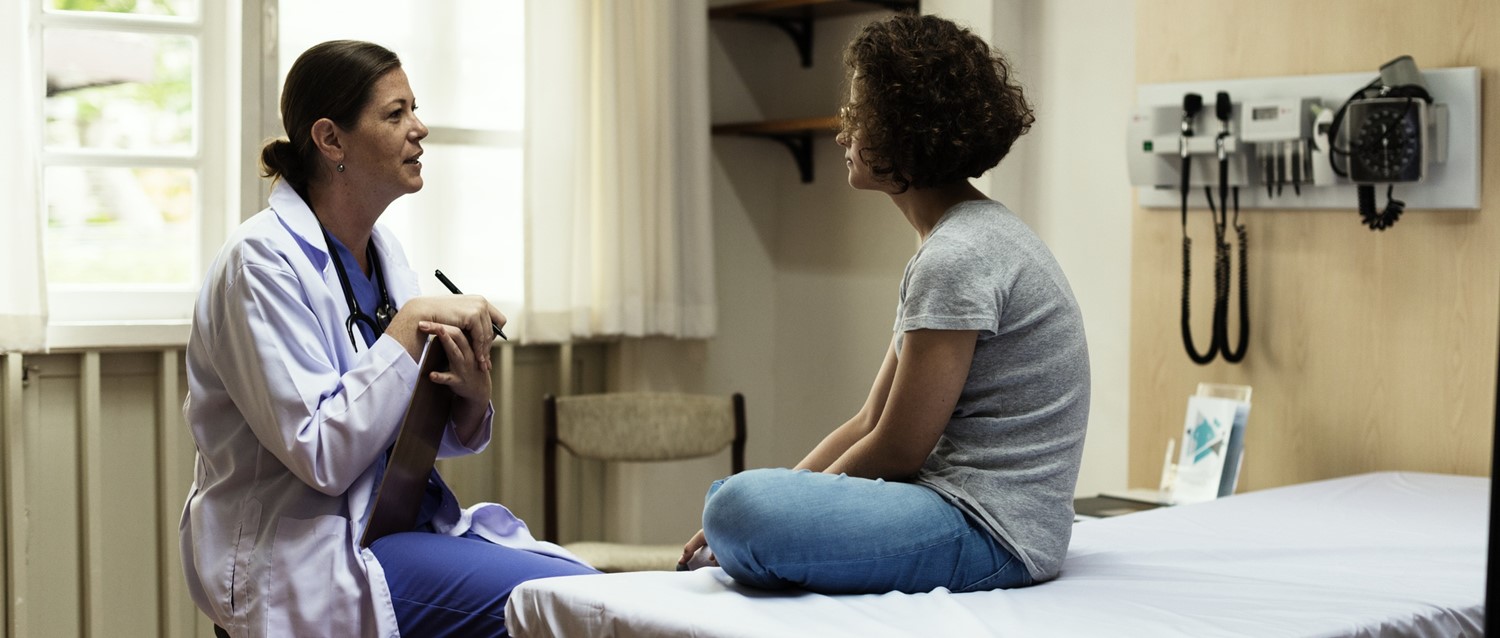
You should always seek medical help if pelvic pain becomes serious
Causes of pelvic pain in pregnancy
Miscarriage
Miscarriage is the loss of a pregnancy at any time up to the 24th week. 7 or 8 miscarriages out of 10 occur before 13 weeks of pregnancy. The usual symptoms of miscarriage are vaginal bleeding and lower tummy (abdominal) or pelvic cramps. You may then pass some tissue from the vagina, which often looks like a blood clot. See the separate leaflet called Miscarriage and Bleeding in Early Pregnancy for more details.
Ectopic pregnancy
An ectopic pregnancy is a pregnancy that tries to develop outside the womb (uterus). Usual symptoms include pain on one side of the lower abdomen or pelvis. It may develop sharply, or may slowly become worse over several days. It can become severe. Vaginal bleeding often occurs, but not always. It is often darker-coloured than the bleeding of a period. See the separate leaflet called Ectopic Pregnancy for more details.
Rupture of corpus luteum cyst
A corpus luteum makes hormones that help keep you pregnant, until other organs such as the placenta take over. It forms after the release of the egg at ovulation. They are often found, by chance, when you have an ultrasound scan for whatever reason. They often cause no problems at all and clear up without treatment. Sometimes it can become too swollen and may burst. This may cause sharp pain on one side of your pelvis. If you have pain in your pelvis in the first 12 weeks of your pregnancy, see your doctor.
Premature labour
Normally labour starts after 37 completed weeks of pregnancy. Normal labour usually starts as tightenings felt across the lower abdomen. These become stronger, more painful and closer together. You may also have a 'show'. This is the mucous plug from the neck of the womb (cervix). If you have a gush of fluid from the vagina, your waters may have broken. You should contact your midwife immediately. If you have pelvic pains that come and go in a regular pattern, contact your midwife for advice. See the separate leaflet called Premature Labour for more details.
Placental abruption
Rarely (about 6 times in every 1,000 deliveries), the placenta detaches from the wall of the womb. Before 24 weeks of pregnancy this is a miscarriage; however, after 24 weeks it is called an abruption. When it happens it is an emergency. This is because the baby relies on the placenta for food and oxygen. Without a working placenta, the baby will die. The staff in the maternity department will quickly try to deliver the baby. This is usually by emergency caesarean section.
For more information on pelvic pain during pregnancy see the separate feature How to cope with groin and pelvic pain during pregnancy.
Pregnancy could be a cause of your pelvic pain

Treatments for pelvic pain
Treatment for pelvic pain in women will depend on the cause. If you are confident that you know the cause or the pain - for example, period pain - you could try taking a painkiller such as paracetamol or ibuprofen.
If you are not sure of the cause of the pain or if the pain is severe, you should see a doctor. In particular, some causes are emergencies - for example, an ectopic pregnancy. Seek medical help urgently if you suspect this. You may also want to see a doctor if the pain keeps coming back. For many of the conditions listed above, there are treatments available.
How is pelvic pain diagnosed?
Your doctor will ask you some questions and may examine you. Based on what they find, they may advise you to have some further investigations.
A urine infection is a very common cause of pelvic pain and your doctor may ask for a urine sample. Swab tests can be used to check for infections, including sexually transmitted infections like Chlamydia and gonorrhoea. t They may arrange an urgent ultrasound scan at your local hospital if an ectopic pregnancy or miscarriage are suspected. A routine ultrasound scan can be arranged to diagnose problems such as ovarian cysts.
Laparoscopy is commonly undertaken by gynaecologists when pain persists and a cause has not been found. In this procedure, a small telescope is put through a small cut in your belly button. This allows the doctor to see inside your pelvis. See the separate leaflet called Laparoscopy and Laparoscopic Surgery for more details.
Doctors who specialise in the bowel may use flexible telescopes to look inside your bowel if a bowel cause is suspected. The gullet and stomach can be seen by gastroscopy. See the separate leaflet called Gastroscopy (Endoscopy) for more details. The lower bowel (rectum and colon) are looked at by colonoscopy.
What may be advised to help manage the problem?
This will depend on the likely cause. Follow the links above to the separate leaflets for more information on this.
If the problem is not an emergency, your doctor may refer you to a consultant for further specialist investigations - as above.
Patient picks for General signs and symptoms

Signs and symptoms
Apathy
Disappointment and feeling dejected are a normal part of life. But it's very important to be able to shrug off disappointments so that you no longer feel apathetic. So a temporary period of apathy is normal. However, long-term apathy is not normal and can cause severe problems with your quality of life.
by Dr Colin Tidy, MRCGP

Signs and symptoms
Itchy bottom
An itchy bottom (pruritus ani) is a persistent itch around the anus. There are many different causes, like haemorrhoids, skin conditions, or infections. Treatments depend on the cause, but include hygiene measures and creams or ointments to treat the itching.
by Dr Doug McKechnie, MRCGP
Frequently asked questions
What is the difference between acute and chronic pelvic pain?
Acute pelvic pain refers to pain that you are experiencing for the first time. Chronic pelvic pain, on the other hand, is pain that has been a problem for a longer period, typically more than six months.
Can problems with my bones or muscles cause pelvic pain?
Yes, pain can originate from your pelvic bones or nearby muscles, nerves, blood vessels, or joints. Sometimes the pain may feel like it is in your pelvis, even if its origin is actually in your lower back or hip joints.
What is the difference between superficial and deep pain during sex?
Superficial dyspareunia is pain felt on the surface of the genital region, while deep dyspareunia is pain felt deeper within the pelvis. They have different causes and treatments. Although some women might experience both, typically one type of pain is more predominant.
What is Mittelschmerz?
Mittelschmerz is a sharp pain experienced by some women when an egg is released during ovulation. It's called 'middle pain' because it occurs mid-cycle and may shift sides each month depending on which ovary releases the egg. This pain usually lasts only a few hours but can be severe for some.
What is interstitial cystitis?
Interstitial cystitis, also known as 'painful bladder syndrome,' is a poorly understood condition where the walls of the bladder are inflamed. It can be a cause of long-term pelvic pain and is considered when a woman has cystitis-like symptoms but urine tests show no infection.
How can I manage chronic pelvic pain if no specific cause is found?
If no specific cause can be identified for chronic pelvic pain, treatment typically focuses on managing the pain. Keeping a symptom diary can be helpful to identify patterns and triggers. Psychological treatments may also be considered, as emotional distress can worsen pain, and chronic pain can contribute to emotional distress.
Further reading and references
- Cheong YC, Smotra G, Williams AC; Non-surgical interventions for the management of chronic pelvic pain. Cochrane Database Syst Rev. 2014 Mar 5;3:CD008797. doi: 10.1002/14651858.CD008797.pub2.
- Endometriosis: diagnosis and management; NICE Guidelines (Sept 2017 - last updated November 2024)
- 2019 United Kingdom National Guideline for the Management of Pelvic Inflammatory Disease; British Association for Sexual Health and HIV (BASHH - 2018, last updated 2019)
- Guidelines on Chronic Pelvic Pain; European Association of Urology (2022)
About the authorView full bio

Dr Hayley Willacy, FRCGP
General Practitioner, Medical Author
MBChB (1992), DRCOG, DFFP, MRCOG (Part 1) MRCGP (2007), DFSRH (2013), MSc - medical education (2020)
Dr Hayley Willacy was an NHS GP working in northwest England, who retired from clinical practice in 2022 after 30 years.
About the reviewerView full bio

Dr Doug McKechnie, MRCGP
Medical Writer
MA, MBBS, MSc, DRCOG, MRCP(UK), MRCGP(2021), FHEA
Dr Doug McKechnie is an NHS GP working in London. He works full-time clinically and is also the Deputy Lead for the Clinical and Professional Practice module at University College London Medical School.
Article history
The information on this page is written and peer reviewed by qualified clinicians.
Article also available in English, German, Spanish, French, Italian, Portuguese, Hindi, Hebrew, Arabic, and Swedish.
Next review due: 20 Feb 2028
21 Feb 2023 | Latest version
19 Jul 2012 | Originally published
Authored by:
Dr Hayley Willacy, FRCGP
Join the conversation
Share your thoughts or experiences with others in our patient communities.

Ask, share, connect.
Browse discussions, ask questions, and share experiences across hundreds of health topics.

Feeling unwell?
Assess your symptoms online for free
Sign up to the Patient newsletter
Your weekly dose of clear, trustworthy health advice - written to help you feel informed, confident and in control.
By subscribing you accept our Privacy Policy. You can unsubscribe at any time. We never sell your data.
More in signs and symptoms
- Angio-oedema
- Cluster headaches
- Coughs and colds in children
- Dry eyes
- Epidermoid and pilar cysts
- Epiglottitis
- Febrile seizure
- Fever
- Fluid overload
- Globus sensation
- Insect bites and stings
- Joint pain
- Nausea and vomiting
- Precordial catch syndrome
- Steroid injections
- Sweaty feet
- Swollen eyelid
- Tinnitus
- Urethral stricture
- Warts and verrucas