Herzinfarkt
Herzinfarkt
Begutachtet von Dr Rosalyn Adleman, MRCGPZuletzt aktualisiert von Dr Rachel Hudson, MRCGPZuletzt aktualisiert 30. Dez 2024
Erfüllt die Anforderungen des Patienten Richtlinien des Patienten
- HerunterladenHerunterladen
- Teilen
- Language
- Diskussion
- Audio-Version
In dieser Serie:Akutes KoronarsyndromKardiale EnzymeErholung nach Herzinfarkt
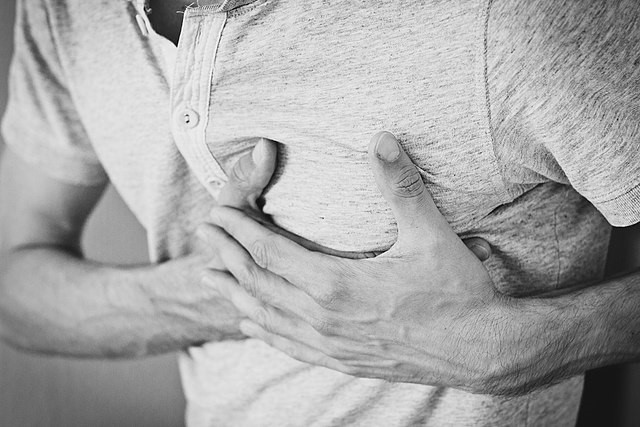
A heart attack (myocardial infarction) is usually caused by a blood clot, which stops the blood flowing to a part of your heart muscle. You should call for an ambulance immediately if you develop severe chest pain.
In diesem Artikel:
Videoauswahl für Herzinfarkt
If someone has a heart attack, treatment with a clot-busting medicine or an emergency procedure to restore the blood flow through the blocked blood vessel is usually done as soon as possible. This is to prevent or minimise any damage to your heart muscle. Other treatments help to ease the pain and to prevent complications. Reducing various risk factors can help to prevent a heart attack.
Lesen Sie unten weiter
What is a 'heart attack'?
What is a heart attack?
If you have a heart attack, a coronary artery or one of its smaller branches is suddenly blocked. The part of the heart muscle supplied by this artery loses its blood (and oxygen) supply if the vessel is blocked. This part of the heart muscle is at risk of dying unless the blockage is quickly removed. When a part of the heart muscle is damaged it is said to be infarcted. The term myocardial infarction (MI) means damaged heart muscle.
If a main coronary artery is blocked, a large part of the heart muscle is affected. If a smaller branch artery is blocked, a smaller amount of heart muscle is affected. After a heart attack, if part of the heart muscle has died, it is replaced by scar tissue over the following few weeks. Read Anatomie des Herzens und der Blutgefäße for more information about the heart.
There is actually a range of conditions that can be caused by a sudden reduction in blood flow in a coronary artery. This range of conditions has an overall term called akutes Koronarsyndrom (ACS).
Heart attack symptoms
Zurück zum InhaltIf you think someone is having a heart attack, look for the four Ps:
Pain - a continuous pain in the chest, which could spread to the jaw, neck or arms.
Pale skin.
Rapid and weak pulse.
Perspiration/sweating.
The most common symptom is severe chest pain, which often feels like a heavy pressure feeling on your chest. The pain may also travel up into your jaw and down your left arm or down both arms. The pain may be similar to angina but it is usually more severe and lasts longer. Angina usually goes off after a few minutes. Heart attack pain usually lasts more than 15 minutes - sometimes several hours. Heart attack pain also doesn't usually improve if you rest or take your usual angina medication.
However, some people have only a mild discomfort in their chest. The pain can sometimes feel like Verdauungsstörungen oder Sodbrennen.
You may also sweat, feel sick and feel faint. You may also feel short of breath.
Occasionally, a heart attack happens without causing any pain. This is usually diagnosed when you have a heart tracing (electrocardiogram, or ECG) at a later stage.
Some people collapse and die suddenly if they have a large portion of heart muscle damaged. This is not very common.
Women are less likely than men to call for help quickly when experiencing signs of a heart attack. It is very important to get medical help very urgently, to reduce the chances of permanent damage to the heart muscle.
What should I do if I think I am having a heart attack?
Dial 999/112/911 for an ambulance immediately. Then, if you have some, take 300 mg of aspirin (see below for the reason for this). You will normally be admitted straight to hospital.
Lesen Sie unten weiter
What causes a heart attack?
Zurück zum InhaltBlood clot (thrombosis) is the cause in most cases. Blood clots do not usually form in normal arteries. However, a clot may form if there is some atheroma within the lining of the artery.
Certain risk factors increase the risk of more atheroma forming. This can lead to ACS. Siehe das separate Merkblatt mit dem Titel Herz-Kreislauf-Erkrankung (Atherom).
Briefly, risk factors that can be modified and may help to prevent a heart attack include:
Rauchen. Wenn Sie rauchen, sollten Sie alle Anstrengungen unternehmen, um aufzuhören.
Hoher Blutdruck. If your blood pressure is high it can be treated.
Übergewicht. Losing some weight is advised. Losing weight will reduce the amount of workload on your heart and also help to lower your blood pressure.
Cholesterol. This should usually be treated if it is high. A statin (cholesterol lowering medication) is usually recommended if your risk of a heart attack is found to be raised, even if your cholesterol does not appear to be very high. This is calculated using a calculation called QRISK, which takes into account the various factors in this list.
Inaktivität. You should aim to do some moderate physical activity on most days of the week for at least 30 minutes - for example, brisk walking, swimming, cycling, dancing, gardening, etc.
Ernährung. You should aim to eat a healthy diet.
Diabetes. People with Diabetes have a higher risk of having ACS. This risk can be reduced by ensuring your blood pressure, cholesterol levels and blood sugar (glucose) levels are well controlled.
Family history. Your risk is increased if there is a family history of heart disease or a Schlaganfall that occurred in your father or brother aged below 55, or in your mother or sister aged below 65.
Ethnic group. Certain ethnic groups - for example, people of South Asian origin - have a higher risk of developing cardiovascular disease.
How is a heart attack diagnosed and assessed?
Zurück zum InhaltTests are usually done to confirm a heart attack. These are:
Ein Herzdiagramm (Elektrokardiogramm oder EKG). There are typical changes to the normal pattern of the ECG in a heart attack. However, it is possible to have a heart attack without having these ECG changes.
Bluttests. A blood test that measures a chemical called troponin is the usual test that confirms a heart attack.
Eine angiography of the coronary arteries may also be performed to find the blockage in the artery.
Other tests may be done in some cases. This may be to clarify the diagnosis (if the diagnosis is not certain) or to diagnose complications such as heart failure if this is suspected. For example, eine Ultraschalluntersuchung des Herzens (Echokardiogramm oder 'Echo') or computerised tomography (CT) scan) to rule out lung conditions.
You may also be advised to have tests to assess the severity of the fatty patches or plaques (atheroma) in the coronary arteries - for example:
Lesen Sie unten weiter
Treatment for a heart attack
Zurück zum InhaltThe following is a typical situation and mentions the common treatments that are usually offered. However, each case is different and treatments may vary depending on your situation.
What you need to do
Call 999 (or 112 or 911) for medical help and say you think someone is having a heart attack.
Help move them into the most comfortable position. The best position is on the floor leaning against a wall with knees bent and head and shoulders supported.
Give them a 300 mg aspirin (if available and they're not allergic) and tell them to chew it slowly.
Keep checking their breathing, pulse and level of response.
If they stop responding at any point, you may need to do cardiopulmonary resuscitation (CPR). See the separate leaflet called Dealing with an adult who is unresponsive.
Aspirin und andere Thrombozytenaggregationshemmer
As soon as possible after a heart attack is suspected you will be given a dose of aspirin. Other antiplatelet medicines may be given. See the separate leaflet called Aspirin and other antiplatelet medicines.
Injections of heparin or a similar medicine
These are usually given for a few days to help prevent further blood clots from forming.
Schmerzlinderung
Ein starkes Schmerzmittel wie Morphin is given by injection into a vein to ease the pain.
Treatment to restore blood flow in the blocked coronary artery
There are two treatments that can restore blood flow back through the blocked artery:
Koronarangioplastie. This is removing the blockage in the artery and putting in a stent to keep it open. Ideally this is the best treatment if it is available and can be done within a few hours of symptoms starting.
An injection of a clot-busting medicine is an alternative to emergency angioplasty. It can be given easily and quickly in most situations. Some ambulance crews are trained to give this.
Both the above treatments usually work well to restore blood flow and greatly improve the outlook. The most crucial factor is the speed at which one or other treatment is given after symptoms have started.
A beta-blocker medicine
Betablocker-Medikamente have some protective effect on the heart muscle and they also help to prevent abnormal heart rhythms from developing. Beta-blocker medicines will also help to prevent another heart attack.
Insulin
Some people have a raised blood sugar level when they have a heart attack, even if they do not have diabetes. If this occurs then your blood sugar (glucose) levels may need to be controlled with insulin. If you have diabetes then it is also likely that you will need to be treated with Insulin to control your blood glucose levels when you are in hospital.
Oxygen
You may be given oxygen which works to reduce the risk of damage to your heart muscle.
Treatment after you have had a heart attack
Zurück zum InhaltTreatment and advice after a heart attack aims:
To reduce the chance of a further heart attack.
To help to prevent heart disease from getting worse.
If you are a smoker, it's essential to mit dem Rauchen aufzuhören. Regular exercise and getting back to normal work and life are usually advised. Much can be done to reduce the risk of a further heart attack. See the separate leaflet called Heart Attack Recovery
Normally you will be advised to take regular medication for the rest of your life. The medicines are usually taken each day for life. The exact medicines prescribed for you can depend on factors such as the type of heart attack you had, as well as any other illnesses you may also have. The medicines used include:
Antiplatelet medicines to help prevent blood clots.
Betablocker to help protect the heart.
Angiotensin-konvertierendes Enzym (ACE)-Hemmer to help protect the heart.
Statine to lower the cholesterol level.
How serious is a heart attack?
This often depends on the amount of heart muscle that is damaged. In many cases, only a small part of the heart muscle is damaged and then heals as a small patch of scar tissue. The heart can usually function normally with a small patch of scar tissue. A larger heart attack is more likely to be life-threatening or cause complications.
Even before treatments became available to restore blood flow, many people made a full recovery. With the help of modern treatment, particularly if you are given treatment within a few hours to restore blood flow, a higher percentage of people now make a full recovery.
Some possible complications include the following:
A further heart attack which may occur sometime in the future.
Patientenempfehlungen für Herzinfarkt

Herzgesundheit und Blutgefäße
Erholung nach Herzinfarkt
Following a heart attack, there are things you can do to help yourself to recover and to reduce the risk of further problems, such as another heart attack. Everyone is different and individual circumstances will vary.
von Dr. Hayley Willacy, FRCGP
Herzgesundheit und Blutgefäße
Kardiale Enzyme
Cardiac enzymes are substances released by the heart muscle when it is injured - for example, during a heart attack or a severe case of angina.
von Dr. Colin Tidy, MRCGP
Weiterführende Lektüre und Referenzen
- Beurteilung der Fahrtauglichkeit: Leitfaden für medizinische Fachkräfte; Fahrer- und Fahrzeugzulassungsbehörde
- Akutes Koronarsyndrom; Scottish Intercollegiate Guidelines Network - SIGN (2016)
- Mehta LS, Beckie TM, DeVon HA, et al; Acute Myocardial Infarction in Women: A Scientific Statement From the American Heart Association. Circulation. 2016 Mar 1;133(9):916-47. doi: 10.1161/CIR.0000000000000351. Epub 2016 Jan 25.
- Ibanez B, James S, Agewall S, et al; 2017 ESC Guidelines for the management of acute myocardial infarction in patients presenting with ST-segment elevation: The Task Force for the management of acute myocardial infarction in patients presenting with ST-segment elevation of the European Society of Cardiology (ESC). Eur Heart J. 2017 Aug 26. doi: 10.1093/eurheartj/ehx393.
- Valgimigli M, Bueno H, Byrne RA, et al; 2017 ESC focused update on dual antiplatelet therapy in coronary artery disease developed in collaboration with EACTS: The Task Force for dual antiplatelet therapy in coronary artery disease of the European Society of Cardiology (ESC) and of the European Association for Cardio-Thoracic Surgery (EACTS). Eur Heart J. 2017 Aug 26. doi: 10.1093/eurheartj/ehx419.
- Akute Koronarsyndrome; NICE-Leitlinien (November 2020)
Lesen Sie unten weiter
Artikelverlauf
Die Informationen auf dieser Seite wurden von qualifizierten Klinikern verfasst und begutachtet.
Nächste Überprüfung fällig: 29. Dez. 2027
30. Dez. 2024 | Neueste Version

Fragen, teilen, verbinden.
Durchsuchen Sie Diskussionen, stellen Sie Fragen und teilen Sie Erfahrungen zu Hunderten von Gesundheitsthemen.

Fühlen Sie sich unwohl?
Bewerten Sie Ihre Symptome online kostenlos
Abonnieren Sie den Patienten-Newsletter
Ihre wöchentliche Dosis klarer, vertrauenswürdiger Gesundheitsberatung - geschrieben, um Ihnen zu helfen, sich informiert, selbstbewusst und in Kontrolle zu fühlen.
Mit dem Abonnieren akzeptieren Sie unsere Datenschutzrichtlinie. Sie können sich jederzeit abmelden. Wir verkaufen Ihre Daten niemals.